
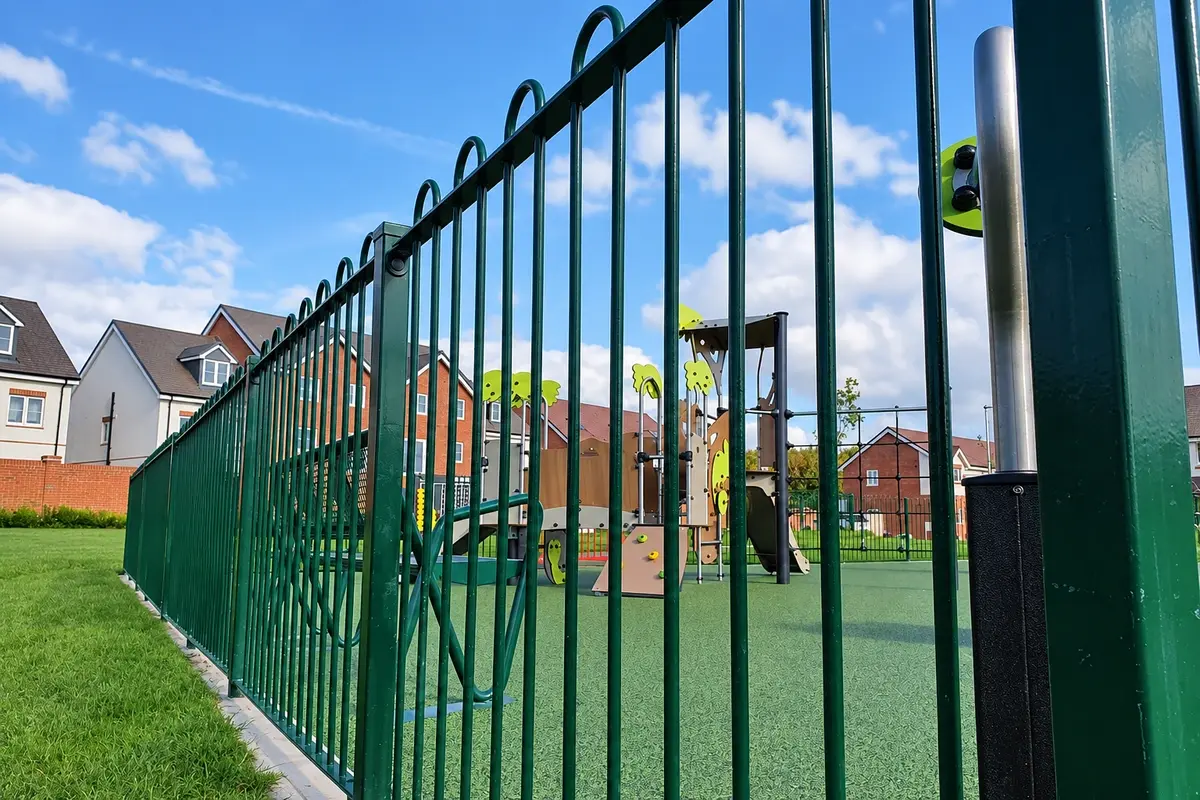
Name the purpose of every enclosed area
Mark the play space, general park boundary, dog-management area and maintenance compound separately where they exist. Ask the operator what each line must achieve. A low visual divider should not be described as secure containment simply because it encloses a shape on the plan.
Record nearby paths, seating, planting and equipment. Review how the boundary meets hard surfaces and whether later landscaping could alter the bottom gap or effective height. The operator’s applicable design requirements determine acceptance; a generic catalogue dimension does not.
Work through a simple quantity example
Assume a rectangular 36 m × 24 m boundary measured on the intended fence line. Its perimeter is 2 × (36 + 24) = 120 m. If the design contains a 1.2 m pedestrian opening and a 3.6 m maintenance opening, the net fence length is 115.2 m.
| Item | Illustrative quantity | Keep separate |
|---|---|---|
| Net fence runs | 115.2 m | Panel setting-out and non-standard closing bays |
| Pedestrian gate | 1 assembly | Required usable opening and operating arrangement |
| Maintenance gate | 1 assembly | Equipment passage, opening space and controls |
| Corners and returns | From the final plan | Post and connection details |
These dimensions demonstrate quantity calculation, not recommended public or playground gate widths. Panel counts must follow the chosen system’s installed module, not a rounded division of the overall perimeter.
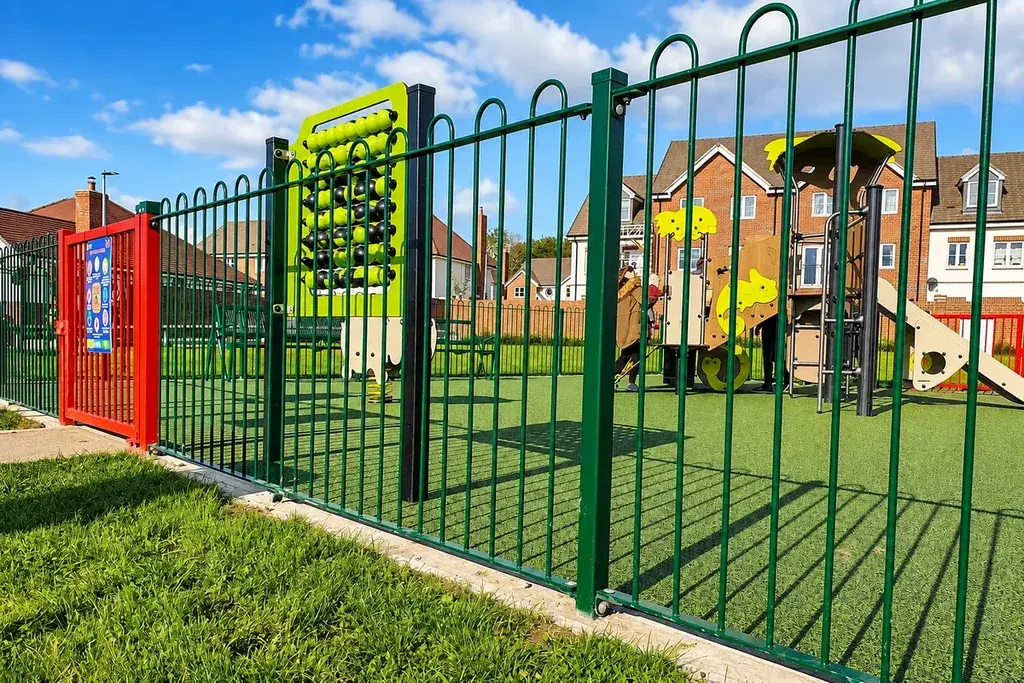
Review the visitor route and the maintenance route together
Locate the pedestrian entrance where users can understand it from the path. Check the space occupied by the moving gate, the surface transition and the route immediately inside. Review the maintenance opening with the actual mower or other equipment dimensions, including attachments and turning movement.
If maintenance occurs while the park is open, the operator needs a working arrangement for separating the task from visitors. HSE’s pedestrian guidance is relevant where park operations involve workplace vehicle movements.
Inspect joints and moving parts at handover
Compare installed gaps and accessible edges with the approved details. Review closing and latching under the specified operating conditions, without using people to test pinch points. Have any required play-safety assessment performed by an appropriately competent person using the applicable procedure.
Record each gate and run with a location identifier. Retain the accepted detail for replacement hinges, latches and connecting brackets. When a component is changed, check the operation of the assembled gate again rather than assuming a same-sized replacement behaves identically.
The completed park schedule should show which boundary controls which activity, how people and equipment enter, and how the operator will maintain it. That is more useful than specifying one fence height throughout the site.