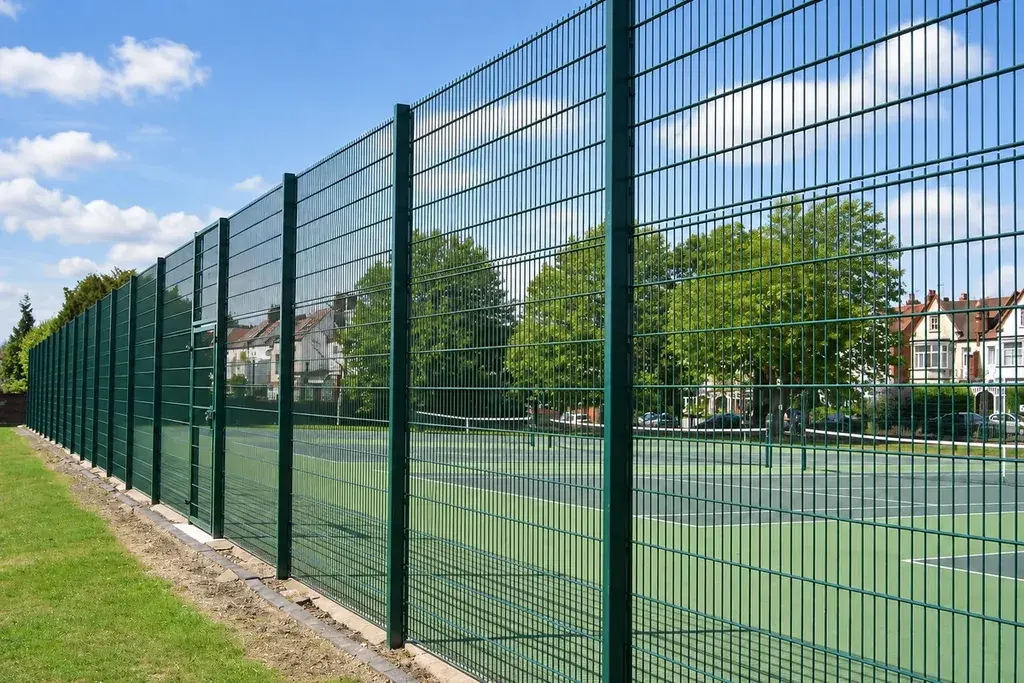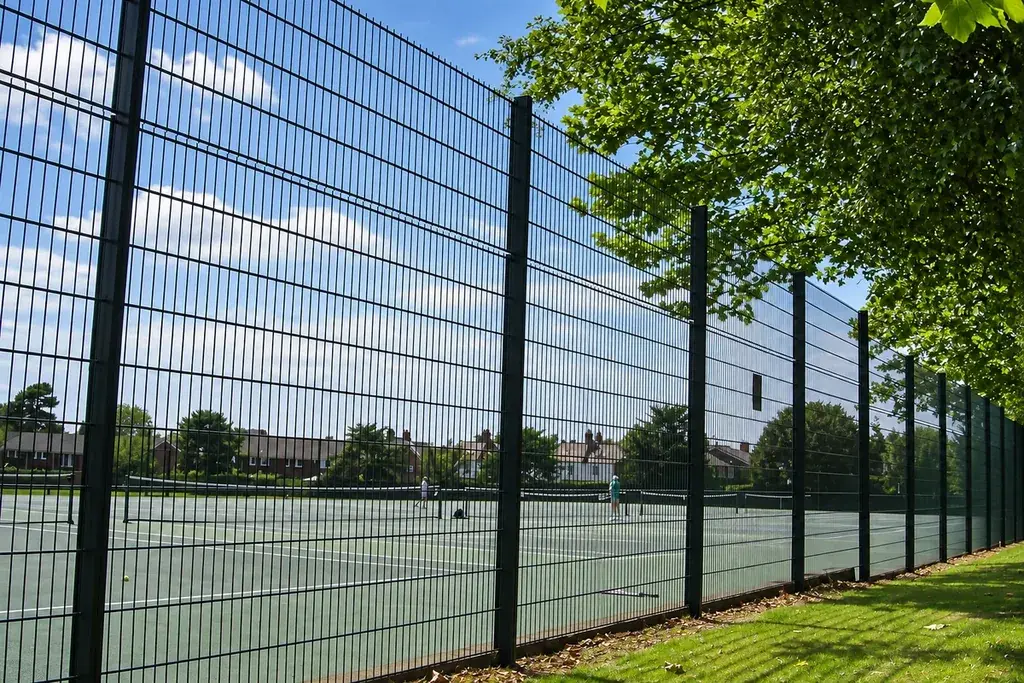
Check the finished openings
Wire spacing and clear opening are different measurements. Identify the dimensions and orientation relevant to the intended ball-retention requirement. Generic perimeter mesh should not be assumed suitable because its product name includes “sports”.
A small gap through the mesh does not compensate for an unresolved gap below a panel or beside a gate. Show those edges on the court elevation.
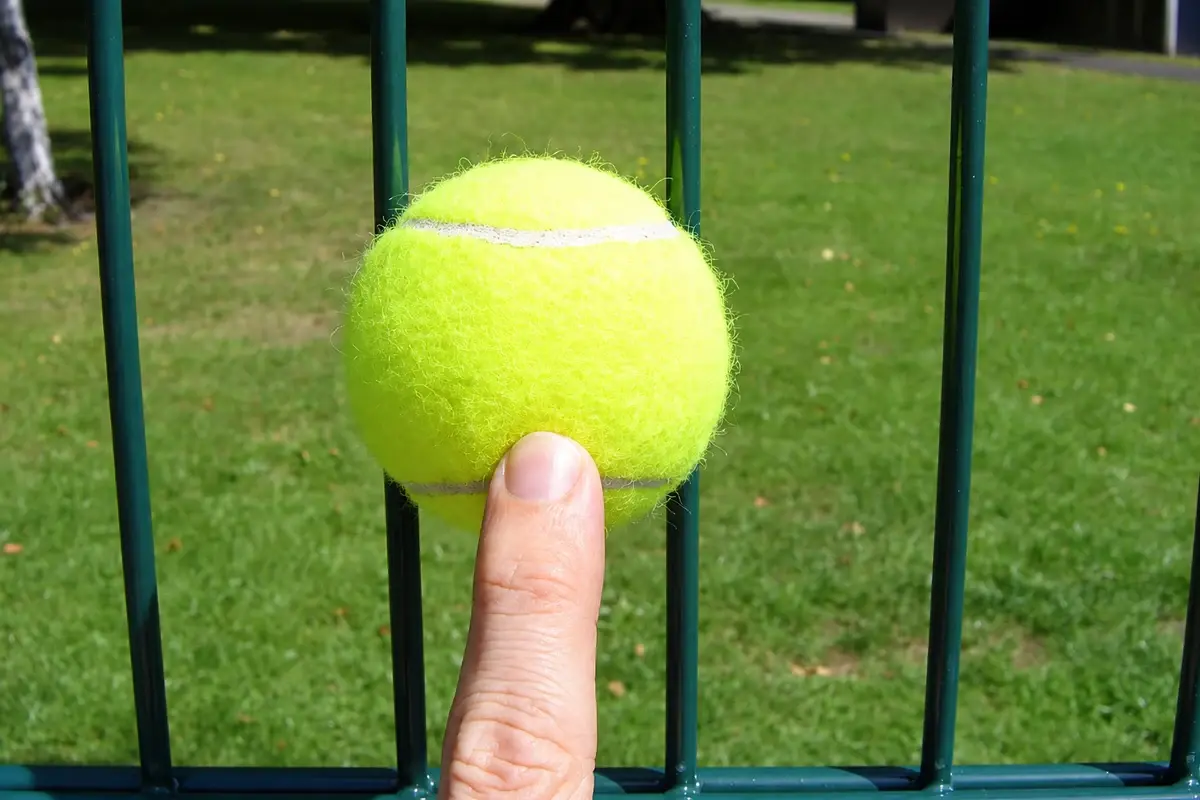
Coordinate surface levels and gate thresholds
The finished playing surface, surrounding ground and drainage details can sit at different levels. Use the final surface information when defining the lower edge and gate clearances.
Specify access for players and for maintenance equipment. Check where the open leaf will sit relative to the court and surrounding paths.
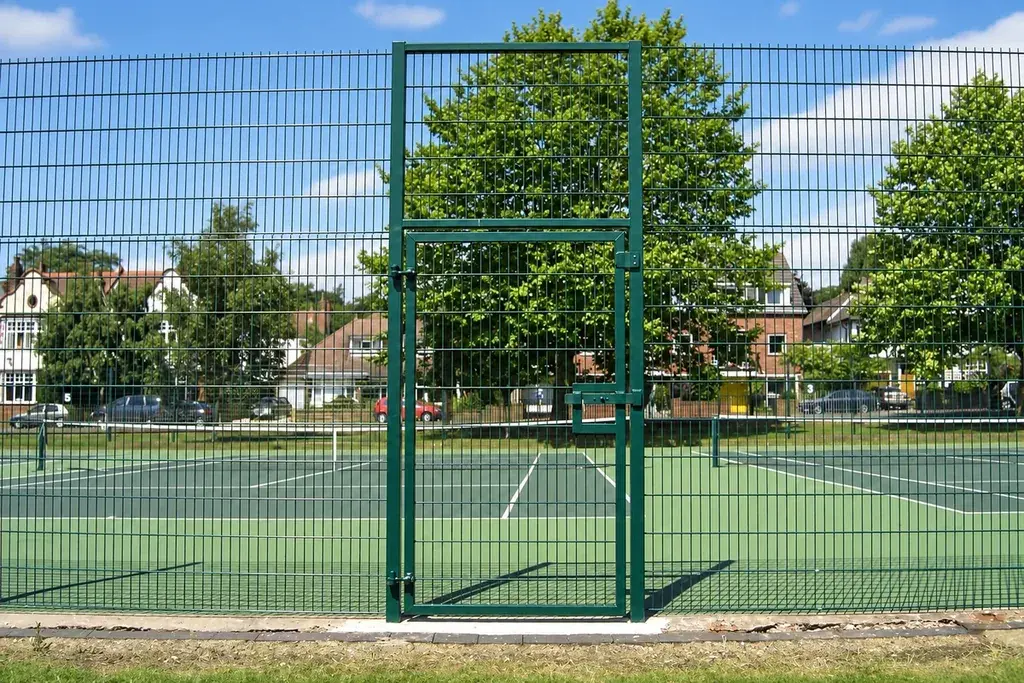
Include screens in the original design brief
Windscreens, banners and other additions alter exposure and loading. Identify their location and extent before posts and foundations are selected. Adding screening to an open-mesh fence should not be treated as a purely cosmetic change.
The designer should also review any lighting or other equipment proposed on the same posts.
Compare fabric and panel constructions
Chain link and welded sports panels have different attachment and tensioning arrangements. Evaluate the proposed complete assembly against the court requirements.
For repair orders, retain the mesh definition, panel or fabric dimensions and post connections. Include the gate-edge detail so the replacement continues the intended boundary without introducing a new opening.