Build a short sports requirement matrix
| Requirement | Record for each intended game |
|---|---|
| Ball retention | Relevant ball and acceptable openings |
| Contact areas | Where play regularly strikes the fence |
| Equipment | Goals, nets or other items and their interfaces |
| Access | Player movement and equipment entry |
| Operational constraints | Hours, neighbouring uses and specified noise criteria |
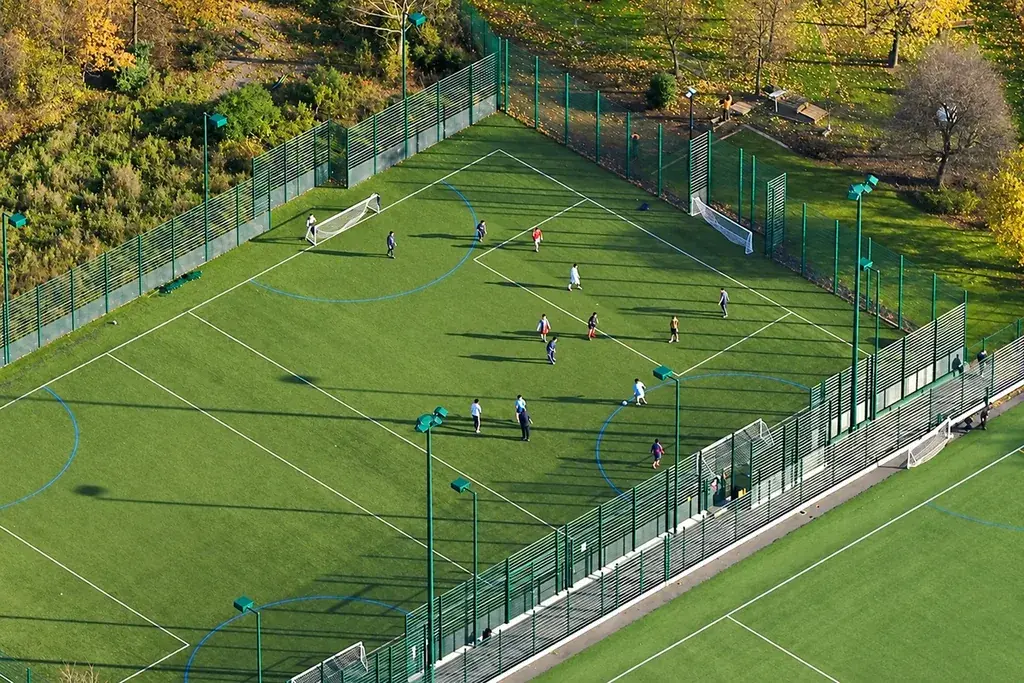
Resolve conflicts in the brief before choosing a common panel. A configuration suitable for the largest ball may leave openings that do not suit another game.
Separate the lower zone from the upper boundary
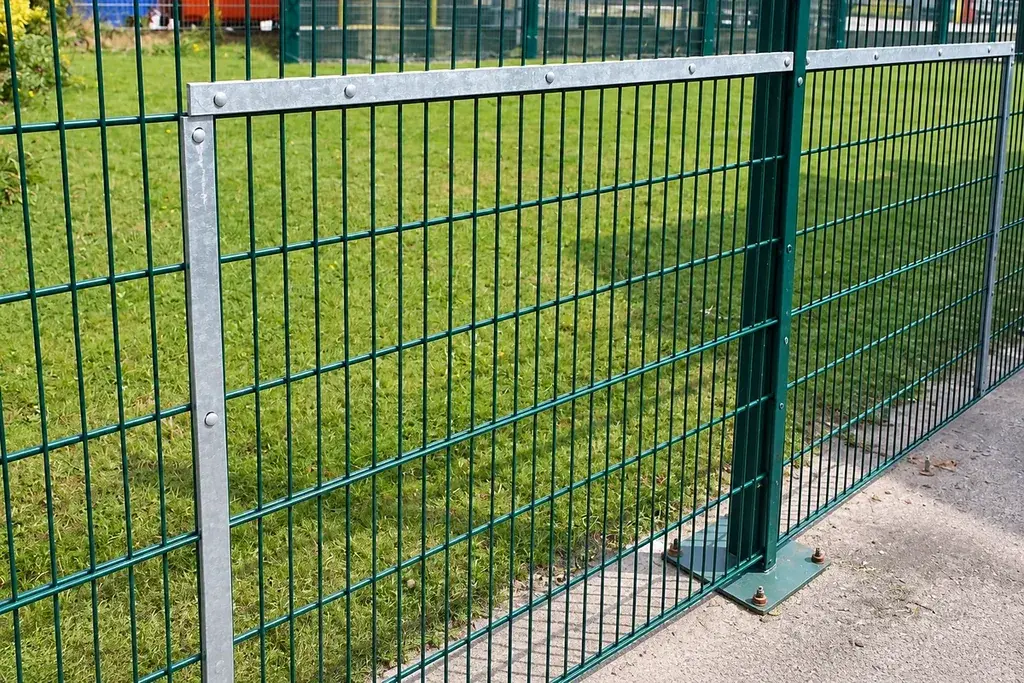
The area most exposed to contact can need a different detail from the upper ball-retention area. Rebound fencing and double wire sports panels should be assessed as their specified assemblies, including posts and connections.
Any claimed impact or acoustic performance needs evidence for that arrangement. Changing a connection or adding an insert does not automatically reproduce another system's test result.
Put openings and equipment on the same drawing
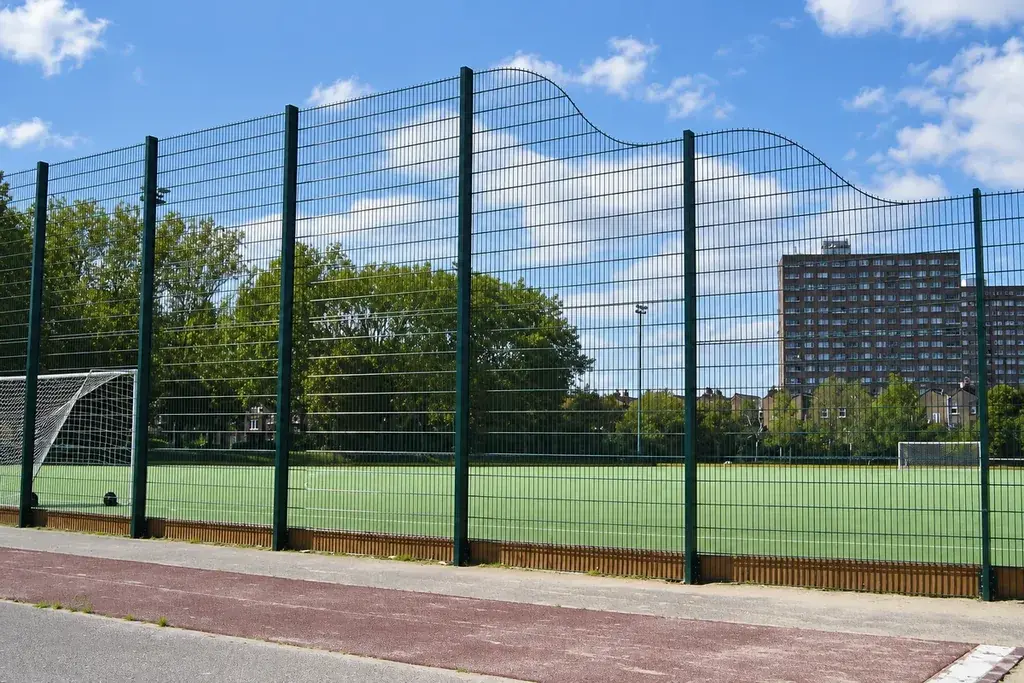
Mark the position of gates when open, storage access and any recesses. Record equipment that attaches to the fence separately from equipment with independent supports. Keep those responsibilities visible in the quotation.
Preserve the specification through shared maintenance
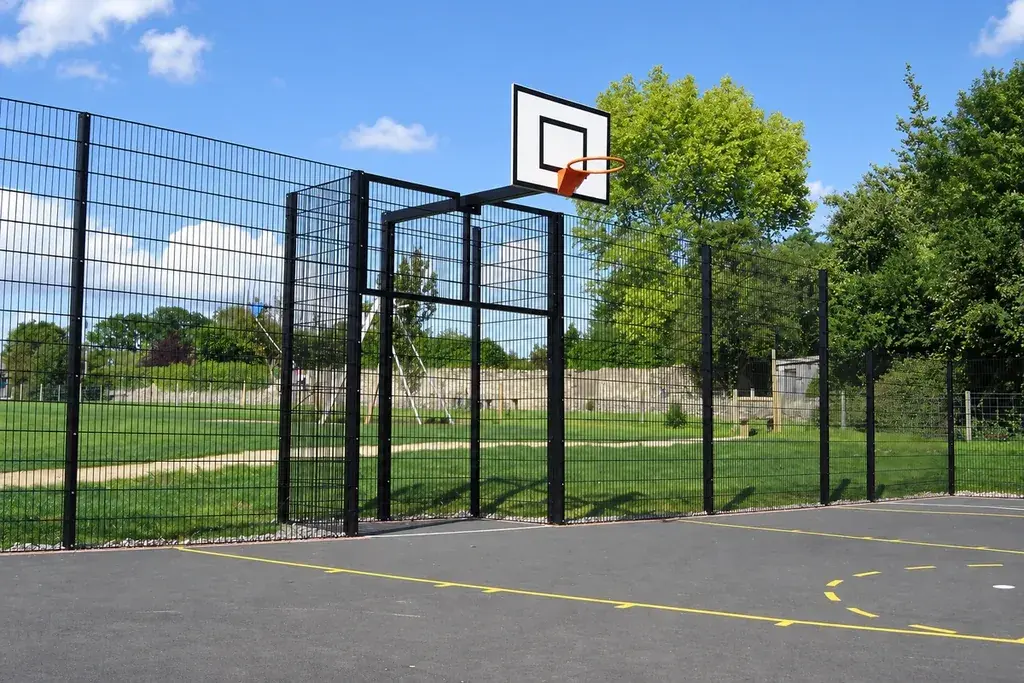
Facilities staff need the panel and fixing references, gate hardware information and any agreed inspection instructions. Record changes so a later repair does not quietly alter the geometry selected for one of the sports.
For a predominantly football or tennis facility, the football and tennis pages develop the relevant boundary details.