
Build the item list before grouping the shipment
A panel, its post and its fixing set should each be identifiable, even when they are sold together. Where a range includes several heights or finishes, separate those variations in the item schedule. This makes it easier to check quantities, identify substitutions and order individual replacements later.
| Record against each item | Example of the information needed |
|---|---|
| Your product code | The reference used in your stock or sales system |
| Specification revision | The drawing or dimensional sheet to which the item is made |
| Mating components | The posts, clamps, caps or hardware that must fit it |
| Finish identification | Treatment, colour and agreed appearance reference |
| Packing unit | Quantity per agreed package and the required label information |
This is a record structure, not a fixed catalogue configuration. The actual product range and order quantities are reviewed for the proposed batch.
Use the first approval to define later orders
Discuss which dimensions, fit details and appearance points need checking on a sample or drawing. If a sample is approved, keep its reference alongside the specification and any agreed exceptions. A colour sample does not approve every dimensional feature of a finished panel, and a component sample does not define the entire fence package.
Sample format, costs, minimum quantities and approval timing are assessed by product and order. Labels, private branding and packaging requirements can be submitted for review with the same information.

Mixed loading needs a usable packing list
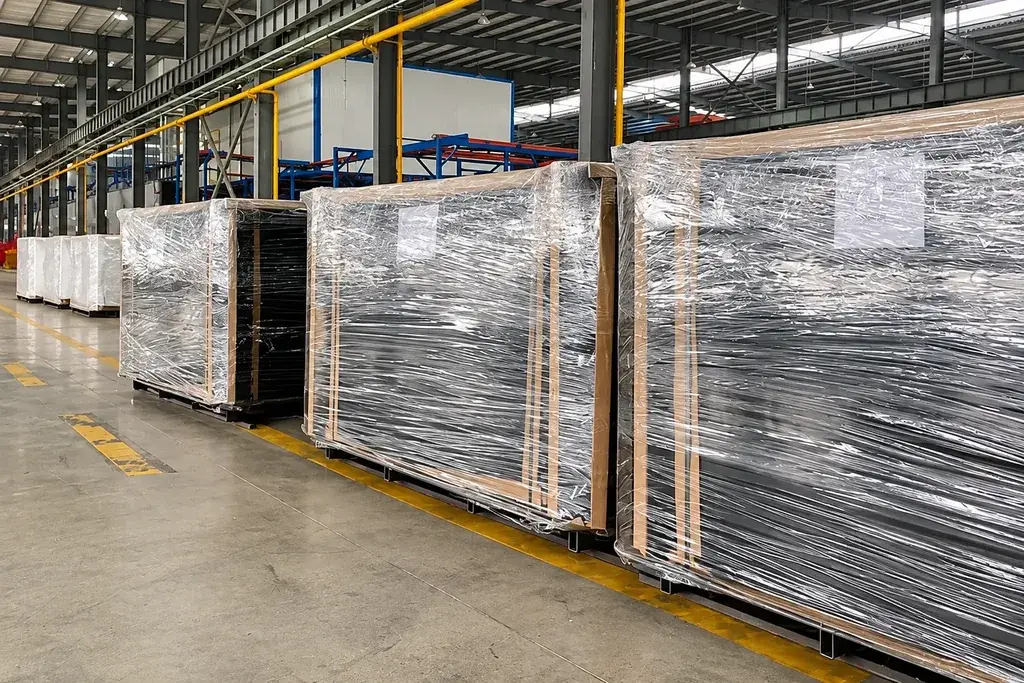
Panels, posts, gates and smaller fittings occupy different types of packages. A mixed order should identify the contents of each package and relate them to the item schedule. State any receiving constraints, including how the packages will be unloaded and moved into storage.
The packing discussion should cover protection, identification and agreed units. It should also make clear whether fittings arrive as sets for a particular fence arrangement or as separate stock items. Packing and shipping information explains the wider delivery scope.
Review changes before they become a compatibility problem
On a repeat order, quote the accepted item reference and revision. If a dimension, connection, material, finish or packing arrangement is changing, identify it explicitly. A small change to a cap or fixing can affect which stocked post it fits, even when the part looks similar.
FencingWise combines in-house production with partner sourcing. The applicable route and schedule are confirmed for the order; a previous supply does not remove the need to check the current requirements.
Make receiving records useful for resolving an issue
Match package labels and quantities to the packing list before the parts lose their shipment references. If there is visible damage or a shortage, record the order number, item and package references, quantities and photographs or video. Those details allow the reported issue and responsibility to be reviewed.
The written order sets the agreed commercial and delivery arrangements. We do not publish one MOQ, fixed lead time or stocking commitment that applies to every distributor range.