Fence toppings
Custom Barbed Wire Rolls
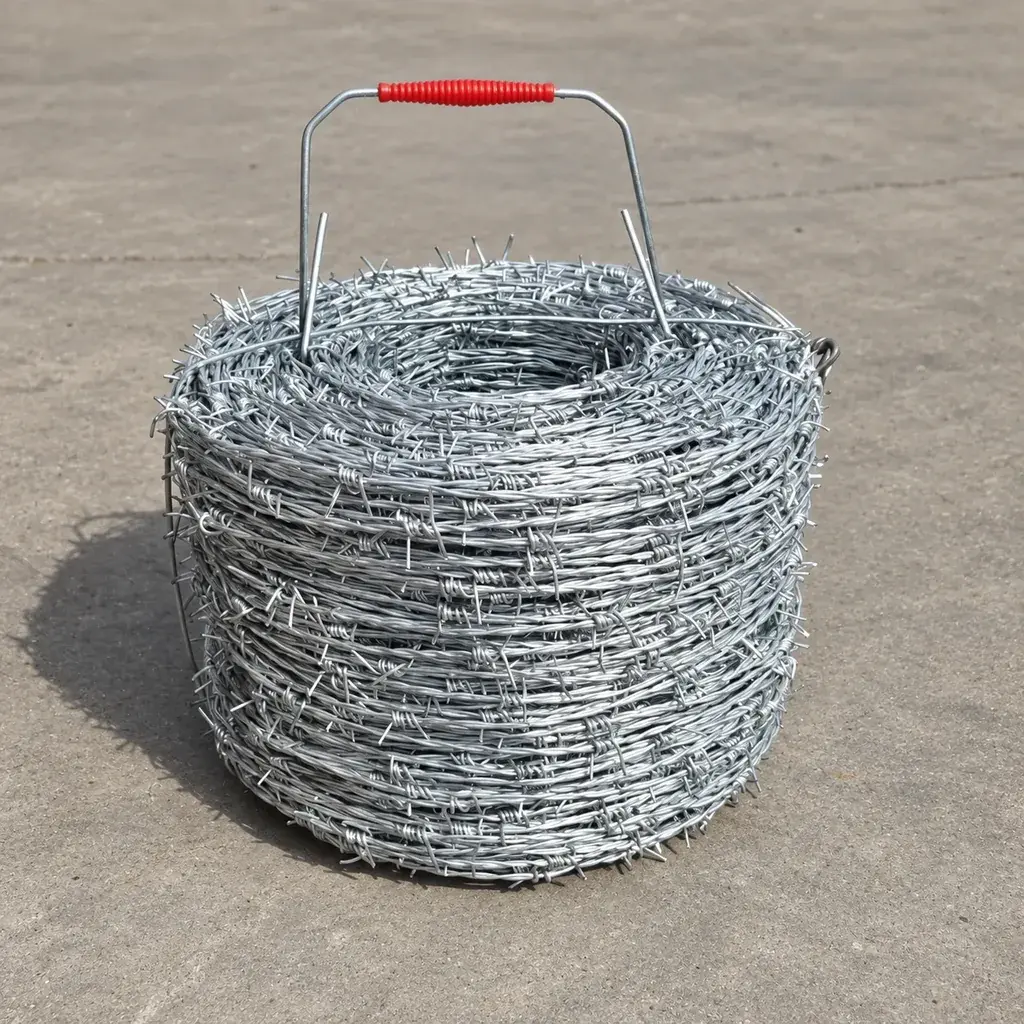
Twisted wire with spaced barbs for a supported topping.
View productWe review custom fence toppings as a defined material package: straight barbed-wire strands, expanded concertina coils or planar flat-wrap loops. Each format has different dimensions, supporting interfaces and order units. Use this collection to compare the constructions, specify material and finish, and turn the approved perimeter arrangement into identifiable rolls, coils, attachments and protected packs.

THE FENCINGWISE RANGE
3 products
Fence toppings
Twisted wire with spaced barbs for a supported topping.
View productFence toppings
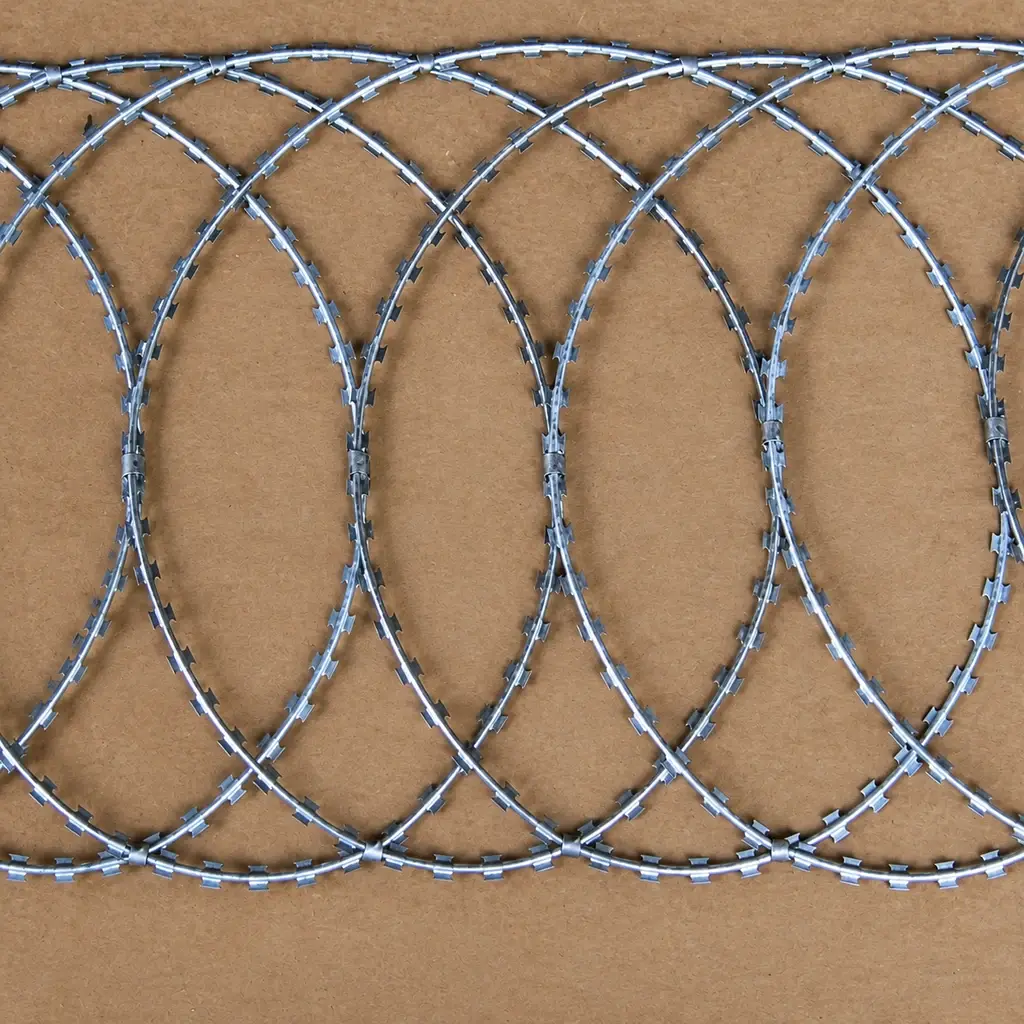
Linked razor-wire coils that expand when deployed.
View productFence toppings
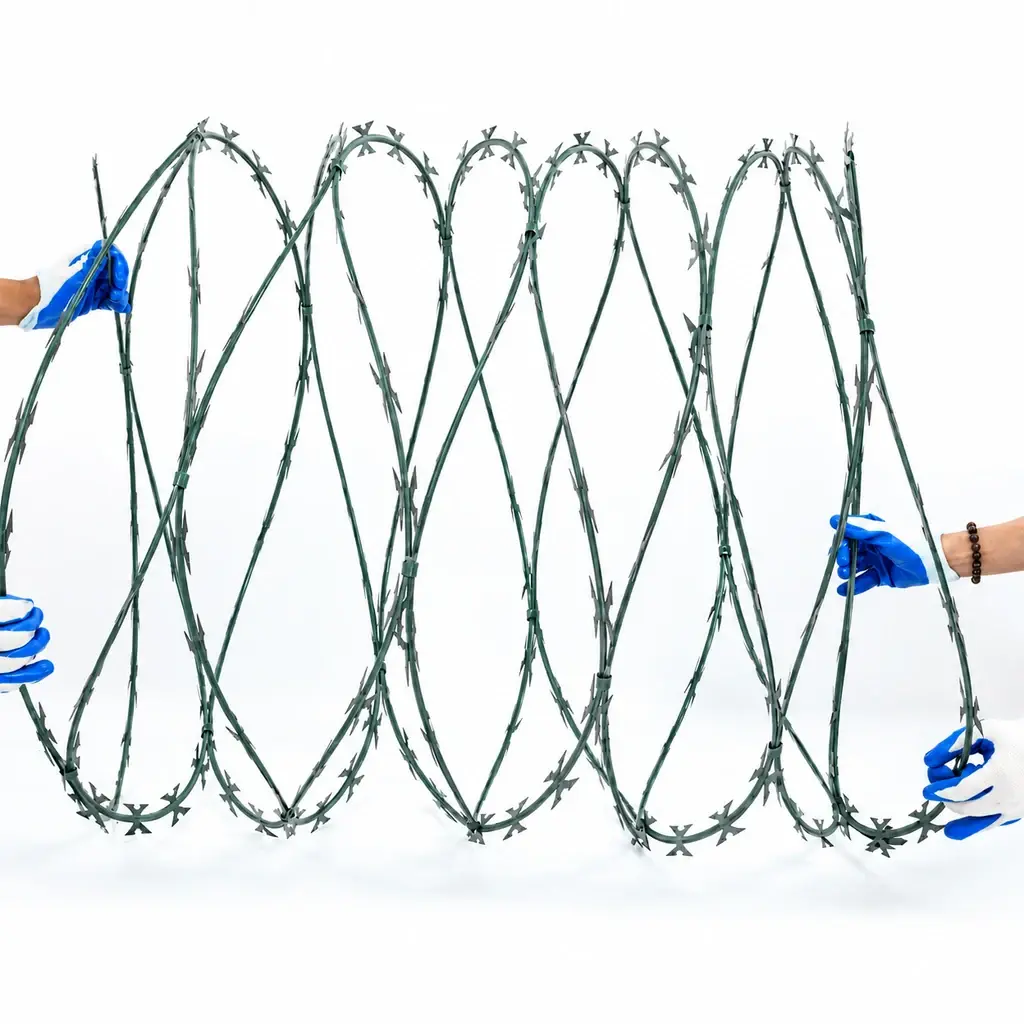
Overlapping razor-wire loops arranged in a flat plane.
View productTry a broader term or clear the filters to see the full range.
| Topping format | Construction to identify | Useful quantity basis |
|---|---|---|
| Barbed-wire rolls | Main strands with spaced barb clusters, supplied as wound wire | Contained wire length per roll, construction and roll count |
| Concertina razor wire | Linked razor-wire turns forming an expanded coil arrangement | Coil reference and coverage under a stated extension condition |
| Flat-wrap razor wire | Overlapping loops arranged along a defined plane | Loop height, overlap arrangement and declared installed coverage |
These formats are not interchangeable lengths of the same material. The distinction affects projection, attachment parts, packing and the schedule of quantities. Choose the construction that belongs in the accepted boundary design, then use the individual product page to develop its wire, core or tape details.
The material enquiry should show the topping in section relative to the fence face. This records the support arm, attachment positions and available envelope instead of relying on a front-view photograph. Ends, corners and gates can change the support orientation, so list those locations separately from straight repeated runs.
Supporting brackets and connection parts can be itemised alongside the wire package. Identify their material, finish, mounting geometry and supplied quantities. A changed coil or loop arrangement may require a different attachment interface even when the underlying security fence remains the same. Site suitability, permitted placement and the professional installation method are established by the responsible project team; this page defines the material order.
A roll count becomes useful when each roll has an identified construction and contained length. A coil count needs the relevant geometry and coverage basis. Give each item a product reference, package quantity and clear label, so the receiving team can reconcile the delivery without opening sharp material merely to identify it.
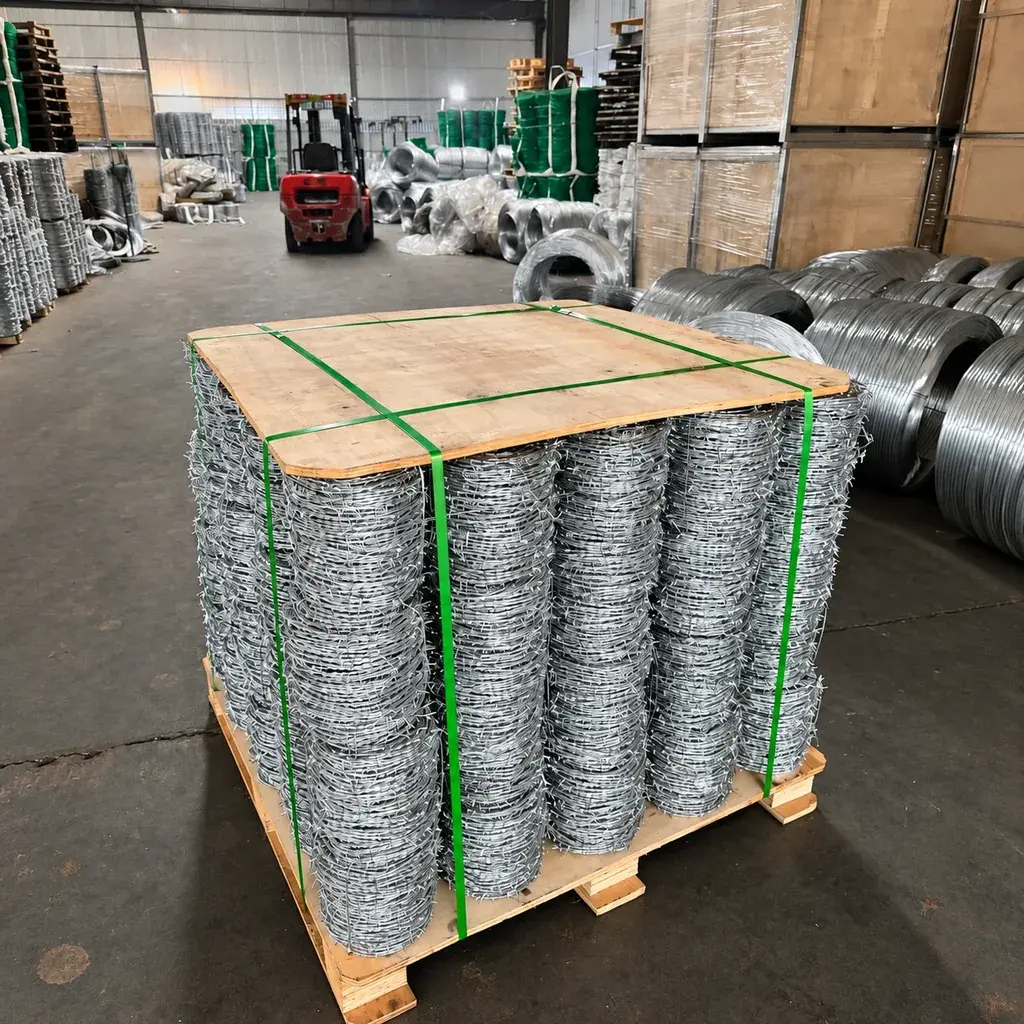
For mixed orders, separate wire rolls, concertina coils, flat-wrap packs and loose attachment sets on the packing list. Agree the protected handling unit and marking before dispatch. Keep section or gate references on any special packages; a complete total quantity can still leave an individual work section without its matching parts.
Concertina construction occupies a three-dimensional envelope when extended. Flat wrap arranges loops within a flatter plane, with overlap along the boundary. The smaller apparent projection of a flat arrangement can be relevant to the design, but it does not make the two products equivalent in attachment, coverage or performance.
For a proposed alternative, compare the installed envelope, material construction and supported arrangement together. Keep the original product and the proposed change visible in the quotation. Our concertina versus flat-wrap comparison explains how package coverage and special junctions affect purchasing; it does not supply a universal deployment instruction.
| Custom specification field | What belongs on the enquiry | Why it affects supply |
|---|---|---|
| Main wire or core | Material designation, diameter and required mechanical specification | Identifies the wire independently of the barb or blade appearance |
| Barb construction | Point arrangement, barb-wire diameter and cluster spacing | Distinguishes products that may otherwise share the same reel size |
| Blade tape | Profile reference, strip material and thickness, with core details | Defines the razor-wire construction rather than only its overall coil diameter |
| Geometry and quantity | Roll length, coil or loop dimensions, and the applicable coverage basis | Connects the physical product to the number of packages ordered |
| Attachments and packs | Supplied components, protected unit, labels and section references | Prevents a material-only price from being mistaken for a complete package |
A gauge label should identify its gauge system, or be accompanied by the actual diameter. Point count and blade profile are separate from the main wire’s properties. For barbed wire, the two-point versus four-point guide shows why those characteristics should be compared independently.
A razor-wire assembly may contain core wire, blade strip and linking components. The material and protective finish need to identify each relevant part, rather than describe the entire package as simply silver or galvanized. For barbed wire, include both the main strand and barb construction in the material description.
Where a zinc-coated or stainless construction is requested, state the material designation and applicable coating requirement for quotation review. Finish selection starts with the site exposure and the component combination. The same visible appearance can conceal a different substrate or coating quantity, while a coating statement for incoming wire may not describe every formed or cut surface.
Keep any corrosion-test evidence connected to the actual material and process offered. A longer test duration does not, by itself, establish a longer outdoor service life. The coating information page helps separate material identity, finish specification and inspection records.
The Jacksons fence-toppings technical sheet provides the selected examples below. They illustrate specification fields, not our stock availability, an approved placement or a guaranteed FencingWise configuration.
| Field | Published quote reference | Keep separate in the order |
|---|---|---|
| Concertina coil diameter | 450, 710 or 980 mm | Packed or stated catalogue diameter, deployed envelope and extension basis |
| Flat-wrap loop height | 500, 700 or 900 mm | Overlap, installed coverage and attachment arrangement |
| Barbed-wire construction | Two strands with a stated 1.7 mm wire reference | Barb details, material, coating and explicitly stated contained roll length |
Do not derive metres of coverage from a diameter or height. A reference size becomes an order only when the drawing and offer also identify its construction, quantity convention and included components.
For barbed wire, compare the same contained length, strand and barb construction, and finish before comparing roll prices. For concertina or flat wrap, use the same accepted deployment or overlap arrangement and its declared coverage. A longer advertised extension can change the configuration rather than provide more equivalent product.
The purchasing calculation is the required scheduled coverage divided by the declared coverage per package, rounded up to whole packages. Use the approved take-off for ends, junctions and any separate sections; do not change deployment spacing to consume a surplus. Keep brackets, connectors and special gate transitions as additional identified items.
Material designation, wire or strip dimensions, finish, package geometry and protective packing affect the offered cost. Freight also depends on the packed volume and handling units, not just the nominal installed length. Request those fields with the quotation so a lower coil price can be assessed against the same delivered scope.
The inspection scope can identify material records, wire or strip measurements, barb or blade profile, coil or loop geometry, finish observations and package counts. Measurements should use the product’s stated condition and agreed method; a photograph of a contained coil cannot establish its deployed coverage.
Keep the approved reference, batch identification and packing list together. Protected packs should remain identifiable through storage and dispatch, with handling information suited to sharp, springing products. Receiving and any sample inspection need the supplier’s controlled procedure and competent personnel. Report damaged containment or missing identifiers as a delivery discrepancy instead of improvising a check by opening the package.
Use its declared coverage under the specified coil arrangement and extension condition. Packed diameter alone cannot answer the question. The quotation should carry both the product reference and coverage basis so package quantities can be repeated.
It is a different configuration to evaluate, not an automatic substitute. Compare the accepted envelope, attachments, coverage and required system evidence, then price the approved alternative with its own reference.
No. Diameter describes geometry. Material, connections, the complete boundary arrangement and applicable performance evidence remain separate. Select the specified system instead of ranking products by coil size alone.
List those sections separately with their approved movement or junction detail. They may use different support orientations and attachments from the straight run. The material schedule should show those parts rather than hide them in a general spare allowance.
The accepted construction, material and finish, geometry, coverage convention and package reference. Include any changed support or gate detail. An old photograph or a coil diameter can match more than one product and is not a complete replacement specification.
Send a topping schedule by construction and section, with required coverage, support interfaces and packing requirements. We can then identify the proposed material package and any unresolved fields directly in the quotation.
Send the required product construction, finish and quantities with its support detail. Include site restrictions and packing requirements in the enquiry.
Request a Custom Quote