Sports fencing
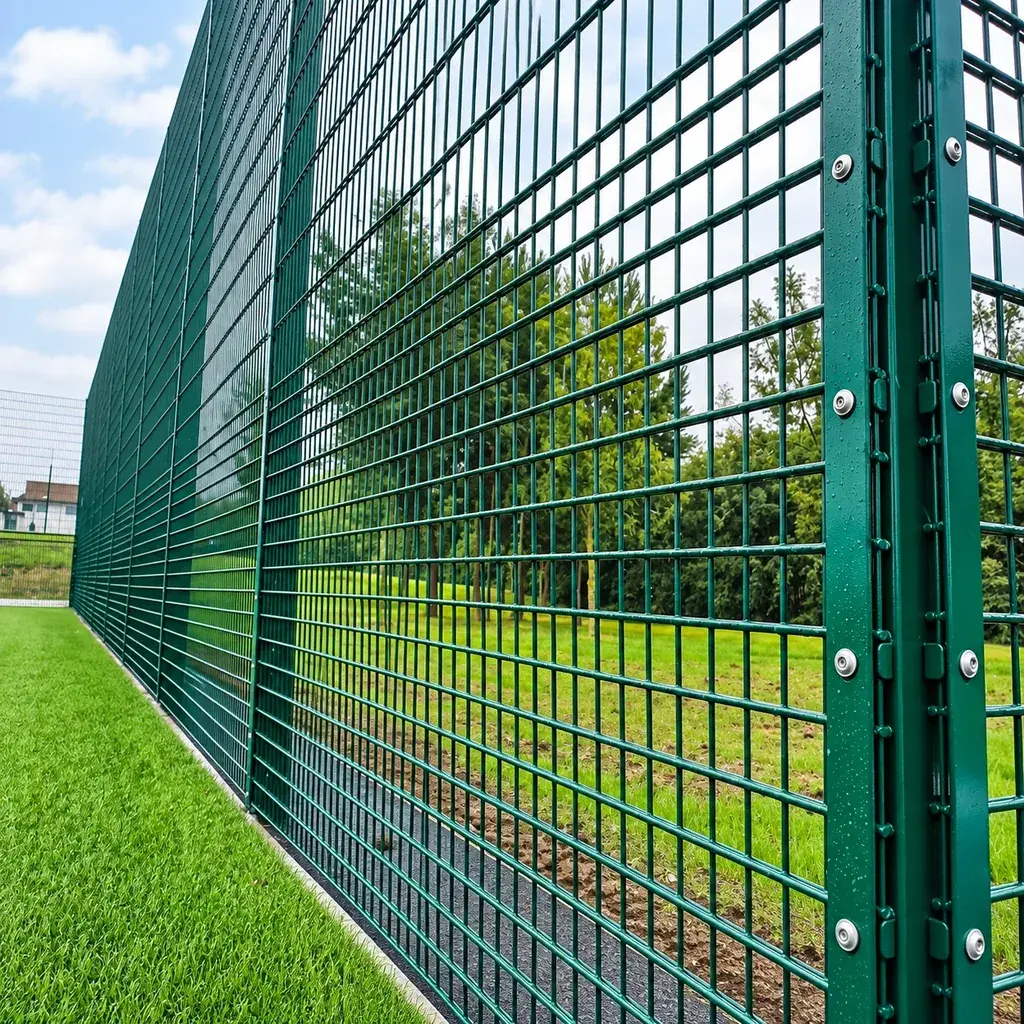
Double Wire Sports Fencing
Twin-wire panel assemblies for sports boundaries.
View productSports boundaries are selected around the games played and the way the fence is used. Start with ball retention and contact areas, then coordinate panel construction, supporting posts and access.
THE FENCINGWISE RANGE
3 products
Sports fencing
Twin-wire panel assemblies for sports boundaries.
View productTry a broader term or clear the filters to see the full range.
| Product | Main specification focus |
|---|---|
| Double wire sports fencing | Twin-wire panels, post connections and the defined court assembly |
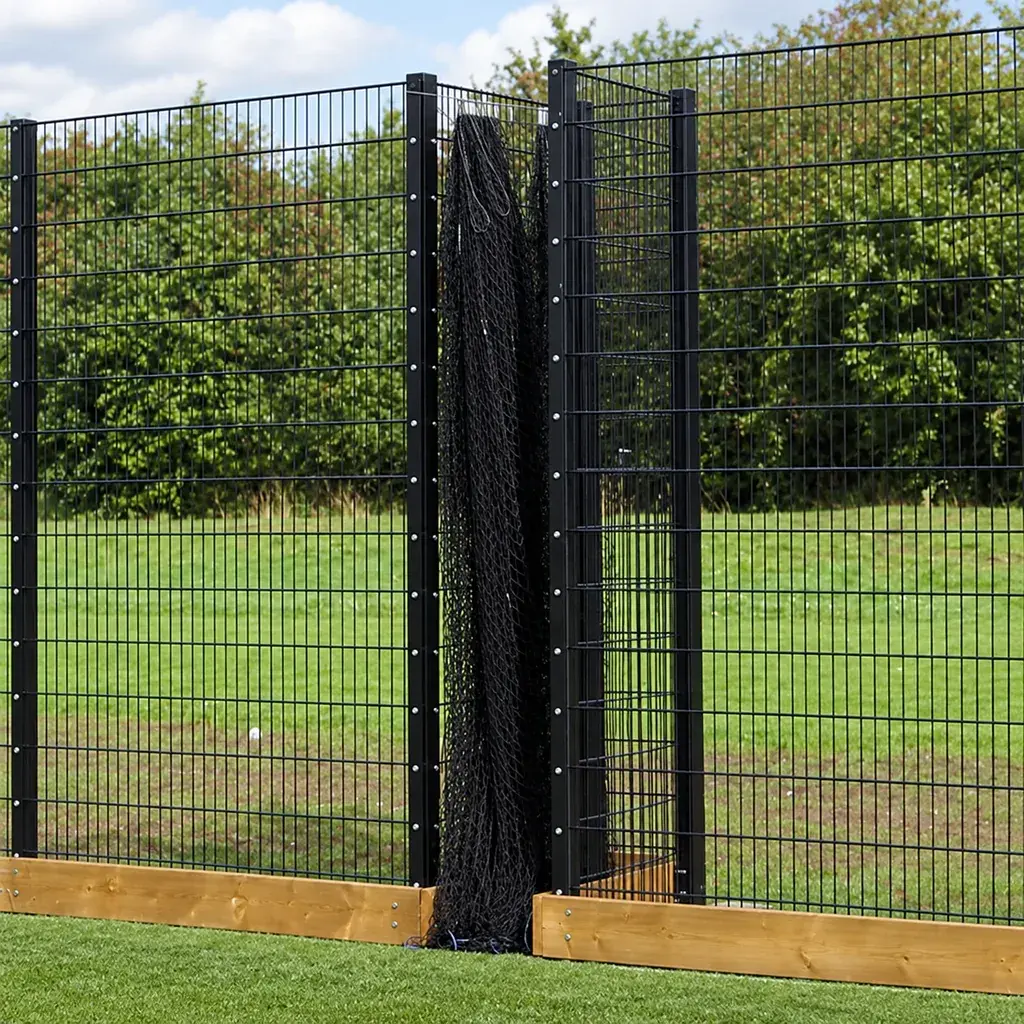
| Rebound sports fencing | The lower contact zone, its construction and connection to the upper boundary |
Neither a wire designation nor a heavier-looking panel establishes a tested impact or noise result. Where those properties are required, request applicable evidence for the proposed assembly.
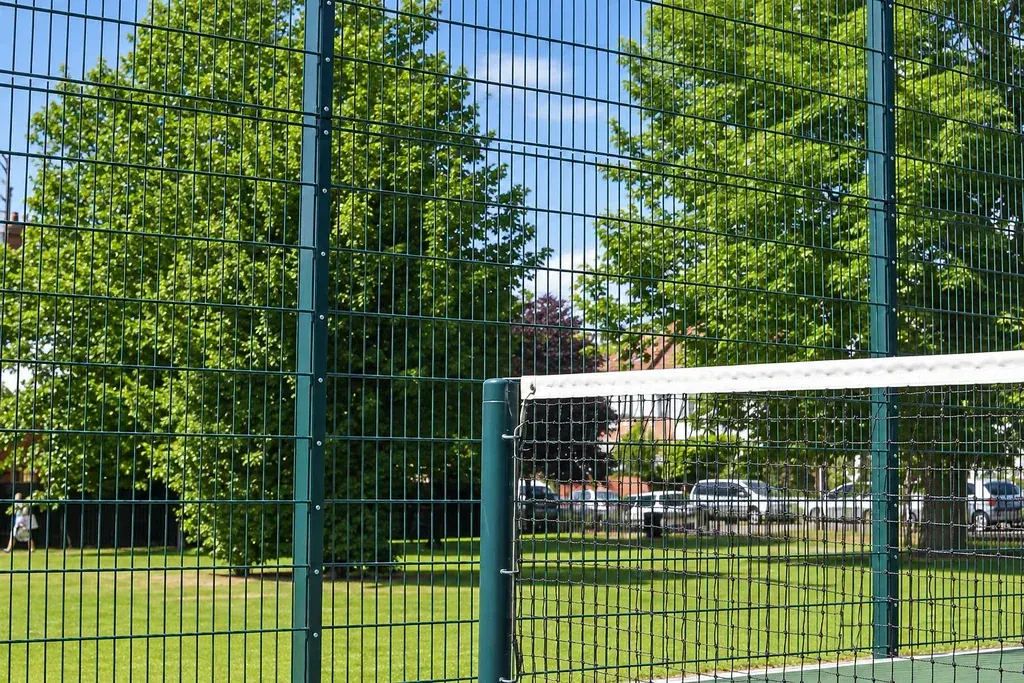
A football pitch needs particular attention around goal ends and equipment access. A tennis court requires the mesh and edge openings to be assessed for the ball being retained. A MUGA combines requirements from more than one game.
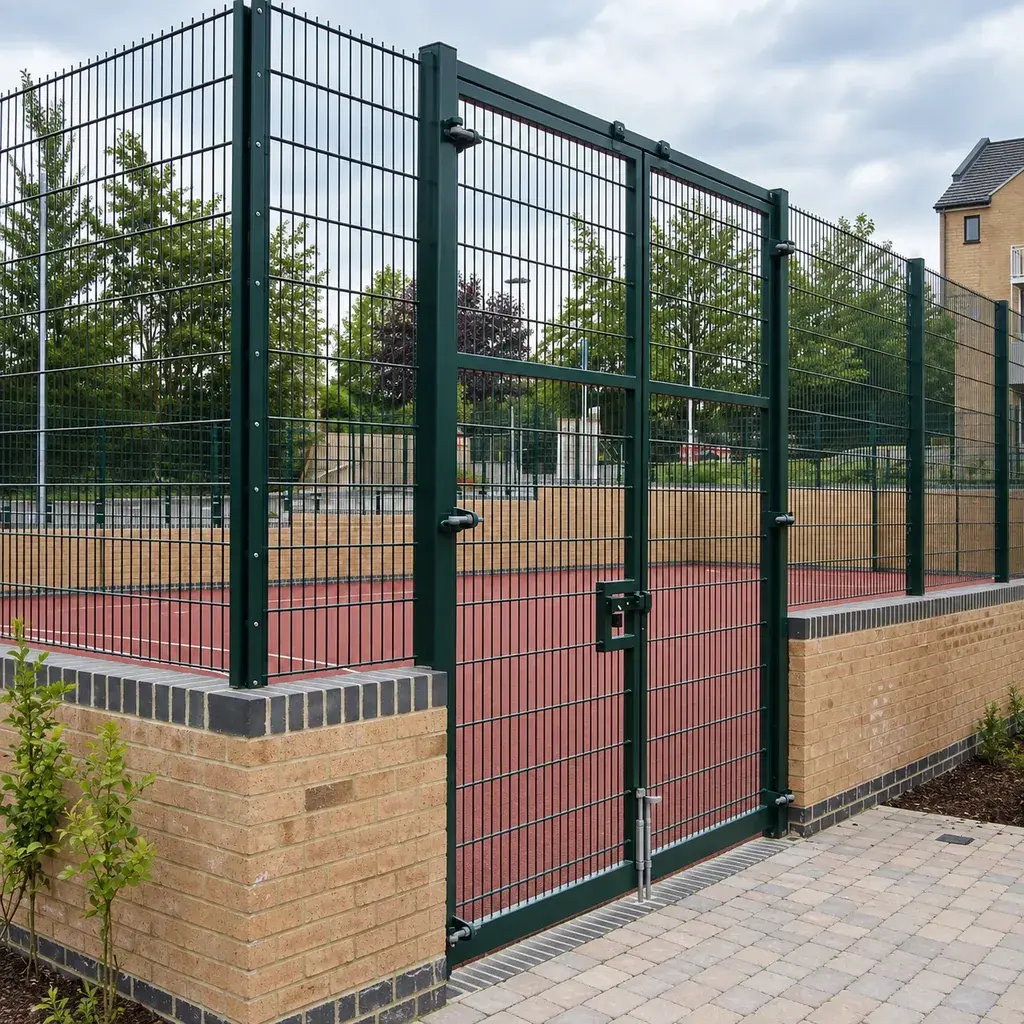
Include gates in the enclosure review. Gaps around a leaf or below a panel can matter even when the principal mesh has been selected correctly.
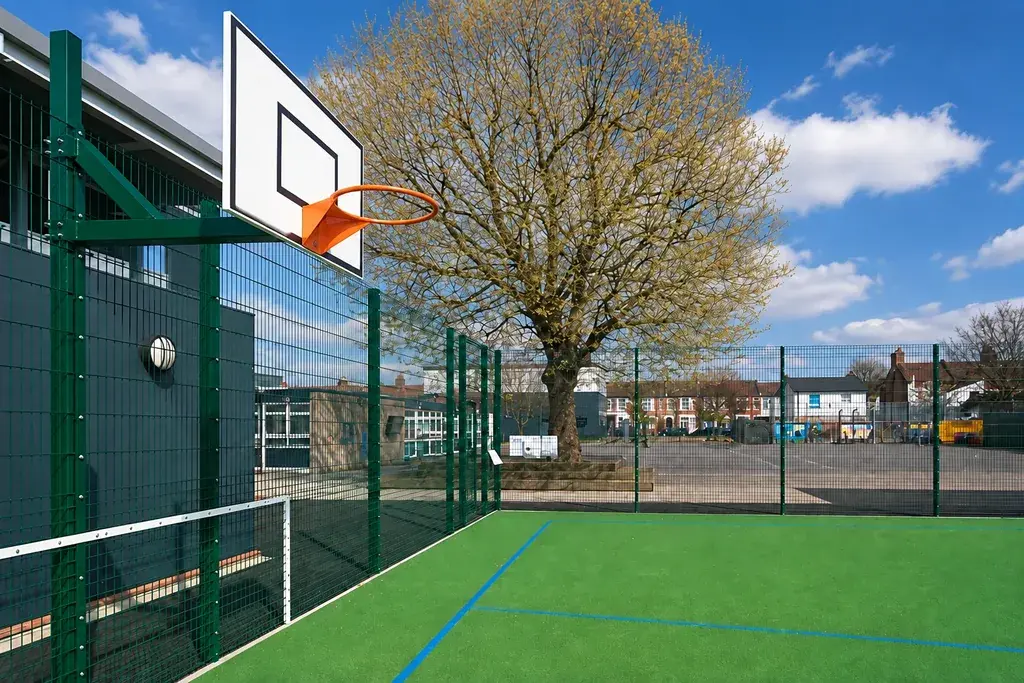
Record screens, signs, lighting and sports equipment that will attach to the fence. Those additions need their interfaces and loading requirements considered before the posts and foundations are specified.
An enquiry should include panels by height, posts, connection sets, gates and finish. Keep special zones identified in the packing schedule so installers can distinguish them from regular boundary panels.
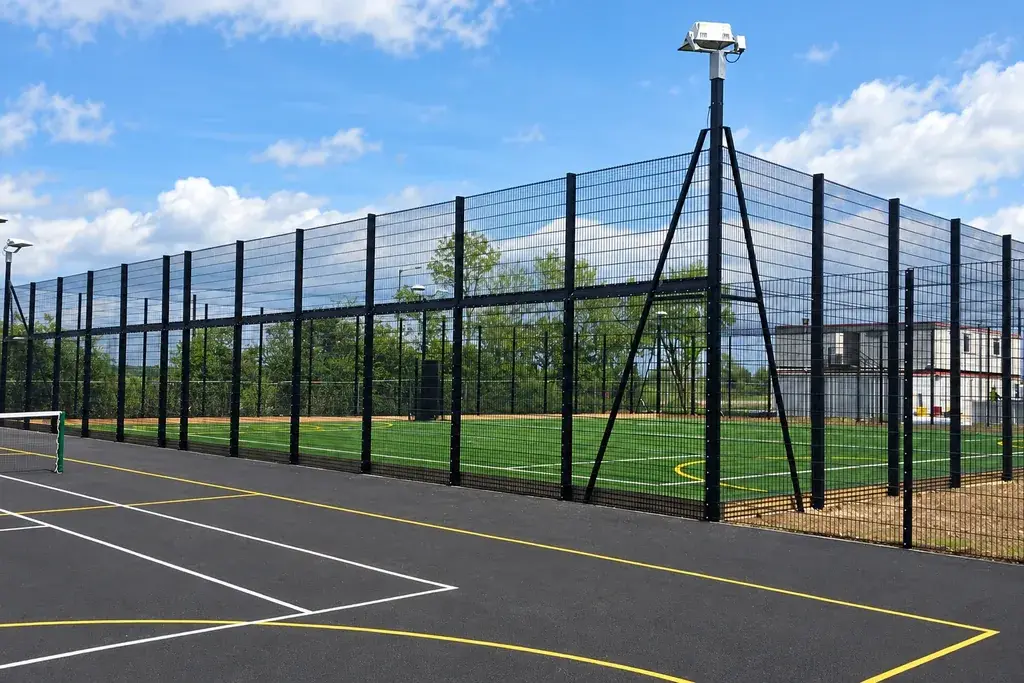
Send the playing layout, games, height zones and gate openings. Identify the required ball-retention, impact and acoustic criteria.
Request a Quote