
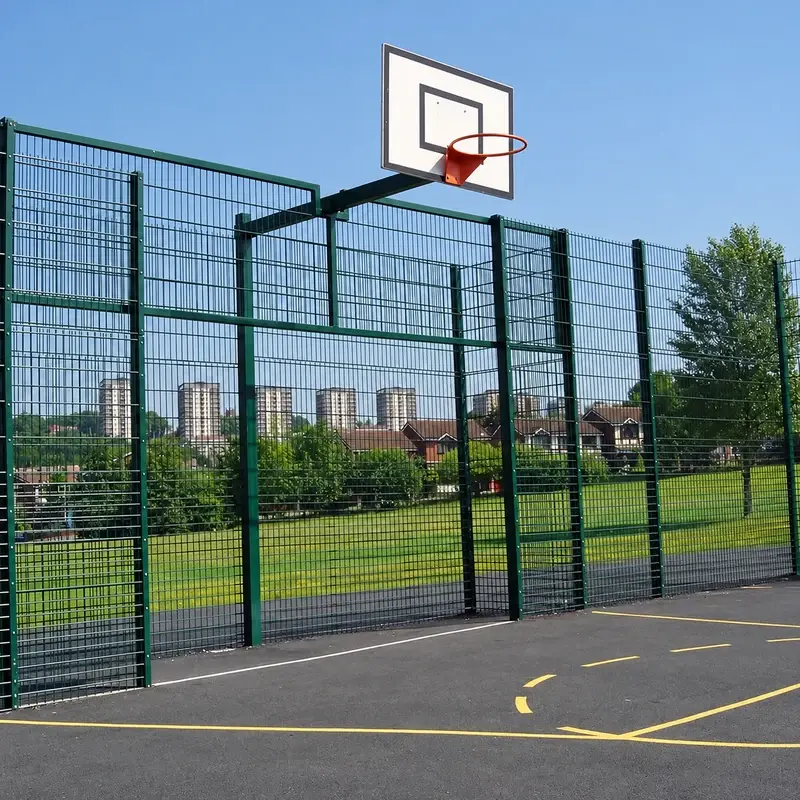
Choose the opening for the ball and use
A net selected for a large ball should not be assumed to retain a smaller ball. Define all sports played on the site, including informal use, before selecting mesh opening and cord construction. Consider how a ball deforms the net on impact as well as its nominal diameter.
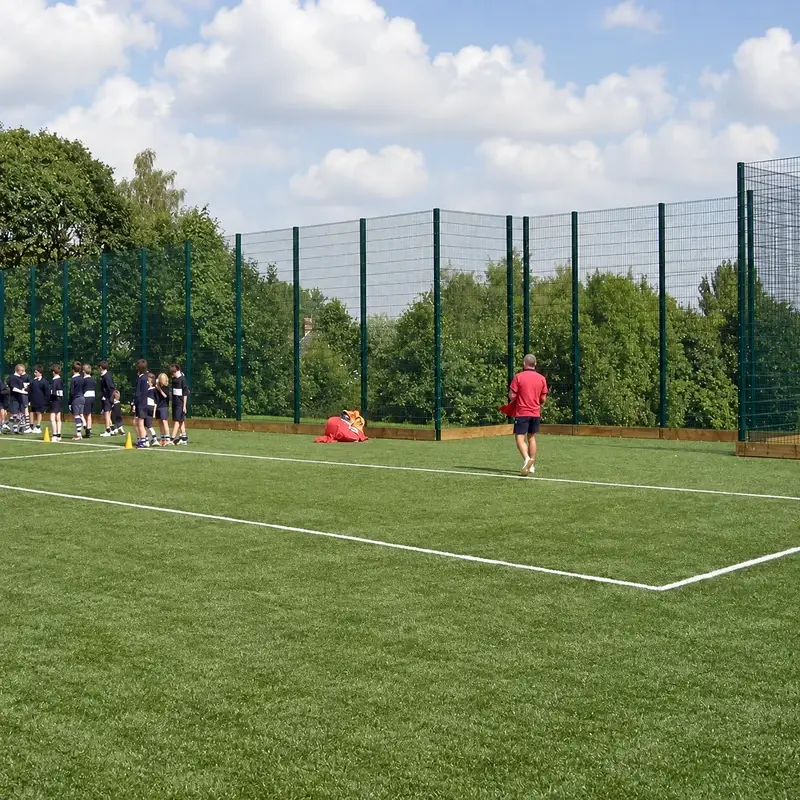
The net is not a rebound surface or a pedestrian security barrier. Where players regularly contact the boundary, coordinate it with a suitable lower fence and the required separation from posts and other hard components.
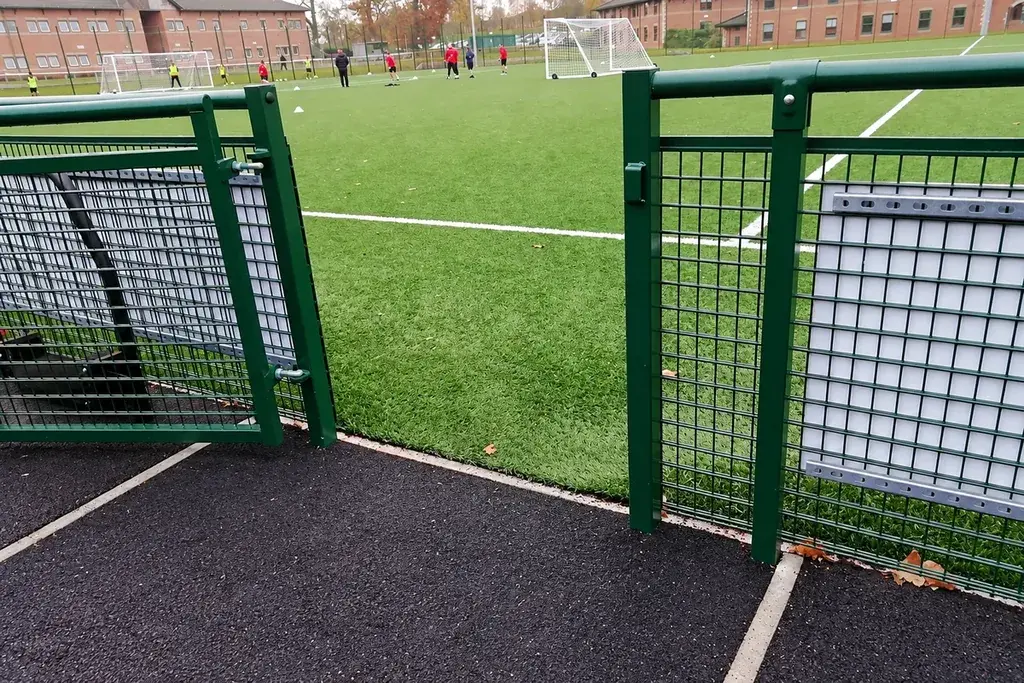
Order netting and supports together
| Part | Function in the assembly |
|---|---|
| Net panel | Retains the specified ball within the designed envelope |
| Edge and suspension system | Transfers loads without damaging the net edge |
| Support and straining posts | Carry the designed span and tension |
| Lower fence interface | Maintains the intended containment at the transition |
Overall net height, support spacing and tension must come from the design. Extending an existing fence post or attaching a new net to it requires a check of the post and foundation, including wind and other applicable loads.
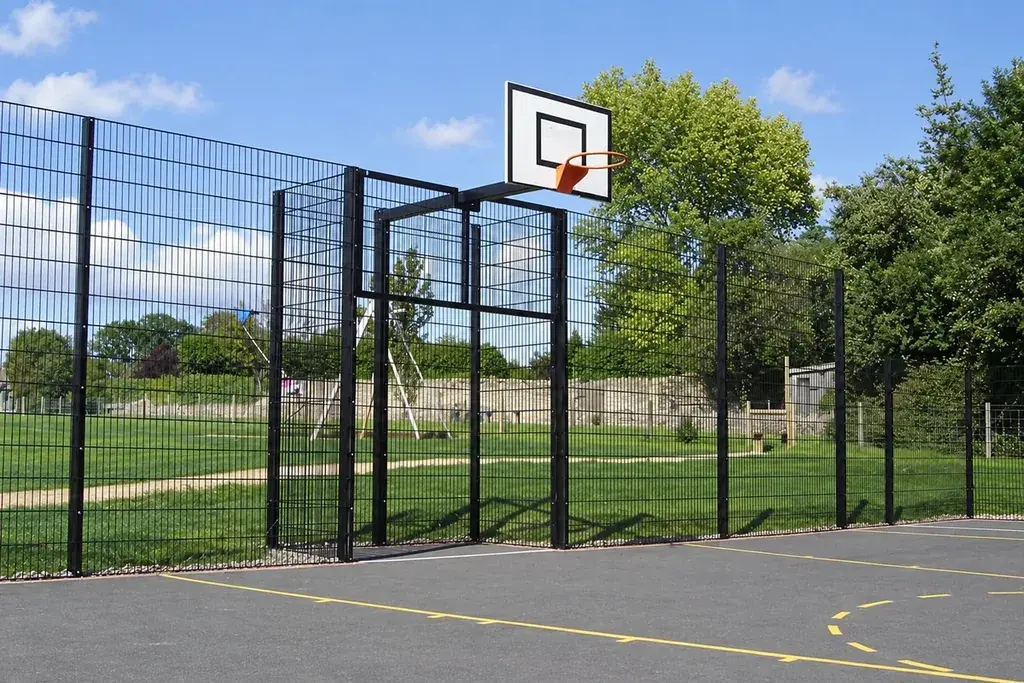
Plan how the net will be serviced
Specify access for inspecting edges, attachments and worn areas. Where a lowering arrangement is proposed, include its hardware, operating instructions and authorised method in the package. Do not assume a net can be safely removed by releasing an arbitrary fixing.
For replacement orders, retain the finished dimensions, opening, edge treatment and attachment spacing. A roll of netting with the same mesh size may still need different fabrication to fit the installed support system.
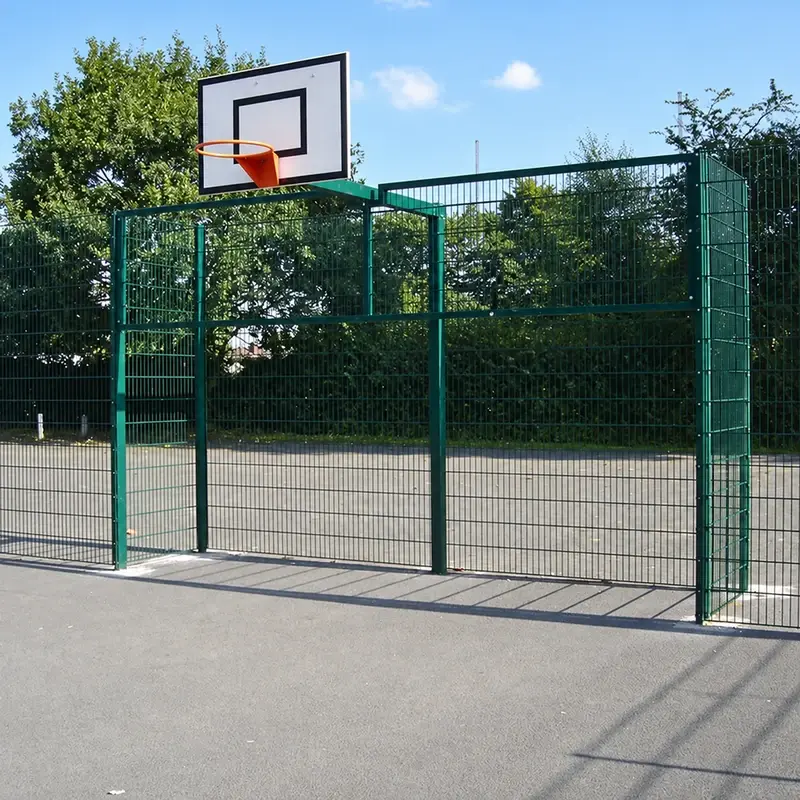
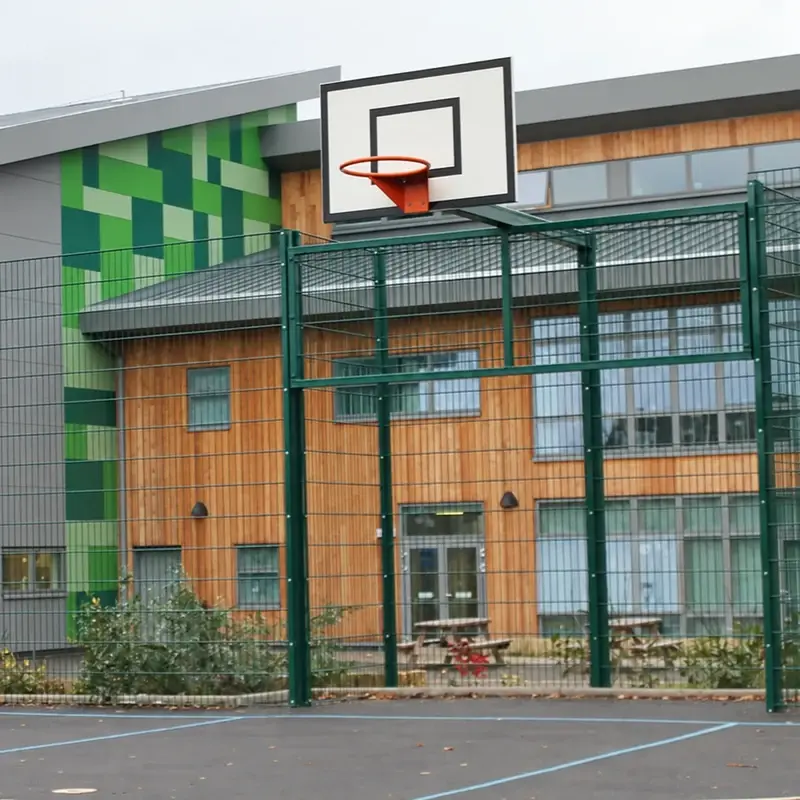
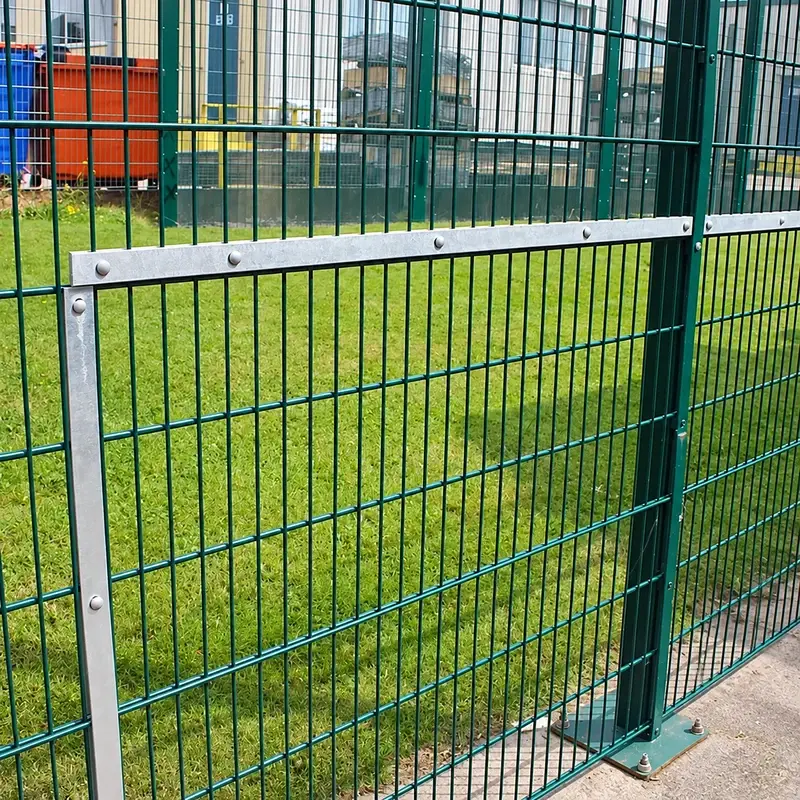
Compare the lower enclosure with double-wire sports fencing and rebound mesh fencing.