
Custom Fence Gates for People & Vehicles
We fabricate custom fence gates around the passage required, the available movement space and the adjoining fence. Choose pedestrian or vehicle access, then compare swing, tracked sliding and cantilever arrangements. The manufacturing enquiry brings the leaf, infill, posts, finish and hardware together; supplied equipment and separately sourced components are identified in the quotation.
THE FENCINGWISE RANGE
Find the right products
6 products
Fence gates
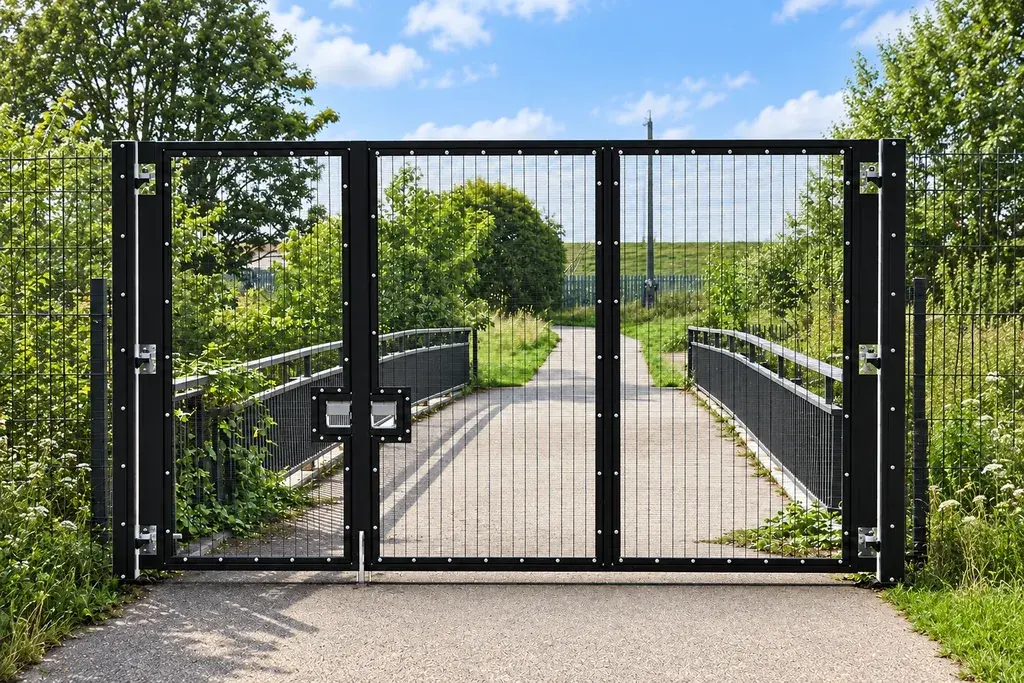
Custom 358 Mesh Vehicle Gates
358 mesh infill for coordinated vehicle entrances.
View product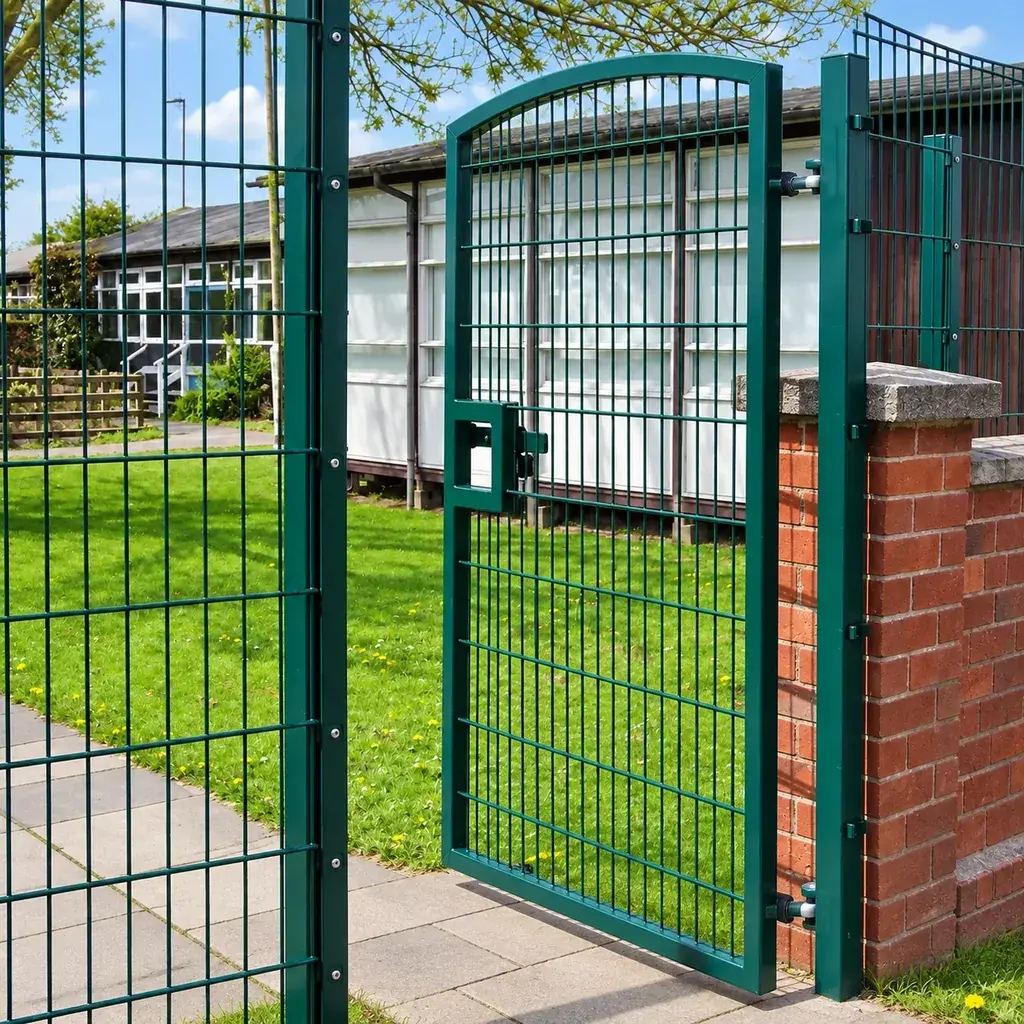
Fence gates
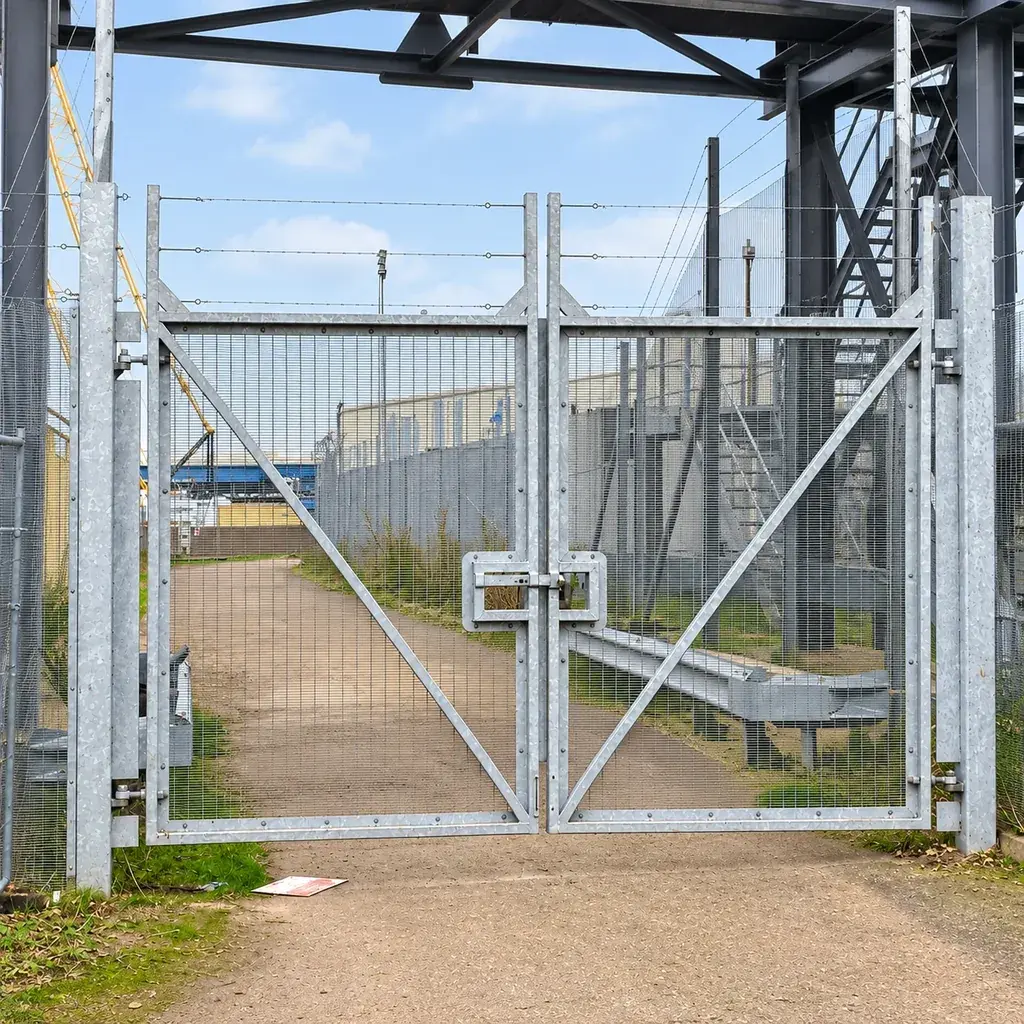
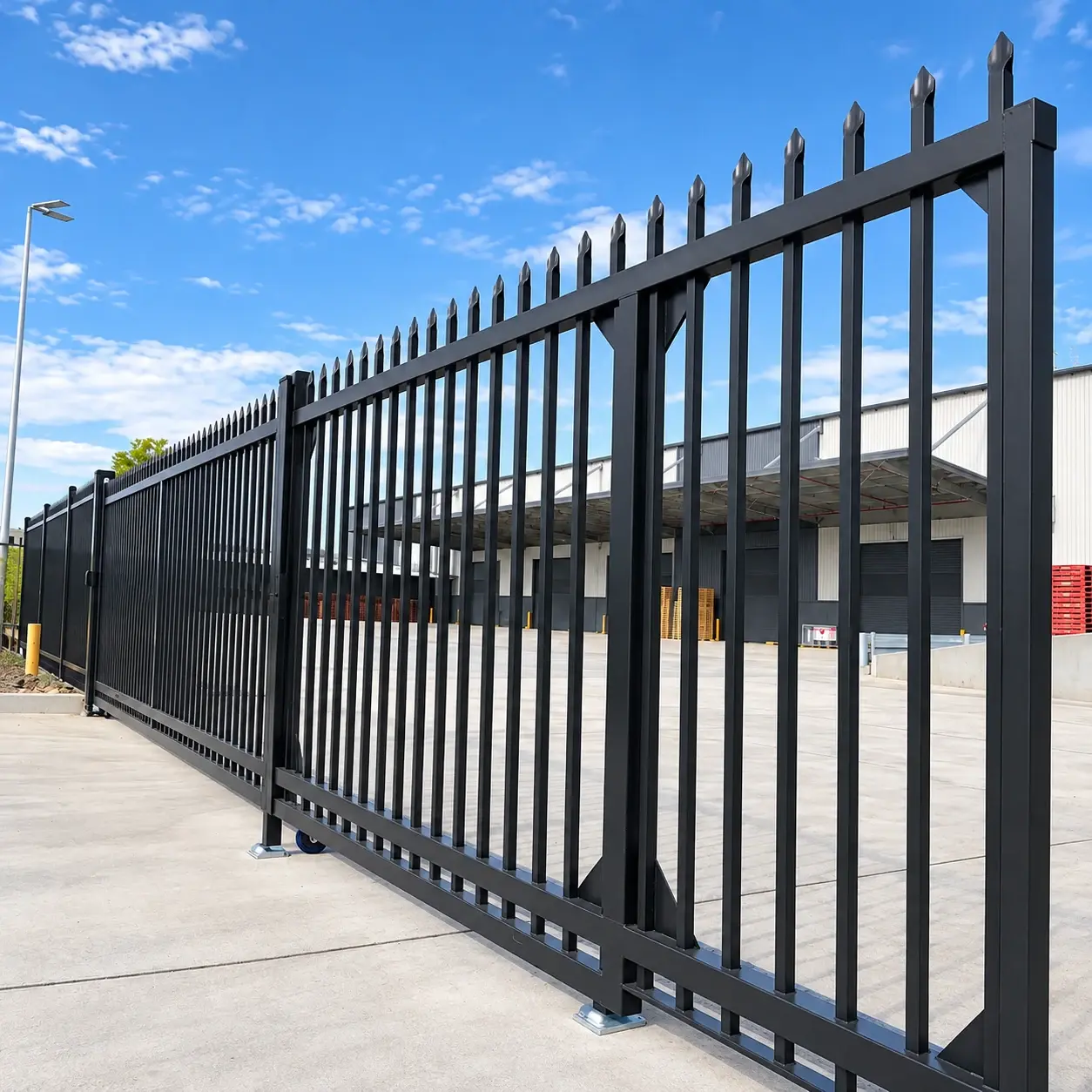
Custom Tracked Sliding Gates
A sideways-moving leaf supported on a ground track.
View product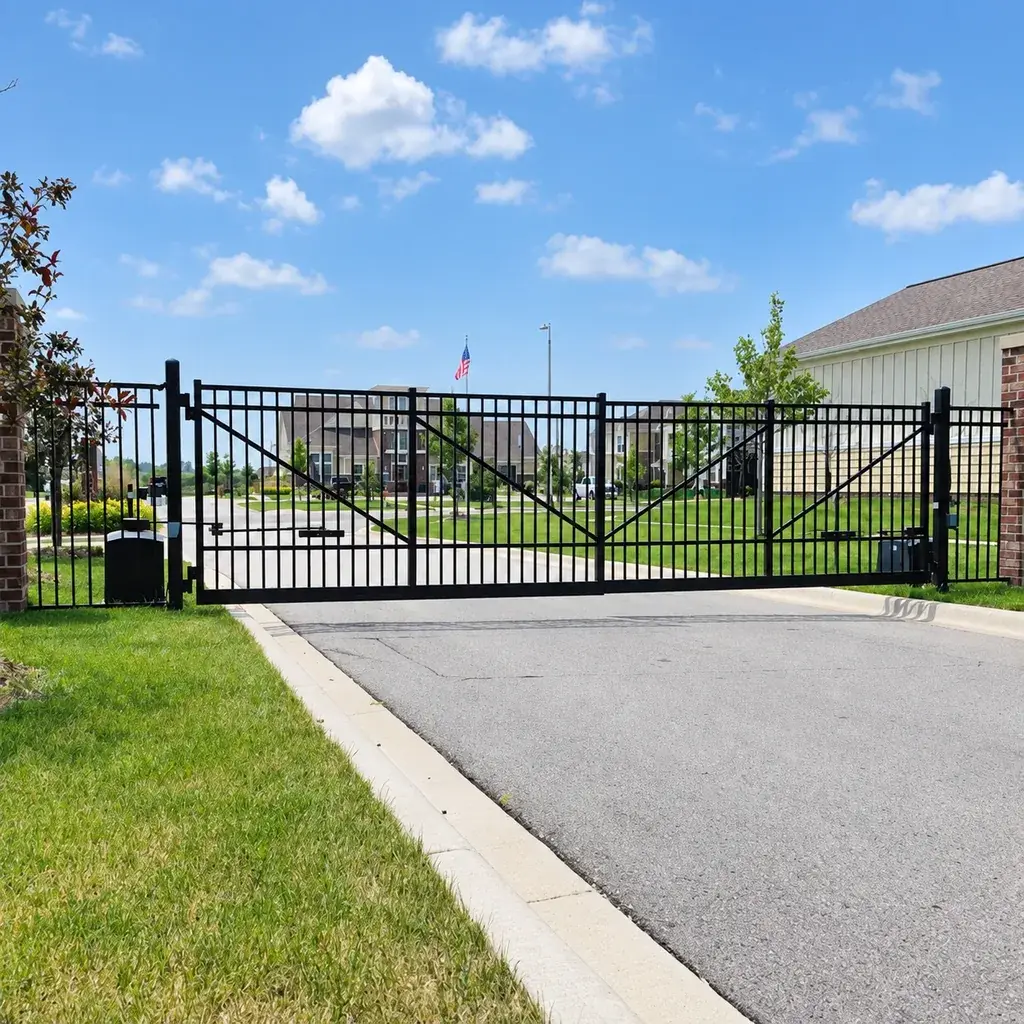
Fence gates
Custom Cantilever Sliding Gates
A supported gate tail leaves the opening free of a ground track.
View product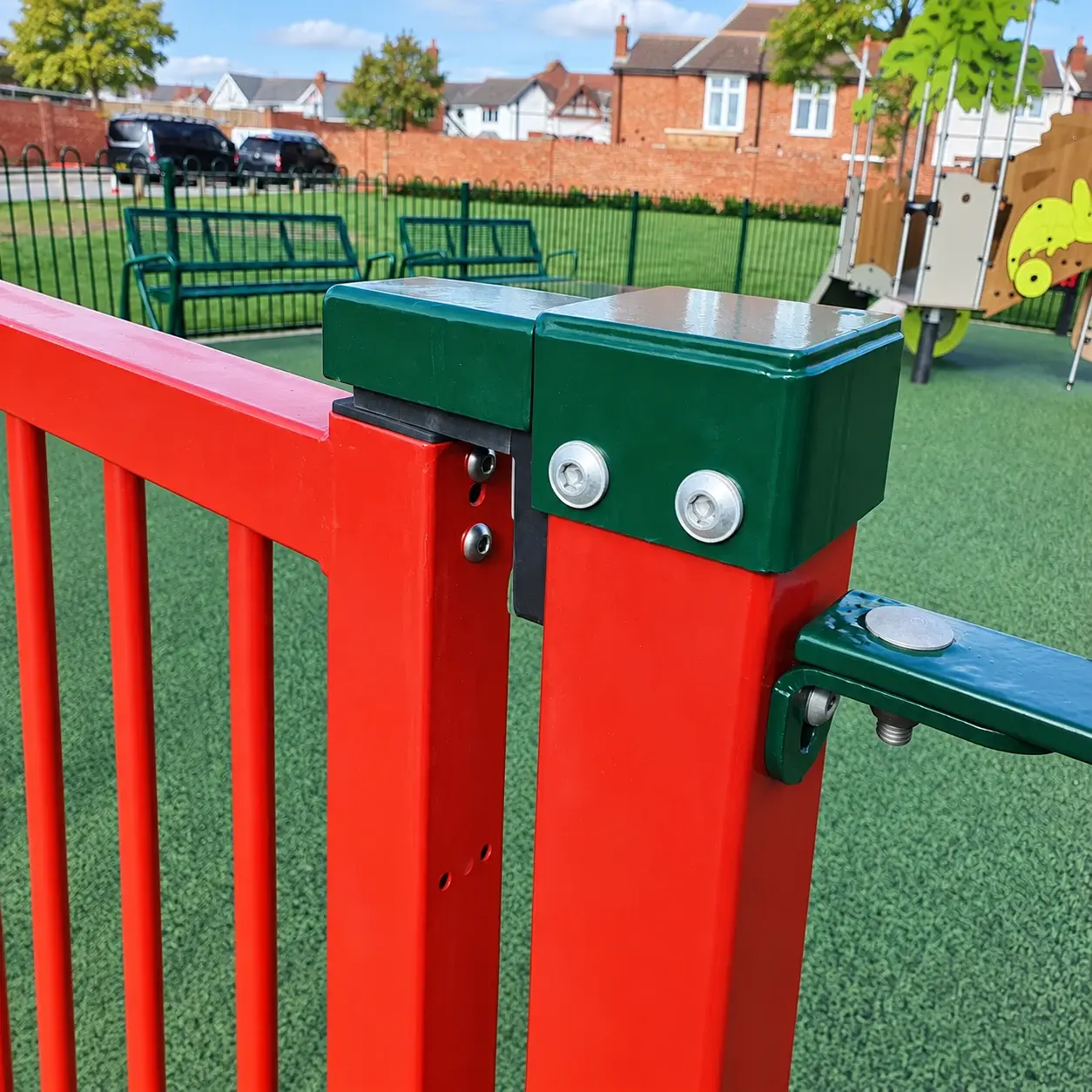
Fence gates
Custom Self-Closing Playground Gates
A gate and closer coordinated for pedestrian access.
View productNo matches found
Try a broader term or clear the filters to see the full range.
Choose the access duty, then the gate family
| Gate family | When to investigate it | Key quotation input |
|---|---|---|
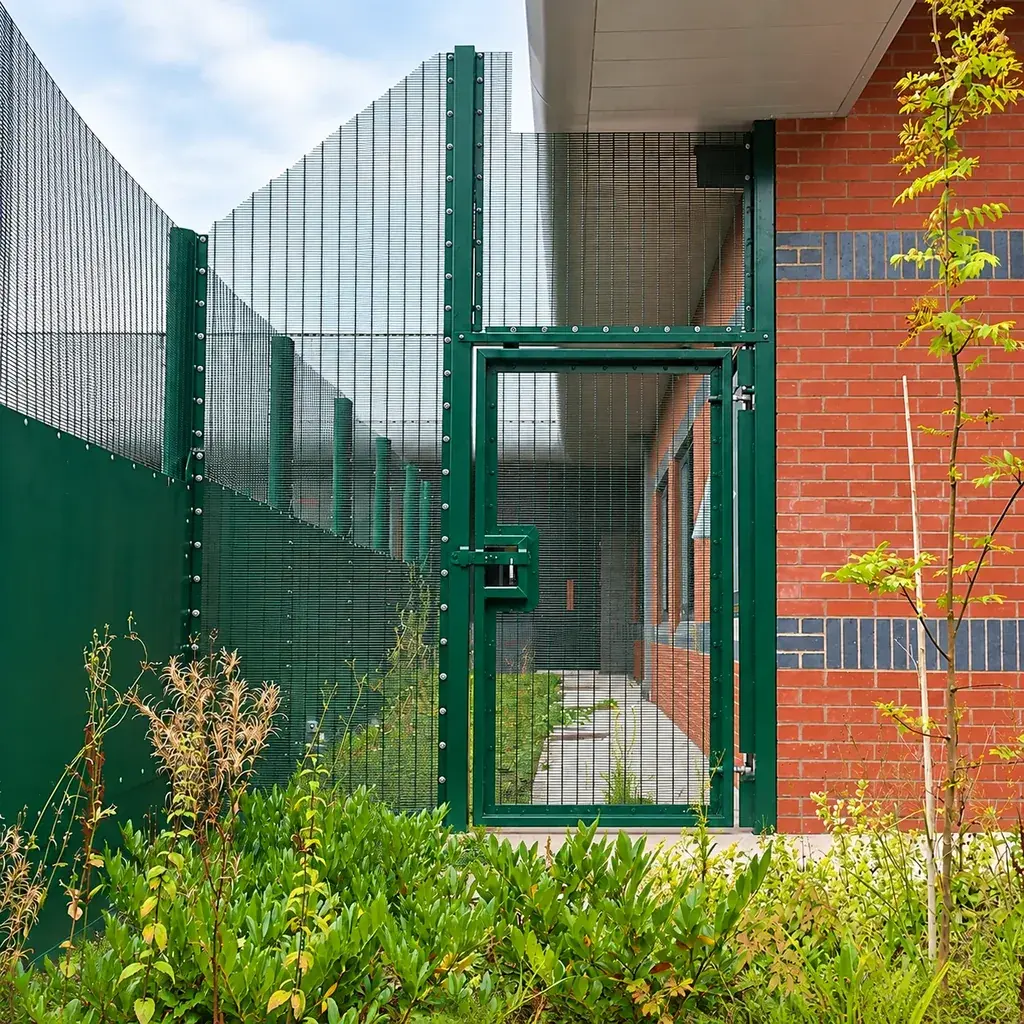
| 358 pedestrian gates | A framed pedestrian opening within a close-mesh boundary | Clear passage, handing, approach and locking arrangement |
| 358 vehicle gates | A vehicle entrance coordinated with the security-mesh line | Individual leaves, movement space and gate-post interfaces |
| Double-wire mesh gates | An entrance matching a twin-wire panel system | Infill arrangement, frame attachment and adjacent panel fixings |
| Tracked sliding gates | A sideways-moving leaf with a suitable ground-running route | Track profile, full travel envelope and surface levels |
| Cantilever sliding gates | A sliding arrangement without a running track across the passage | Complete leaf and tail, carriages, side space and support design |
| Self-closing playground gates | A pedestrian assembly with an assessed closing arrangement | Leaf, closer, latch, stops and finished entrance conditions |
Mesh family and movement type are separate choices. A close-mesh appearance does not determine whether the entrance should swing or slide. Agricultural mesh and rail gates have their own stock-handling and hardware requirements in farm gates and hardware.
Compare the movement envelope before the frame
A swing gate needs space through the leaf’s arc. A paired arrangement divides that moving span but adds a meeting edge and a secondary-leaf arrangement. Unequal leaves can serve different access patterns, such as a frequently used smaller opening and occasional wider access, provided the accepted layout identifies how they operate together.
Both sliding types need space beside the opening. A tracked gate follows its ground-running route; a cantilever gate includes a supported tail beyond the opening section. That tail is part of the fabrication and travel envelope. Show walls, returns and equipment on the same plan so the chosen mechanism fits the actual entrance. The tracked versus cantilever guide develops the support comparison.
Separate usable passage, leaf size and overall width
The required opening is the unobstructed space available in the specified open position. The fabricated leaf is the moving component. Post spacing and the outside-to-outside assembly width describe other reference points. Hinges, receivers and the open leaf can change their relationship, so a nominal gate name is insufficient for a replacement or a tight entrance.
For a new entrance, start with the passage requirement and show the available overall envelope. For retained posts, give measured faces, hardware positions and ground levels as fixed constraints. Our clear-opening guide explains the geometry; the fabrication drawing should return each dimension with its measurement points.
Build an identified hardware package
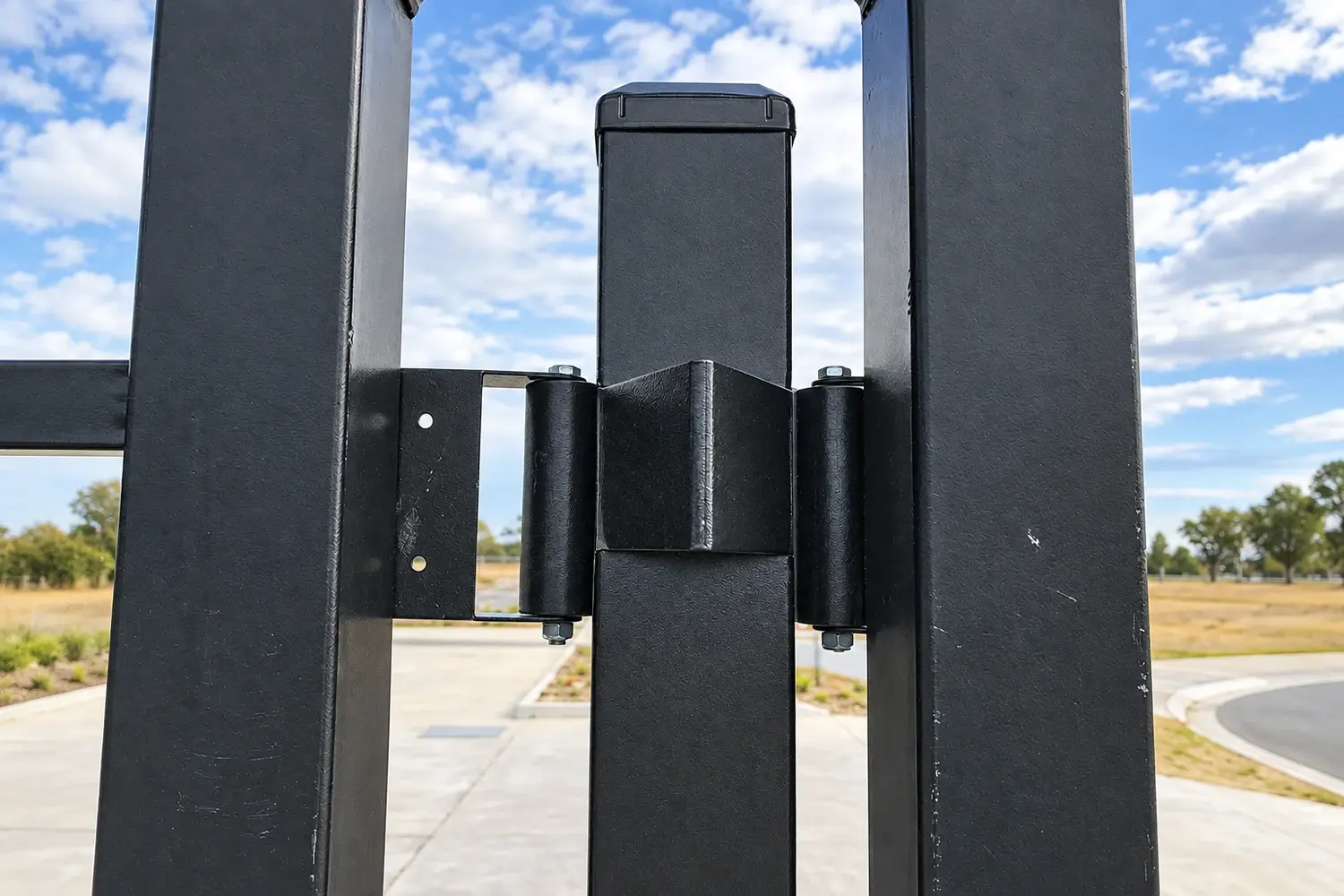
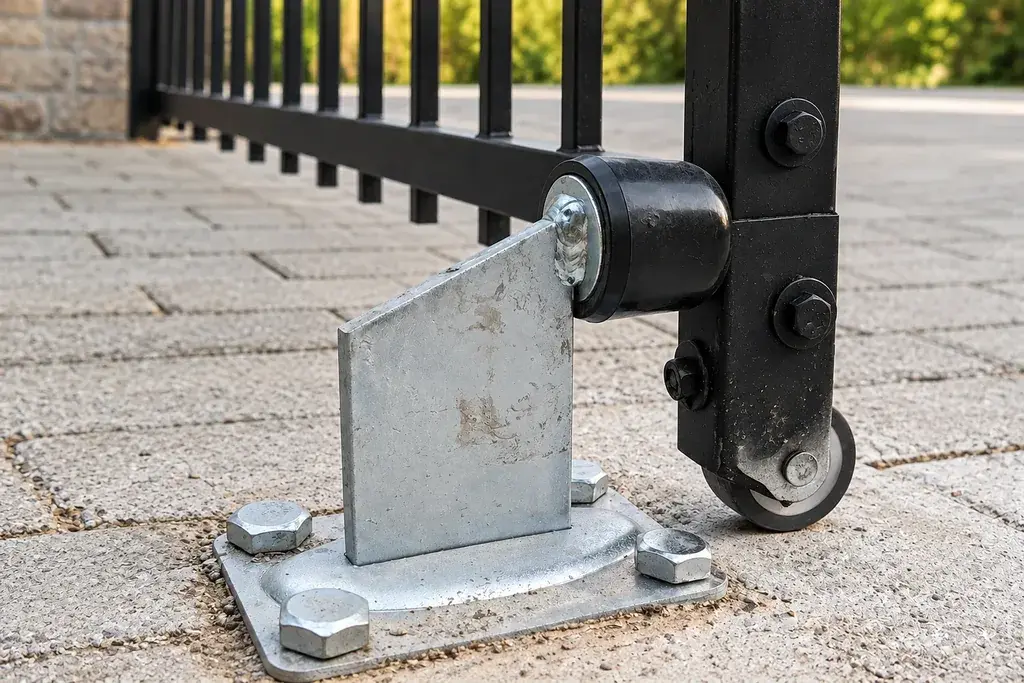
A swing gate may need hinges, a latch or lock, receivers, stops and secondary-leaf retention. A tracked gate uses a matched wheel and track arrangement plus guidance and end-position components. A cantilever design uses a carrying beam and carriages with its own guides and receivers. These are different bills of materials, even when all gates use the same mesh infill.
Buyer-supplied locks, closers or access-control devices need their mounting information before the frame is released. Itemising those interfaces avoids later holes, welded tabs or finish repairs caused by a hardware change. Keep mechanical supply, civil works, electrical integration and any powered-system assessment and commissioning as identifiable scopes.
Custom options that affect the finished gate
| Order field | Options to describe | Why it matters |
|---|---|---|
| Leaf arrangement | Single, equal pair, unequal pair or identified sliding construction | Changes moving dimensions, meeting details and hardware quantities |
| Frame and infill | Frame sections, mesh family, pattern, edge and attachment method | Controls fabrication, appearance and the interfaces presented to fittings |
| Posts and mounting | Retained or new posts, approved embedment or base interface, adjoining panels | Defines where the gate and fixed fence connect |
| Finish and equipment | Protective system, colour, lock positions and supplied-equipment references | Connects appearance approval to the actual manufactured assembly |
We review these fields as a coordinated proposal. A change from open mesh to more closed infill changes the assembly presented to the supports and operating equipment; it should be described in the gate design, not treated as a colour-only variation.
Published sizes as quotation references
The following examples come from the Betafence Robusta-Nylofor manufacturer tables. They help distinguish dimension fields; they are not a FencingWise stock range or a promise of supplied passage.
| Reference group | Selected published dimensions | Dimension to define in your enquiry |
|---|---|---|
| Single swing gate | Nominal widths of 1000, 1200 and 1500 mm; selected heights of 1530 and 2030 mm | Required clear passage and the available outer envelope |
| Paired swing gate | Nominal widths of 3000, 4000 and 5000 mm | Each leaf, meeting arrangement, hinge interfaces and clear passage |
For example, that catalogue lists a nominal 1000 mm single gate with 985 mm free passage and 1145 mm overall width. The different values show why an order needs named reference points. Sliding and cantilever leaves require their own movement drawings rather than extrapolation from a swing-gate table.
Specify protection around fabricated joints and fittings
For steel frames, state the metallic protection and any powder-coated finish, including the colour reference and visible surface expectations. The production route matters at welds, edges, holes and hollow sections. A finished colour sample can settle appearance, while material and coating records identify the protection system underneath.
Hinges, locks, wheels, carriages and fasteners may use separate materials and finishes. Keep their supplier references with the gate record so a later repair can match function and fit. Avoid covering working interfaces with an unspecified coating allowance; the finished assembly, including hardware mounting faces, is the fit-check reference.
Give special mechanisms their own interface review
A cantilever tail and carriage arrangement cannot be selected from the opening width alone. A self-closing gate similarly needs a closer suited to the actual leaf and hardware. These mechanisms add specific component and support requirements. Their product pages set out the information needed for a focused enquiry, while the project’s responsible specialists establish the complete operating arrangement.
Where future automation is planned, identify the intended equipment and its mechanical provisions early. A mechanical gate quotation can list those interfaces without implying that an operator, controls, protective equipment or commissioning services are included.
What changes a custom gate quotation?
Span, height, frame construction and infill affect fabrication and handling. The number of leaves changes hinges, locks, meeting details and assembly work. Sliding systems introduce running hardware; cantilever systems also include the carrying arrangement and tail. Special mounting plates, closer preparation and contrasting finishes add their own operations.
Compare an opening-by-opening schedule rather than a price per leaf. List gate posts, hardware, factory preparation, finish and packing, then identify civil and installation work separately. Reusing an existing component saves cost only when it fits the accepted arrangement; otherwise the quotation needs the adapter or replacement that completes the package.
Check the finished assembly and preserve its identity
Inspection should connect leaf dimensions, squareness, infill attachment, weld observations and coating condition to the approved drawing. Review representative hardware fit where included in the inspection scope. A workshop dimensional check supports manufacturing acceptance; site commissioning evaluates the gate in its actual entrance.
Label each leaf, post set and hardware pack by opening reference and handing. Protect finished faces and projecting fittings during transport, with small components accounted for in the packing list. Similar-looking gates can use different locks or leaf proportions, so location identity prevents an otherwise complete shipment from becoming a mismatched installation.
Custom fence gate questions
Should I order by clear opening or leaf width?
Begin with required usable passage and mark any fixed site dimensions. The approved drawing then defines the leaf, posts and hardware allowances. Use leaf width alone only when reproducing an already defined compatible component.
Can a double gate have unequal leaves?
Include the preferred active leaf and the wider occasional opening in the enquiry. The proposed drawing must show their individual widths, meeting detail and retention hardware rather than assume an equal division.
Can our lock or access-control equipment be fitted?
Provide its drawings, mounting positions and interface requirements before fabrication. The quotation can identify preparation work and buyer-supplied items, while electrical integration remains a separately defined package.
Is a tracked gate always cheaper than a cantilever gate?
No universal comparison is reliable. Include the running or carrying assembly, supporting works, available side space and maintenance access. The suitable ground and support arrangement can change the total project cost.
Can we request the mechanical gate without an operator?
State that scope explicitly, including any known future mounting provisions. The offer should list the leaf, supports and hardware supplied. Later powered operation requires review of the complete system rather than simply adding a motor to an unidentified gate.
Send the entrance schedule and gate drawings, including opening references, dimensions, movement direction, infill and hardware requirements. We use that package to distinguish repeated assemblies from openings needing an individual fabrication detail.
Start the gate schedule with clear openings.
List each opening's width, height, users and operating direction. Add infill, posts, hardware and ground levels so the gate package can be reviewed as an assembly.
Request a Custom Quote