
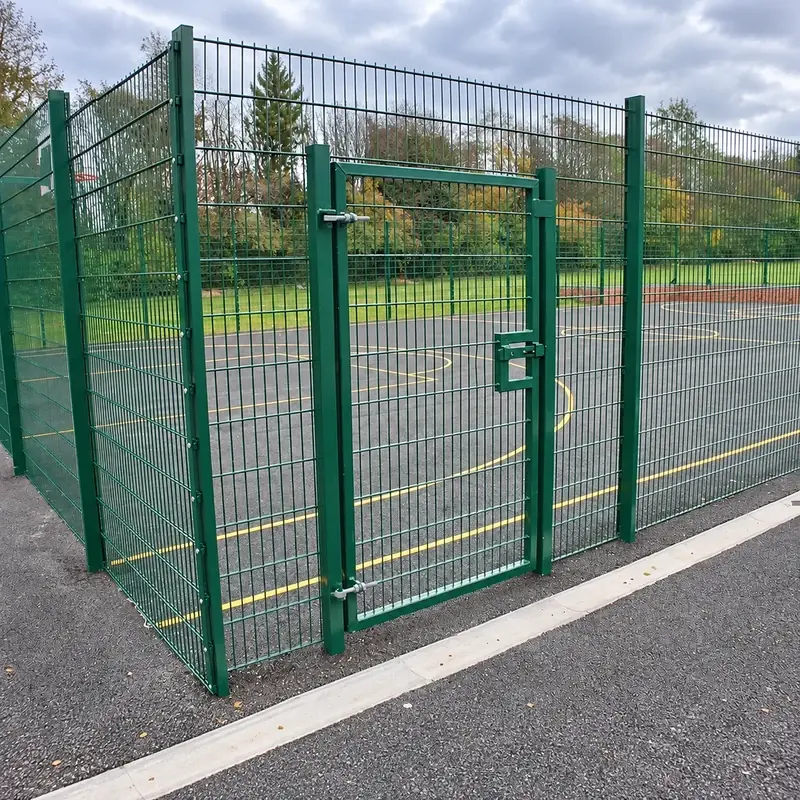
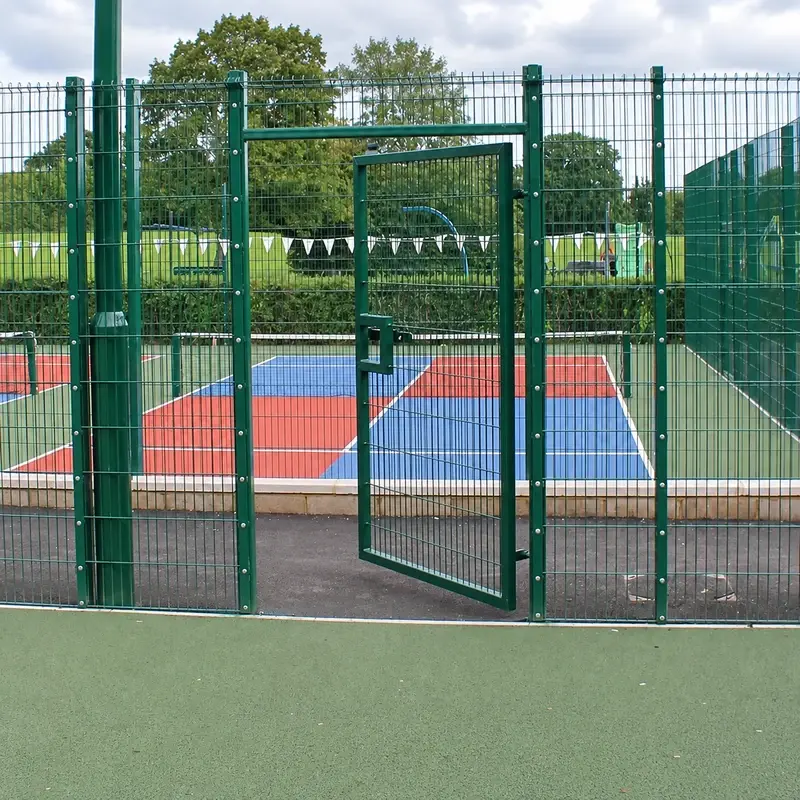
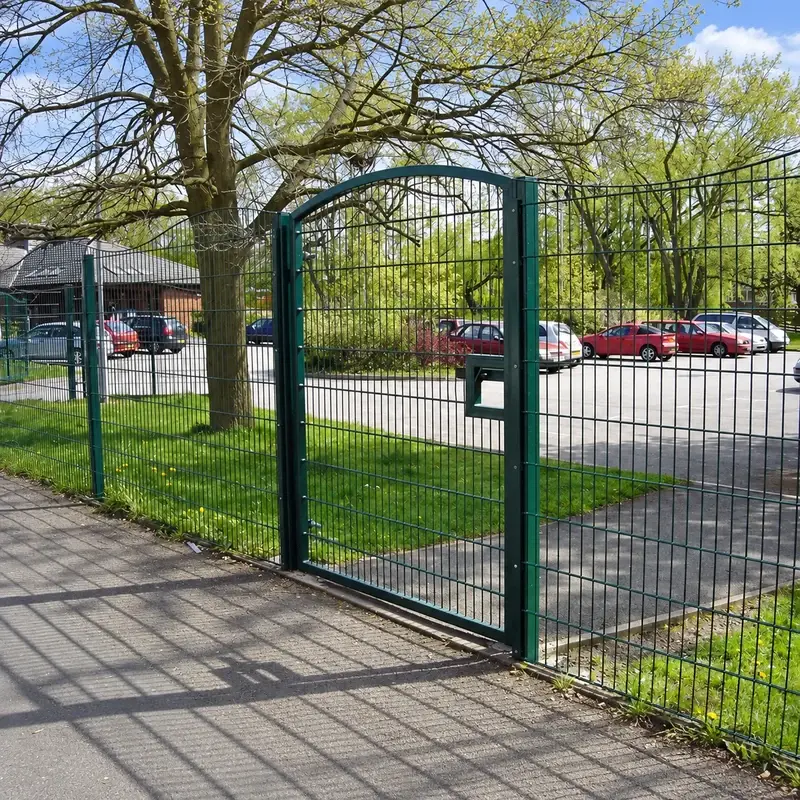
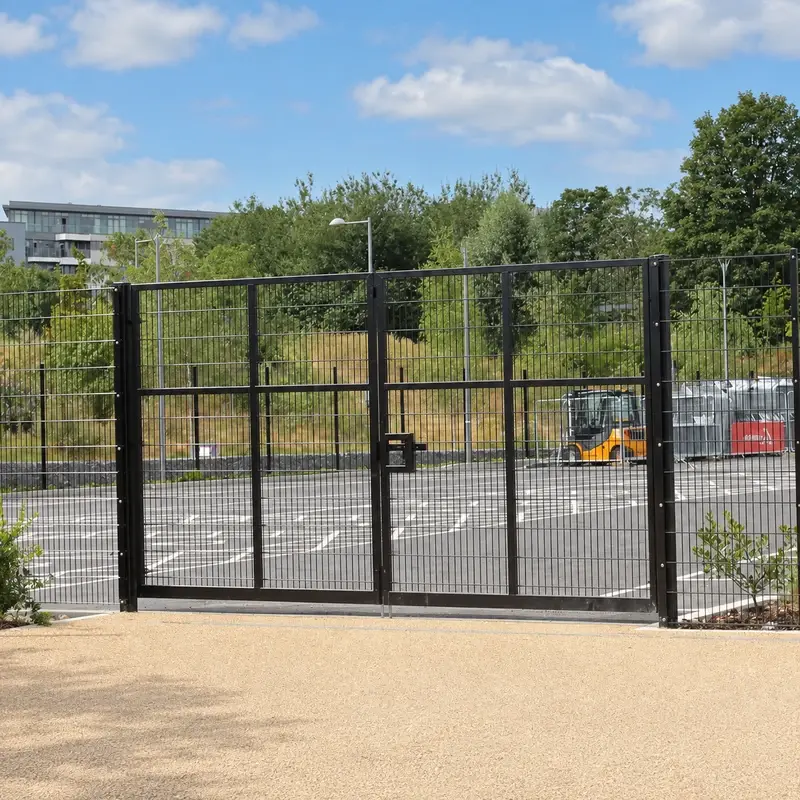
656 and 868 describe the infill
656 panels use nominal 6/5/6 mm wires; 868 panels use nominal 8/6/8 mm wires. The gate specification also needs the mesh spacing, edge detail and attachment to the frame.
A mesh cut to fit inside a frame differs from one fixed across its face. Identify which arrangement is required and where exposed wire ends finish. Matching the mesh name without this detail can leave the gate looking or fitting differently from the adjoining panels.
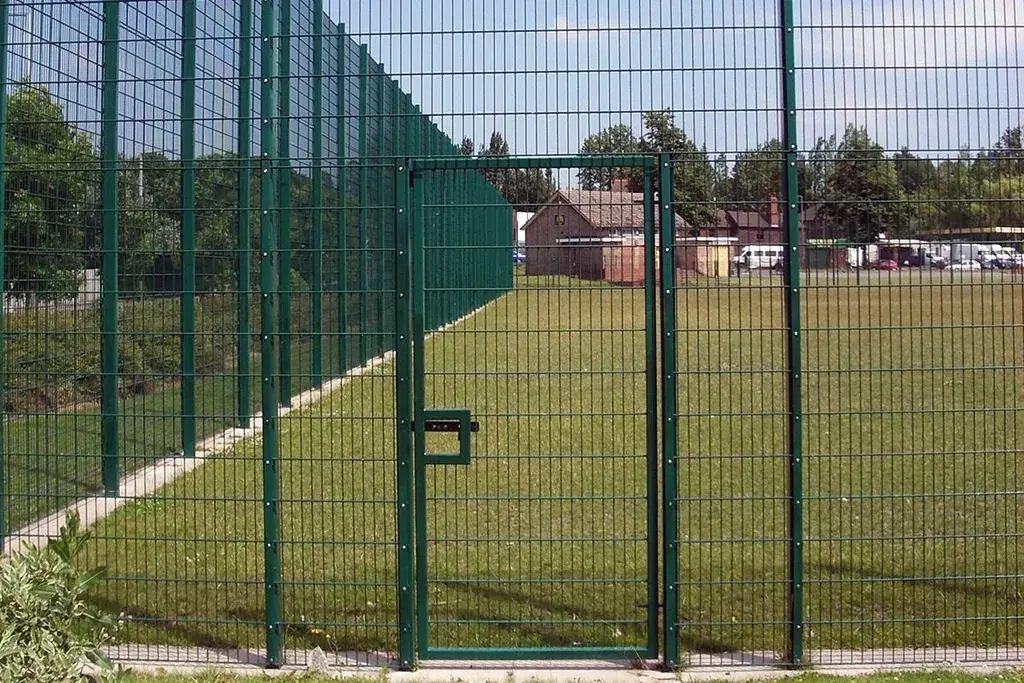
Single leaf or a pair of leaves?
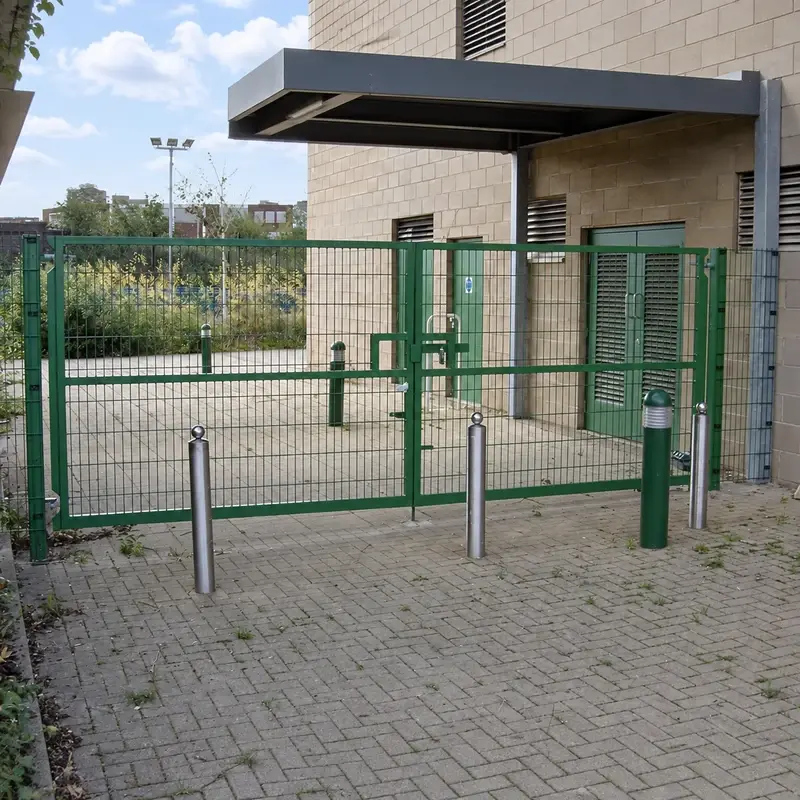
A single leaf has one continuous swing area. A double-leaf arrangement divides the opening but introduces a meeting edge, an active leaf and a secondary-leaf retention detail. Show these on the gate plan rather than dividing the total opening width by two and assuming the rest.
For unequal leaves, state each leaf's intended role. A regularly used pedestrian leaf and a wider occasional access leaf need an operating sequence that matches how the site will use the opening.
| Schedule entry | What it controls |
|---|---|
| Clear opening | Usable passage through the gate |
| Leaf layout | Single, equal pair or unequal pair |
| Opening direction | Swing space and approach |
| Active leaf | Lock or latch operation |
| Ground and stops | Movement limits and retention positions |
Keep the mesh connection clear of the hardware
Fence clips, gate hinges and lock receivers can compete for space on a post. The connection drawing should show all of them, particularly at a corner or a stepped fence run.
Gate posts are specified for the gate assembly. Do not assume that the line-post section used along the fence is also the correct gate-post section. Foundations and post suitability belong in the project design.
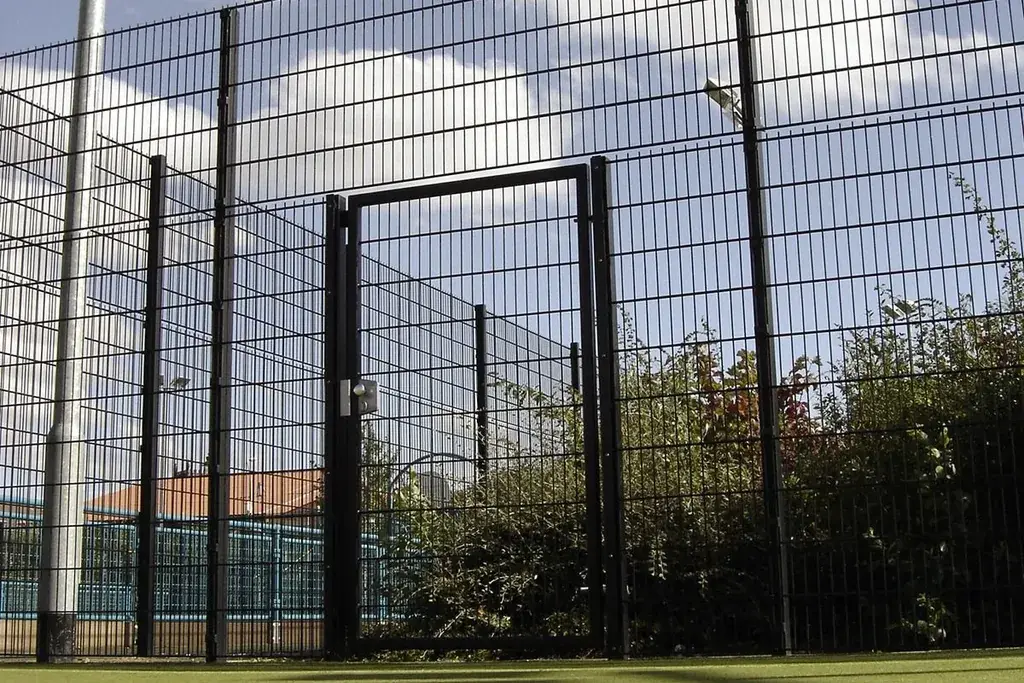
Pack by opening, not only by product type
A project with several similar gates can still have different handing, heights or locks. Carry the opening reference onto each leaf, post set and hardware pack. Keep the approved gate schedule for installation and subsequent spare-part orders.