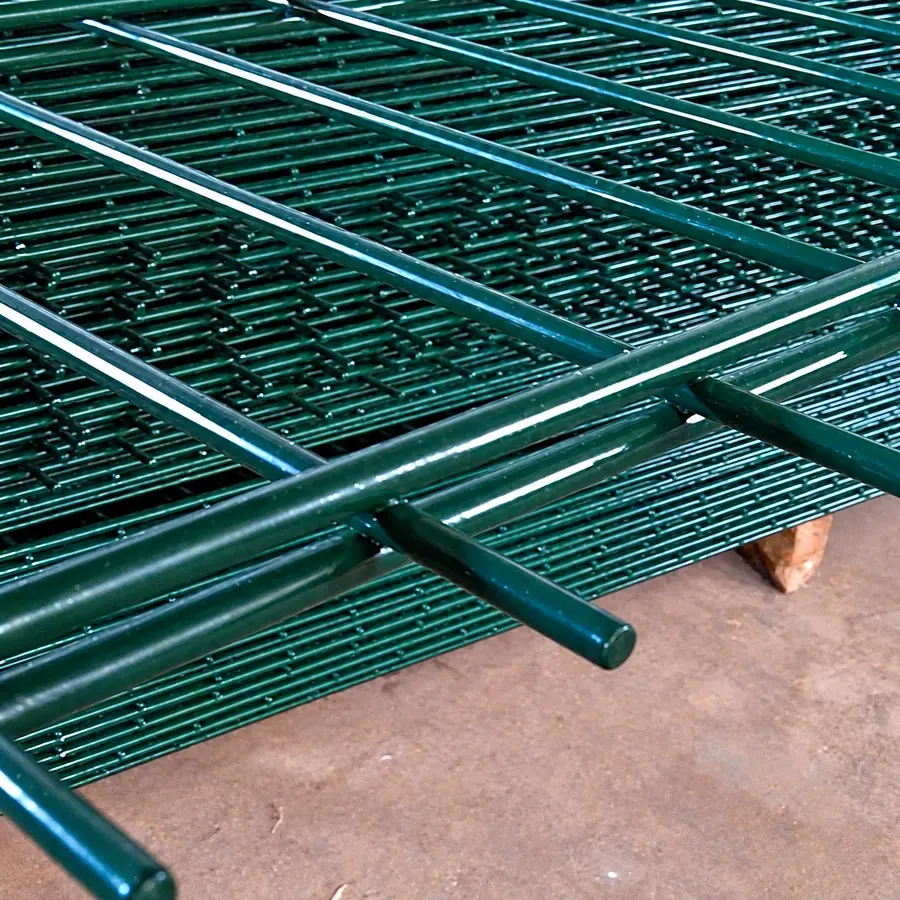
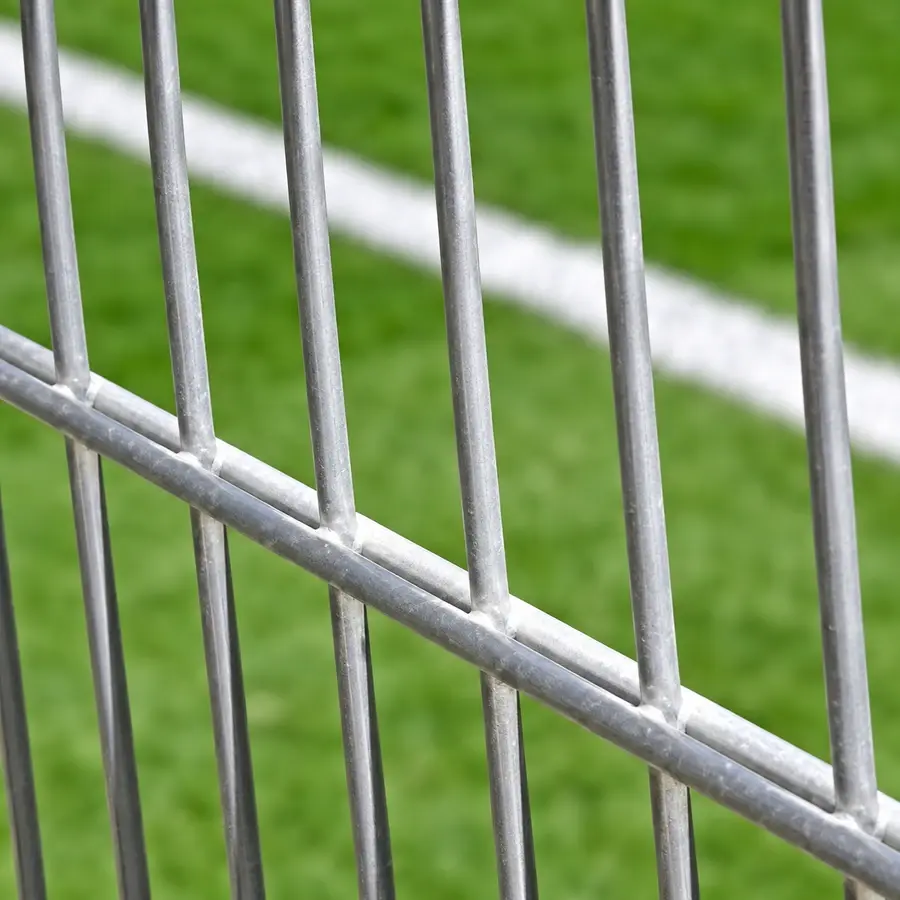
What the twin wires do
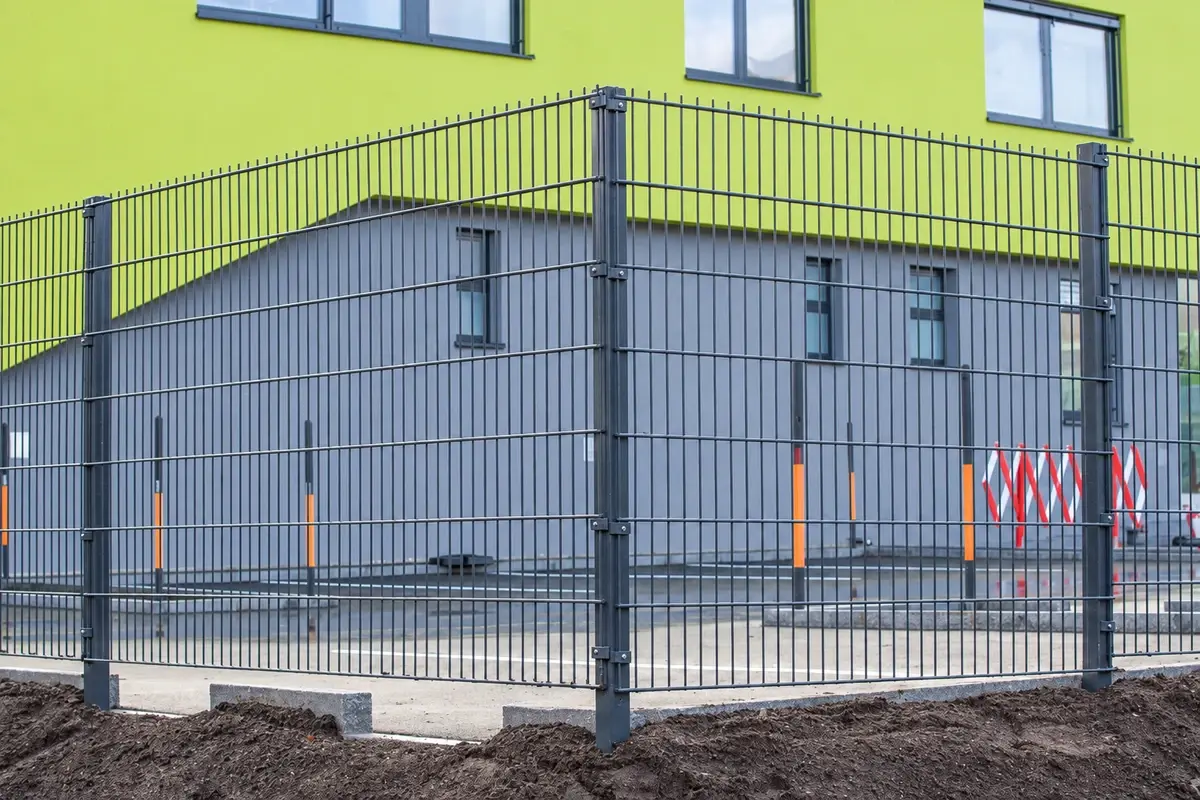
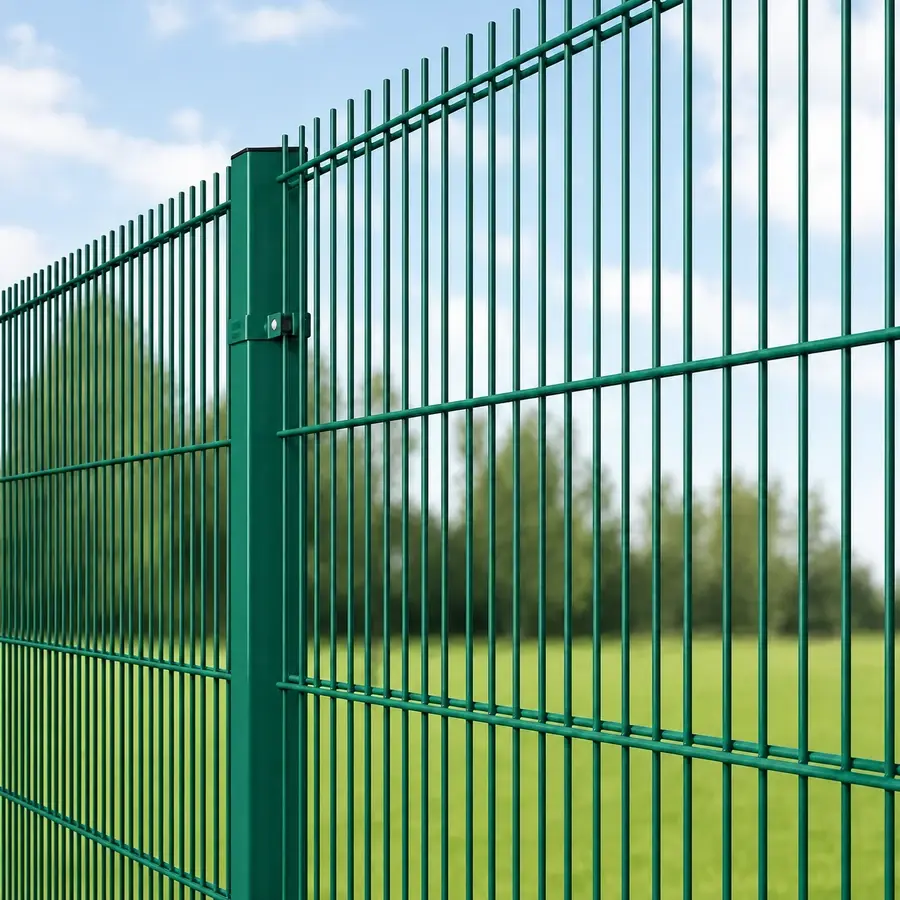
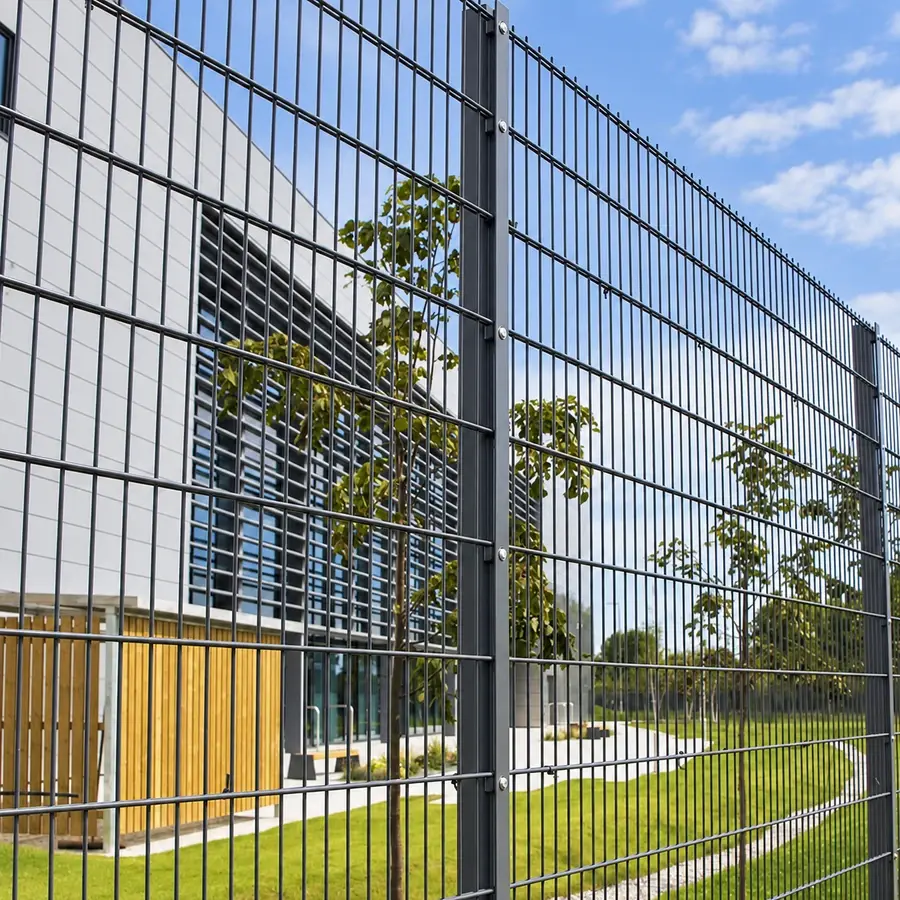
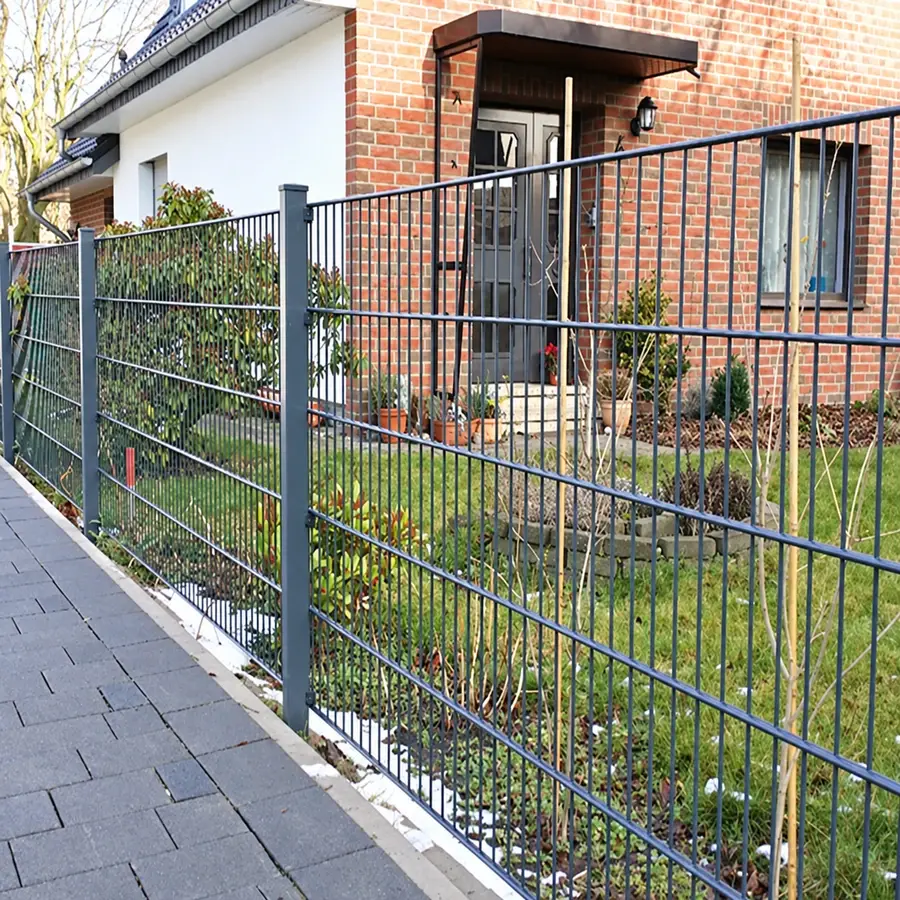
At each horizontal row, one wire runs on either side of the verticals. The wires are welded together, forming a flat mesh panel rather than a woven roll. This paired arrangement is the identifying feature of double wire fencing; the numbers describe wire diameters, not the size of the openings.
Mesh spacing and wire diameter have separate jobs in the specification. Two panels labelled 656 can have different openings, widths and edge projections. Wire measurements should also distinguish the steel diameter from the finished coated diameter.
Where 656 fits in the range
For a school, commercial or industrial boundary with a brief for open welded mesh, 656 is a starting point for the panel selection. The mesh allows views through the fence; it is not a privacy screen. Height, post arrangement and accessible edges then determine how that panel fits the site.
If restricting handholds is the main requirement, compare the closer pattern of 358 mesh. For a court where the fence receives repeated ball contact, review a sports fencing configuration with its playing face and connections, rather than treating a perimeter panel as a complete sports system.
868 double wire panels use paired 8 mm horizontal wires and 6 mm vertical wires. Those larger nominal diameters identify a different panel construction, but neither designation alone establishes a load capacity or security rating. The 656 and 868 comparison explains what to hold constant when assessing the alternatives.
How the panel meets the post
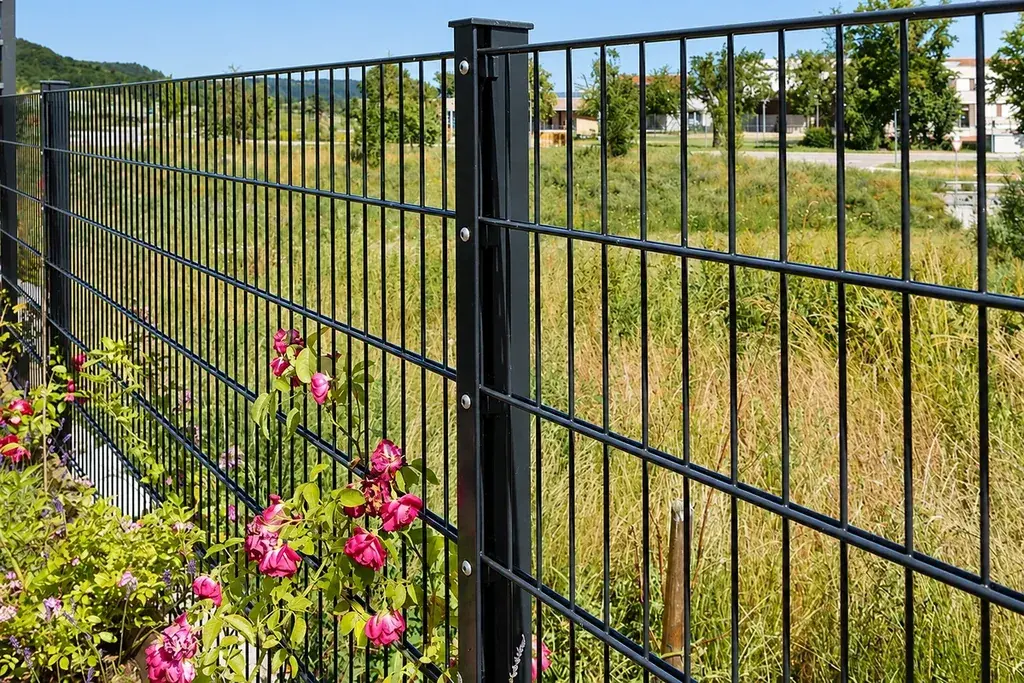
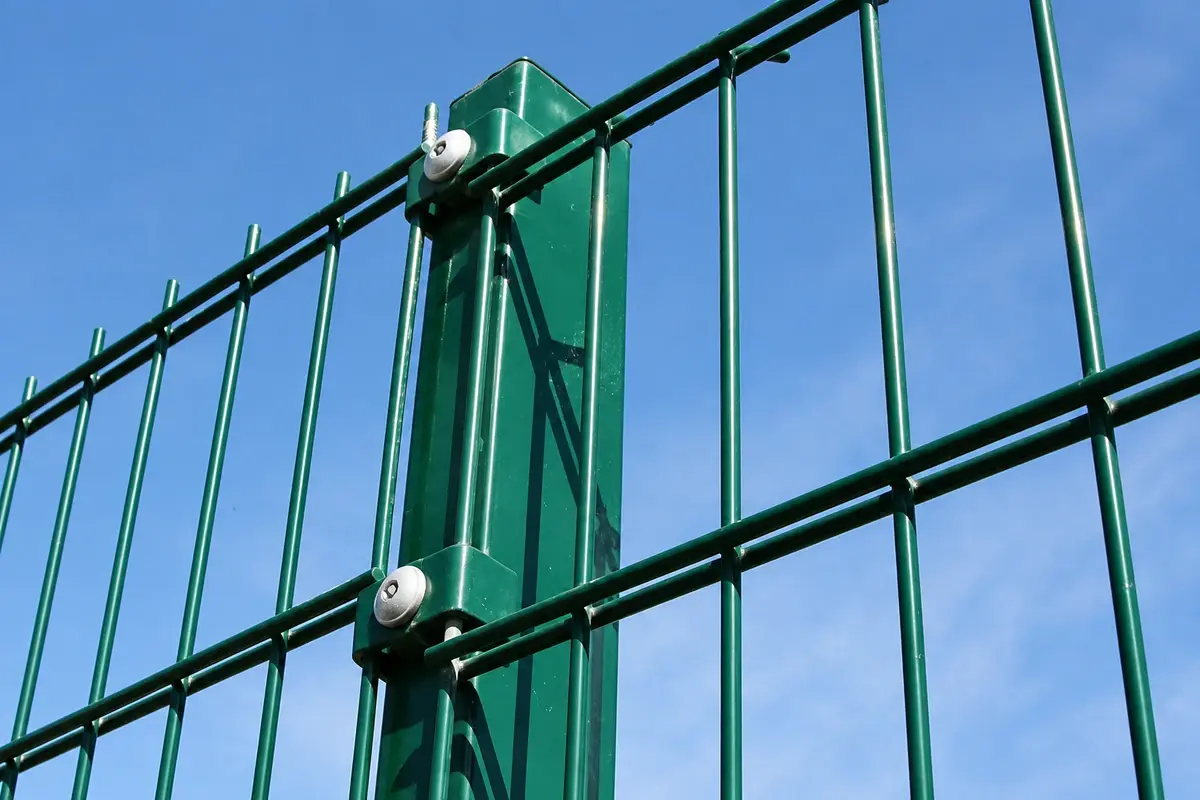
Clips hold the mesh at individual fixing positions; a clamp bar acts along a longer section of the panel edge. The matching fixing arrangement must accommodate the twin-wire profile and the post face. A fitting intended for another mesh thickness or post shape may not seat correctly.
Panel width is measured on the panel itself. Installed bay width depends on the post section, fixing allowance and any overlap, so it cannot be taken directly from the panel width. This distinction matters when replacing panels between existing posts or setting out a new run.
The same connection detail should show the upper and lower wire ends in their installed position. At a corner or change in height, that detail may differ from the straight run. Clamps and fixings should follow those positions rather than a single assumed quantity per panel.
Panels, posts and matching gates
FencingWise supplies 656 panels for project and distributor enquiries, with posts, fittings and double wire gates available as part of the quoted material package. A matching gate uses the same mesh family within its own frame; its hinges, latch and gate posts are separate parts of the assembly.
The panel schedule records height, width, mesh spacing, edge detail and finish. The quotation identifies the supplied components and quantities, so a panel-only price remains distinguishable from a fence package.