
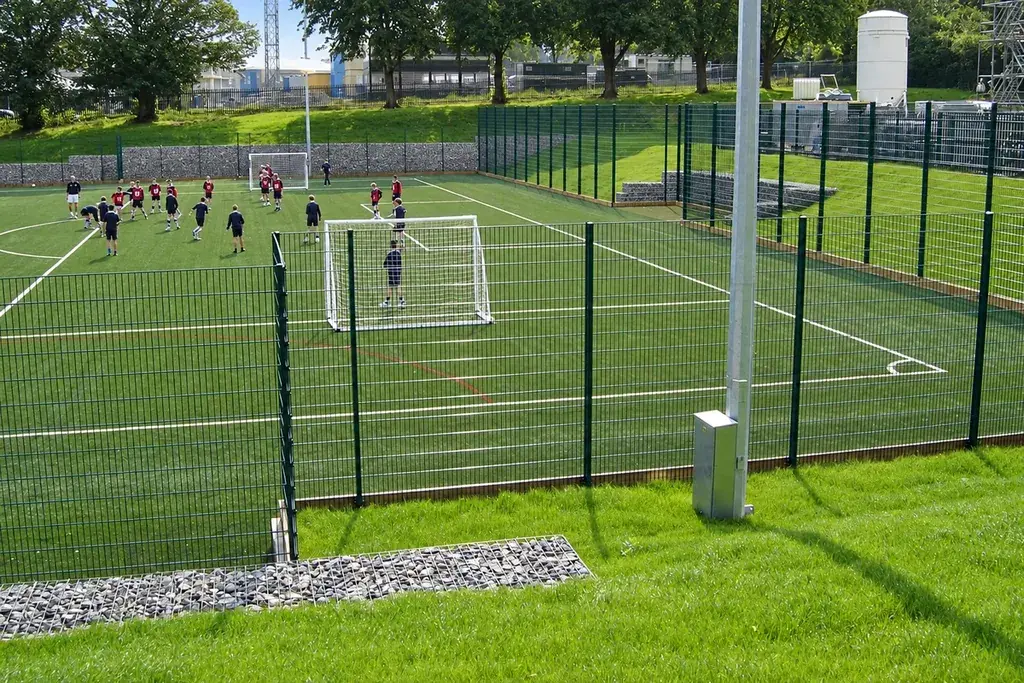
Locate repeated ball contact
Identify goal ends and areas where play regularly meets the fence. The lower mesh, exposed edges and post connections need to suit the intended sports-fence arrangement.
Compare double wire sports fencing with rebound fencing where the project calls for a particular lower-panel construction. A mesh family name alone does not demonstrate a rebound or acoustic result.
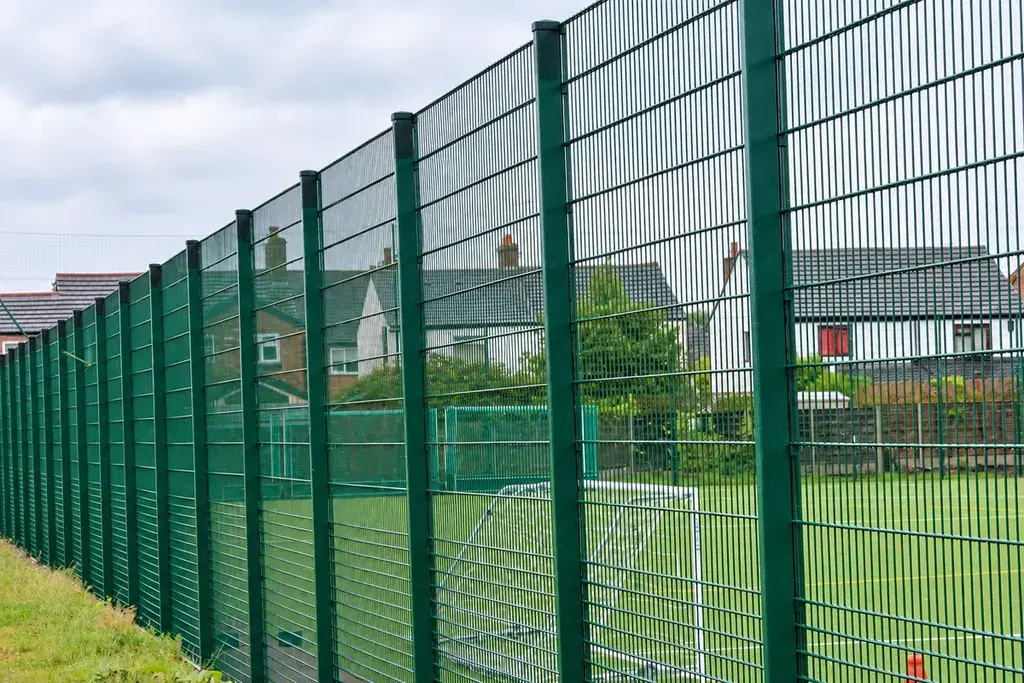
Keep equipment independent unless integration is designed
Show goals, seating, lighting and any dividing equipment on the plan. If equipment is to attach to a fence or post, include that interface and its design requirements before the material specification is fixed.
Do not assume an ordinary fence post can support additional equipment merely because it is in a convenient position.
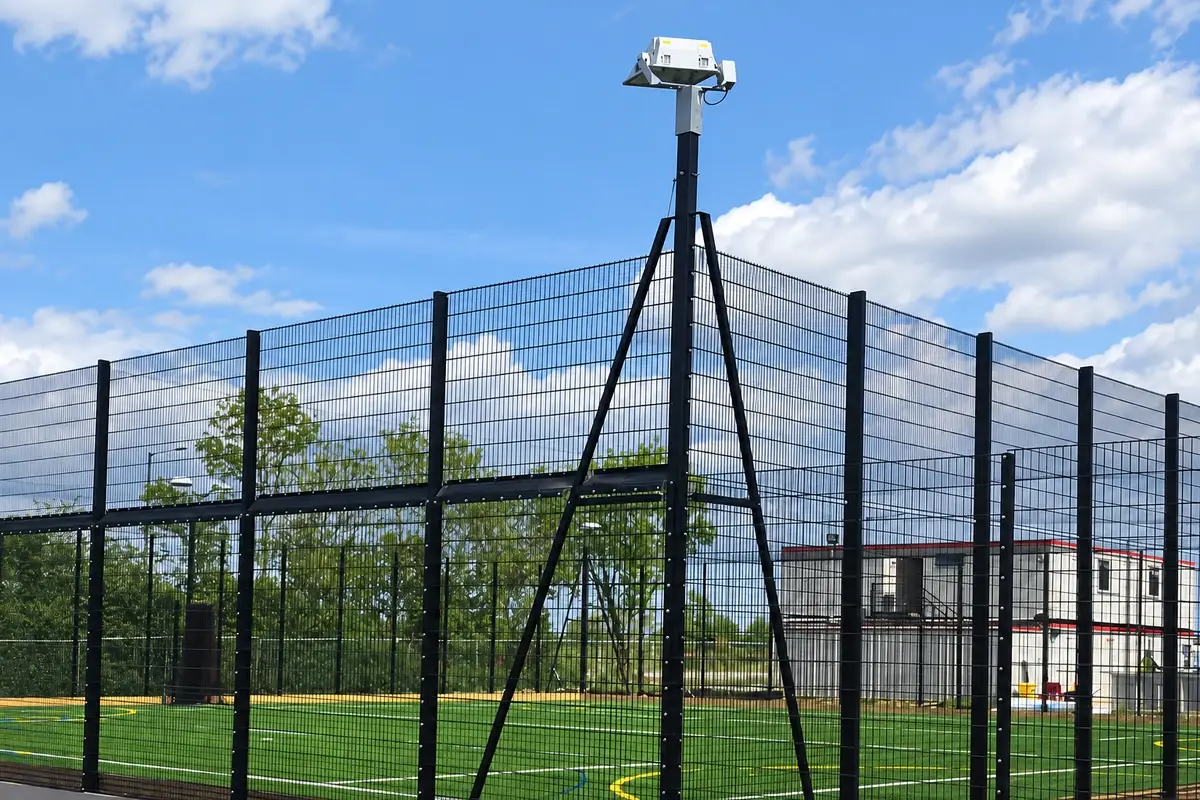
Check entry for players and maintenance
List player openings separately from access for maintenance machinery or replacement sports equipment. Show clear widths and gate swing areas relative to the pitch and surrounding paths.
Where the fence changes height, provide an elevation identifying the transition panels, posts and joints. This prevents high and low sections being priced as unrelated products with no connecting detail.
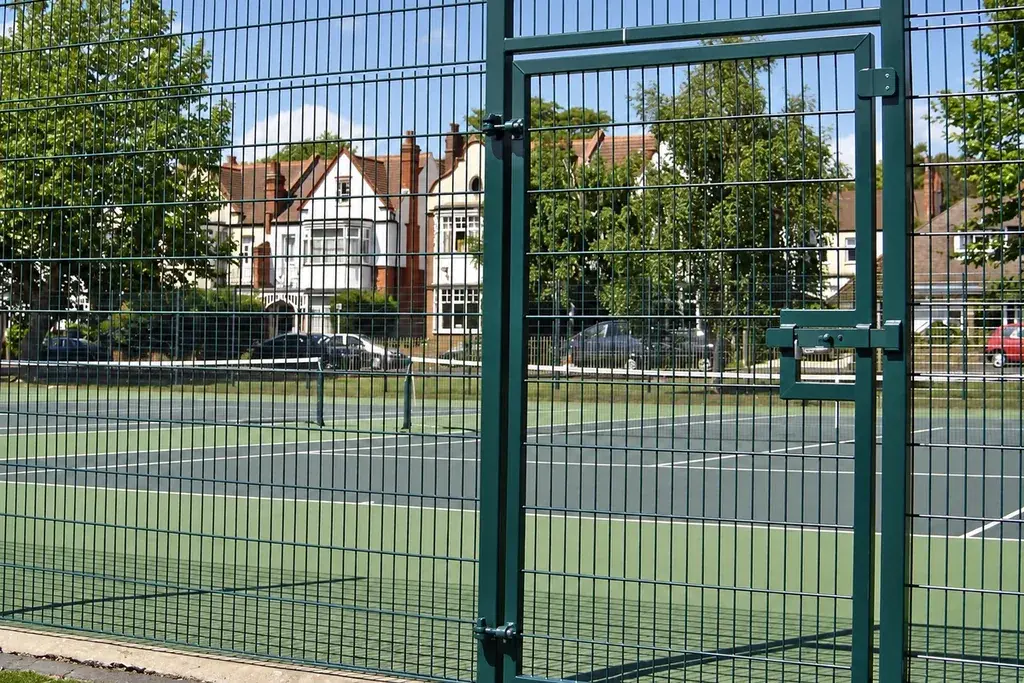
Make deliveries follow the installation zones
Group goal-end panels, regular sides, special posts and gates under distinct references. Keep fixing sets tied to the relevant connection so similar-looking hardware is not mixed on site.
If the same space also hosts other games, use the MUGA planning guide to record those additional requirements before ordering.