
By FencingWise Editorial Team · Updated 17 September 2026.
Where the moving leaf is supported
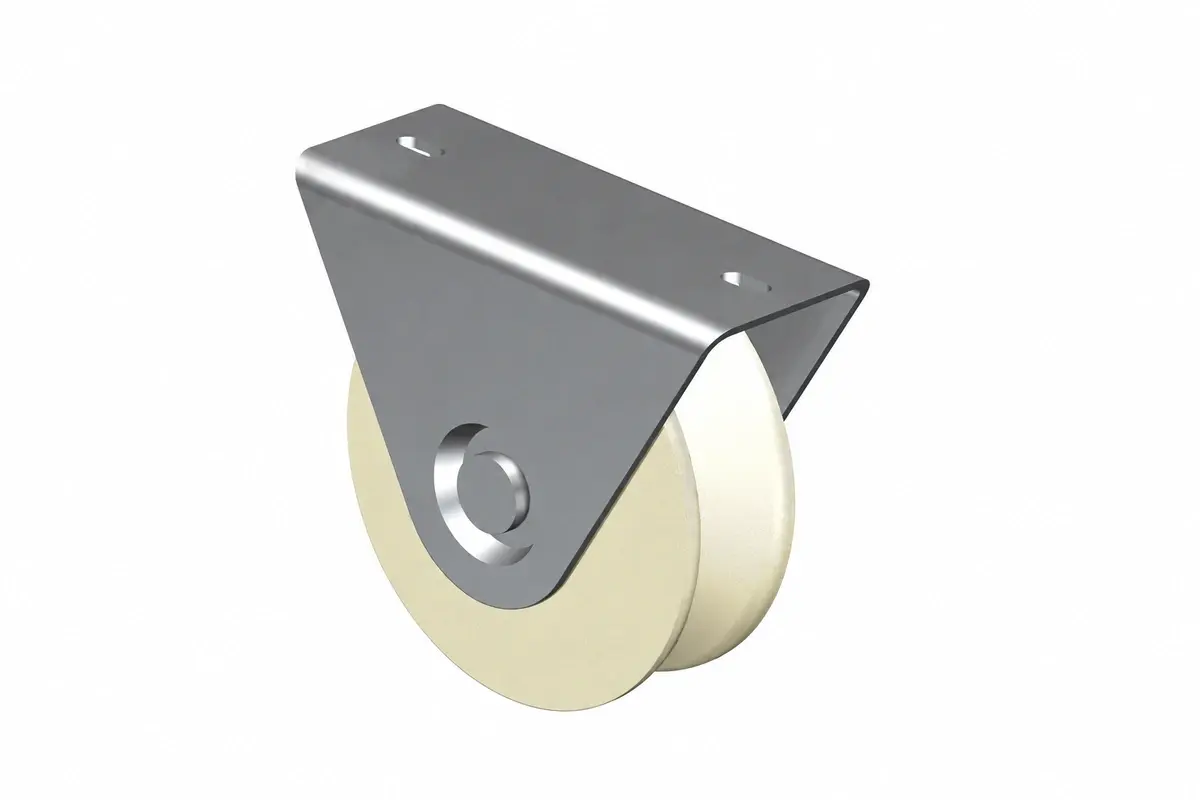
In a tracked arrangement, the wheel and track profiles work together to carry and guide the gate along its route. The track's alignment and supporting surface therefore matter over the full travel distance.
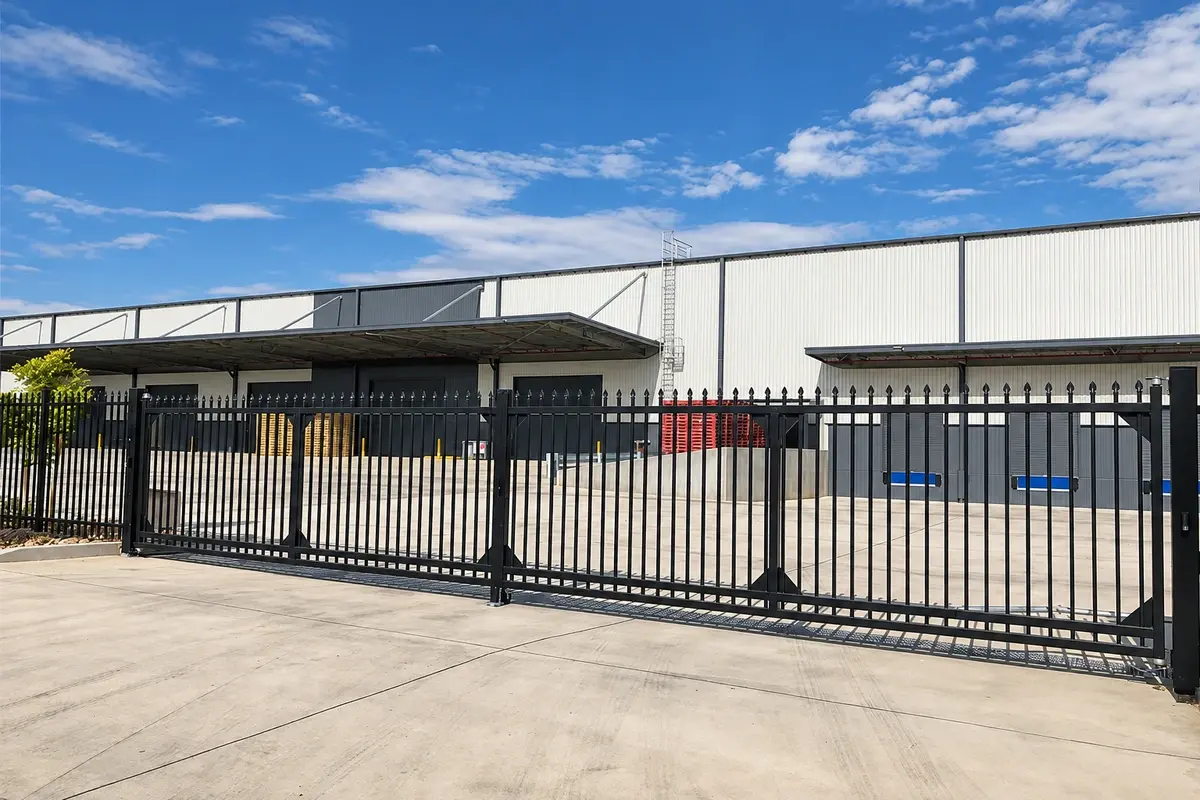
A cantilever arrangement uses a support carriage and a longer gate structure, including a tail beyond the clear opening. The support stays beside the passage while the leaf moves. It removes the track from the roadway, but not the need for foundations or an accurately designed support assembly.
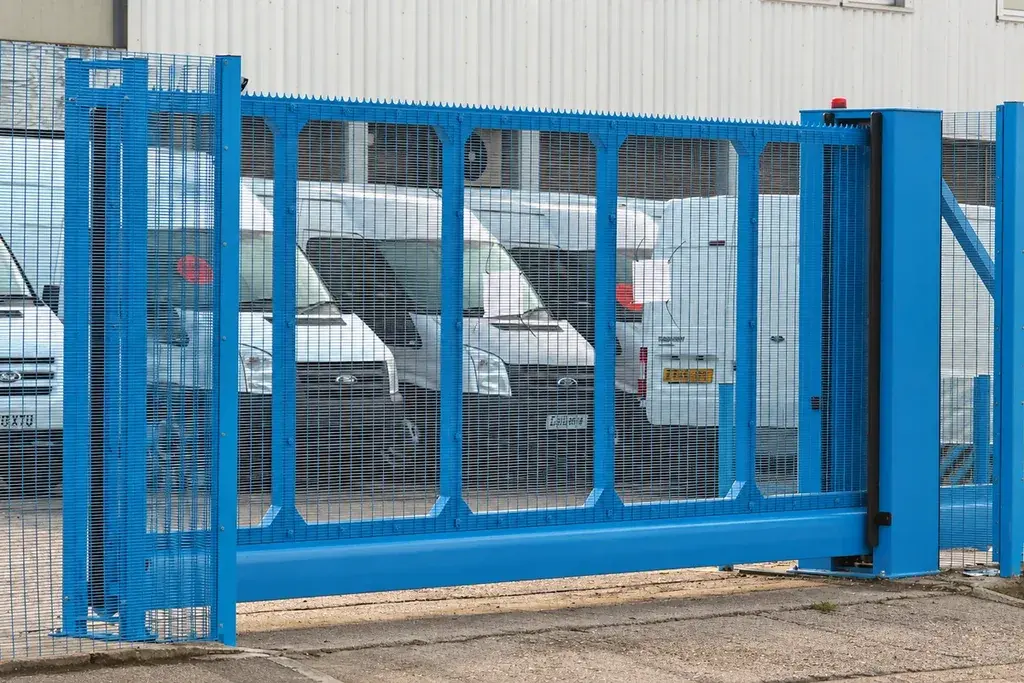
Check the opening and run-back space for the selected operating principle. A cantilever arrangement requires additional overall gate length, which should be confirmed on the gate drawing.
Compare the space and surface together
| Question | Tracked gate | Cantilever gate |
|---|---|---|
| Is a track acceptable across the entrance? | A ground track is part of the arrangement | No ground-running track crosses the passage |
| What needs regular attention? | Track condition, alignment and debris, plus wheels and guides | Carriages, guides and the supporting assembly |
| What side space is needed? | Travel envelope of the leaf and its details | Travel envelope including the cantilever tail |
| What must the ground design support? | Track route and associated posts/supports | Concentrated support and foundation arrangement beside the opening |
A gravel entrance, frequent debris or an awkward roadway surface can make eliminating the crossing track attractive. That does not prove a cantilever gate will fit: the extra side space and foundations still need to work.
Where a suitable track route is available and can be kept clear, a tracked arrangement remains a relevant option. Compare the whole installation scope rather than assuming one type always costs less.
Do not size the run-back from the opening alone
A drawing marked “4 m opening” does not say how long the leaf is or how far it must travel. Overlap, guides, stops and the cantilever tail can extend the required envelope.
Show the closed and fully open positions against actual obstructions: walls, vegetation, parked vehicles and equipment. Ground clearance also needs to be checked along the travel route; “no track” does not mean unlimited clearance over uneven ground.
Compare assemblies, not loose hardware
Wheel, rail and carriage systems have specific compatibility and loading requirements. They should be selected as part of the gate design rather than mixed because individual parts look similar.
This article explains the alternatives; it does not establish cantilever-gate availability or any crash resistance for FencingWise. Our tracked sliding gate page describes the current supply enquiry scope. For any powered arrangement, the movement and safety system require their own competent assessment.