
Allow for the tail as well as the opening
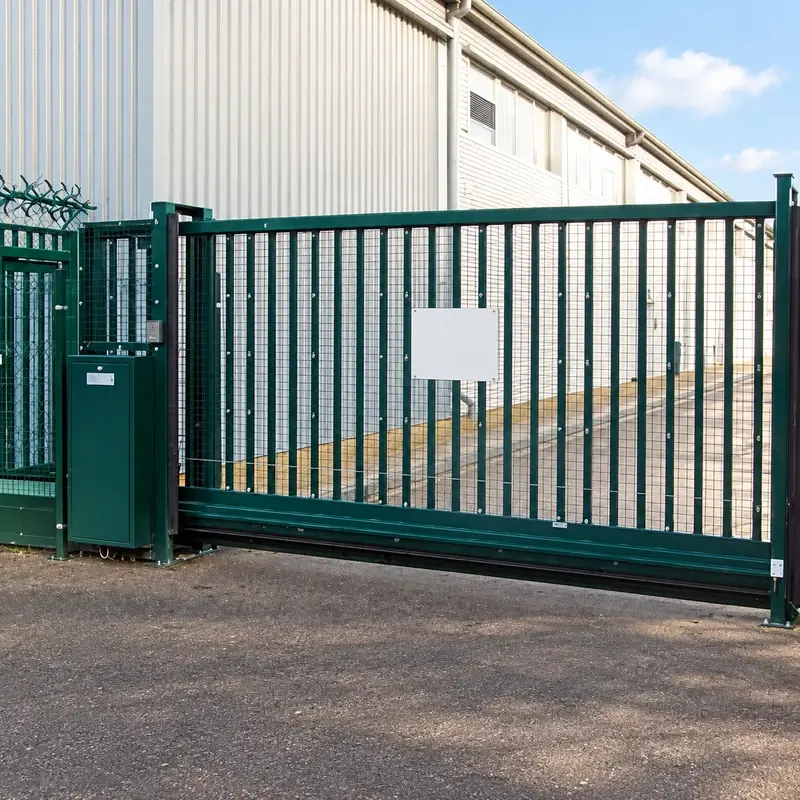
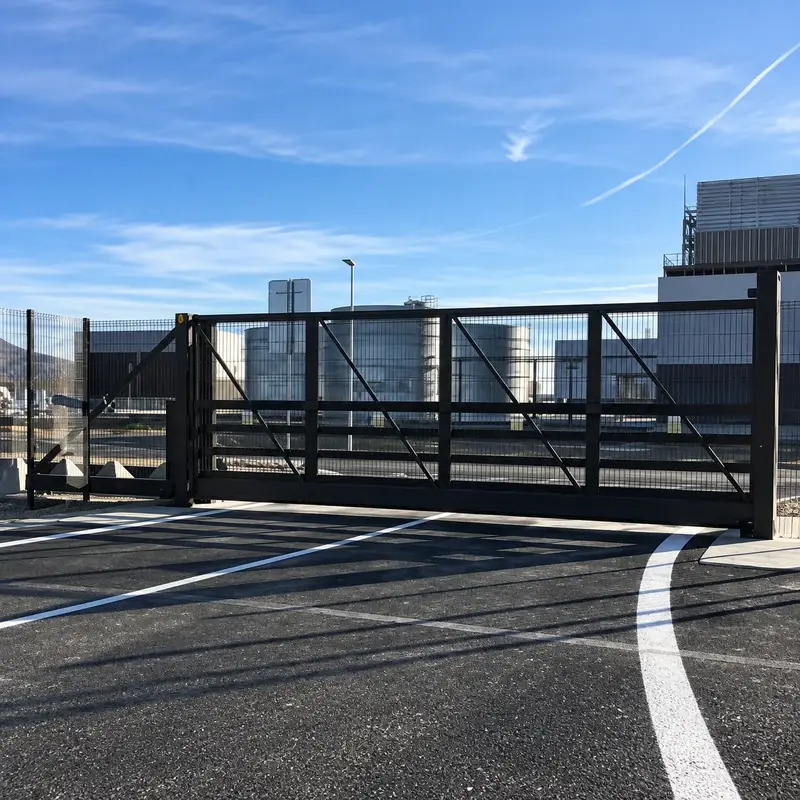
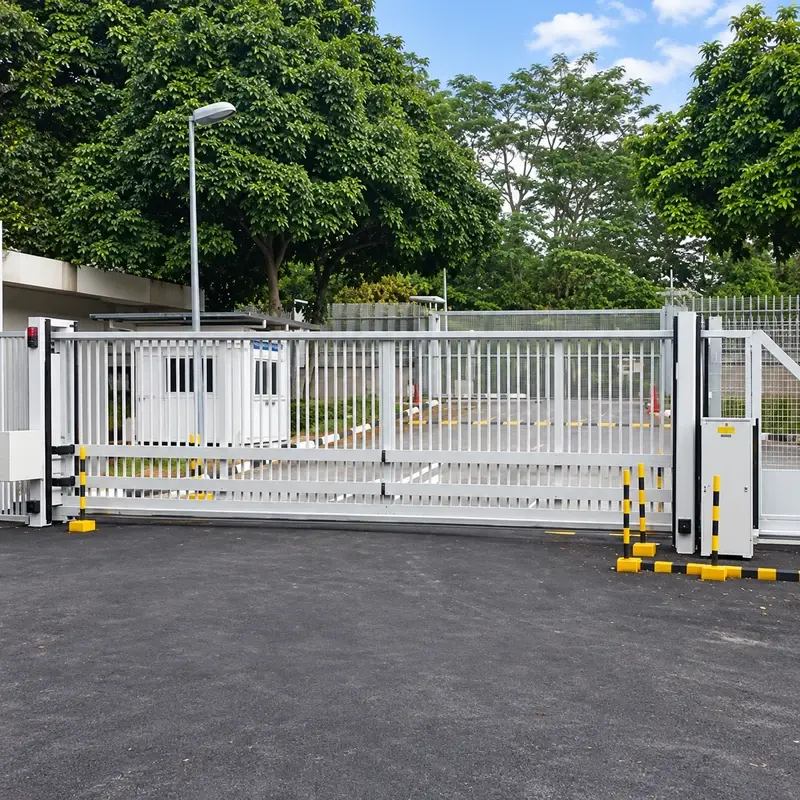
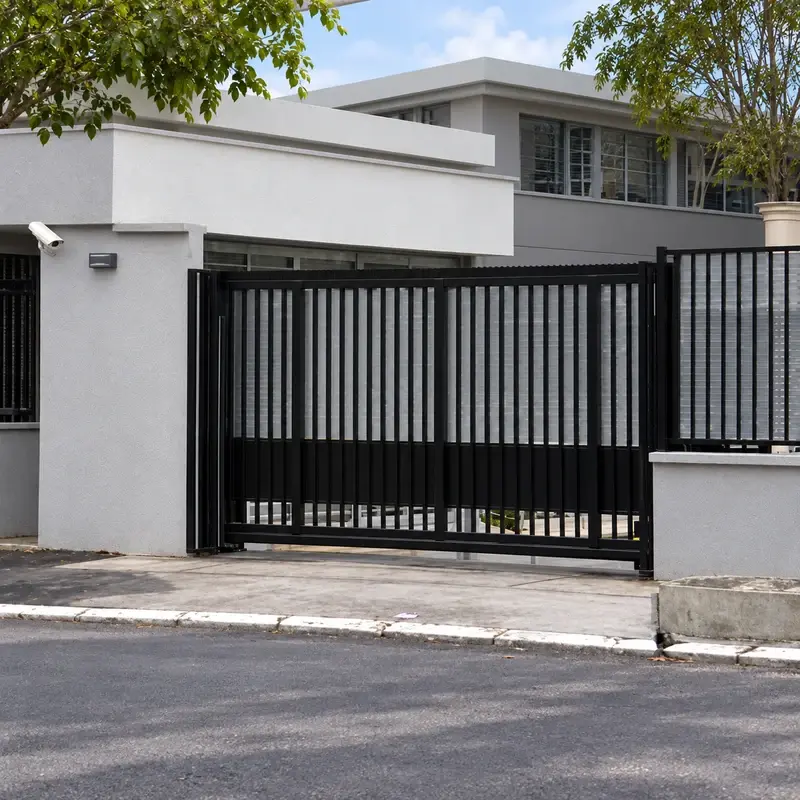
The gate includes a supported tail section that works with the carriage arrangement. Its length is determined by the gate design, not by a universal percentage of the opening. Show the fully open and closed positions, including the tail, guides, receiver and all moving clearances.
A nominal 6 m opening does not mean a 6 m leaf or 6 m of runback will be sufficient. Supply the measured side space and finished levels so that the complete movement envelope can be reviewed.
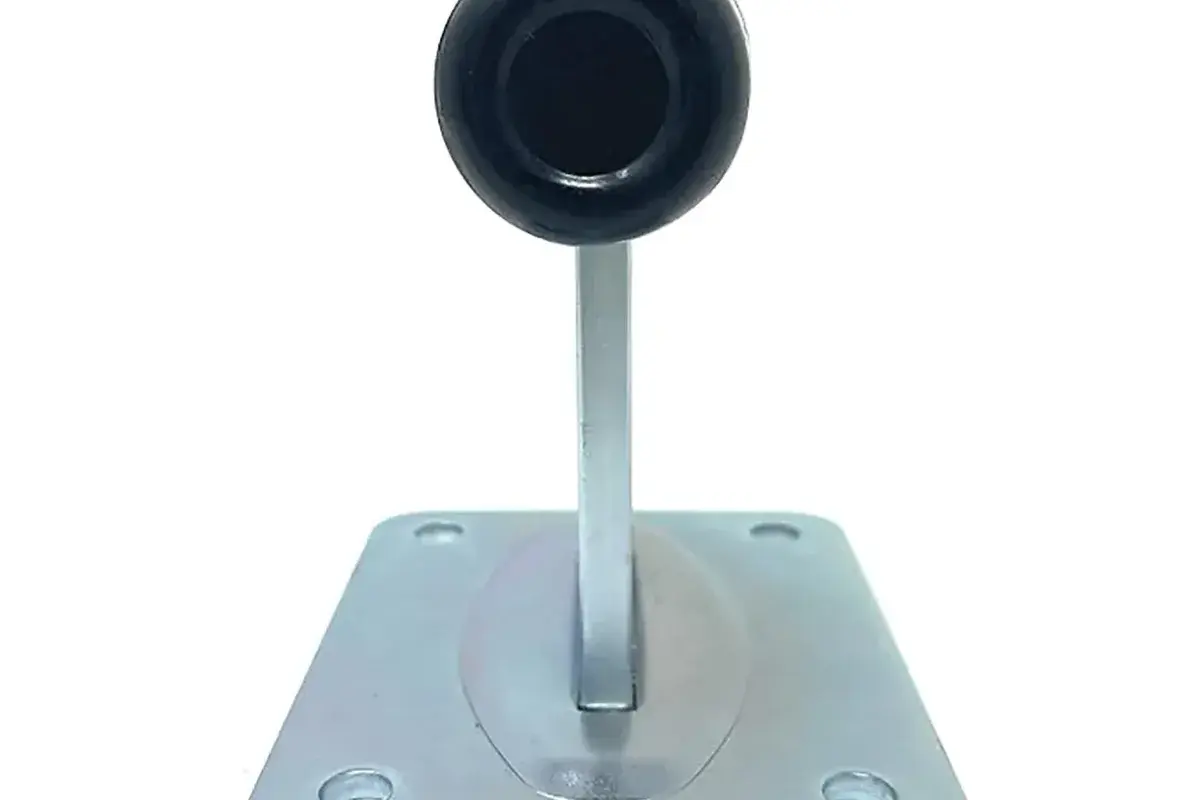
Match the carrying components
| Component | Role |
|---|---|
| Cantilever beam and carriages | Support and guide the moving leaf |
| Upper guides | Control the leaf in its designed movement |
| Receiver and stops | Establish accepted end positions and retention |
| Foundation interface | Transfers the assembly loads to the designed support |
The gate mass, infill, wind exposure and operating arrangement affect the design. A more solid infill is not a like-for-like substitution for an open mesh leaf.
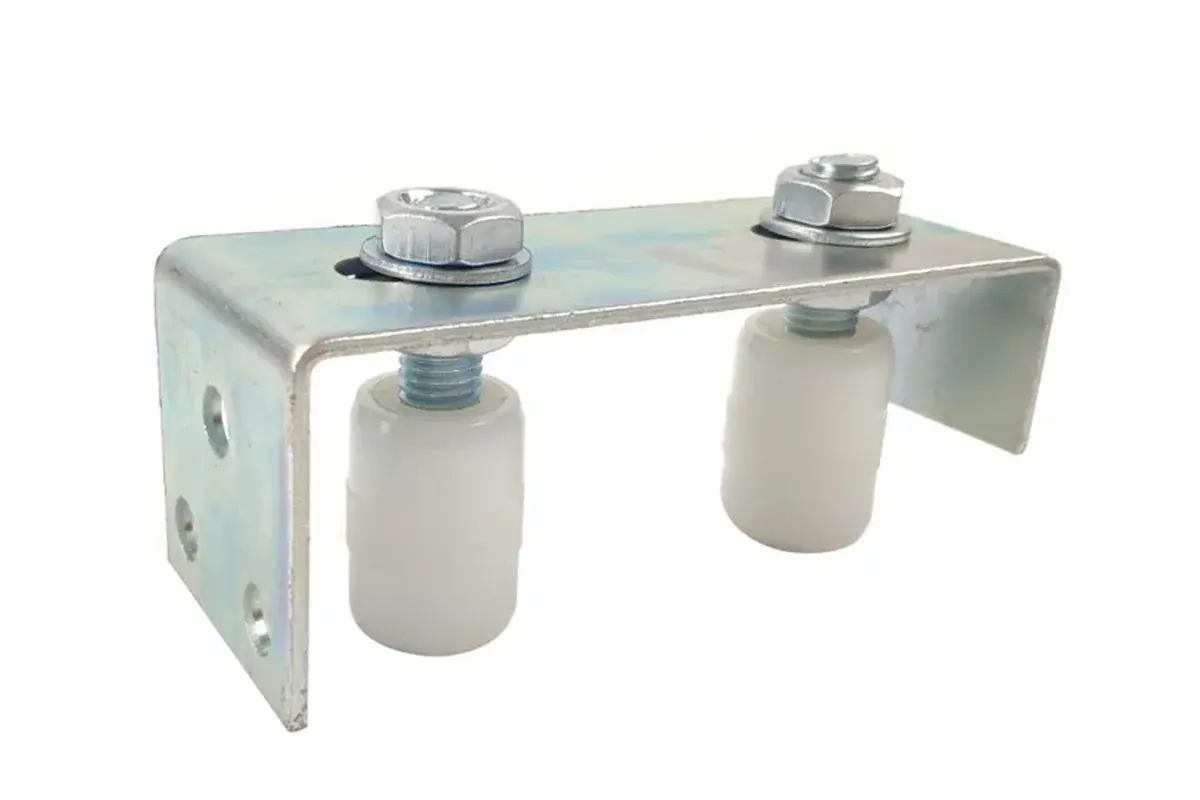
Define the automation boundary
Manual and powered gates require different equipment and acceptance work. For powered installations, a competent specialist must assess the complete system, including hazards, protective measures and commissioning. See HSE's powered gate guidance.
The quotation should identify gate materials and hardware separately from civil works, electrical installation and commissioning. Cantilever construction alone does not establish a vehicle-impact rating.