
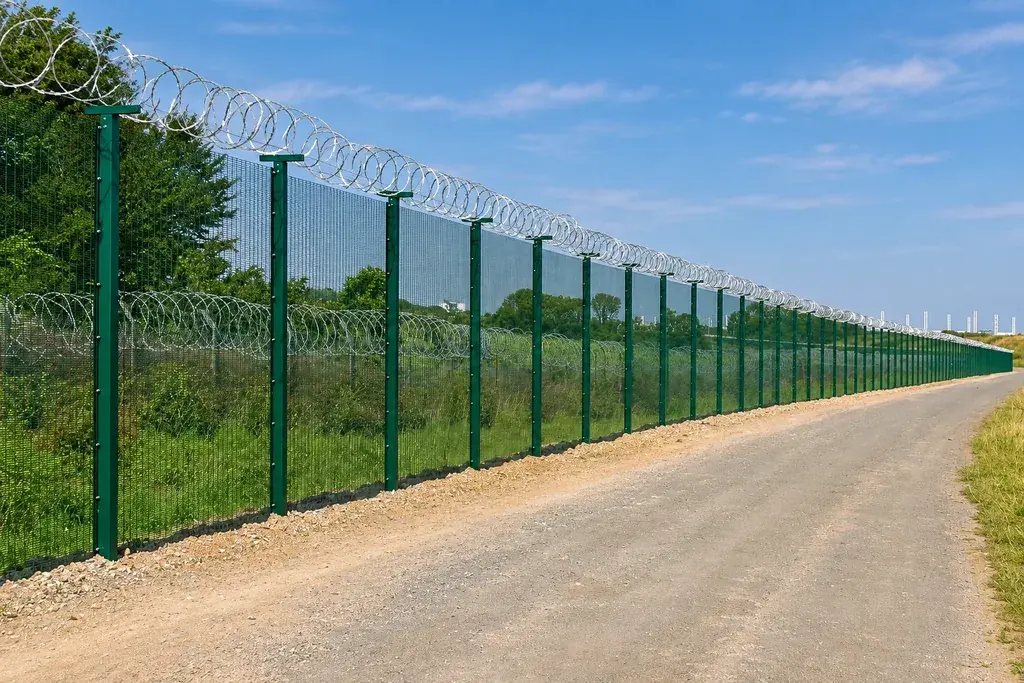
Identify the land on each side
Neighbouring land use affects the duty of the boundary. A fence beside livestock, a public footpath or a station service area cannot be assessed solely by panel height. Network Rail's fencing guidance explains that its boundary provision depends on adjacent use and risk, and asks neighbours not to attach items to its fences.
For a material enquiry, mark the ownership line, existing structures and all connections to third-party fences. Show the ground profile and the distance to retaining walls, bridges, drainage and access points. Survey and access activities near an operational railway must follow the infrastructure owner's arrangements.
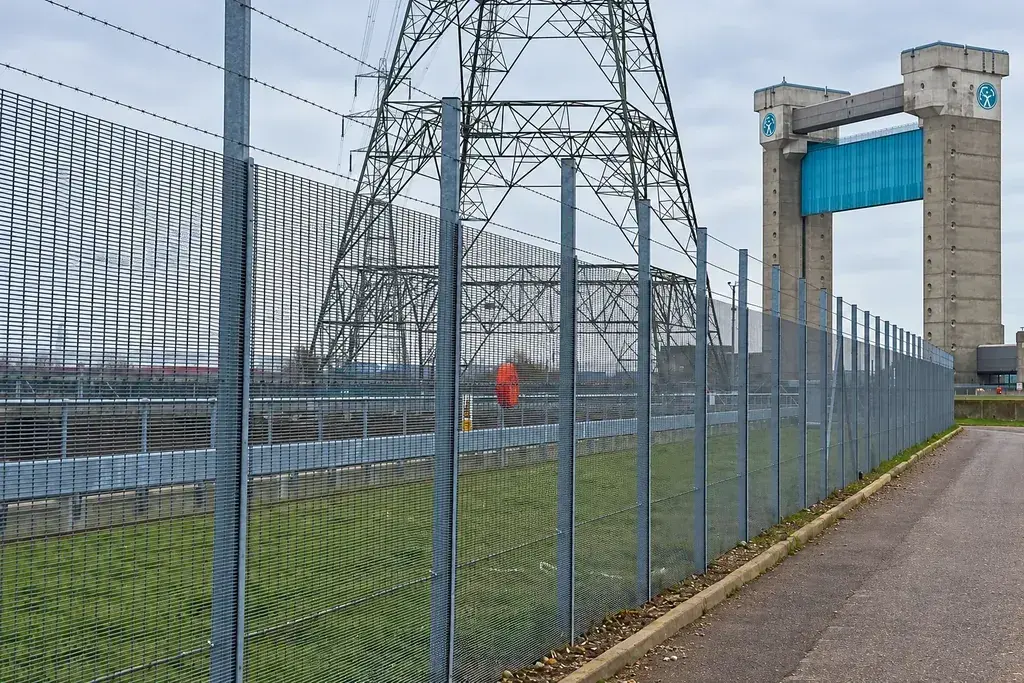
Distinguish a straight run from a transition
A straight panel schedule will not account for every fitting at a bridge abutment, change in height or service gate. Give these positions individual detail references.
| Position | Information needed before fabrication |
|---|---|
| Standard run | Approved system, panel dimensions and post pitch |
| Change of level | Surveyed profile, lower-edge gap and transition arrangement |
| Wall or structure connection | Permitted connection location and responsible designer |
| Maintenance gate | Clear opening, locking interface and access route |
| Electrical interface | Approved bonding or isolation detail and component identification |
Metal parts should not be assumed electrically continuous merely because they touch. Conversely, a coating or washer should not be treated as a designed electrical isolation system. Preserve the specialist's detail through fabrication, finishing and installation.
Keep access and replacement plans together
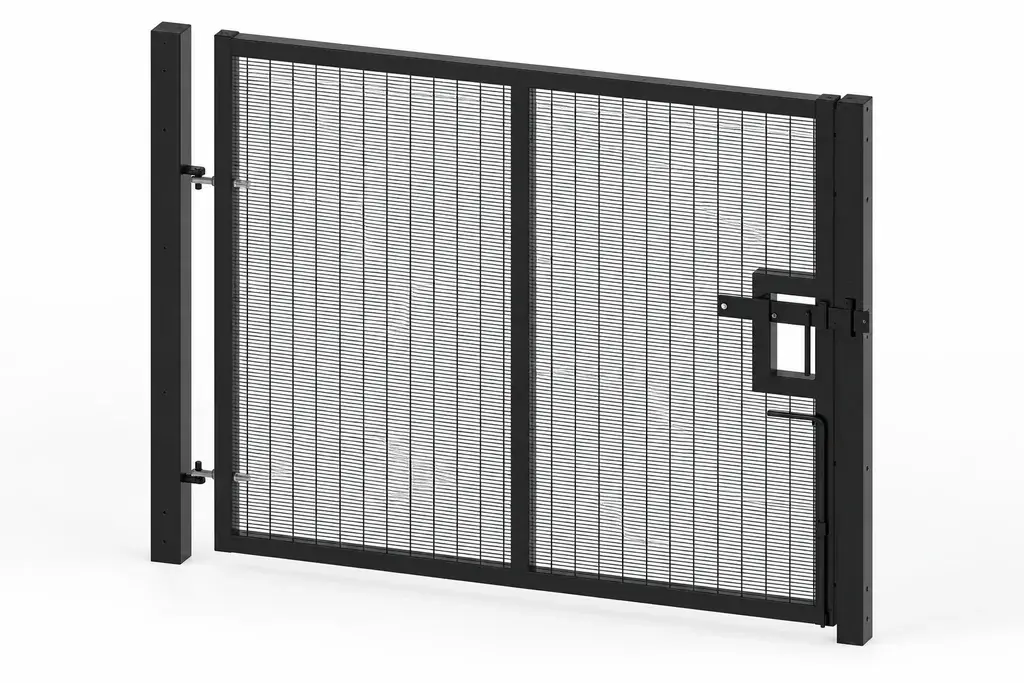
List gates separately from fence bays. Identify pedestrian and equipment openings, the permitted opening direction, any ground restrictions and the clear space needed during use. The gate reference should appear on both the civil arrangement and the material order.
Railway work may have restricted delivery and installation windows. Split packs by the authorised work section, and include the correct fixings with each group. Loose special parts arriving in an unidentified mixed box can delay a short installation opportunity even when the panel count is correct.
For an illustrative 300 m replacement divided into five 60 m work sections, five labelled delivery groups preserve the sequence. They do not determine post quantities: use the approved bay layout, transitions and gate positions to count those components.
Evidence and supply limits
FencingWise can review a material schedule for panels, posts, gates and connections within the confirmed supply scope. A railway project may require specific supplier approval, product evidence or acceptance by the infrastructure owner. We do not claim Network Rail approval or substitute a catalogue mesh name for that acceptance.
Submit the approved specification, drawings, interface details and evidence schedule through the specification support process. Retain a clear distinction between material supply and the railway contractor's installation, access, electrical and operational responsibilities.