
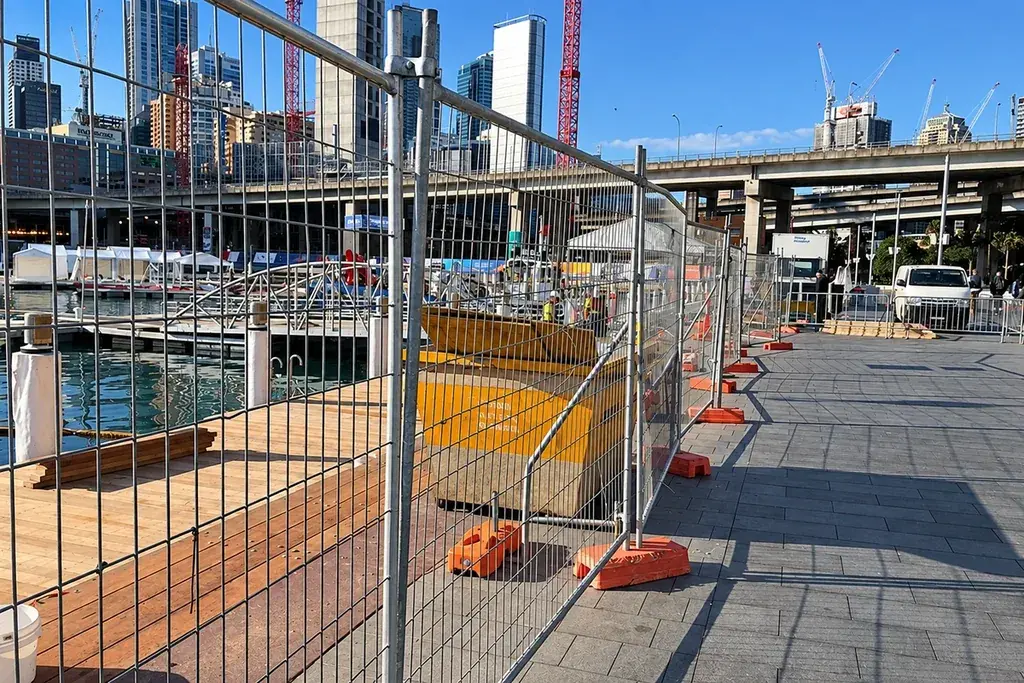
Map public contact separately from the work area
Record pavements, school approaches, crossing points, deliveries and the locations where the public can reach the boundary. Review the plan at the times those routes are busiest, not only during a quiet site visit.
HSE’s public protection guidance addresses risks to people outside construction activities. Use it alongside the project’s site-specific arrangements and relevant highway or school requirements. A fence is one part of the controls, not a complete public-safety plan.
Plan one boundary change at a time
For a hypothetical 38 m work frontage, divide the operation into the actual stages the site can safely manage. Do not derive the stage length merely from how many panels arrive on a pallet.
| Stage record | Required entry |
|---|---|
| Before work | Current boundary and authorised public route |
| Temporary arrangement | Approved barrier line, access and responsible supervisor |
| Change activity | Work allowed, timing and affected interfaces |
| Release check | Boundary closure, route condition and outstanding defects |
| Handover | Person accepting the arrangement and drawing revision |
Where the school’s arrival peak affects the work, agree the restriction in the programme. “Pause deliveries during the agreed arrival window” is an actionable arrangement once the actual window and responsible parties have been agreed. It should not be replaced by an invented universal school timetable.
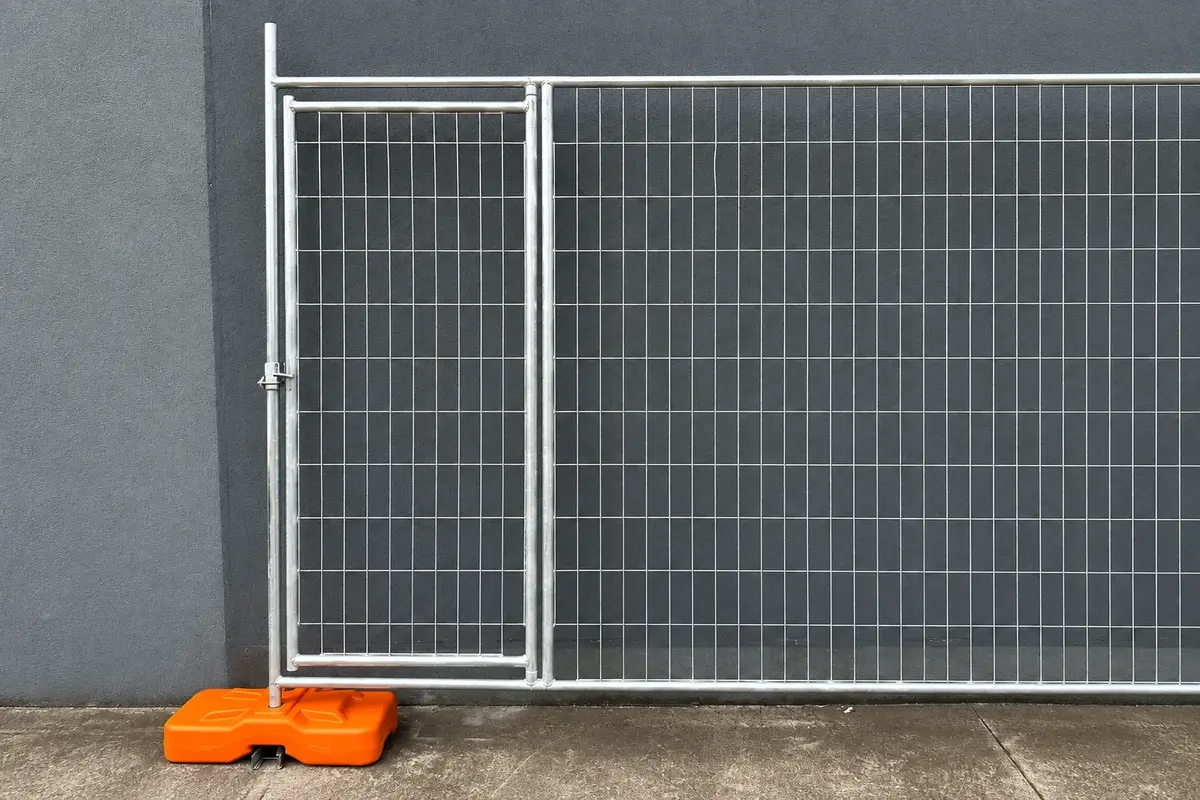
Review gates and vehicle movements together
Consider what happens when a delivery gate opens, where the vehicle waits and how pedestrians are managed under the approved plan. Fence feet, braces and gate leaves must be included in the space review; the drawn panel line does not represent every projection.
Use the selected temporary system’s design and instructions for stability. Screening, signs and changing ground conditions can affect loads and support requirements. HSE includes site fencing within its temporary works guidance; do not specify a generic ballast weight from a different project.
Check the changed arrangement before reopening
Walk the authorised route with the responsible site representative. Verify the boundary is complete, intended openings operate, projections are addressed and signs correspond to the actual route. Record unresolved items with their locations and keep the affected area under the approved controls until released.
Repeat the relevant review after changes, damage or conditions identified in the site’s inspection plan. A completed morning check does not automatically cover a boundary moved later that day.
Preserve the final record
At completion, remove temporary arrangements through the agreed process and confirm the permanent route. Reconcile the as-built fence and gate references with the order, including any authorised changes made during the works.
The useful handover is a current, accepted boundary with traceable stages. A generic statement that the site was “secure throughout” provides no comparable evidence.