
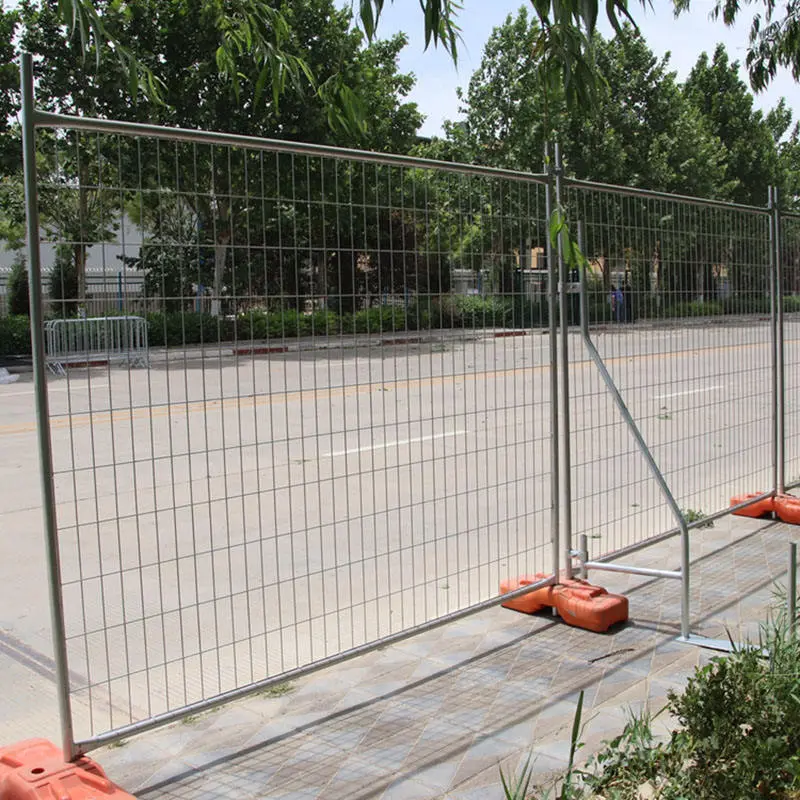
Check the lower connection first
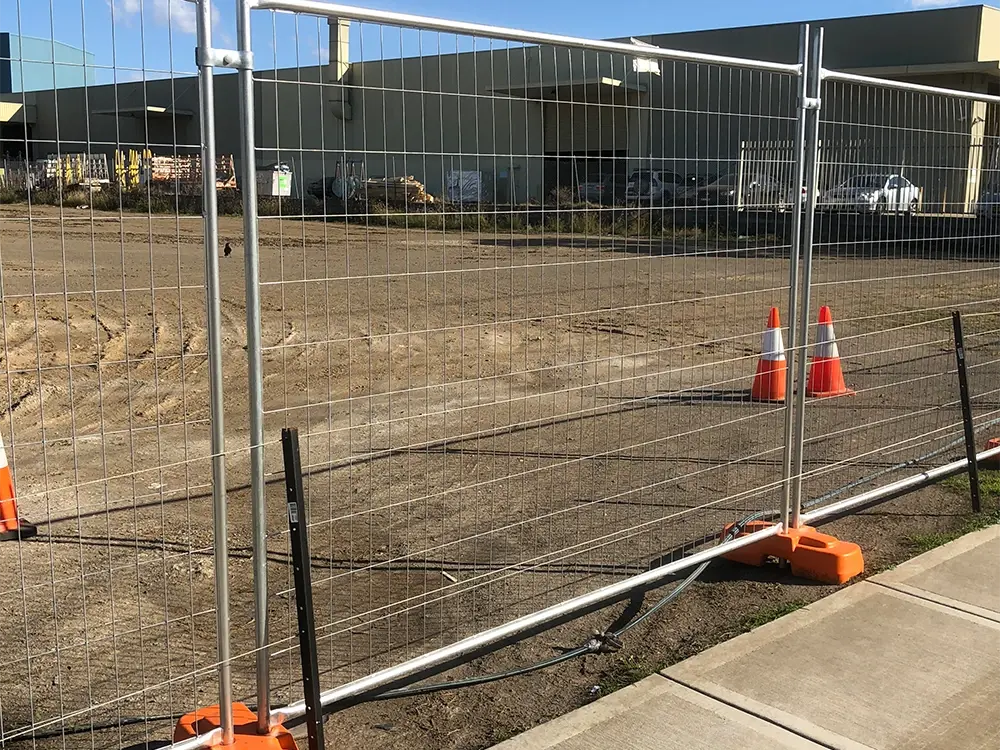
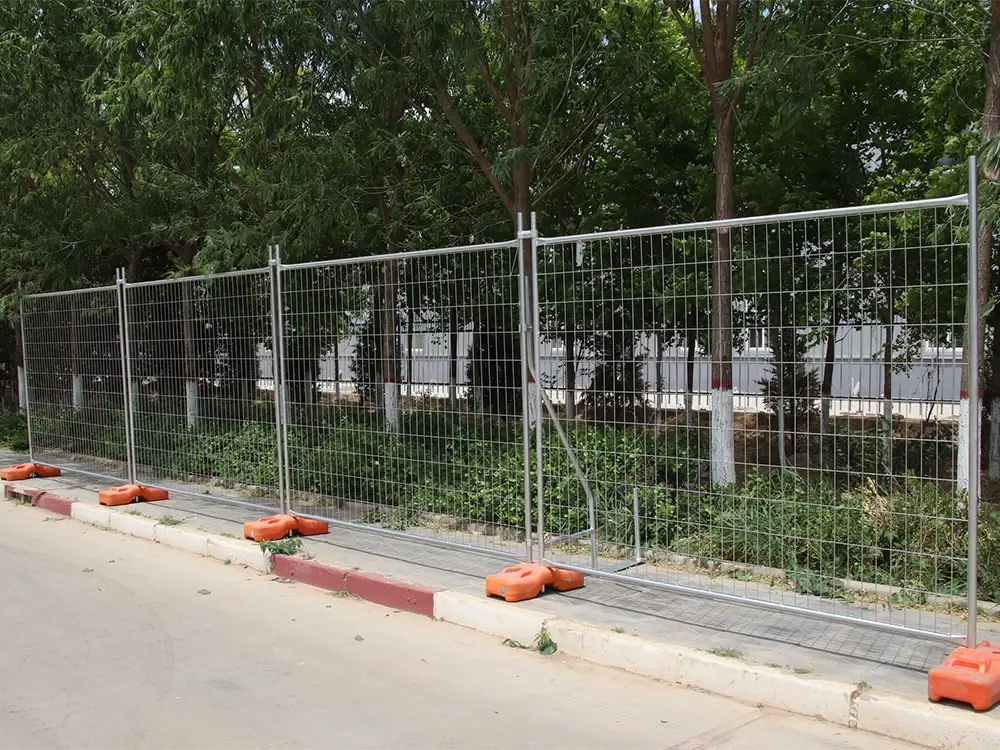
Record the frame tube size, leg position and the base opening that receives it. Similar panel widths can use different leg centres or base sockets. A mixed order should identify the compatible base reference for each panel type.
Clamps also need to fit the adjacent frame tubes. Specify their set contents and quantity by connection instead of assuming every panel includes a complete support package.
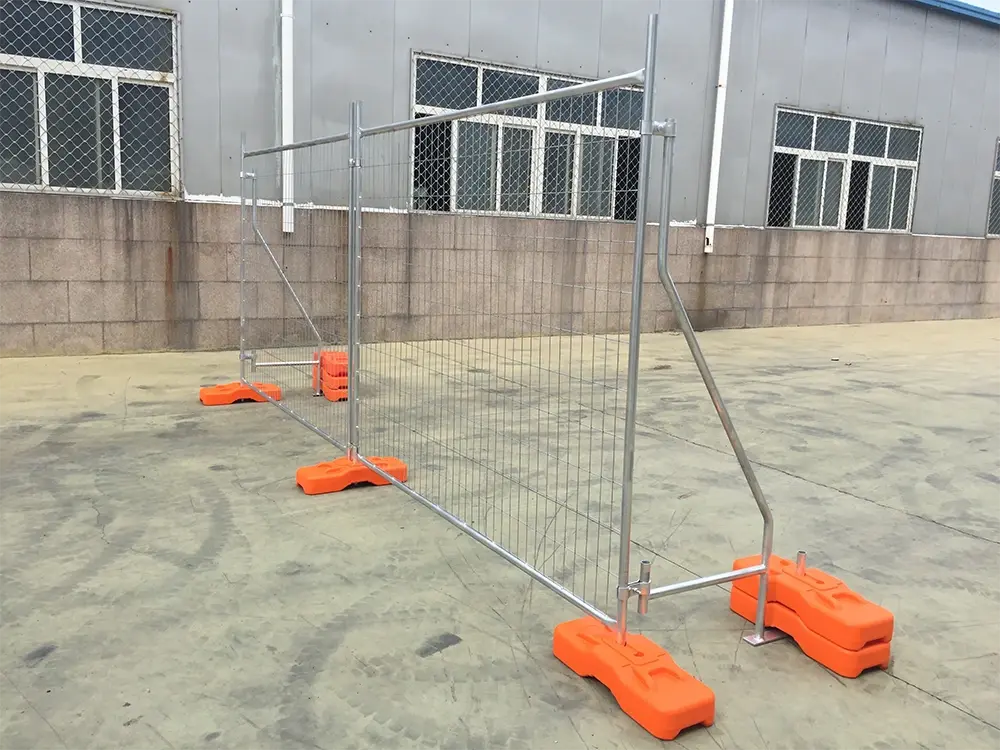
Treat screening as a layout change
Adding banners or opaque sheeting changes the area exposed to wind. It should be included in the temporary-works design before the support arrangement is selected. A panel-only description cannot provide a universal ballast or bracing requirement.
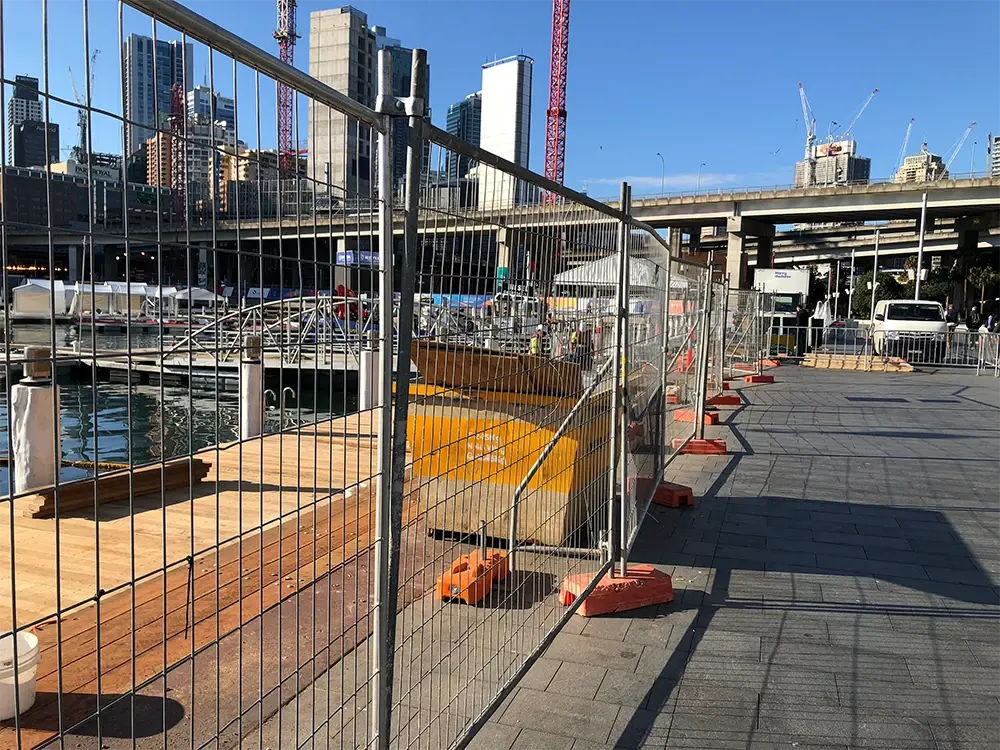
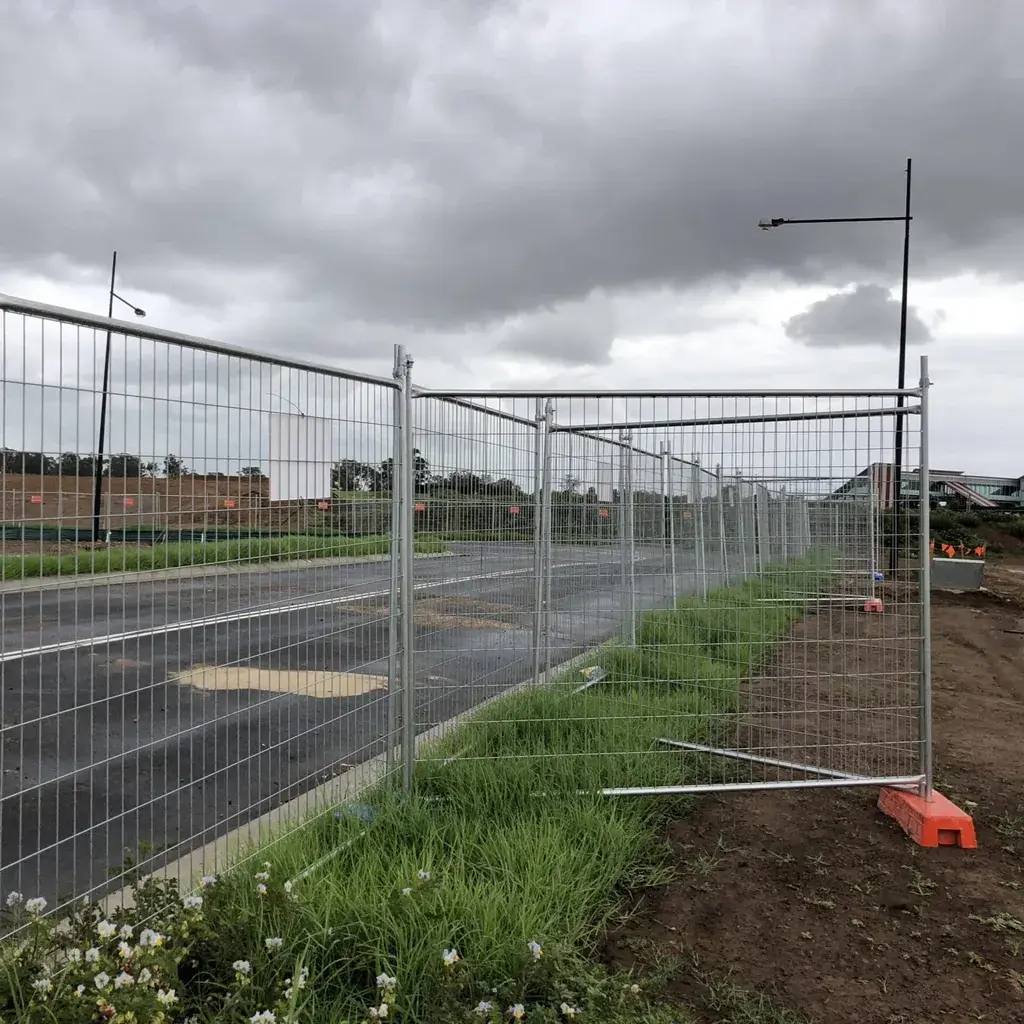
Mark corners, ends and access openings on the layout, including locations where people or vehicles could contact the fence. The construction-site page explains the procurement information needed as a boundary changes during the works.
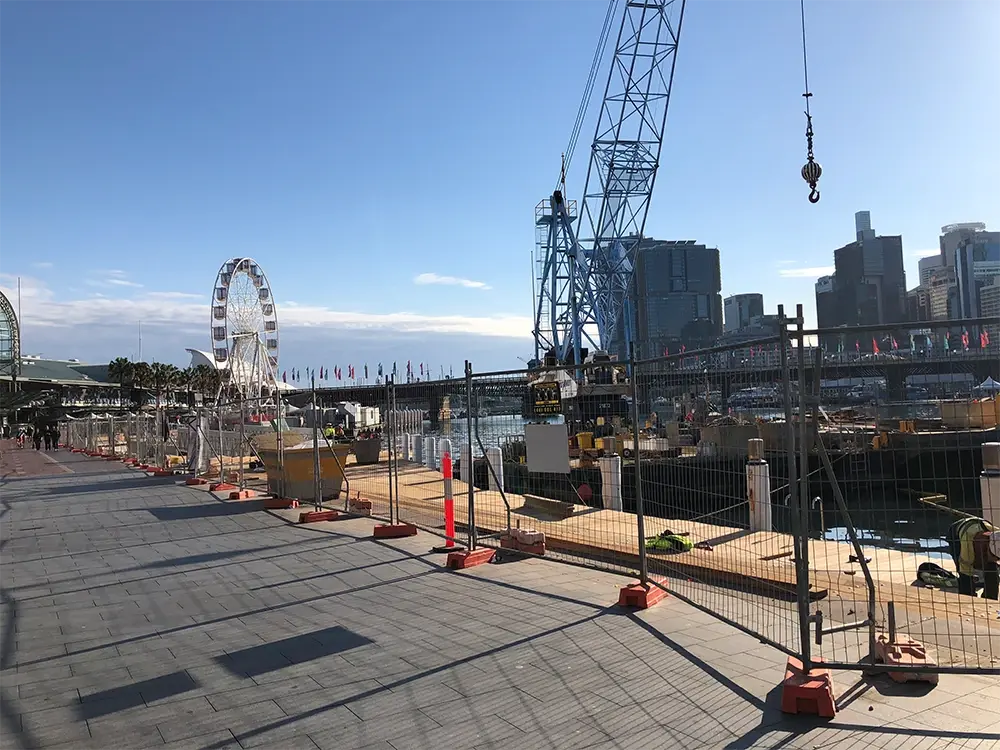
Reuse starts with inspection and identification
Before redeploying panels, check the frame, mesh attachments, connectors and base fit. Separate visibly damaged or distorted components for assessment instead of mixing them back into the next shipment.
Pack replacement clamps and other small parts under identifiable item references. For repeat orders, retain dimensions and connection drawings rather than relying on the broad term “temporary fence”.
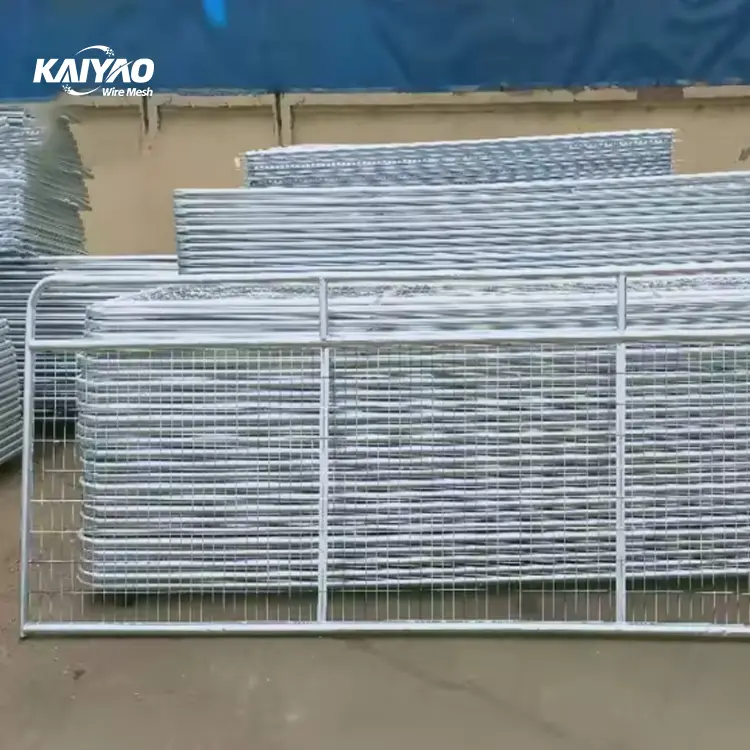
A chain link panel uses a different infill construction. Compare the complete frame, support and connection package when choosing between them.