
By FencingWise Editorial Team · Updated 17 September 2026.
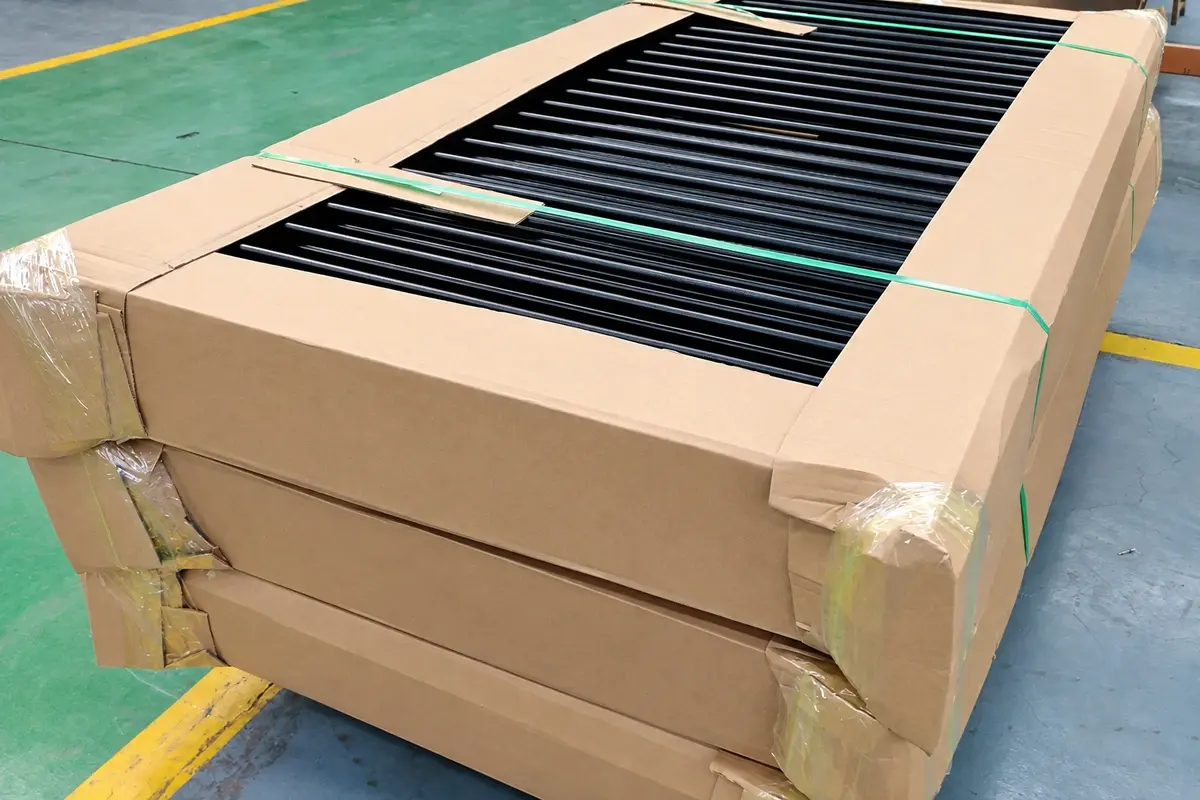
Protect the contact points
| Component | Packaging question |
|---|---|
| Flat mesh panels | Where does the stack bear, and are edges protected from straps and handling? |
| Profiled panels | Does the support suit the formed shape without loading an unsupported bend? |
| Posts | Are bundles restrained and ends or projecting details protected? |
| Gates | Are frames supported without bearing on hinges, latches or other projecting hardware? |
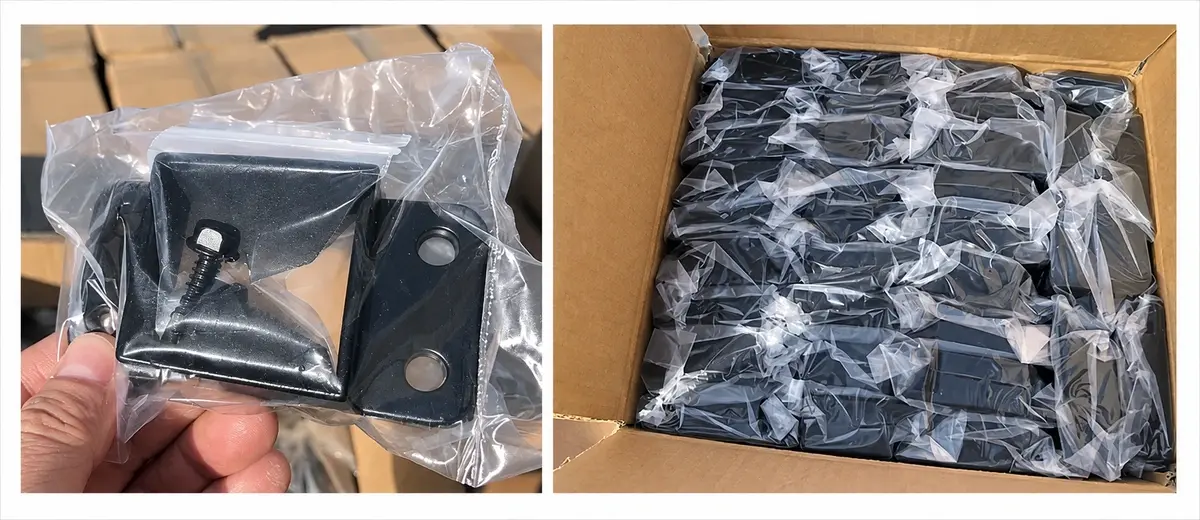
| Small fittings | Are parts separated, counted and labelled by their assembly reference? |
A pallet provides a handling platform; wrapping, separators and restraint perform different functions. More wrapping does not compensate for an unsuitable support beneath the load.
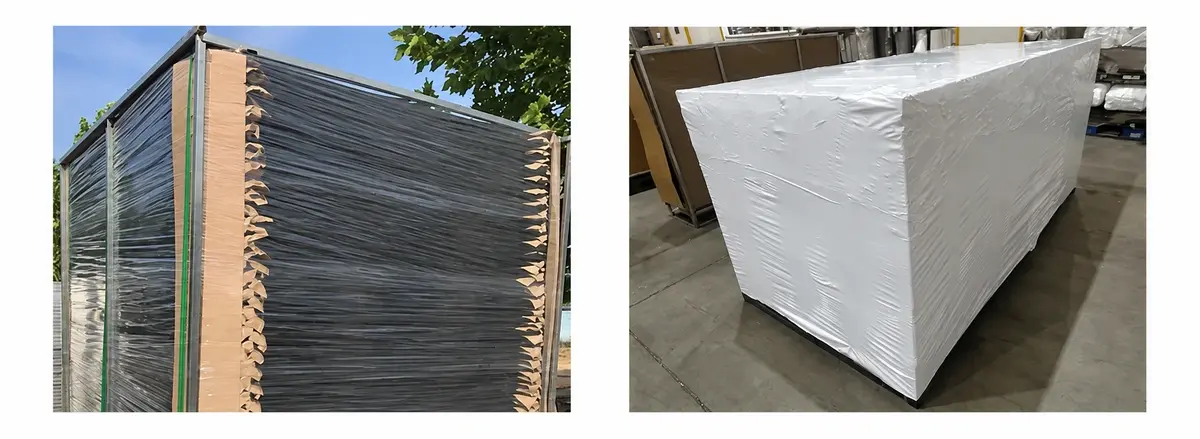
Compare packing arrangements by the delivery task
A distributor may need clearly separated stock references that can be stored and picked individually. A contractor may prefer grouping by installation area. A mixed shipment needs both a readable package reference and a detailed contents list.
Panel orientation and bundle dimensions should be coordinated with the product and handling plan. There is no universal number of panels per pallet that suits every width, weight and finish. The actual package dimensions and gross weight are more useful than an assumed container quantity.
Keep moisture management in the discussion
Protective film can keep dirt off a load, but wrapping damp galvanized parts tightly together can retain moisture. The AGA's wet-storage prevention guidance discusses dry storage, drainage and airflow around galvanized surfaces.
The packing plan should therefore consider the journey and any storage period after arrival. A shipment intended for prompt unpacking may encounter different conditions if it remains outside for weeks. Follow the agreed product storage instructions rather than treating transport wrapping as permanent weather protection.
Give the receiving team usable information
Before dispatch, identify package dimensions, gross weight and the agreed handling arrangement. The receiver needs suitable equipment and access for the actual load. Strap locations should not be treated as lifting points unless the packing design explicitly provides that use.
A simple illustrative packing-list entry might read: “Package P-03; post reference FP-02; 24 pieces; related fixing cartons C-05 and C-06.” Dimensions and weights would be entered from the actual package, not calculated from that label alone.
Preserve the connection between goods and records
Readable labels help the receiver identify several similar heights or post types without opening unrelated bundles. Photographs can record package condition and label references, but they do not replace an item count or a defined inspection.
FencingWise's packing and shipping service covers coordination of the proposed order. For branded labels, see OEM and private label packaging. The pre-shipment checklist brings quantities and packing references into the final record.