
By FencingWise Editorial Team · Updated 17 September 2026.
Calculate wire mass from volume
For round steel wire, using an assumed density of 7,850 kg/m³, the mass is approximately:
Mass in kg = 0.006165 × diameter² in mm × length in m.
The coefficient comes from the circular area, πd²/4, the unit conversion and density. The density is a conventional steel calculation value, also given in Steel Construction Institute reference material; use the actual material basis where a different value is required.
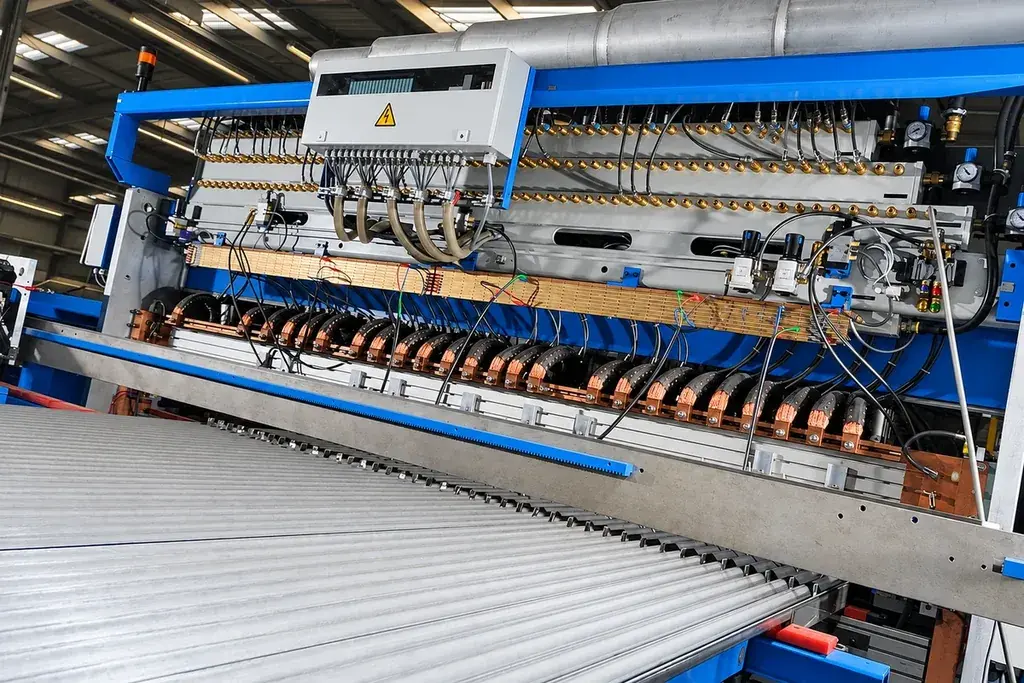
Count the wires on the drawing. Dividing width by mesh pitch without accounting for edge wires and projections can miscount the total.
A complete illustrative twin-wire calculation
Assume a bare, unframed panel comprising:
- 41 vertical wires, each 2.0 m long and 5 mm in diameter.
- 11 horizontal rows, each containing two wires.
- Each horizontal wire is 2.0 m long and 6 mm in diameter.
| Wire group | Total wire length | Calculated mass |
|---|---|---|
| Verticals | 41 × 2.0 = 82 m | 0.006165 × 5² × 82 = 12.64 kg |
| Paired horizontals | 11 × 2 × 2.0 = 44 m | 0.006165 × 6² × 44 = 9.77 kg |
| Total bare wire | 126 m | 22.40 kg |
The total is calculated before rounding the individual subtotals. The example uses stated wire counts rather than inferring them from a commercial panel size. It is not a FencingWise product weight or a tolerance.
Where theoretical and measured values diverge
A formed panel needs the developed wire length through its bends. Using only the projected panel height can omit steel. Twin horizontals count twice, whereas a single horizontal row counts once.

Wire diameter has a squared effect in the calculation. Use measured or specified steel diameter rather than treating the outer coating as solid steel. Actual tolerances, end projections and the product's manufacturing details also affect mass.
A finished panel adds coating; a framed panel adds the frame. Clamps attached for shipping may add more. Those differences should be explained before interpreting a weight variance as a material shortage.
Separate panel net weight from pallet gross weight
An illustrative shipment of ten panels measured at 23.0 kg each has 230 kg of panel net weight. If the measured pallet and protection weigh 30 kg, the gross package weight is 260 kg. That second example is independent of the bare-wire calculation above.
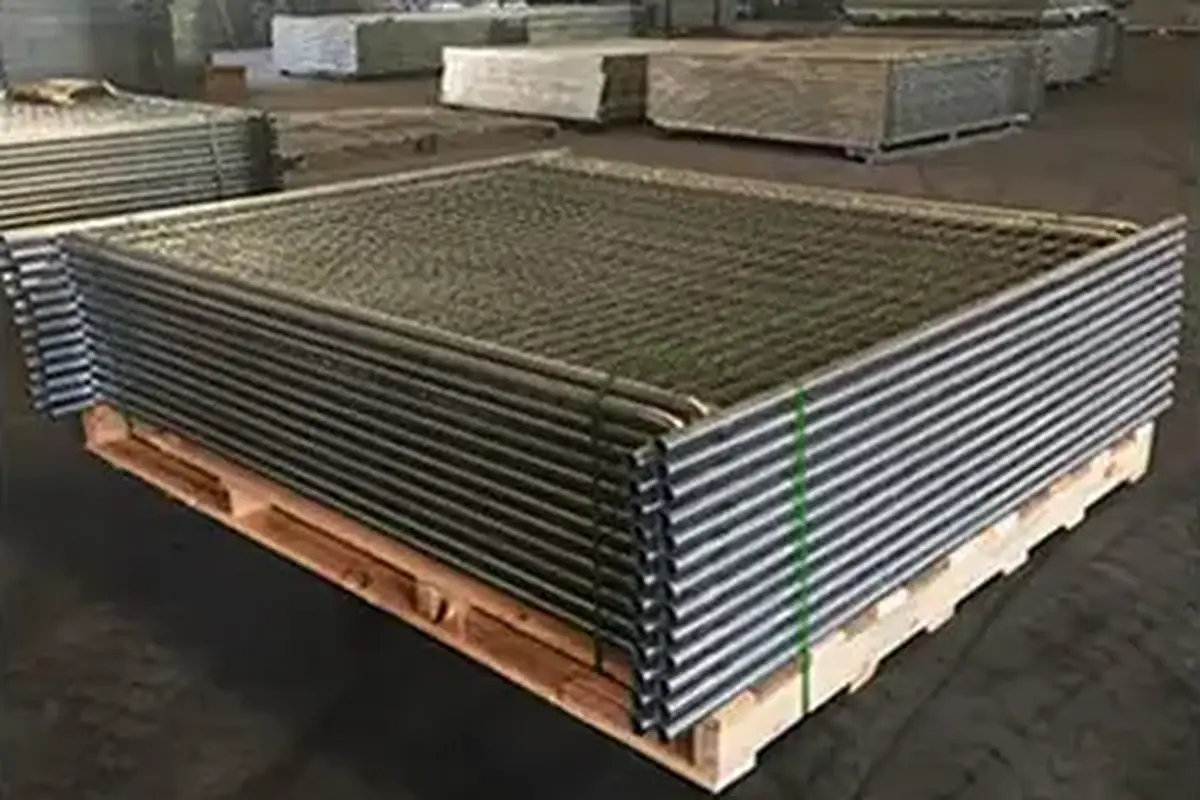
A receiving record should identify what was weighed, the scale used and the packaging included. Compare against the agreed tolerance and sampling plan. The pre-shipment checklist and pallet packaging guide help keep those records consistent.