
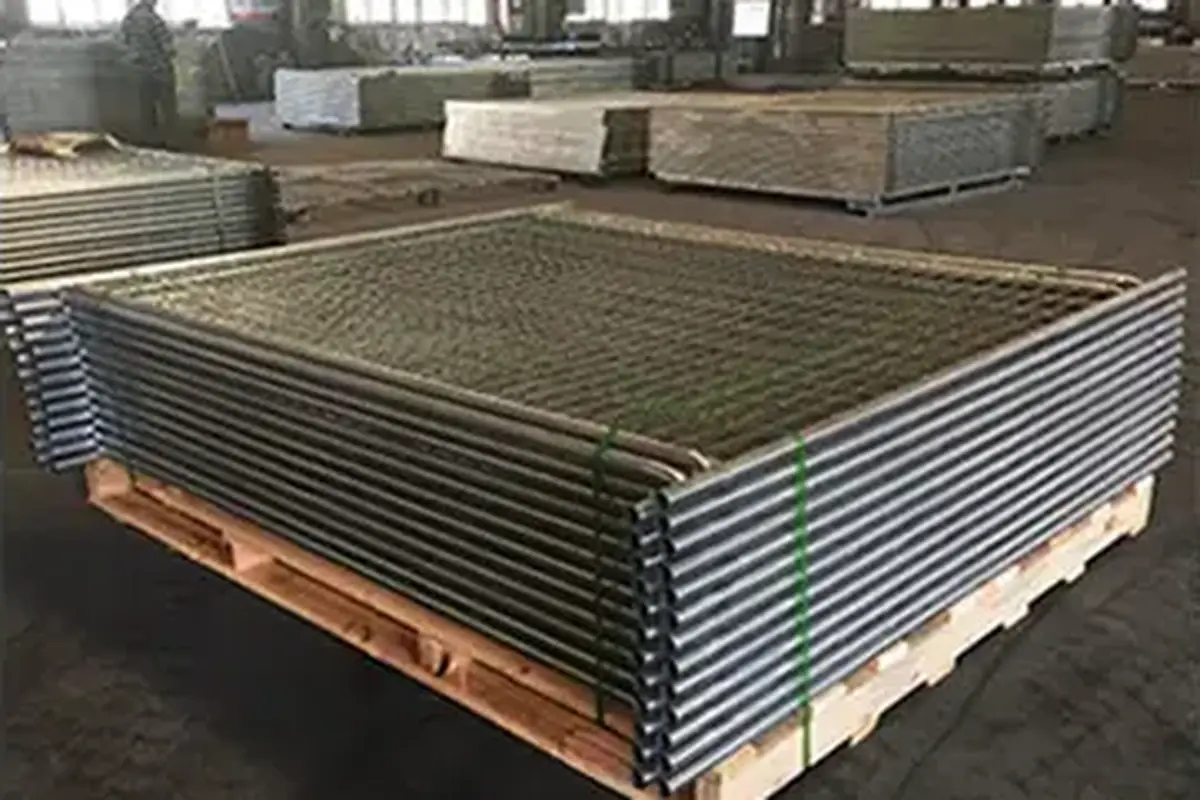
Give every pack a physical description
Record length, width, height, gross mass, support points and the approved handling method. Include projecting hinges, base plates, protective frames and separators. A gate leaf that is nominally narrower than the container can still need a larger protective package.
Identify whether packages may be stacked and under what assessed arrangement. Do not place a heavy post bundle on a panel pack merely because the combined height fits. The load path through the packing needs to be suitable for the actual cargo.
| Pack group | Important distinction |
|---|---|
| Mesh panels | Face protection and support against distortion |
| Posts | Bundle stability, ends and projecting base plates |
| Gates | Frame support, hardware protection and orientation |
| Accessories | Countable sets, compatibility and secure containment |
Reconcile an illustrative mixed shipment
Assume four panel packs each weigh 800 kg, two post bundles each weigh 650 kg, one gate pack weighs 450 kg and accessory cartons total 150 kg. Cargo package mass is 4 × 800 + 2 × 650 + 450 + 150 = 5,100 kg.
If the transport plan adds 120 kg of dunnage and securing material not included in those package masses, the total becomes 5,220 kg before the container's own tare. Do not add the same pallet or protection twice if it is already included in a measured pack gross mass.
Keep the calculation by pack reference. A single total weight gives little help when a gate pack changes or a post bundle is split.
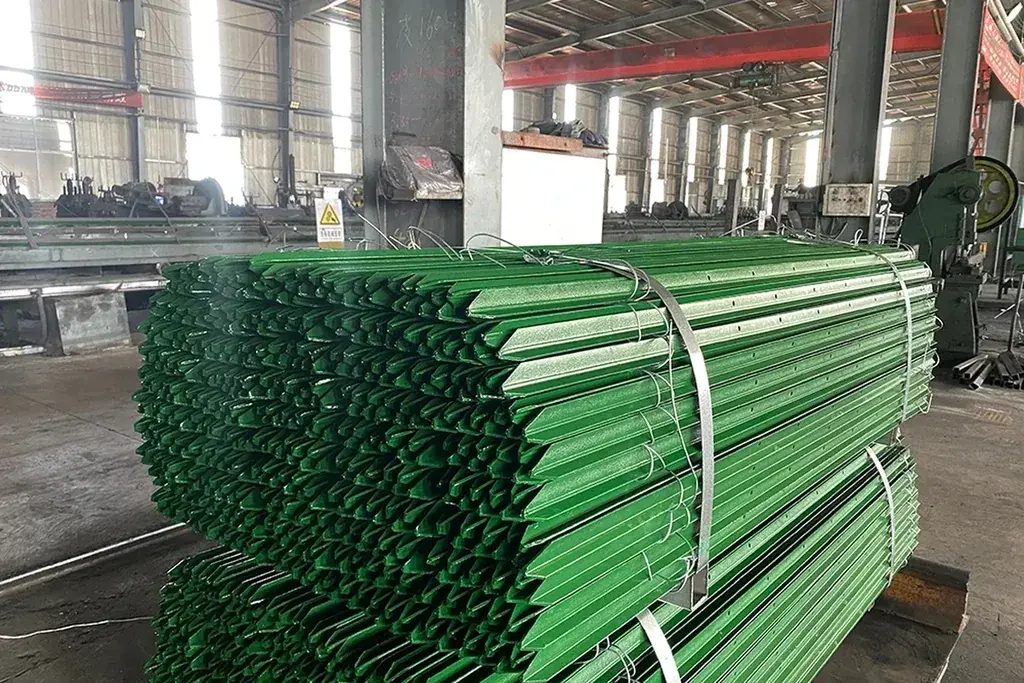
Check the installation sequence against unloading
If the site needs gate supports first, identify where those supports are packed and whether they can be unloaded without disturbing unsuitable packages. Loading solely for minimum unused space can create an impractical or unsafe unloading sequence.
Show the intended unloading equipment and access. Fork pockets, lifting points and the available ground area need to match the approved handling method. A package that can be loaded at the factory may still be difficult to unload at a constrained site.
For multiple destinations, segregate and label each destination's material. Do not allow the first site to consume connection parts intended for a later delivery simply because all accessories were placed in one unmarked box.
Prevent compatibility from disappearing inside the mix
Use the same references on the drawings, packing list and labels. A fixing carton should identify which panels or gates it serves. Visually similar bolts can have different lengths, threads or material requirements.
For illustration, a shipment contains 120 fixing sets for panel family A and 80 for family B. Receiving 200 sets in total is insufficient if all 200 are family A. Reconcile quantity by reference, not only by the number of cartons or total mass.
Keep separately agreed spares distinct from installed quantities, and identify special-width panels by installation position.

Resolve an added gate after the load plan is drafted
Treat a late gate addition as a new physical package, not only a change to the invoice. Obtain its protected dimensions, gross mass, handling arrangement and hardware location. Check whether it changes the unloading sequence or displaces a pack needed earlier at the receiving site.
Update the load drawing and package list together. If an existing pack is split to create space, give the new packages distinct identities and reconcile their contents. Avoid leaving the carrier with an old package count while the factory uses the revised arrangement.
Review securing and support after the change with the responsible transport team. An apparently small addition can affect access to securing points or load distribution. The final release should refer to the actual completed packages, including the gate's projecting hardware and protection, rather than the earlier estimate based on its bare leaf dimensions.
Finalise geometry, weight and securing together
The load plan should show package orientation, distribution, securing and the usable door opening. Volume alone cannot establish that the cargo fits or that the transport arrangement is acceptable.
Use container loading calculations for the dimensional comparison and export documentation for the shipment records. The completed mixed-load schedule should let the factory, carrier and receiving site identify the same packs, masses and unloading order without reconstructing the shipment from a total cubic-metre figure.