
By FencingWise Editorial Team · Updated 17 September 2026.
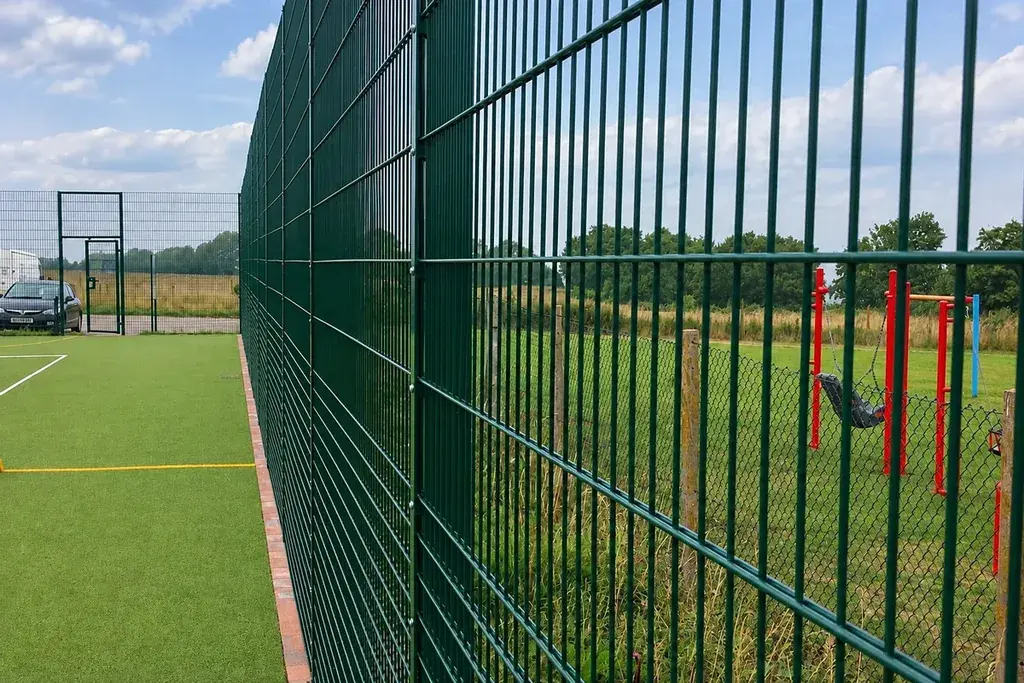
The lower zone does a different job
A rebound arrangement may use a denser mesh pattern near the playing surface, with a different pattern above it. The lower zone receives frequent ball contact; the upper zone has a containment role. The specified sport and ball determine what the whole enclosure needs to achieve.
Ordinary twin-wire construction alone does not establish suitable ball response. The panel, posts and connections work as an assembly, and the relevant performance should be supported for that configuration.
| Detail | General perimeter panel | Rebound assembly |
|---|---|---|
| Main duty | Boundary enclosure | Enclosure with an intended playing interaction |
| Lower mesh | Defined by the perimeter specification | Reviewed specifically for ball contact and response |
| Playing-side face | Not necessarily designed as a court surface | Panel ends, fittings and transitions require attention |
| Connections | Designed for the stated fence duty | Also considered for repeated ball contact and movement |
| Gate infill | Matches the boundary requirement | Needs to continue the intended playing-zone detail |
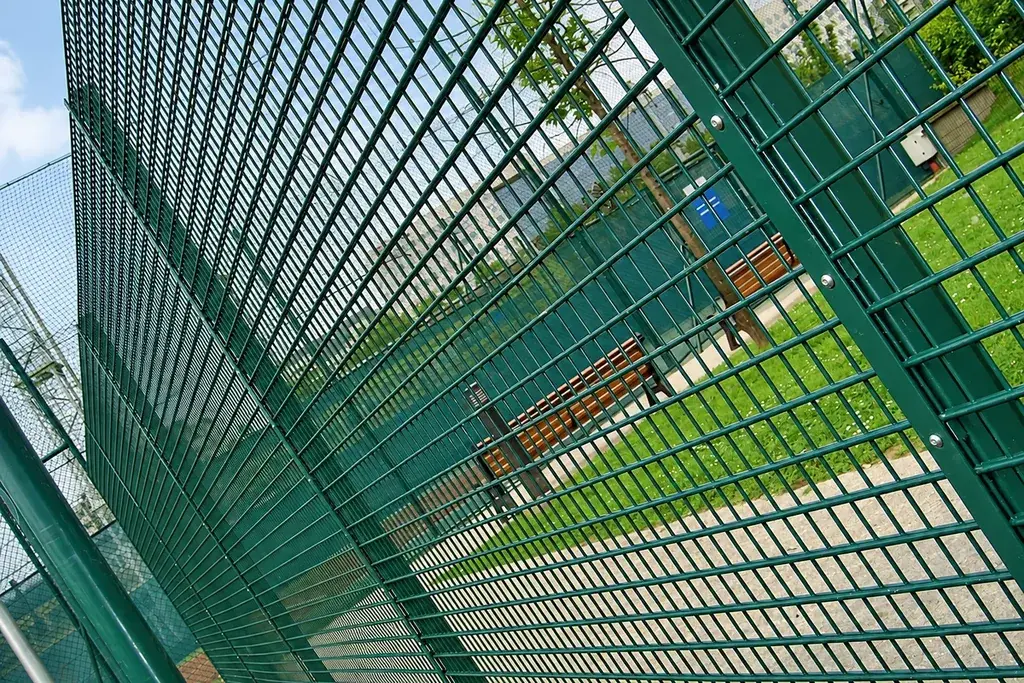
Connections influence both the face and the sound
A moving panel or loose connection can rattle under impact. Some sports systems incorporate resilient interfaces and cover the panel-edge area with bars. The reference matters: a pad or bar is part of a designed joint, not a universal cure for noise.
Zaun's Super Rebound description illustrates this relationship between mesh zones and fixings. Its dimensions and performance statements apply to its product, not to every rebound fence or FencingWise supply.
Noise depends on the installed assembly and surrounding conditions. A claim about measured sound reduction needs evidence for the proposed system; denser wire alone cannot substantiate it.
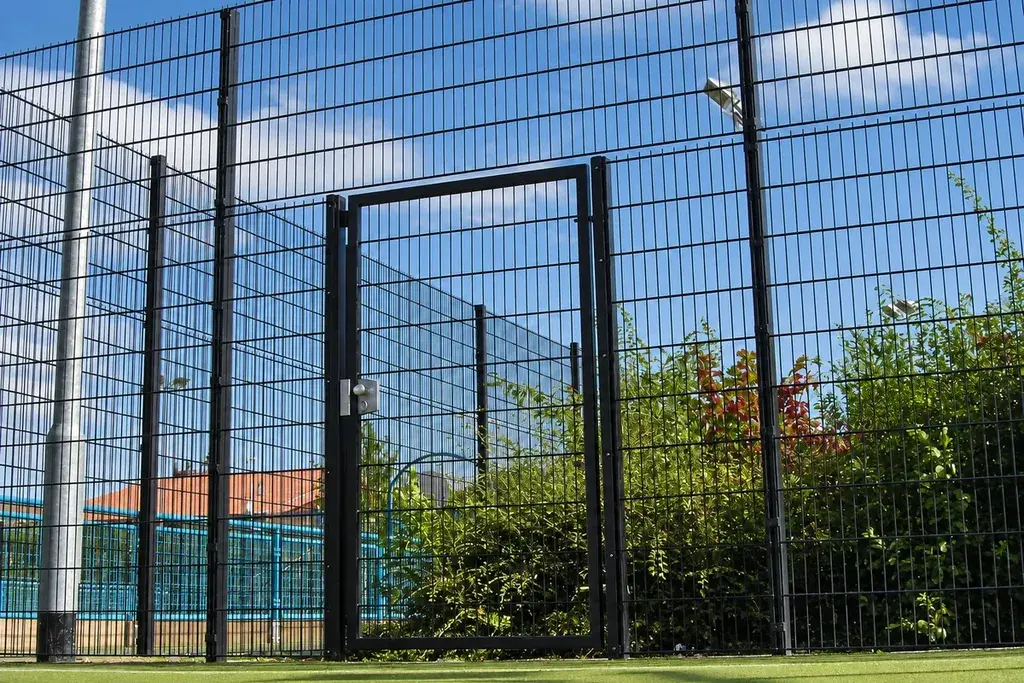
Gates and corners continue the playing surface
A sports enclosure can be consistent along its straight runs yet have a different exposed detail at a gate. Review the frame, latch, hinges and mesh transition on the court side.
Changes in enclosure height and corners also need coordinated connections. The drawing should show how the lower playing zone continues through those positions and whether maintenance access requires a different arrangement.
Specify the use before the dimensions
Identify the sports, ball types, intended fence interaction and any required test criteria. The designer then defines the configuration, including heights, supports and the relevant safety details.
Use the rebound product page for the supply discussion and the sports collection to distinguish related systems. A general fence specification can be the starting reference, but it should not stand in for a sports brief.