
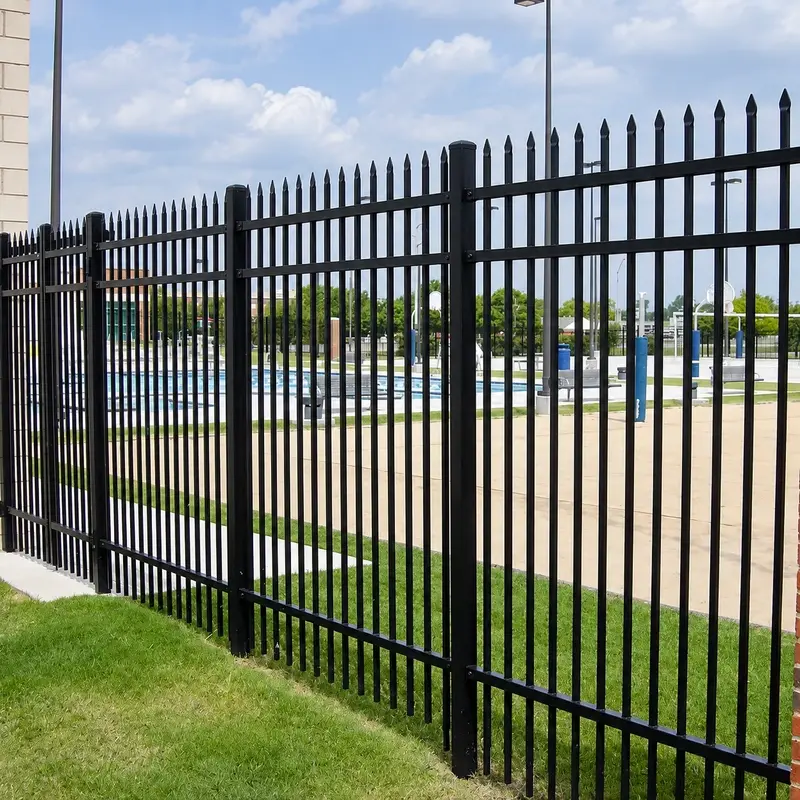
Create a common core and a site schedule
The common core can identify panel family, connection dimensions, part-number format and documentation requirements. Each site schedule then records its approved heights, exposure conditions, ground arrangements, gates and access constraints.
| Common record | Site-specific record |
|---|---|
| Defined panel and connection family | Approved configuration and run locations |
| Component identification method | Quantities by installed zone |
| Drawing and revision format | Foundation and level details |
| Replacement part register | Access windows and maintenance responsibility |
Do not standardise a foundation because the above-ground fence is common. Similarly, a different coating requirement may affect the ordered finish without requiring every mechanical interface to change.
Consolidate quantities without hiding variants
Assume three sites require 120, 80 and 60 panels of a shared dimensional family. The combined quantity is 260 panels. If the 60-panel coastal site has a different approved coating system, keep it as a separate finish line rather than issuing one ambiguous 260-panel order.
The consolidated schedule might therefore show 200 panels under finish specification A and 60 under finish specification B, with the same defined interface reference where that has been verified. Packaging labels must preserve the destination and finish distinction.
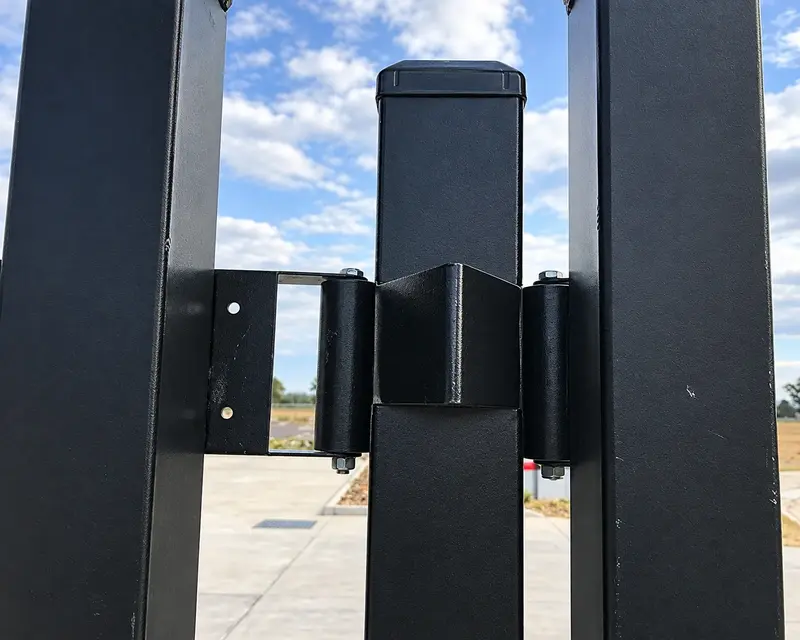
Prove interchangeability at the connection
Compare mounting positions, panel edge construction, post geometry and fastener arrangement. Review a representative assembled sample or an approved dimensional comparison. Matching nominal width is insufficient if the actual installed module or connection method differs.
Include the relevant drawing revision on replacement orders. A supplier may retain a product family name while changing a bracket or hole position. Treat those changes as controlled revisions, with compatibility assessed rather than assumed.
Keep a formal exception route
When a site needs a different height, finish or gate, record the reason and the parts affected. Identify whether the exception is local to one run or becomes a new approved family. This prevents a one-off substitution from silently becoming the standard for later sites.
An exception should have a responsible reviewer and an accepted document reference. Avoid an email trail that says only “same as last time” when several versions have already been delivered.
Plan spare stock by actual overlap
List which parts fit all sites and which are destination-specific. For example, a shared fastener may be suitable across the approved family while a coated panel must match a particular finish. Base stocking quantities on the organisation’s usage and replenishment assessment, not an invented universal spare percentage.
At receipt, reconcile labels, quantities and revisions by site. At installation, update the asset register so future purchasing can identify what was actually fitted. The modular repair guide explains how that record supports local replacement.
The result is a controlled catalogue with fewer avoidable variants and visible exceptions. It gives purchasing scale without erasing the engineering differences between sites.