
Match the fence attachment first
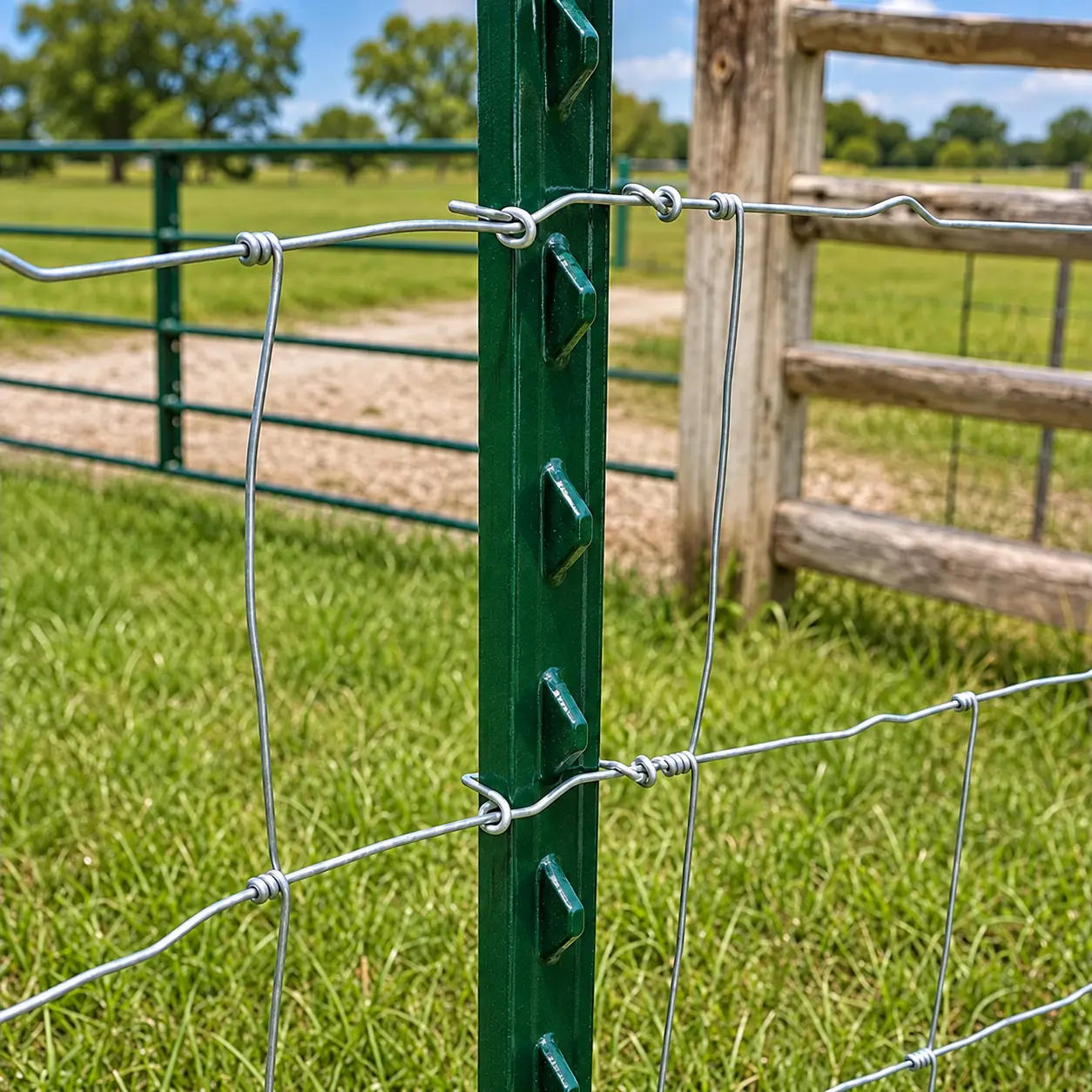
Identify how the selected wire or mesh is attached. Record the clip, tie or other fitting and its supported post profile. Check hole or stud positions against the fence pattern, especially near the top and bottom where available fixing positions may matter.
Support any claim that a fitting suits Y-posts with a defined profile range. Check the actual post section and attachment dimensions; a similar overall shape does not establish compatibility.
| Drawing field | Purchasing purpose |
|---|---|
| Cross-section dimensions | Identify the profile and accessory fit |
| Total length | Distinguish supplied length from installed height |
| Hole or stud pattern | Match the intended attachment positions |
| End and top detail | Check installation and approved protective accessories |
| Coating | Confirm the ordered finish and relevant evidence |
| Mass basis | Compare like-for-like transport and material quantities |
Read kilograms per metre correctly
Suppose an illustrative post is 1.8 m long and has a stated mass of 2.0 kg/m on the supplier’s defined basis. Its calculated mass is 1.8 × 2.0 = 3.6 kg. For 250 posts, the calculated post mass is 900 kg before separately supplied accessories and packaging.
Confirm whether the supplier’s quoted mass includes coating, attached plates or other features. A figure of 2.0 kg per post is not equivalent to 2.0 kg/m. Record tolerances where the mass forms part of the agreed acceptance requirements.
Do not use mass as a capacity certificate
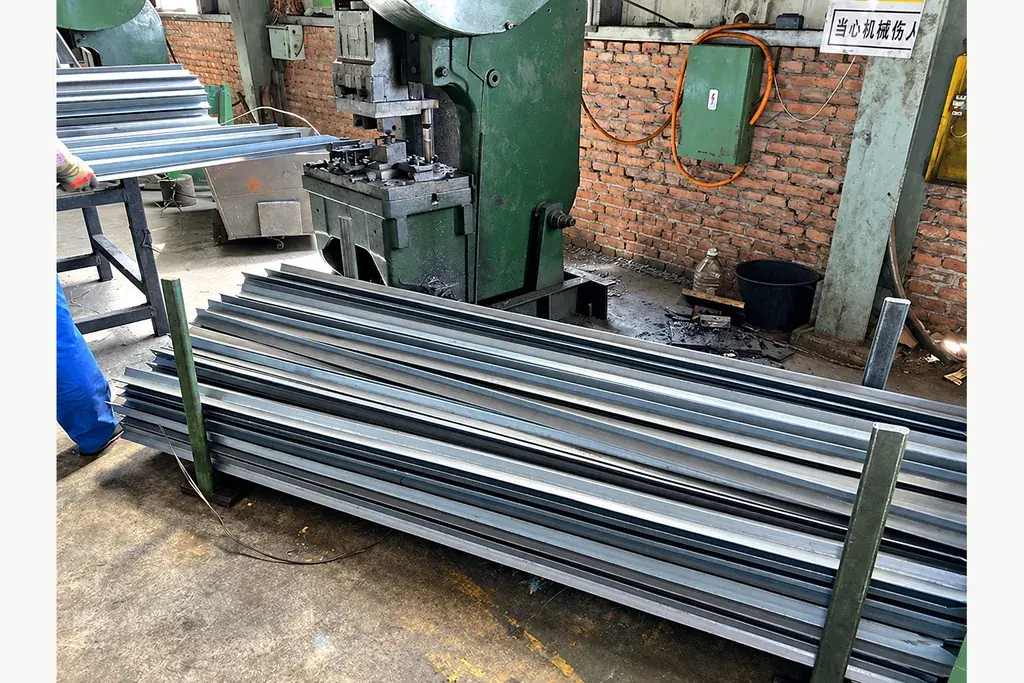
Post behaviour depends on section geometry, material, support conditions and loading direction. A heavier post may differ in useful ways, but weight alone does not establish allowable spacing or resistance in the installed fence.
Use the selected system’s design for line posts and the separate arrangements required at ends, corners and gates. A line post should not be substituted for a straining or gate support merely because its length is similar.
Trial the actual combination
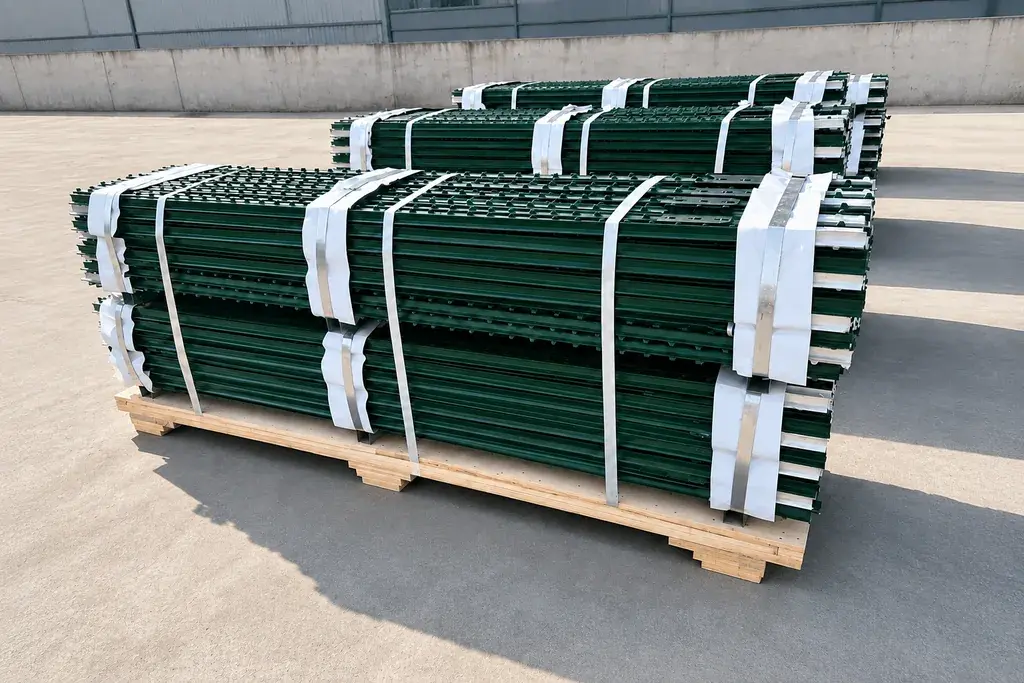
Before a large order, compare a representative post, fitting and mesh sample. Verify that the intended attachment can be assembled according to the product instructions and that the specified positions align. Keep the approved part references and drawing revisions together.
Check delivery labels and separate any unapproved variant. A changed hole pattern can create site rework even if total length and colour still match the quotation.
For quantities along a route, use the post spacing and bracing guide. It distinguishes a count based on an already approved layout from designing the support system itself.