
By FencingWise Editorial Team · Updated 17 September 2026.
Define what is being compared
This comparison concerns rigid welded panels and chain link fabric. Welded wire also comes in lighter roll forms, so “welded mesh” alone does not identify a rigid security panel.
| Feature | Rigid welded panel | Chain link fabric |
|---|---|---|
| Wire intersections | Welded joints | Interwoven wire forming a diamond pattern |
| Usual material unit | Individual panel | Roll of fabric |
| Support arrangement | Panels fixed to posts through clips or bars | Fabric tensioned and attached to its specified posts, rails or wires |
| Dimensional reference | Panel width, height and connection | Fabric height, opening, wire diameter and installed run |
| Local replacement | A compatible panel and fixing set | A compatible section of fabric with its joining and tensioning details |
Where the construction affects the choice
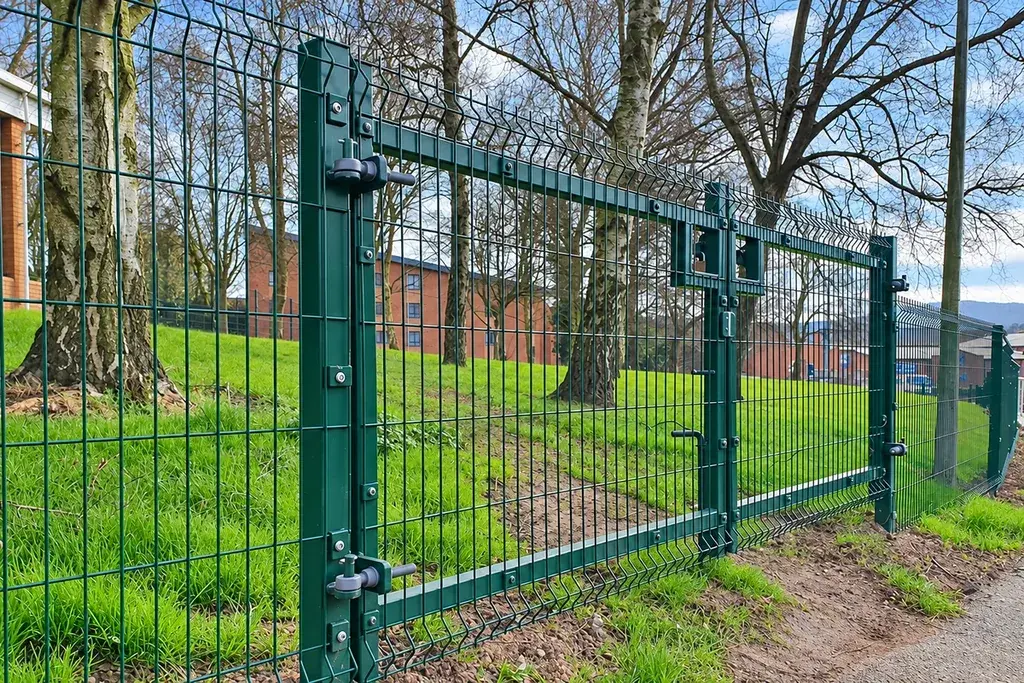
Rigid panels are useful when the project needs a defined flat or profiled bay arrangement. Repeatable panel references also help identify replacement parts between existing posts.
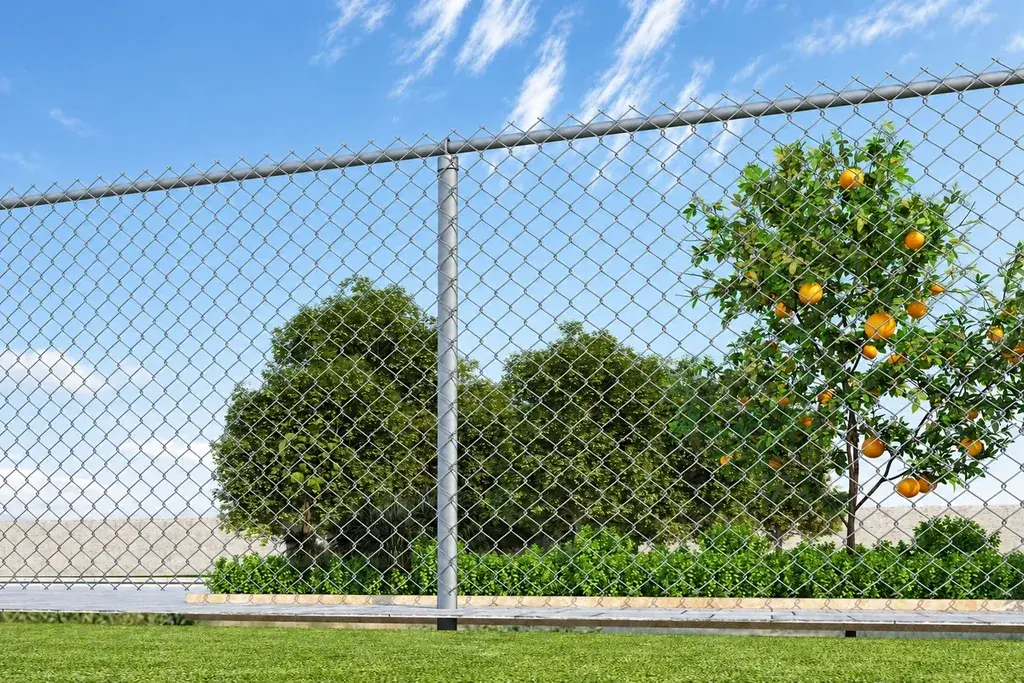
Chain link provides a roll-based fabric system that can suit long runs and layouts designed around tensioned mesh. Changes in direction and level still require the correct terminal, support and connection details. Flexibility is not a reason to omit that design.
For a demanding security brief, compare the actual aperture, wire, connections and system evidence. It is too broad to say that every welded fence is harder to breach than every chain link fence. Close 358 mesh and a light welded roll, for example, are very different constructions.
Follow the load path into the supports
A welded panel passes forces through its fixings into the posts. Chain link also depends on how the fabric is tensioned and restrained along the run. End and corner arrangements therefore deserve their own component references rather than being counted as ordinary line positions.
Mesh supply and installed-system supply are different scopes. A roll price does not establish the quantity of terminal fittings; a panel price does not establish the quantity of clips or posts.
Repairs need a matching interface
A damaged panel can be replaced if its width, profile and fixing detail match. Chain link can also be repaired locally with compatible fabric and appropriate joining and retensioning. The extent of either repair depends on the damage and condition of the surrounding assembly.
For extensions, record the existing mesh and support details first. Compare welded mesh families with chain link fencing, then use the component schedule guide to identify the fittings that belong to the chosen system.