
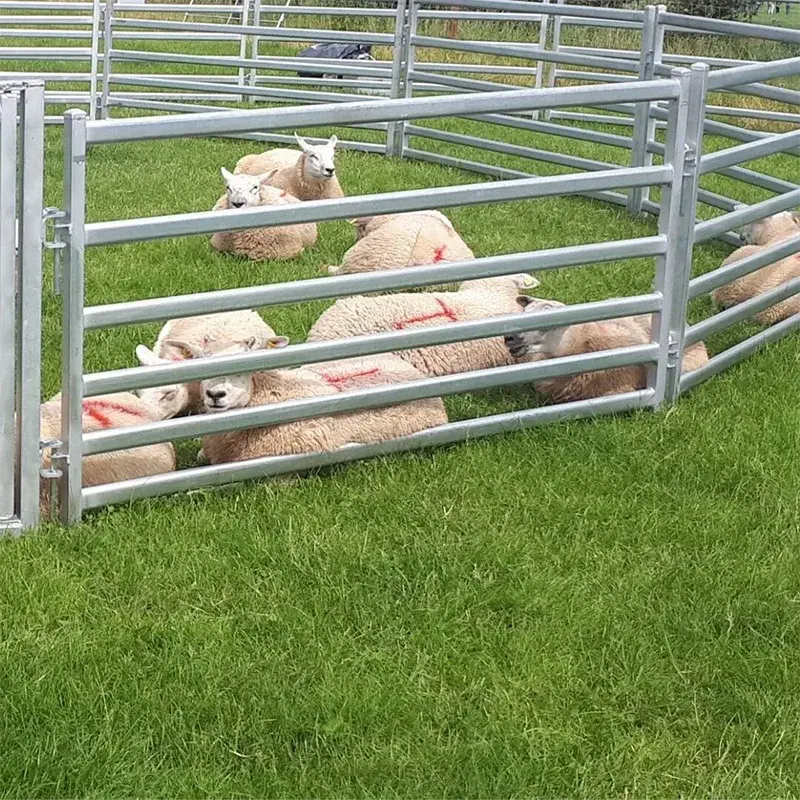
Choose rail gaps for the stock
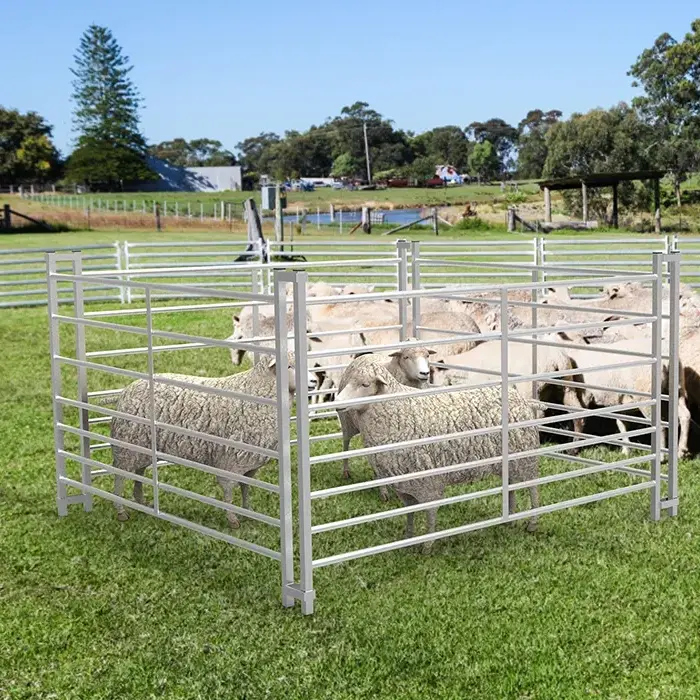
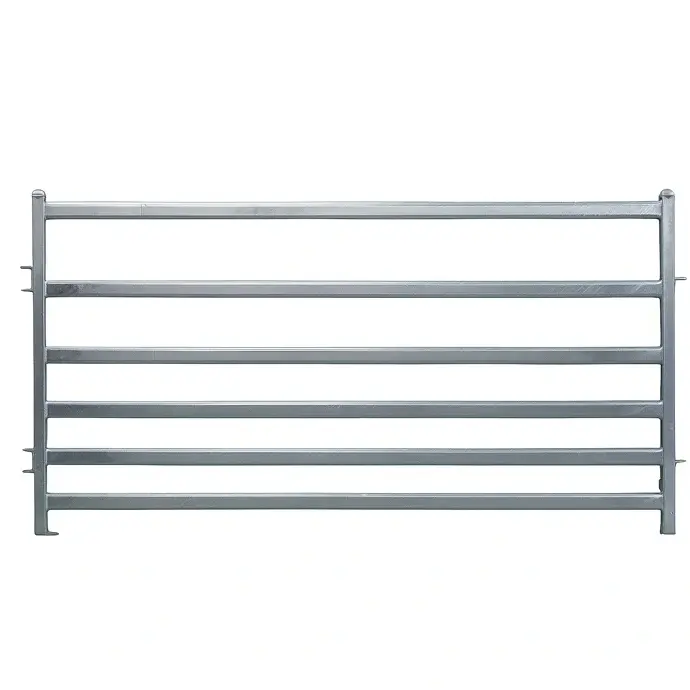
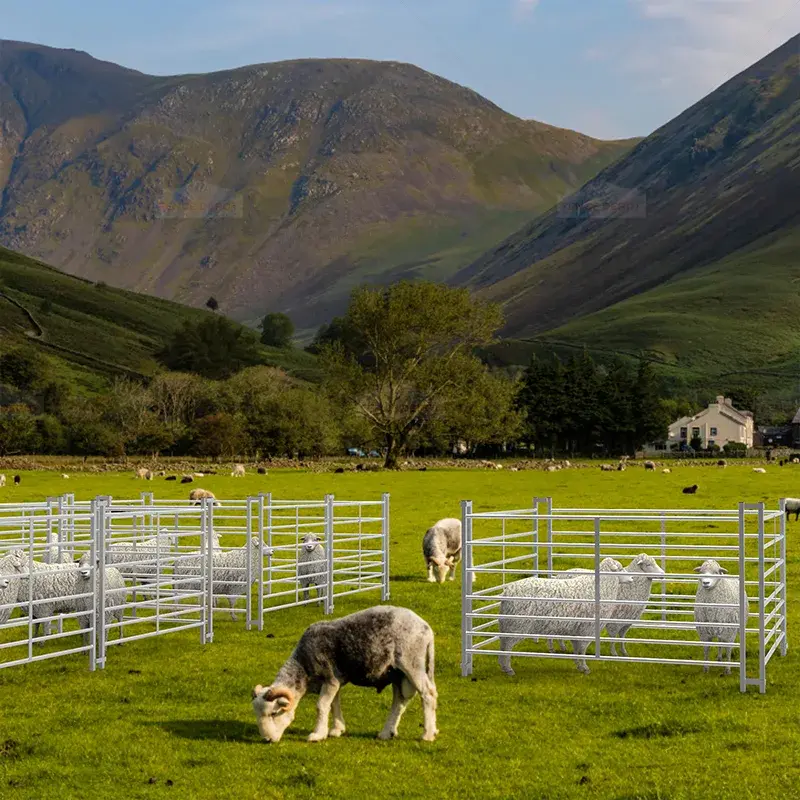
Overall height and rail count do not completely describe a hurdle. The clear gaps between rails, bottom opening and end connections need to suit the sheep using the pen, including younger or smaller animals where applicable.
Specify rail profile and material thickness alongside the outside dimensions. A taller hurdle is not automatically suitable for a more demanding handling location; the complete frame and connection arrangement must match the duty.
Plan access before counting panels
| Layout element | Include in the order |
|---|---|
| Straight pen sides | Standard panel references and quantities |
| Corners and junctions | Compatible pins, lugs and angle arrangement |
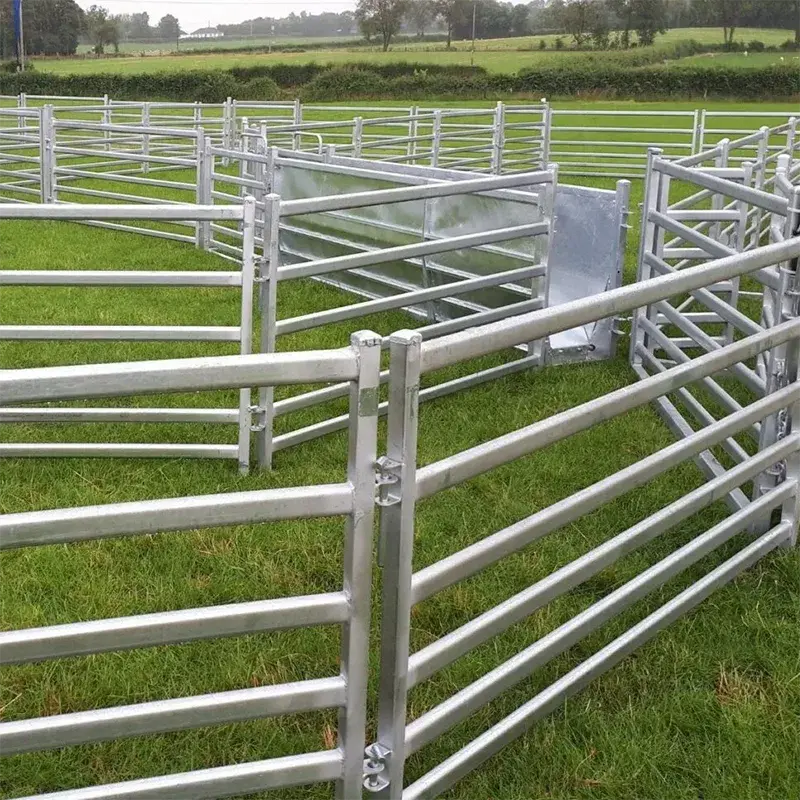
| Personnel access | Appropriate gate or approved access arrangement |
| Sorting route | Purpose-designed openings and connections |
Do not count a gate opening as an ordinary hurdle and leave the operator to lift a panel out during routine work. The access arrangement should be part of the planned system.
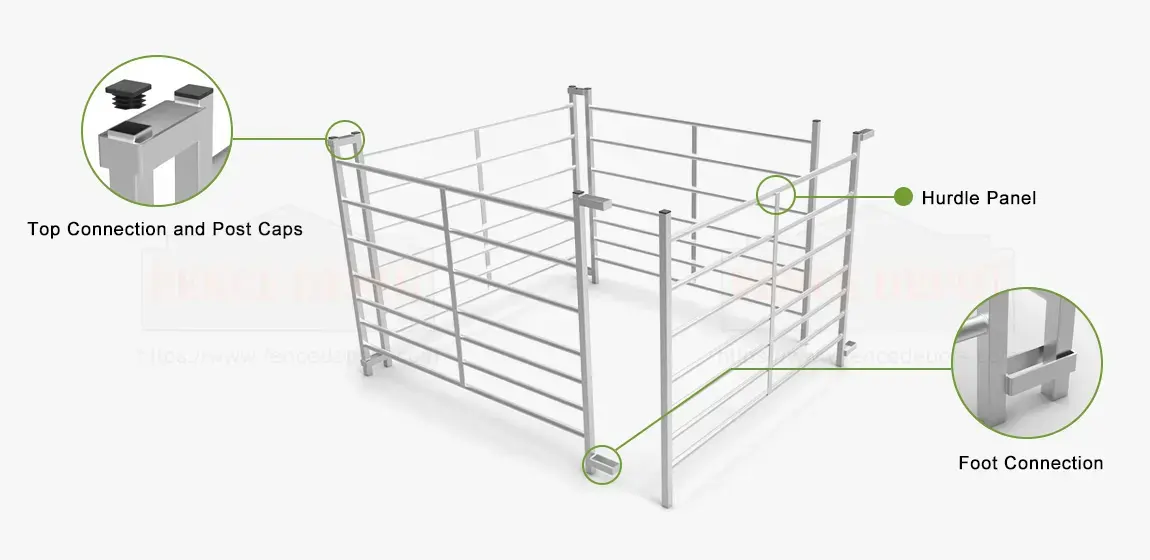
Check compatibility with existing equipment
For extensions, measure connection positions, pin diameter and retained panel height. Similar rail count and colour do not prove that new hurdles will connect neatly to an existing set.
Use an accepted drawing or sample to settle the interface before a larger order. Distinguish standard panels from special ends so that replacements can be identified without rebuilding the whole pen schedule.
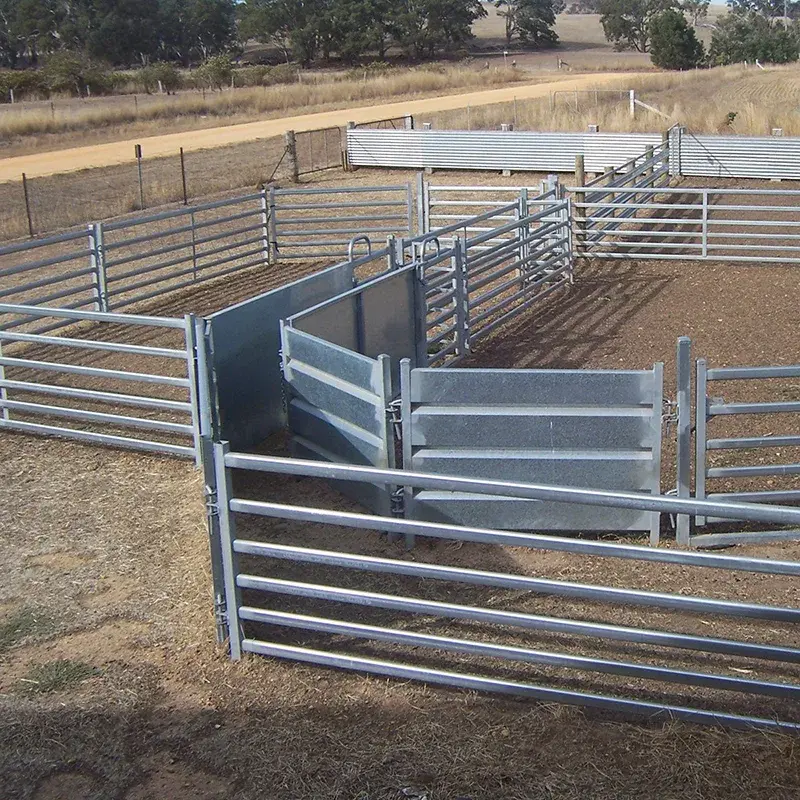
Handle and store the panels as specified
Actual unit mass matters for the handling method. Provide it with the offered construction and pack arrangement rather than calling every hurdle “lightweight”. Inspect rails, welds and connections on return from use; damaged panels should be assessed before they are reassembled.