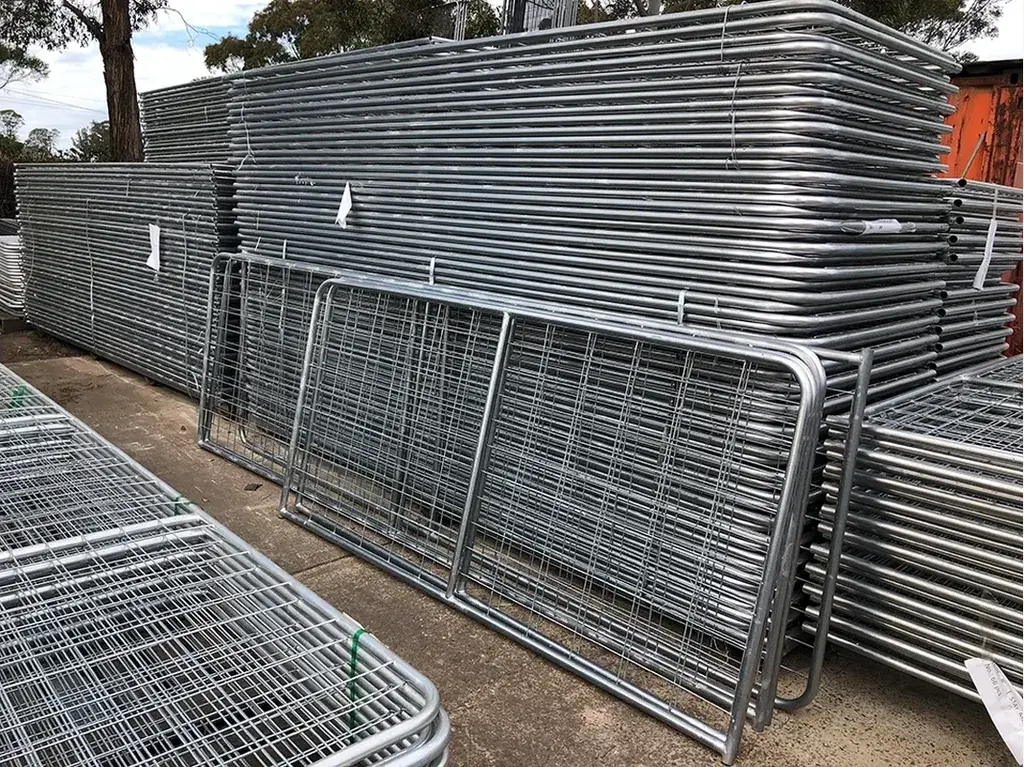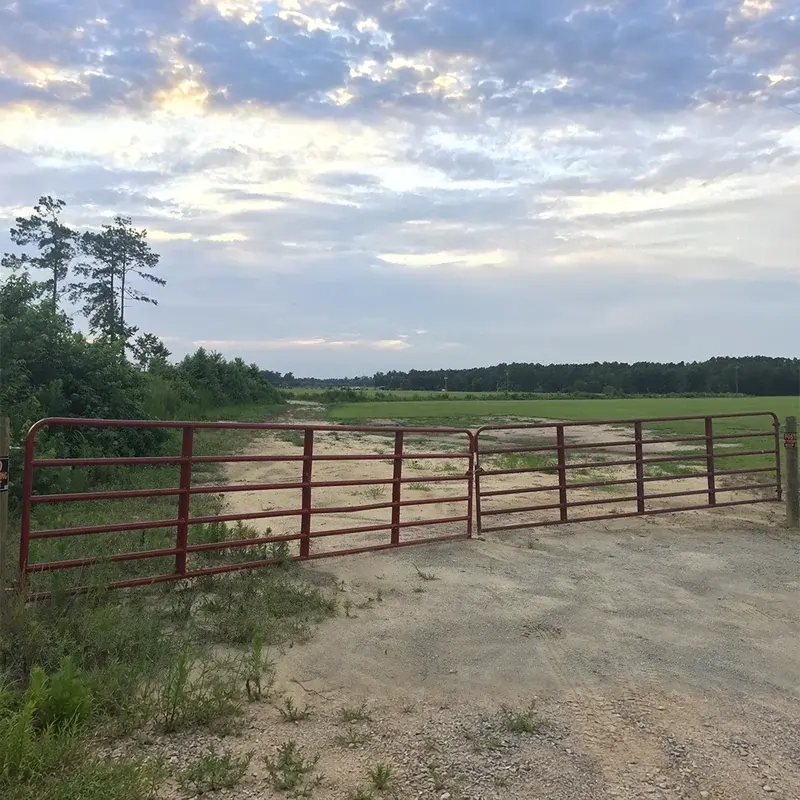
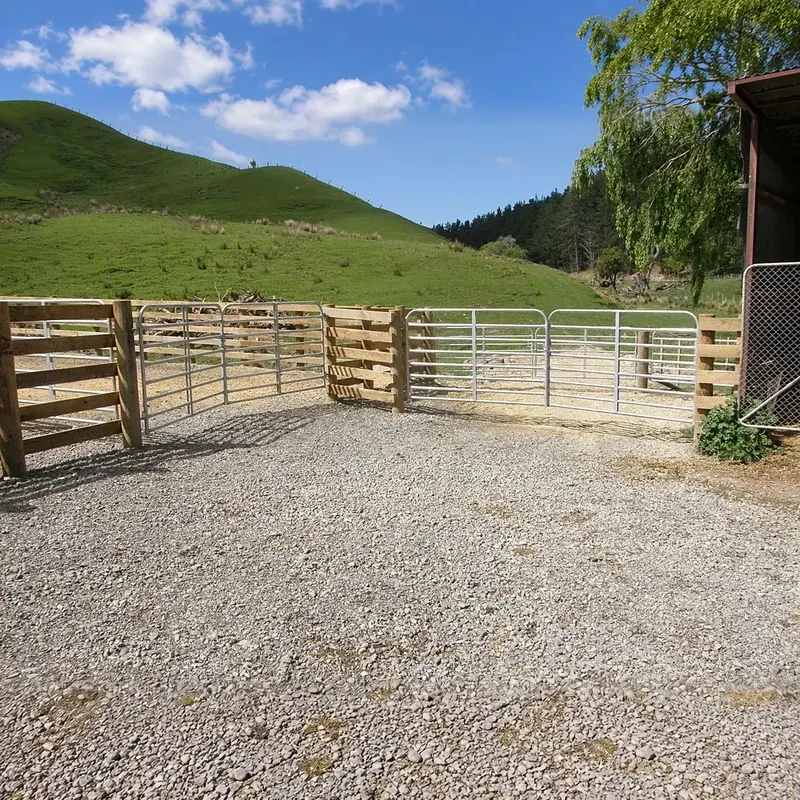
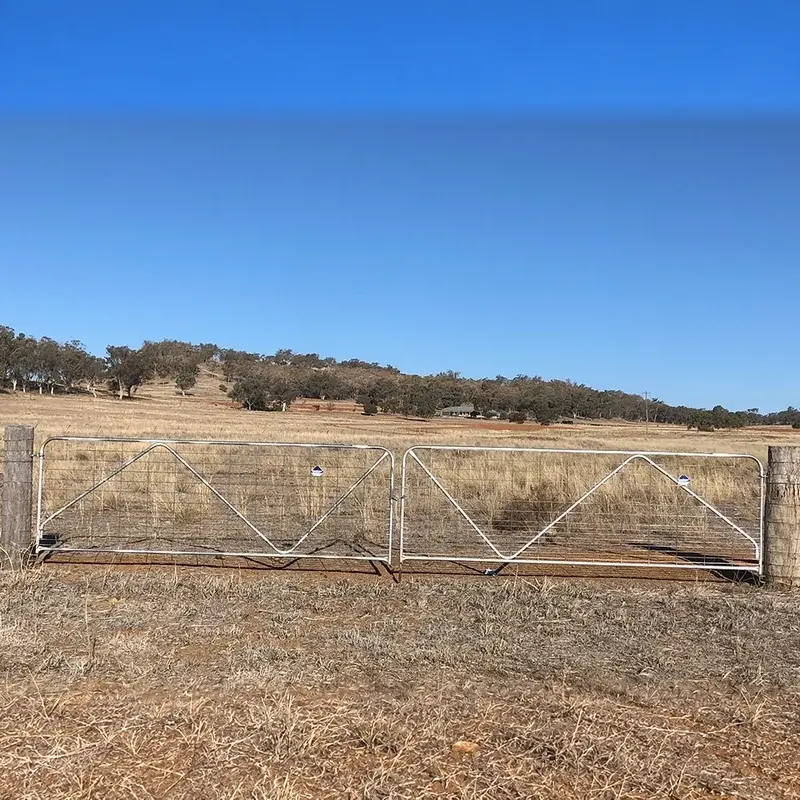
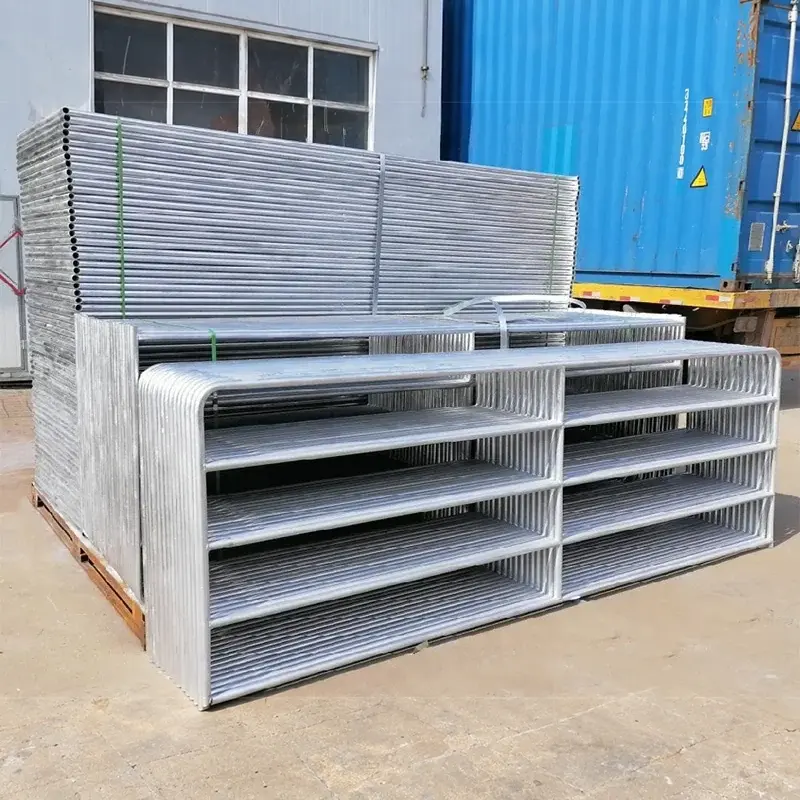
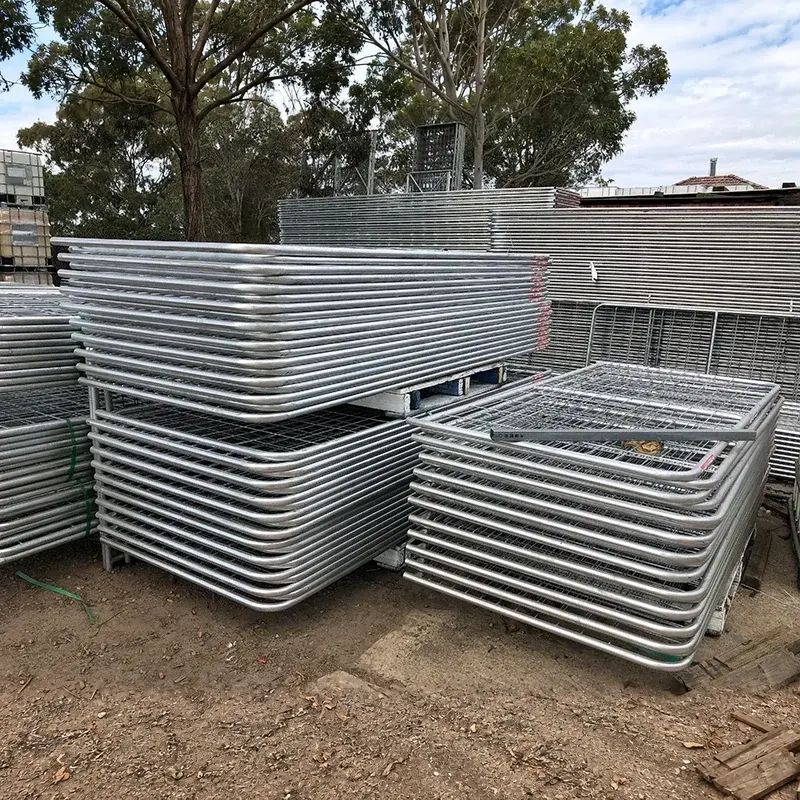
Define the rail arrangement, not only the count
Rail count, clear gaps, profile and wall thickness describe different aspects of the leaf. Six rails do not establish a universal stock suitability or strength. The position of the lowest rail and the installed ground clearance also affect the enclosure.
Use the livestock and handling duty to select the appropriate construction. Where smaller animals require closer openings, compare a mesh farm gate or another accepted infill arrangement.
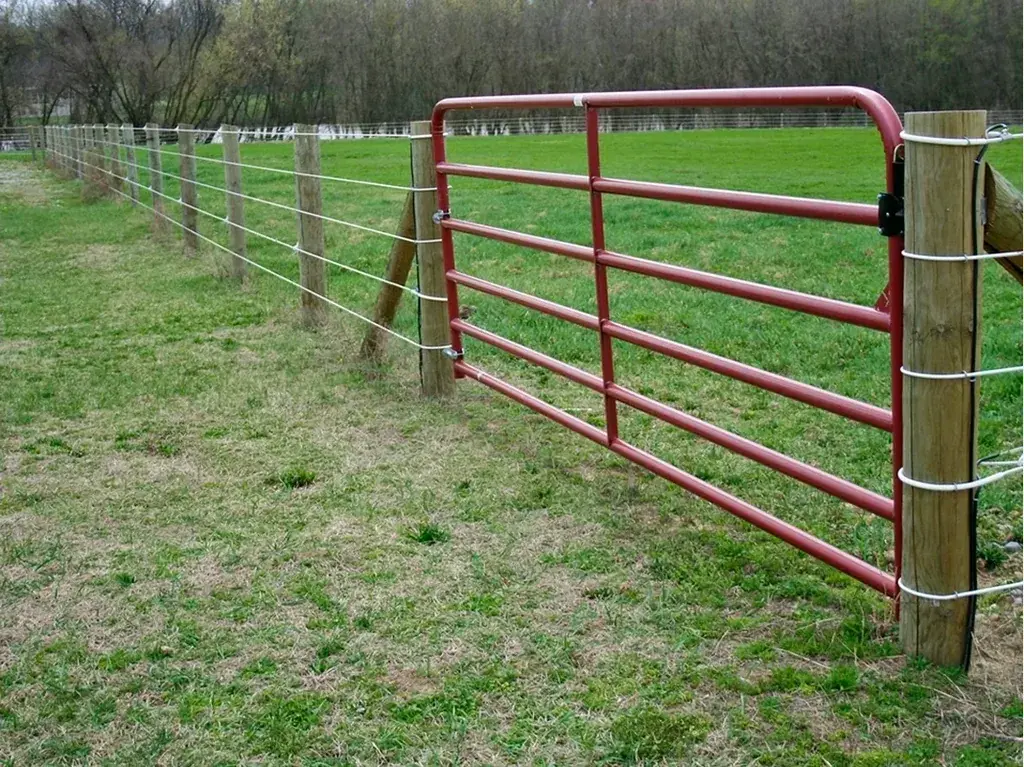
Choose the gate supports with the leaf
| Assembly part | Detail to define |
|---|---|
| Leaf | Frame, rails, width and height |
| Hinges | Type, spacing and supporting interface |
| Latch | Operation, receiver and access from the intended side |
| Posts or gate frame | Suitable support and anchoring arrangement |
The supporting post must suit the gate's mass, width and use. An ordinary line post should not be assumed to function as a gate post simply because a hinge can be attached to it.
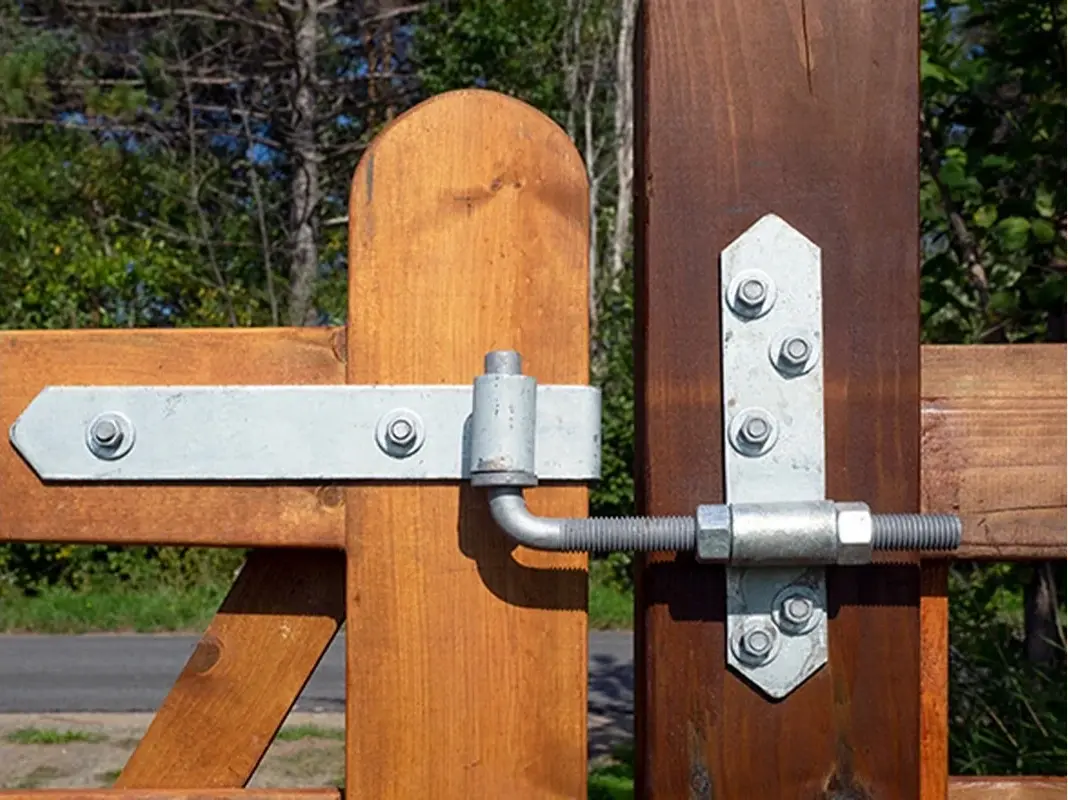
Check movement in the working layout
Draw the leaf open and closed. Check nearby fences, slopes, animal movement and the handler's position. The latch should be reachable through the intended operating route without requiring an improvised manoeuvre around the gate.
For cattle handling, use the competent yard designer and relevant HSE guidance. A rail gate supplied on its own does not establish the safety of the handling system.
Keep gates identifiable in a mixed load
Label width, handedness where applicable, assembly reference and included fittings. Separate similar-looking gates with different hinge positions or rail patterns. Record actual pack weights and the agreed unloading method.