
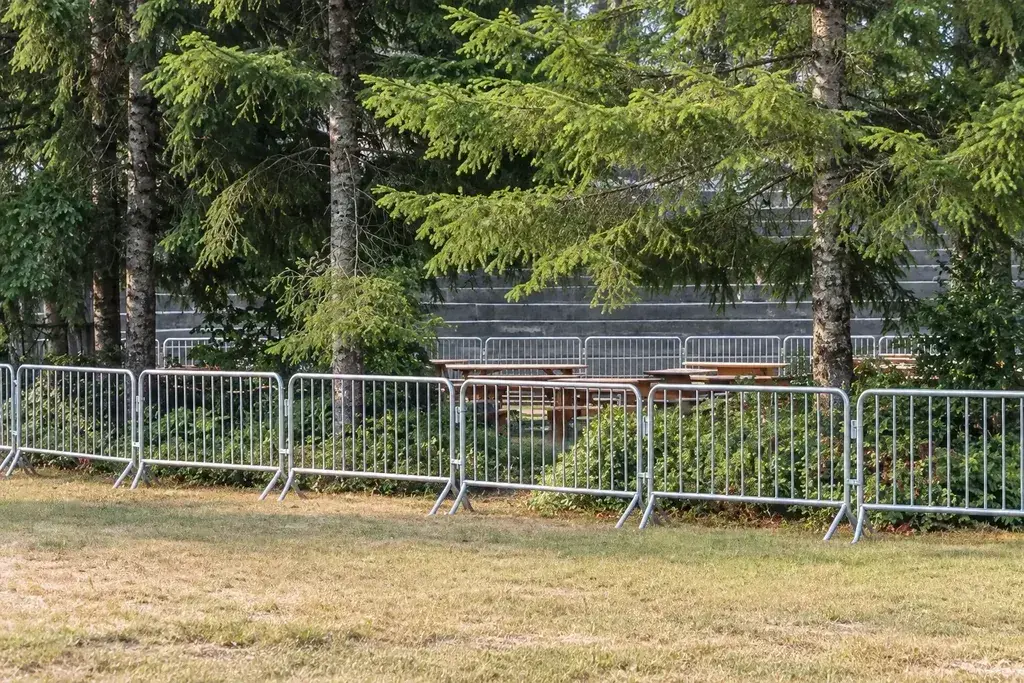
Three boundaries with different purposes
The site perimeter separates the event area from its surroundings. Framed temporary welded mesh and temporary chain link are product families to assess with their feet, connectors and support arrangement.
Internal dividers help identify routes or separate service areas. Their position, visibility and openings matter alongside the height of the panel.
Crowd barriers need to suit the expected use and loading. A mobile pedestrian barrier is not automatically a pressure barrier for a stage front or a dense crowd. HSE's event barrier guidance calls for selection based on the location and assessed use; stage barriers require particular consideration.
The base and connector belong to the fence
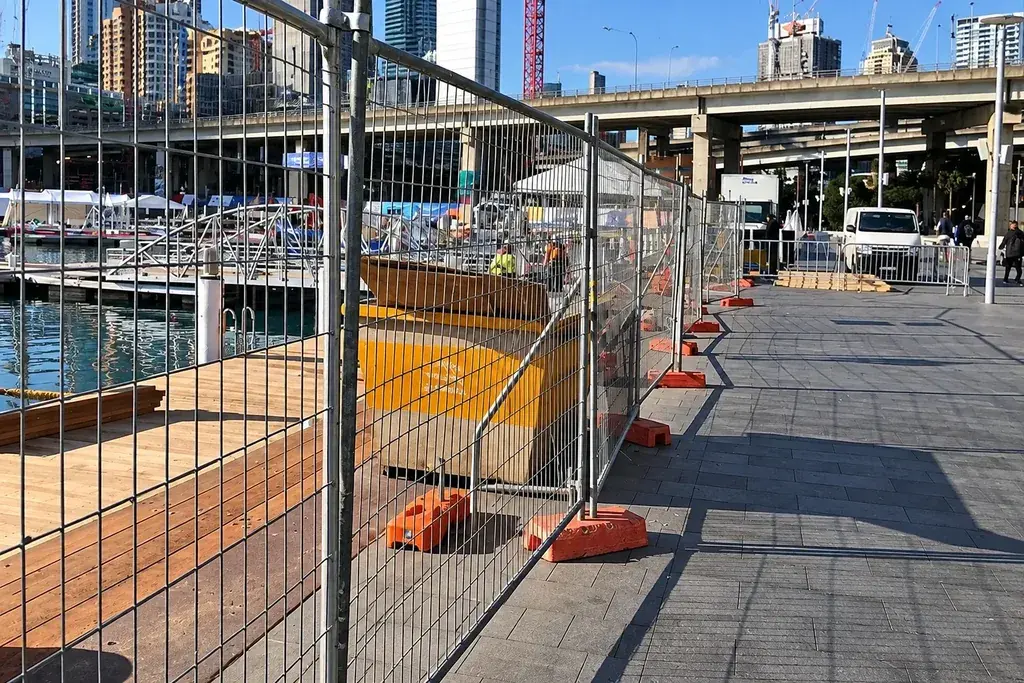
A temporary panel has no complete support system on its own. The frame, connector, foot and any required bracing form an assembly. A connector must suit the frame profile; a foot must suit the panel and the planned support configuration.
On a public-facing route, foot projections and changes in ground level need attention. At a service opening, the connector arrangement should allow the intended access without leaving the adjoining panels unsupported. The event designer or temporary-works specialist establishes the support and loading requirements.
Screening changes the arrangement
Adding fabric, advertising boards or privacy screening changes the area exposed to wind. It can also conceal people approaching an opening. The original open-mesh configuration therefore needs reassessment before those additions are made.
Do not assume that a heavier base or a few extra ties provide a verified solution. The supporting arrangement and any operating restrictions need to come from the assessed configuration. HSE includes site fencing within its temporary-works guidance.
Openings and repeated handling
Service vehicles, event staff and visitors may use different openings at different times. Identify gates and removable sections separately so their fittings do not disappear into the general panel count.
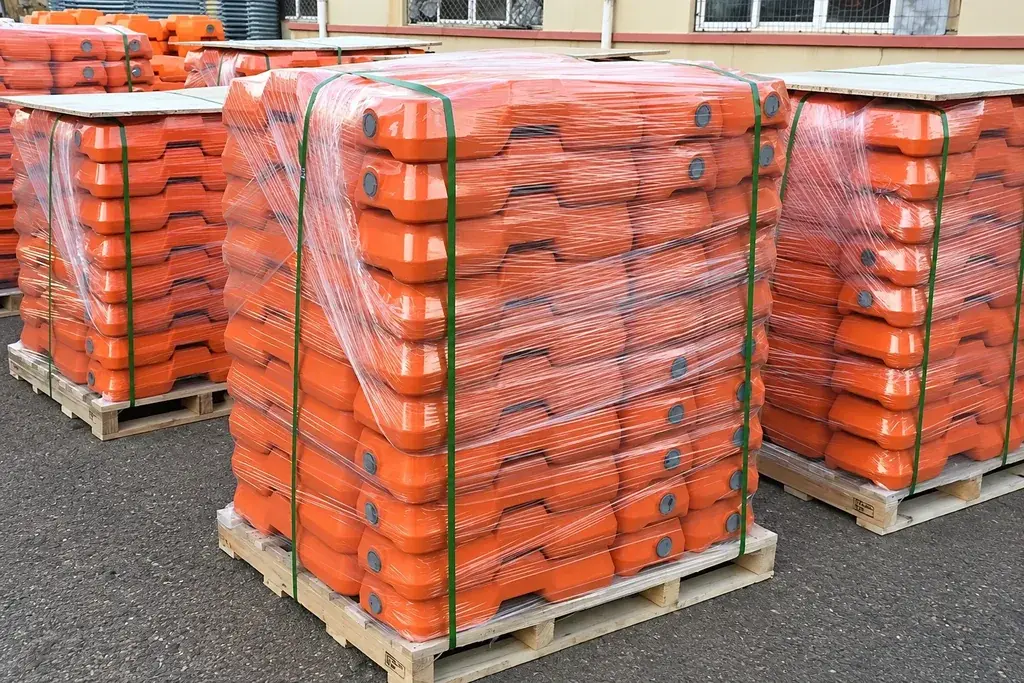
For reusable stock, keep panels, connectors and feet identifiable by type. Damaged frames or missing retaining parts should be recorded before the next deployment. FencingWise can quote the defined material list, with the packing arrangement discussed around transport, unloading and later storage. See temporary fencing for the current product range.