
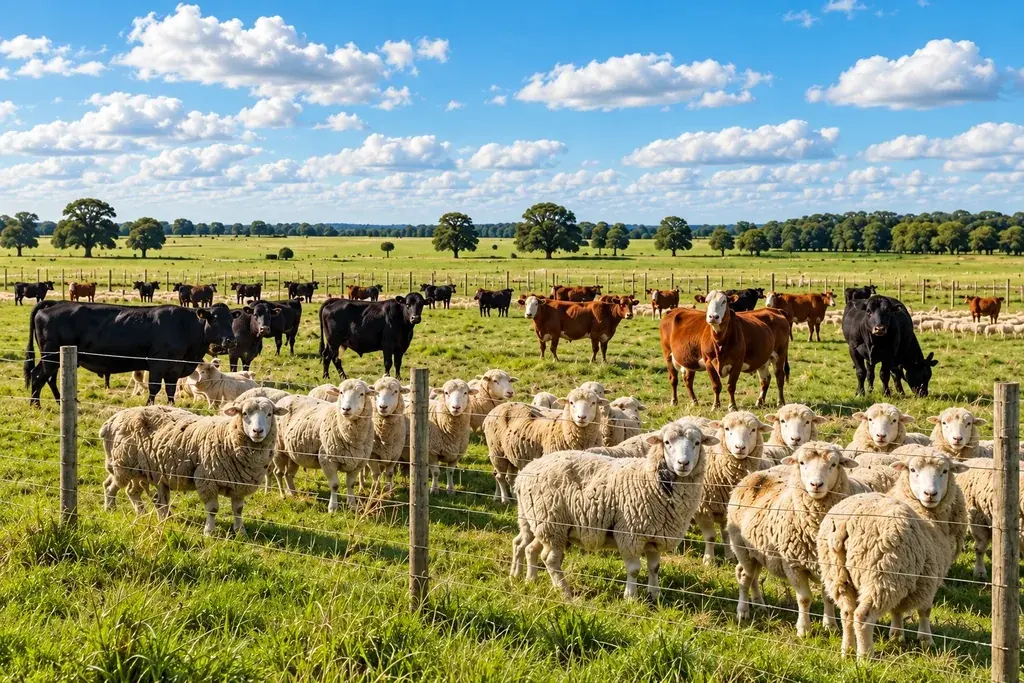
Describe the animals and their use of the space
Species, age, size and behaviour affect the design brief. Record whether animals normally graze beside the boundary, gather at feeding points or pass through a handling route. Identify young stock and mixed groups separately where their containment needs differ.
The responsible livestock adviser or farm designer should determine appropriate height, aperture, visibility and contact details. A product name such as field fence does not establish suitability for every animal. Smoothness, projections and the possibility of trapping a limb or head deserve attention at both the mesh and gate interfaces.
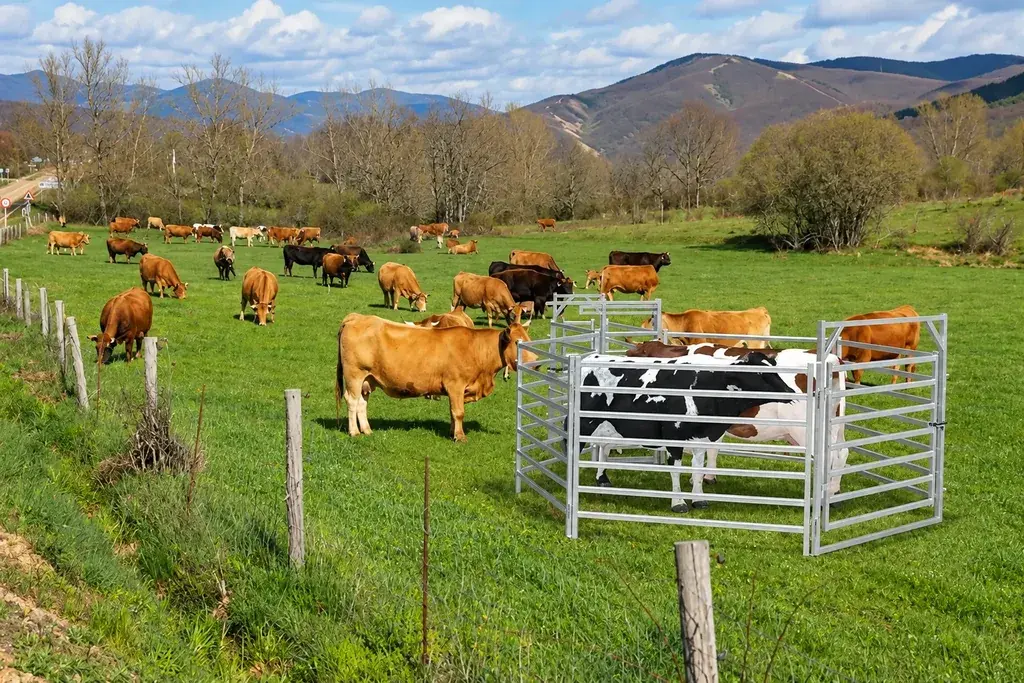
Give each fence a defined duty
| Farm location | What the enquiry should distinguish |
|---|---|
| Long pasture run | Roll mesh construction, line profile, end and corner support design |
| Collecting or handling area | Expected animal contact and a specifically designed panel system |
| Machinery entrance | Usable opening, turning space, gate movement and supporting posts |
| Pedestrian entrance | Operator access, latch use and separation from vehicle movements |
| Boundary beside a road or railway | Consequences of escape and the relevant owner's requirements |
A stronger-looking panel is not a substitute for a suitable arrangement. End supports, changes in direction and access points must carry the duties assigned to them in the complete design.
Measure runs between real endpoints
Prepare a sketch with corners, gates, changes in terrain and drainage crossings. State whether the listed run length includes the gate openings. For example, a 240 m boundary containing a 4 m opening has 236 m of fence only if the 240 m measurement includes that opening.
Roll quantities then depend on the chosen roll length and the installation method. Allowances for joining, tensioning and offcuts belong in the take-off; they should not be hidden in an unexplained percentage. Do not set agricultural post spacing from a rigid-panel calculation. Tensioned mesh needs its own support design and manufacturer's instructions.
Gate measurements should survive a reorder
Keep post-to-post clearance, leaf dimensions and hinge arrangement distinct. Record the opening direction, ground profile through the swing and the latch position. A nominal four-metre gate description may not tell a replacement supplier which measurement was intended.
Photograph connections with a scale and retain the finished dimensions. If a hinge or latch must work with existing posts, provide both the mounting dimensions and the movement required. The gate specification method explains how to organise those inputs.
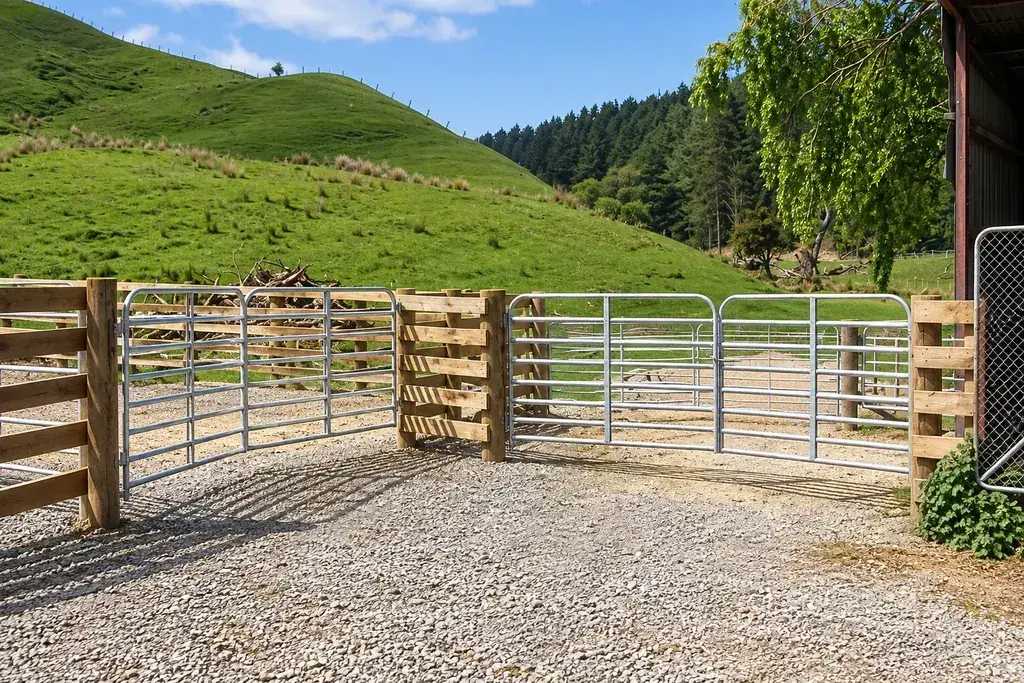
Our supply route for farm projects
Farm fencing and specialist farm hardware fall within FencingWise's partner-sourced enquiry scope. They are not presented here as a stocked range or as wholly manufactured at our Wuxi factory. Product availability, actual specifications and supporting information need to be established for the proposed order.
Send the intended use, animal requirements, measured runs, gate schedule, finish and delivery destination through the project enquiry page. A supply proposal can then distinguish available items from details that still require the farm designer's approval.