Farm & ranch fencing
Custom Fixed-Knot Field Fence
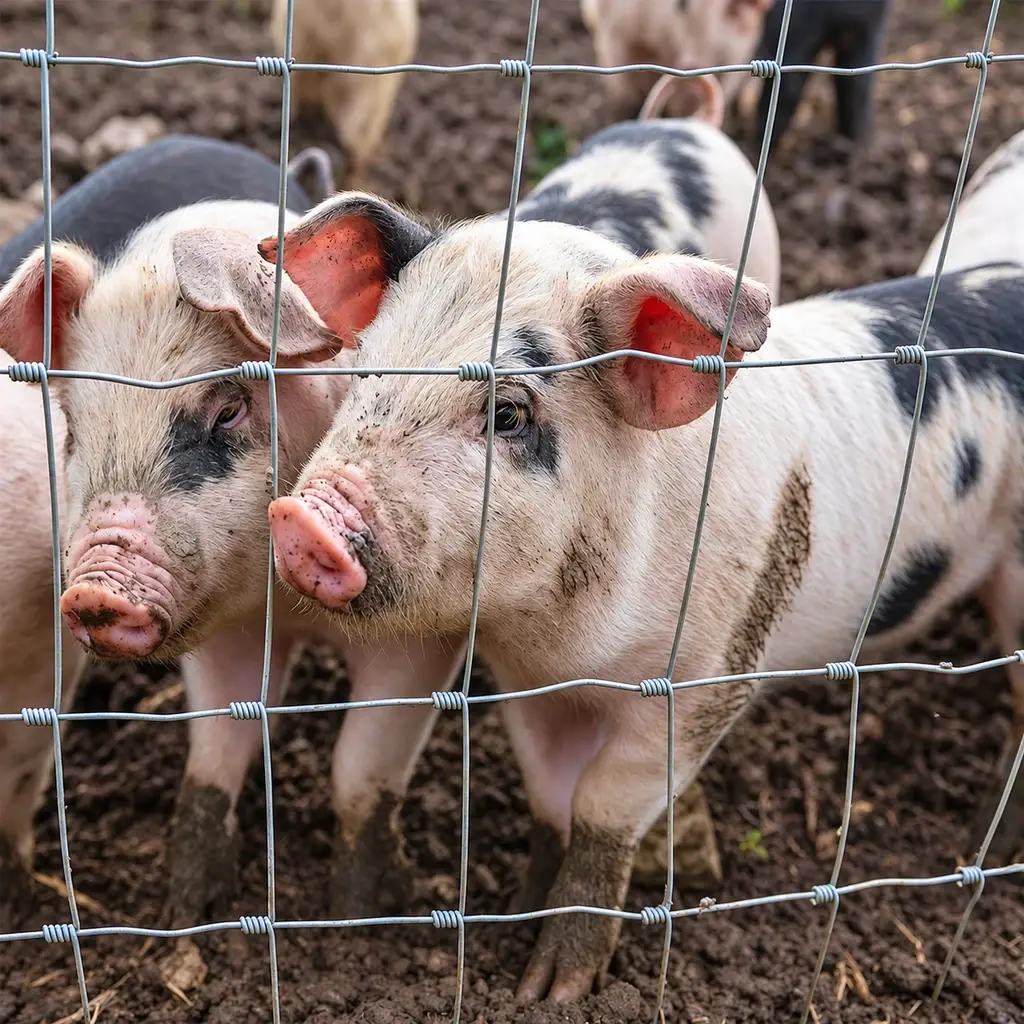
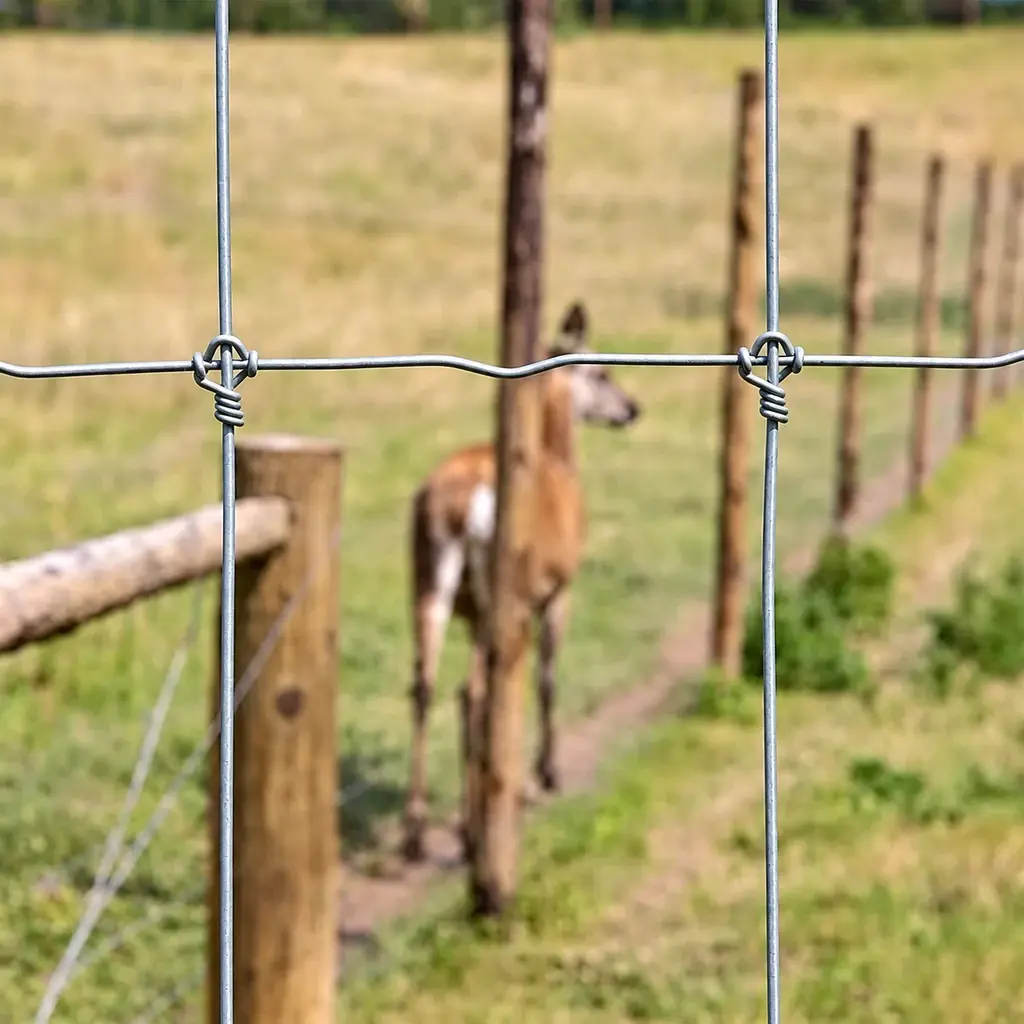
A separate knot wire secures continuous vertical stay wires.
View productOur farm and ranch fencing supply covers woven field rolls, horse mesh, cattle yard panels and sheep hurdles through partner sourcing. We help project buyers and distributors turn the livestock brief into separate product specifications, quantities and compatible connections. Compare the families below, then use the pattern, material and packing fields to define the actual package for quotation.
THE FENCINGWISE RANGE
5 products
Farm & ranch fencing
A separate knot wire secures continuous vertical stay wires.
View productFarm & ranch fencing
Vertical wire sections wrap around horizontal line wires.
View productFarm & ranch fencing
Wrapped junctions form a comparatively smooth woven mesh.
View productFarm & ranch fencing
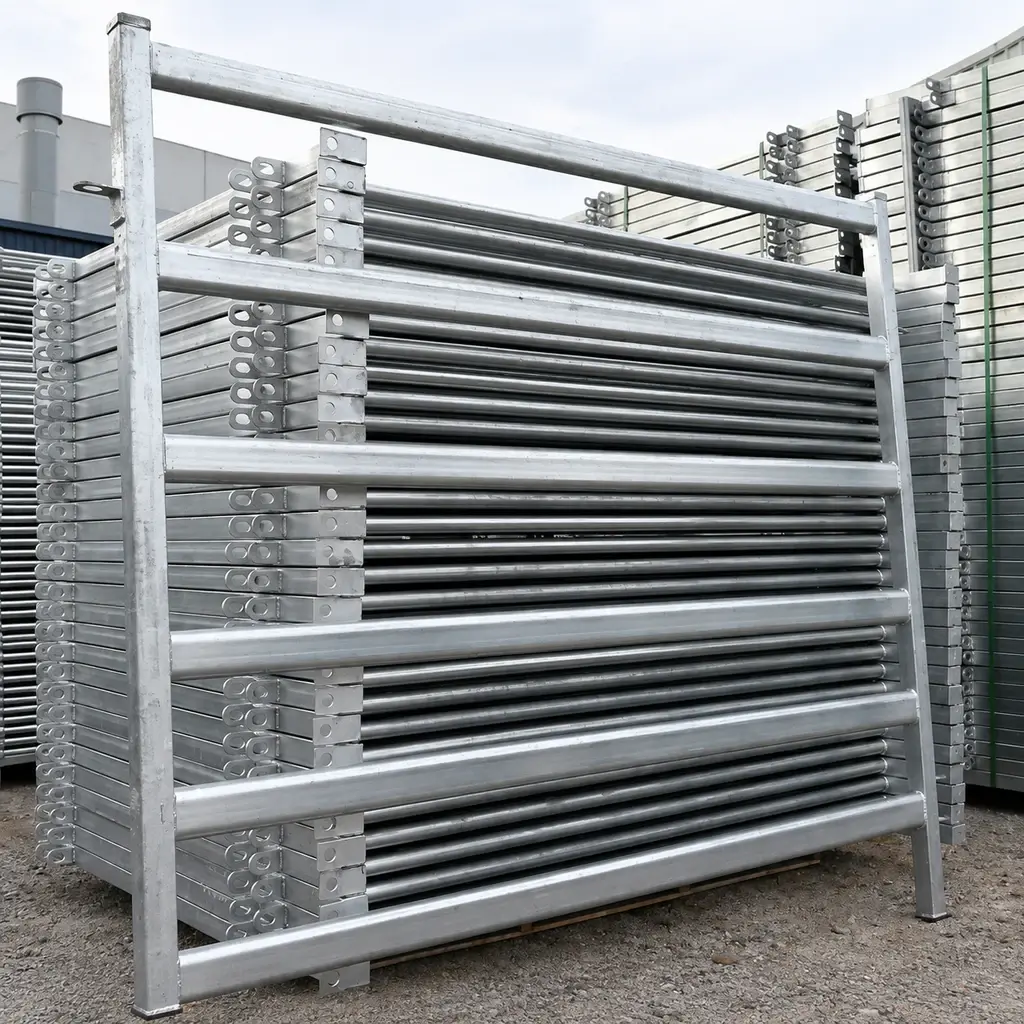
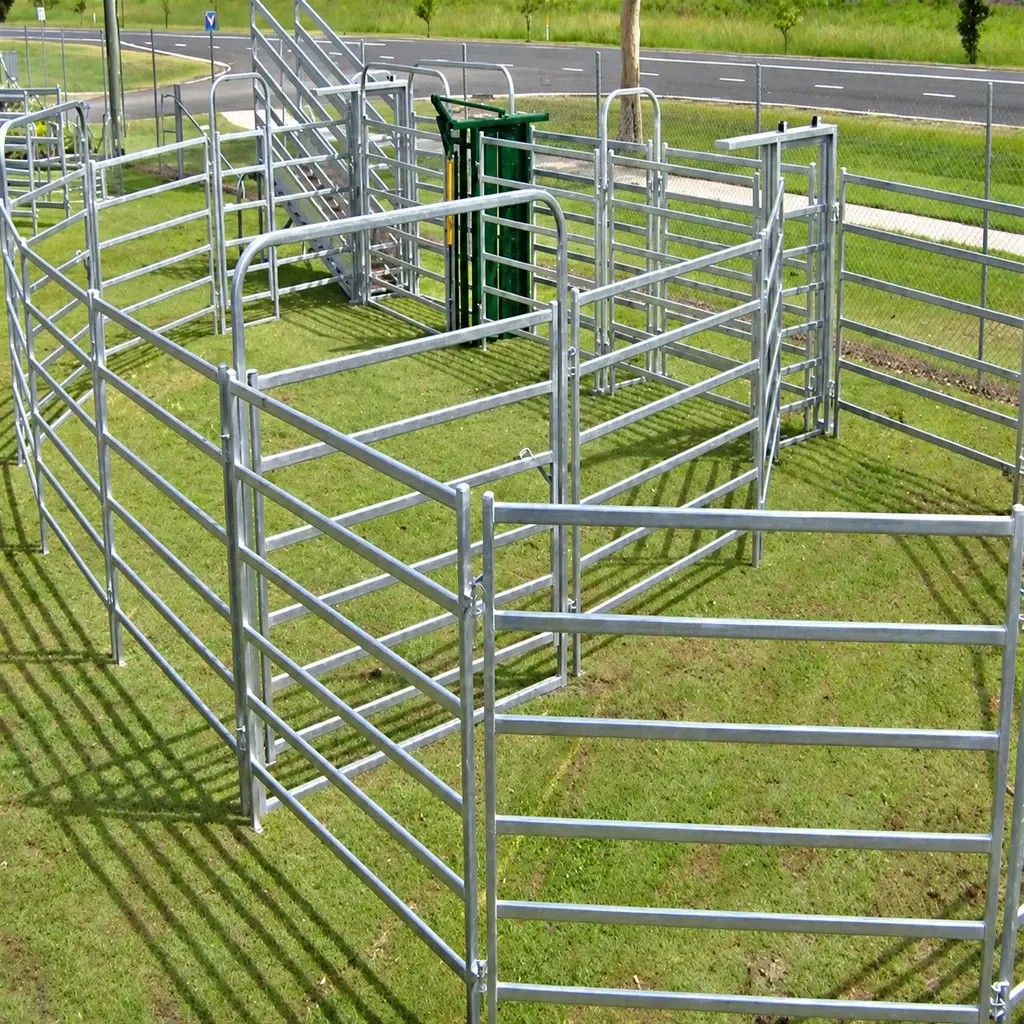
Rigid rail panels connected to form yard layouts.
View productFarm & ranch fencing
Movable rail panels for pens and stock movement.
View productTry a broader term or clear the filters to see the full range.
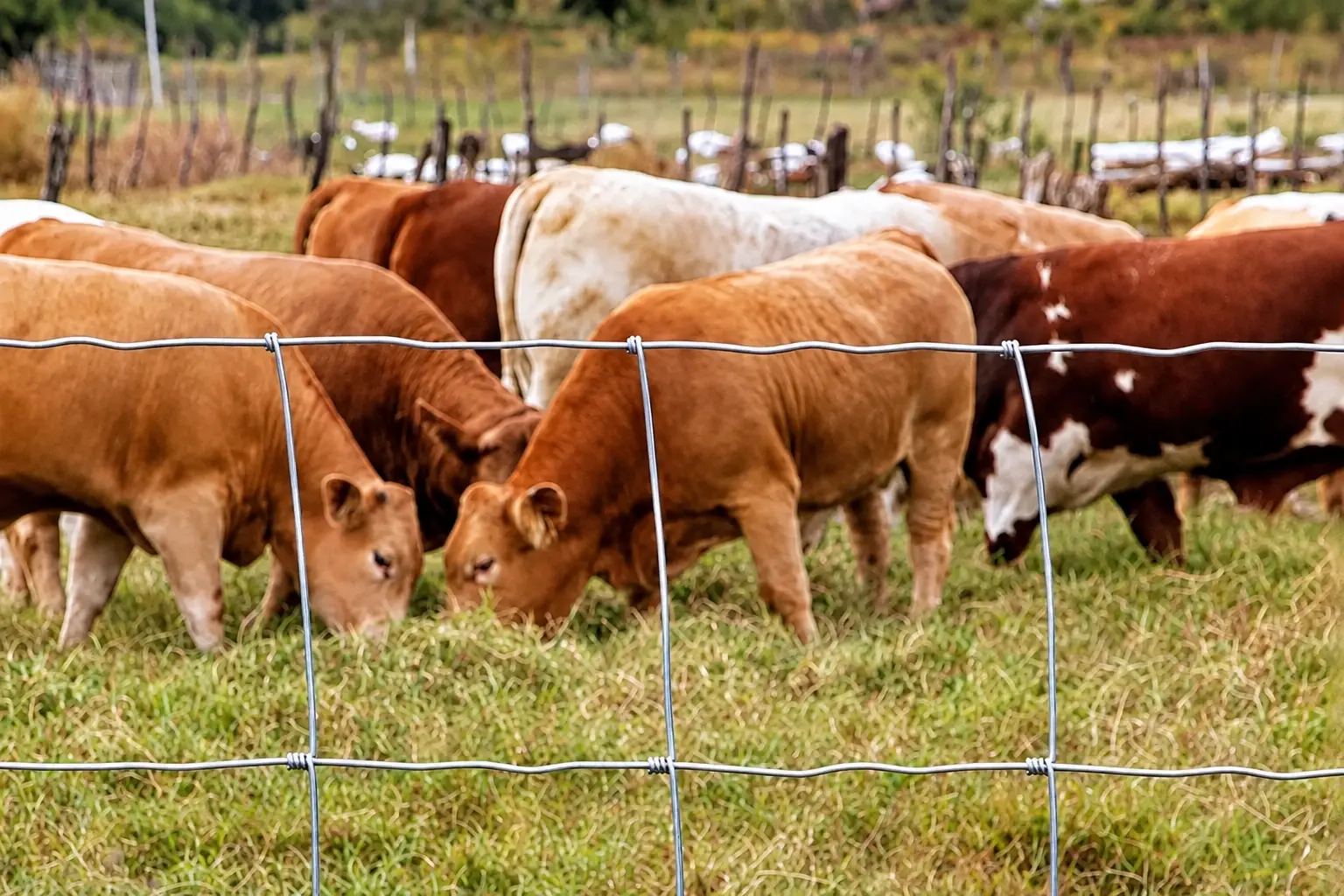
Farm and ranch fencing includes two different purchasing units: tensioned mesh sold in rolls, and rigid assemblies sold as panels or hurdles. Roll fencing defines longer field boundaries; yard panels and hurdles form handling or pen layouts with local connections and access points. Separate these duties before comparing a price per roll with a price per panel.
| Family | Construction | Selection question |
|---|---|---|
| Fixed-knot field fence | A separate knot wire secures continuous vertical stays. | Which full mesh pattern, wire specification and terminal arrangement suit the field run? |
| Hinge-joint field fence | Vertical wire sections wrap around horizontal line wires. | How do the graduated openings and selected wire grade fit the livestock and route? |
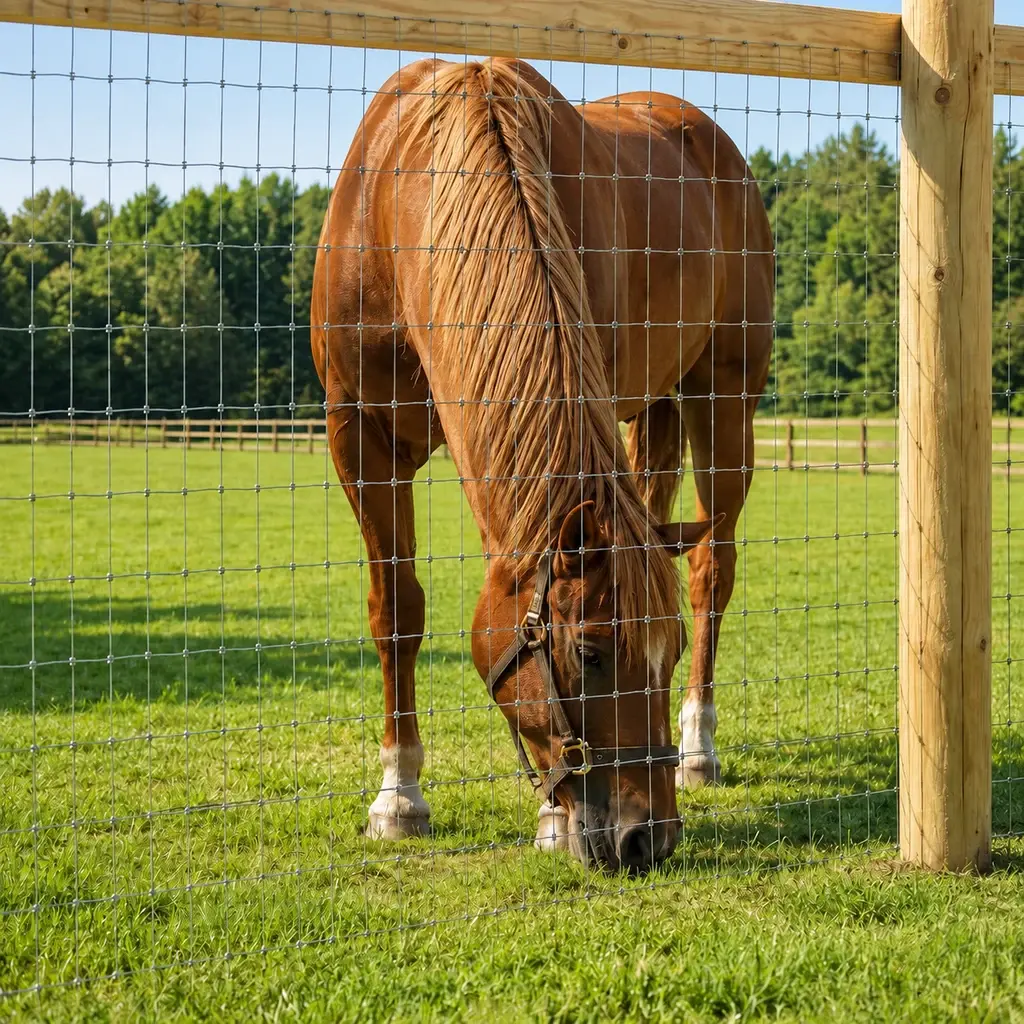
| S-knot horse mesh | Woven mesh with wrapped S-knot junctions. | What openings, contact face, edges and visibility does the horse enclosure require? |
| Cattle yard panels | Rigid tubular frames and rails joined into a yard. | Which rail construction, junctions and gates belong in the handling layout? |
| Sheep hurdles | Movable rail panels with defined end connections. | Which rail gaps, connector arrangement and handling method suit the planned pens? |
A pasture edge, horse paddock, gathering yard and temporary sorting pen can require different constructions on the same farm. Record the animals using each area, including younger or smaller stock, and how the operator moves them. That information determines which product families should be compared before dimensions are finalised.
For horses, the mesh contact face, visible boundary and adjoining gates deserve their own brief. For a cattle yard, panel connections and the handler's working route are central. For movable sheep pens, repeated assembly and handling affect connector and pack choices. A product name or rail count is not a substitute for those decisions. The livestock selection guide helps split the route into relevant specifications.
Begin with named field runs and yard sections, rather than one total length. Allocate roll mesh to its intended run and identify rigid panels, gate openings and special junctions separately. This keeps the field-fence quantities from being mixed with the components needed to assemble the working yard.
For an extension, attach the retained mesh pattern or panel-end drawing to the relevant line. For distributor replenishment, use a stable product reference and label format. We review each proposed construction through the partner route and connect the offered dimensions, material details and pack quantities to that reference. The result should be a repeatable product description, not simply a pallet count.
We use the following information to review a proposed partner product or a requested variation. Keep the full pattern or connection drawing with the quotation so a repeat order can identify more than a height and catalogue name.
| Purchase | Fields to define | What the choice affects |
|---|---|---|
| Field-fence rolls | Knot type, line-wire count, horizontal spacing sequence, stay spacing, wire grade and diameters. | Opening geometry, material quantity, joining and the selected tensioning arrangement. |
| Horse-mesh rolls | Clear opening pattern, knot/contact face, edges, height, length and coating. | The animal-facing surface and continuity into gate and terminal details. |
| Cattle panels | Rail profile, wall thickness, clear gaps, frame size, lugs, pins and retainers. | Assembly mass, connection fit and how the approved yard is built. |
| Sheep hurdles | Rail and frame sections, lower openings, panel dimensions, end couplings and unit mass. | Stock-facing openings, compatibility with retained hurdles and handling. |
| Mixed delivery | Product references, quantities, loose parts, labels and pack allocation. | Correct distribution to different runs and pens without mixing similar components. |
These quote references illustrate how agricultural products are described. They are external manufacturer examples, not our available-stock list or a claim that a partner supplies the same branded product.
| Reference | Published dimensions | What remains specific to the offered product |
|---|---|---|
| Field pattern 8/90/15 | 8 line wires, 900 mm height, 150 mm stay spacing (between vertical wires); 100 m roll. | Knot construction, lower-to-upper spacing sequence, wire and coating. |
| Field pattern 12/115/15 | 12 line wires, 1150 mm height, 150 mm stay spacing (between vertical wires); 200 or 250 m rolls listed. | Actual roll length and handling unit, with the full mesh pattern. |
| Interlocking sheep hurdle | 1220 or 1830 mm length, 970 mm height, 7 rails. | Clear gaps, material sections and connector fit for the chosen pen system. |
The roll examples follow Waratah's published Stockgrip code convention; the hurdle examples come from IAE's seven-rail interlocking hurdle. Their proprietary construction or performance claims are not transferred to our quotation. The accepted offer records the actual partner product and dimensions.
For woven rolls, identify line, stay and knot-wire dimensions separately where they differ. Wire grade and diameter both matter; the knot name alone does not define the material. Record the metallic coating specification and its evidence alongside the mesh drawing so a visually similar roll does not replace the accepted construction.
For panels and hurdles, rail profile and wall thickness describe different features. A round and an oval rail cannot be compared by one outside dimension alone. Include the frame, weld details and connection parts in the material schedule.
The coating route should explain whether members were coated before fabrication or the fabricated assembly receives its finish afterwards. Welds, cut ends, holes and loose pins need appropriate coverage and inspection within that route. A bright galvanized appearance is not a measured coating result. For the wire-construction comparison, see fixed knot versus hinge joint.
A tensioned field run needs its approved terminal, corner and line-support arrangement. Keep those components separate in the schedule: a line post has a different role from a strainer. Mark joins, changes in direction, levels and gate openings on the route plan, then allocate the mesh rolls to those runs.
Rigid yard panels depend on compatible end connections. Lug spacing, pin length, retention and corner clearance can prevent two similar-looking panels from working together. Gates and handler access should be part of the yard plan, rather than ordinary panels removed whenever passage is needed. Use farm gates and hardware for agricultural gates, fittings and T/Y line posts.
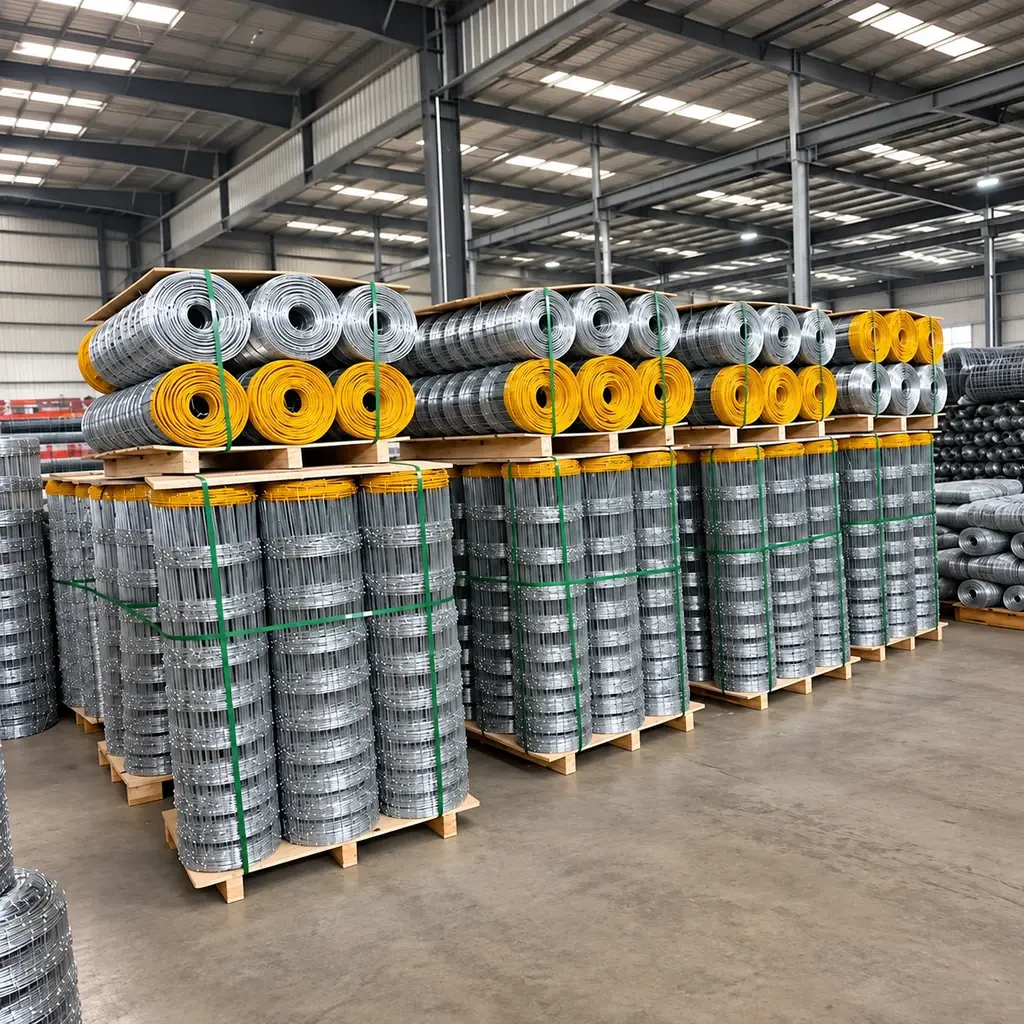
Roll length changes the number of packs and potential joins along a route. Mesh height, wire quantity, opening pattern and coating change the material being purchased. Compare equal net boundary coverage and the matching support package before deciding that one roll is cheaper.
With yard products, compare complete connected lengths and the supplied pins, special ends and gates. A panel-only price may leave a material part of the assembly outside the quotation. Mixed lengths or different connector patterns also create separate production and packing references.
For distributors, a narrower set of compatible references can simplify repeat buying and spare holdings. For a project, the priority may be packing by field run or yard zone. Both approaches benefit from actual unit and pack masses, an unloading plan and clearly separated installed quantities and spares. Our farm fence quantity guide explains why acreage alone cannot establish boundary length.
For rolls, check labels, specified height and pattern, wire identity, visible deformation, coating condition and the agreed length-verification evidence. A photograph of the outside of a wrapped roll does not show every field needed to identify it. Retain a labelled mesh reference where a sample is agreed.
For rigid panels, inspect finished size, rail layout, weld appearance, connection positions and the fit of representative mating parts. Pack loose pins and retainers under the same yard reference as their panels. Protective separation and restraint should prevent finished surfaces or projecting connections damaging one another during handling.
Our partner-sourcing review connects these requirements to the proposed supply. It does not replace the farm's enclosure or handling design. The approved product references, inspection scope and pack schedule make the delivered materials identifiable for both installation and later replacement.
No single knot name settles the comparison. Compare the full opening pattern, wire grade and dimensions, coating, roll length and installed supports for the intended livestock. Fixed knot and hinge joint describe different junction constructions; the useful choice concerns the complete specified run.
A shared boundary needs a brief covering both animal groups. Horse-facing openings, junctions, visibility and gate details deserve their own assessment. It may be more useful to split the route or select an equestrian mesh than to extend a cattle-fence description without reviewing those features.
The horizontal wire positions, stay spacing and edge construction may differ. Record the full spacing sequence when matching existing fence. A transition can then be detailed, or a matching pattern requested, without relying on overall height alone.
Provide the retained end-connection dimensions and the required angles. Panel height and rail count do not identify lug positions, pin fit or retaining details. We can review the proposed partner construction against those interfaces before defining a mixed-batch order.
List each field run or yard zone with its product reference and quantity, then add gates, line posts, terminals, connectors and loose spares as separate items. Include the animal-use brief and a measured layout. This keeps different duties visible while allowing the supply package to be coordinated.
Send the livestock brief, route or yard drawing, proposed mesh or rail construction, dimensions and delivery quantities. Identify retained components that new materials must match. Request a farm and ranch fencing quotation with the packing and destination requirements for your project or trade order.