
Look closely at the intersection
In a fixed knot construction, a separate knot wire secures the crossing of horizontal line wire and continuous vertical stay wire. A hinge joint wraps the stay wire around the line wire at the intersection, allowing a different kind of movement.
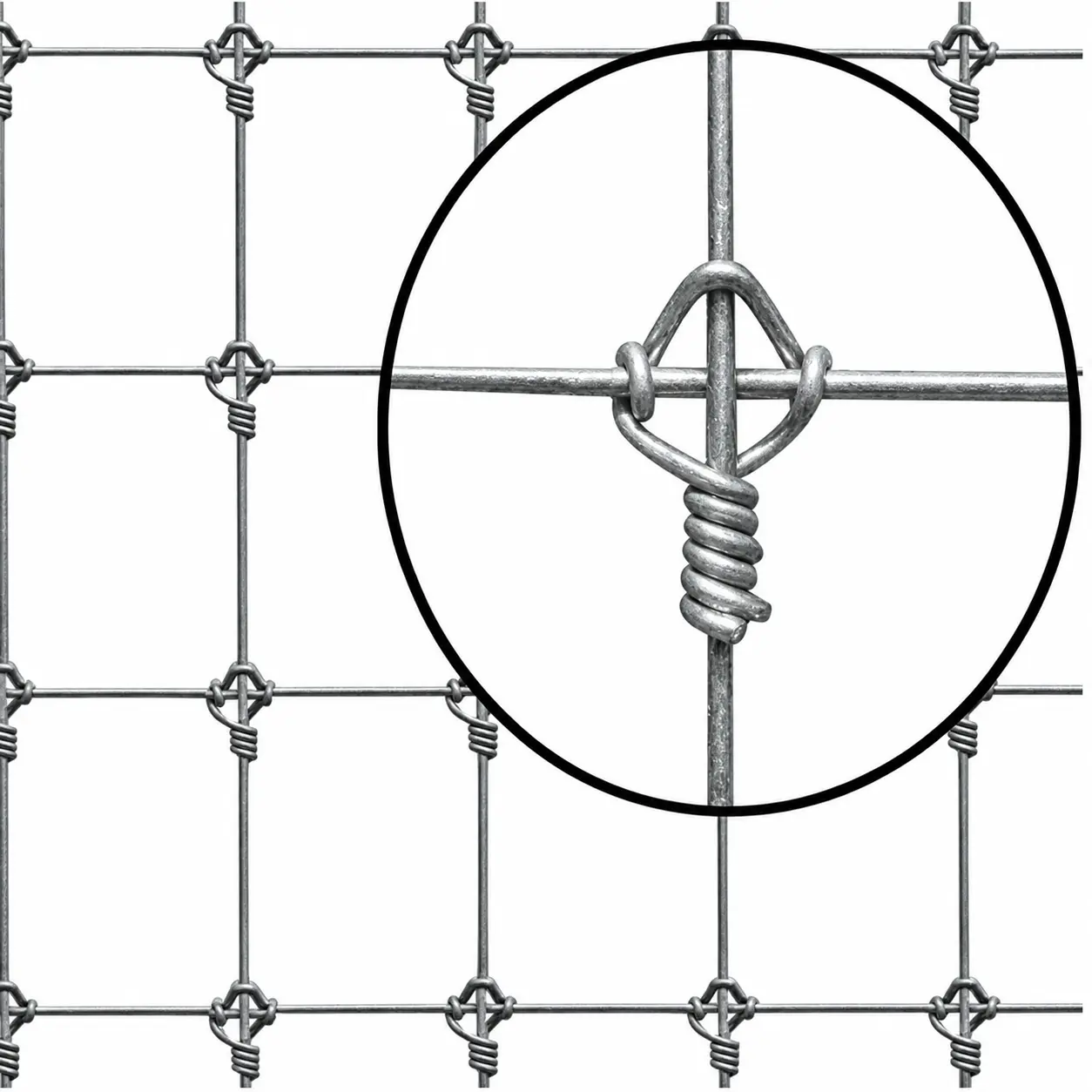
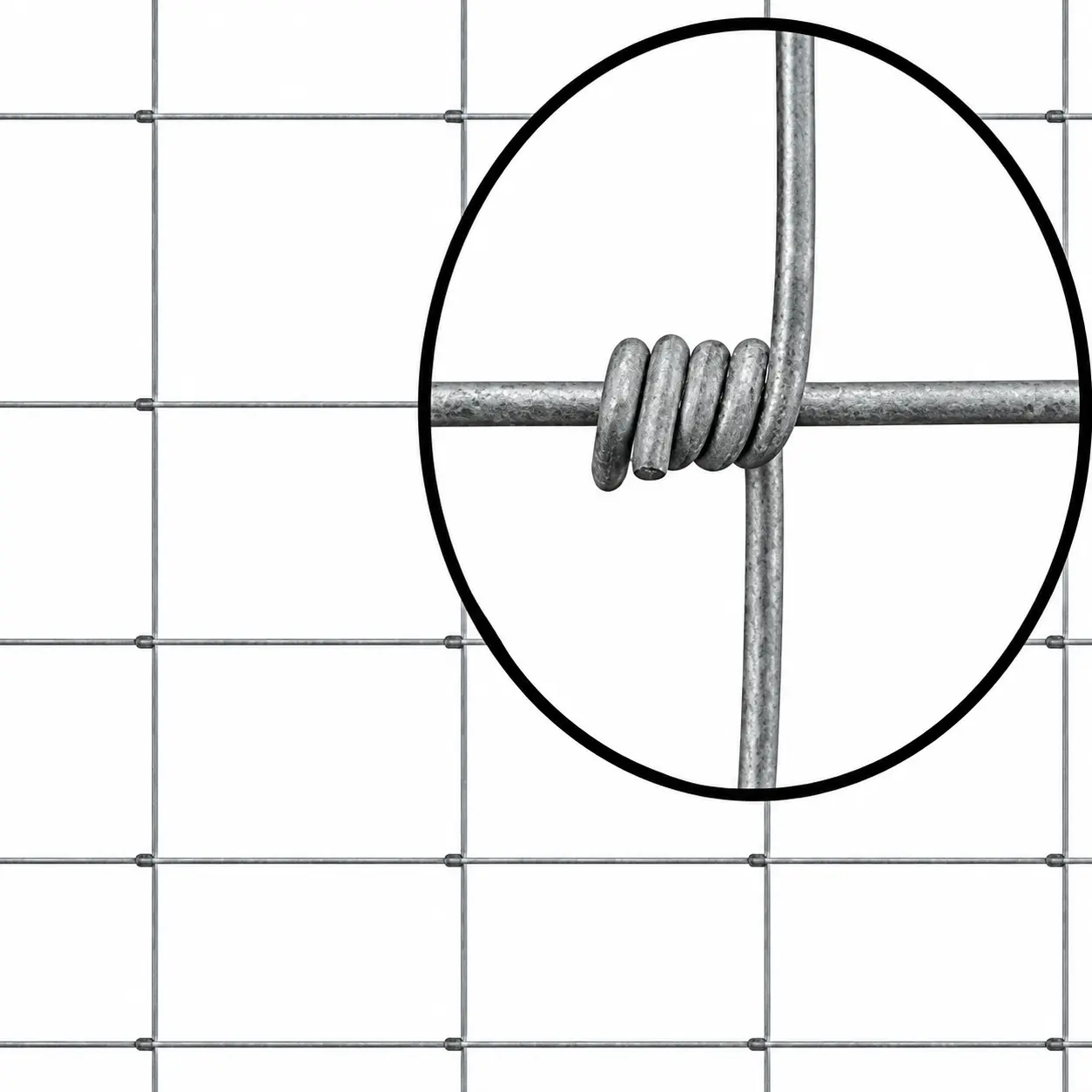
Ask for a close photograph and a construction drawing with the quotation. A distant roll photograph rarely shows whether the vertical wire is continuous. Do not treat a supplier’s commercial product name as a substitute for identifying the actual joint.
Fixed knot is a useful starting point where keeping intersections in position matters. Hinge joint may suit a specification that calls for a more flexible joint and an established installation method. Neither conclusion replaces the animal assessment, support design or product test evidence.
Make the quotations genuinely comparable
Suppose two illustrative offers both describe 1,200 mm high, 100 m rolls. That is only the start of the comparison.
| Field to align | Offer A and Offer B must identify |
|---|---|
| Horizontal wires | Number, spacing pattern and top/bottom wire differences |
| Vertical stays | Spacing, continuity and diameter |
| Wire properties | Actual diameter, material designation and relevant strength evidence |
| Coating | Coating type, stated quantity or class and the applicable reference |
| Joint | Construction, compatible joining method and installation instructions |
| Roll delivery | Usable length definition, identification and handling requirements |
If A has closer vertical stays than B, a price difference is not solely the cost of the knot. Ask for an aligned alternative or describe the differences explicitly in the comparison. The same applies when one roll has heavier edge wires.
Convert the route into a roll schedule
For a hypothetical 480 m net fence route using 100 m rolls, simple division gives 4.8 rolls, so five whole rolls provide 500 m of nominal material. The apparent 20 m balance must cover the actual joint and termination allowances before it becomes spare stock.
Split the route at gates, corners and changes that require separate straining sections. A 20 m remainder is only useful if its length and permitted joining arrangement match a later run. State whether allowances are already included; adding them twice distorts the order.
This example counts material. It does not establish post spacing, straining force or permissible unsupported length. Those belong to the selected fence system and site design.
Check what happens after damage
Before selecting a system, ask how a damaged section can be isolated and repaired, which joining components are approved and whether replacement mesh can be identified from the delivery records. Keep the wire specification and joint photograph with the installed asset record.
A similar-looking replacement roll may have a different spacing pattern or wire grade. If it cannot connect using the approved method, the saving on the replacement material can be lost in site rework. Trial the proposed repair arrangement on a controlled sample before relying on it for maintenance stock.
Choose against the actual use
Select the offer whose complete specification meets the livestock, route and maintenance requirements. Use knot type as one important construction decision, then resolve the remaining differences. The animal selection guide addresses containment needs; the post spacing and bracing method explains how to organise the support schedule.