
Separate pasture, holding and handling uses
Record whether the panel forms a permanent boundary, temporary holding area or part of a handling system. Identify the animals and age groups with the responsible operator. The selected product and design should be accepted for that use before quantities are consolidated.
| Decision | Information to compare |
|---|---|
| Animal contact | Openings, accessible joints and ends |
| Structural duty | Manufacturer’s supported application and relevant evidence |
| Assembly | Posts, feet or other approved supports |
| Connections | Pin, clamp or other specified coupling and retention |
| Access | Gate arrangement and the complete movement route |
Counting horizontal rails cannot settle these questions. Two panels with the same rail count can have different rail sections, spacing and connections.
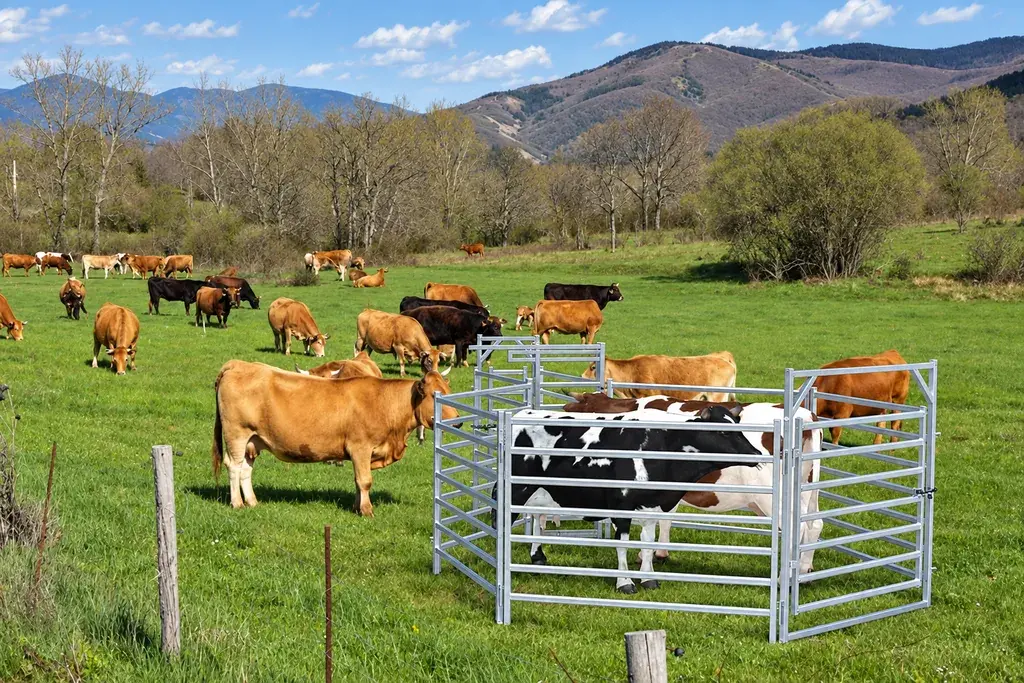
Distinguish nominal panel width from installed length
Ten illustrative panels each described as 3 m wide provide 30 m of nominal panel width. The installed run may differ if the connection overlaps, creates a gap or uses an additional post. Obtain the setting-out module for the actual assembly.
If a gate is included in a nominal 30 m enclosure side, do not order ten full panels plus the gate without checking the layout. The gate replaces part of the boundary length; its supporting details may also change the adjacent modules.
Review corners and ends as part of the system
A straight row and a closed enclosure place different demands on the arrangement. Use the manufacturer’s instructions and competent design for the intended configuration. Do not assume a panel can stand safely because a similar one appeared unsupported in a product photograph.
Show the connection at each change of direction and around entrances. Any proposed substitute coupling should be checked for geometry and the stated use, not merely whether its pin fits through a hole.
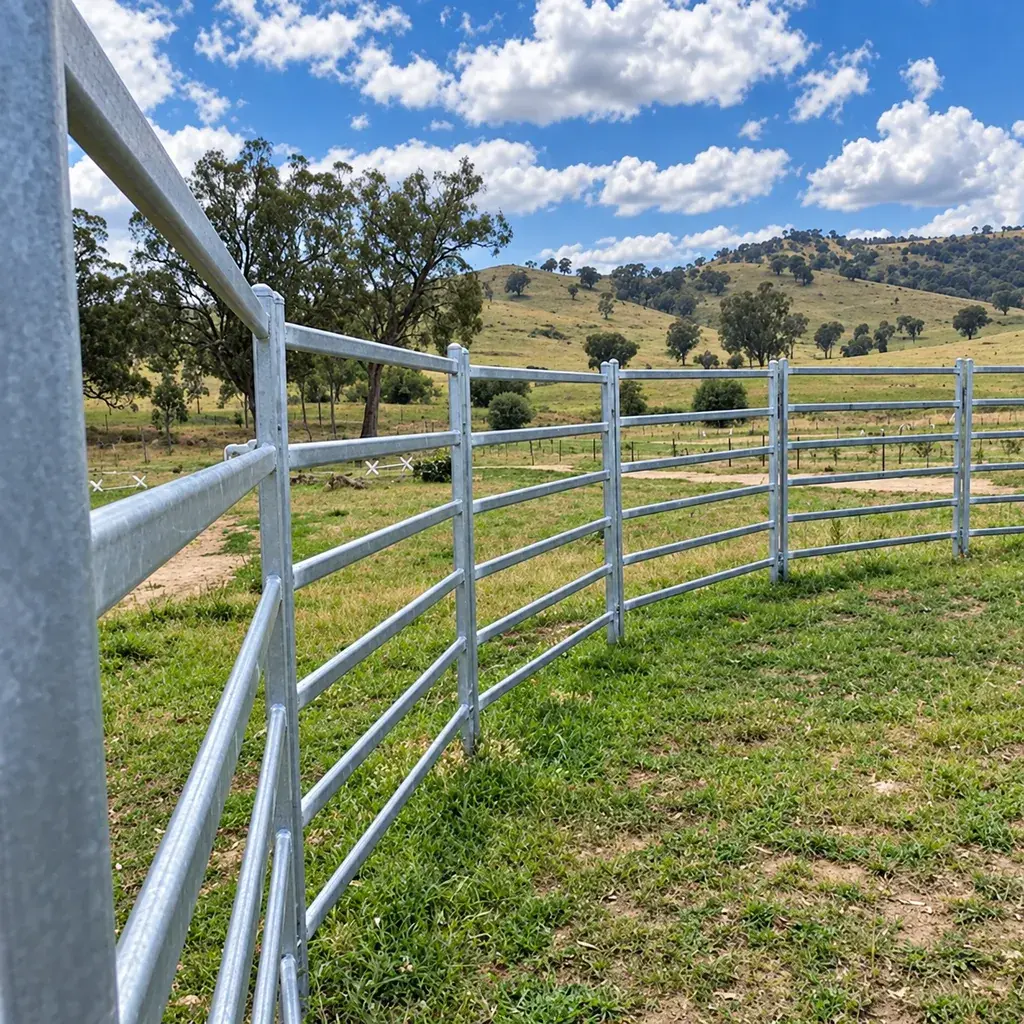
Compare contact details on a sample
Review the complete panel and connection with the responsible animal-management team. Keep openings and accessible details within the approved assessment. Do not perform improvised live-animal tests to establish suitability.
Where a panel is damaged, use the operator’s isolation and inspection procedure. Straightening a visibly bent member does not demonstrate that the original performance has been restored. Repairs should follow an accepted method for the product and use.
Preserve identification for future changes
Retain model references, drawings and accepted configurations with the enclosure record. If the enclosure is enlarged or used for a different animal group, review the revised assembly before treating the previous approval as transferable.
Use the animal selection matrix to define the use brief and the gate comparison where the enclosure includes mesh or rail gates. These decisions belong to one coordinated layout.