
Compare the spaces animals encounter
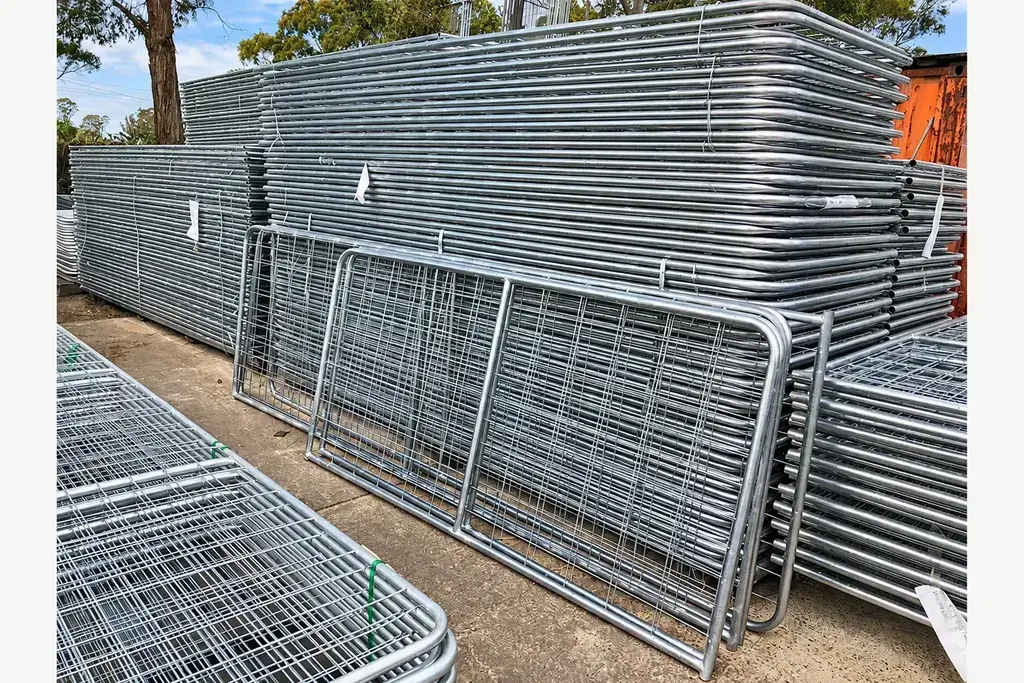
Mesh infill creates a pattern of smaller openings; rail infill creates openings defined by the rails and frame. Neither description proves suitability for a particular species or age group. Include young stock and mixed groups in the approved use brief.
| Feature | Mesh gate | Rail gate |
|---|---|---|
| Infill description | Opening pattern, wire and joint construction | Rail number, section and clear spaces |
| Contact details | Mesh ends and connection to frame | Rail-to-frame joints and exposed features |
| Visibility | Review complete arrangement on site | Review complete arrangement on site |
| Replacement | Can infill or components be replaced as approved? | Can rails or components be replaced as approved? |
The livestock selection matrix helps define the use. Do not select a rail gate for small animals merely because the adjoining fence is suitable for them.
Put two offers on the same dimensional basis
Assume both proposals describe a 3.6 m gate. Ask whether this means leaf width, nominal opening or another convention. Until that is resolved, the dimensions are not necessarily comparable.
Request the frame section, infill detail, total assembly mass, hinge arrangement and latch side. Compare the completed gate, not just a square metre of mesh against a length of rail. A change of infill may affect the assembly and its supporting requirements.
Include the operating space
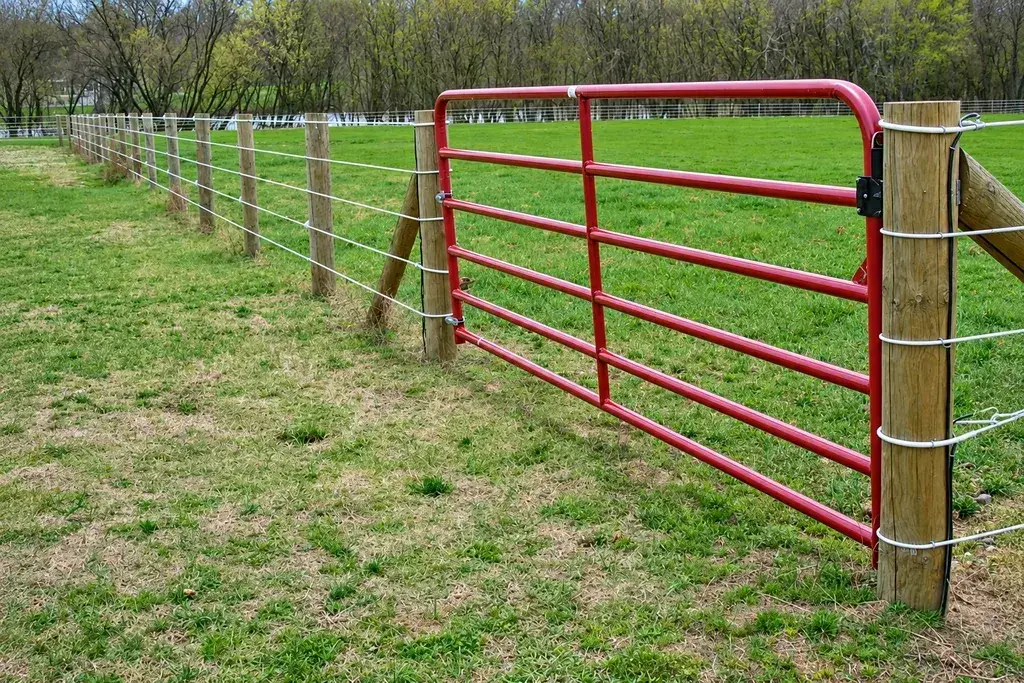
Show the intended swing and ground profile on the drawing. Check the open position, any hold-open arrangement and the route immediately beyond the gate. Equipment passage depends on the usable opening and approach, not solely the leaf’s nominal width.
Keep the gate post and its support design identifiable. A post selected for a line fence does not automatically serve as a hinge post. The agreed assembly and site design should establish what is needed.
Review substitutions as assembly changes
If the supplier proposes replacing mesh with rails, or changing the rail arrangement, return the revision to the relevant reviewers. Keep the animal-use assessment and component requirements connected to that decision.
The same applies to a heavier leaf, altered hinge location or different latch. Do not assume existing hardware remains suitable because the gate still spans the same opening.
Check the delivered gate before installation
Verify handedness, dimensions, infill pattern and the hardware schedule against the approved drawing. Confirm the method of identifying replacement components. After installation, inspect and operate the complete assembly through the approved procedure, including latching and its intended open position.
Use the farm gate measurement method to distinguish leaf width from clear passage, and the hardware checklist to prevent small but necessary items being omitted.