
By FencingWise Editorial Team · Updated 17 September 2026.
Divide the fence into runs before counting rolls
Draw every corner, end, gate and change in the specified support arrangement. Give each uninterrupted fabric run a reference. This is more reliable than taking the site's total perimeter and dividing it by a roll length.
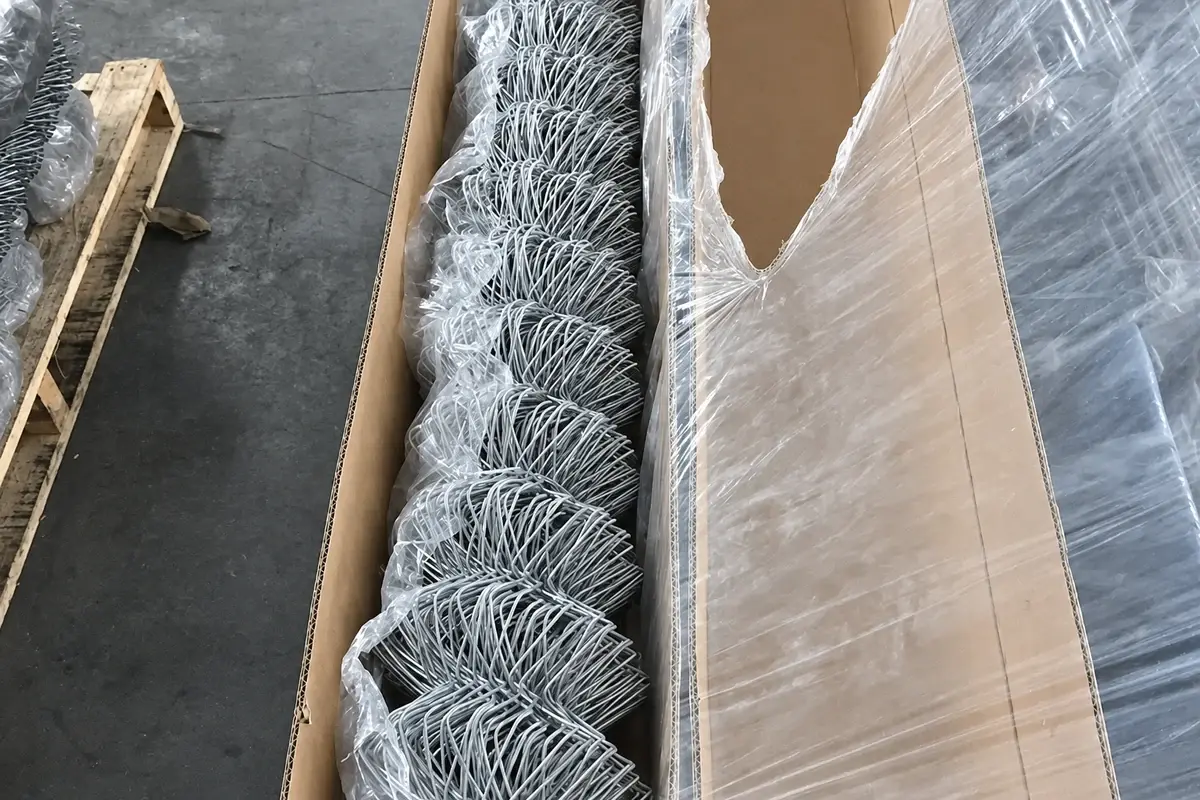
Two separate 20 m runs are not necessarily equivalent to one 40 m run. Their combined fabric length may match, but they have more termination positions. Gates also need their own frames and hardware; subtracting the opening from the perimeter does not count those components.
Start with a layout and record which dimensions refer to terminal-post centres, fabric lengths or clear openings. The tensioning and connection detail determines the relationship between them.
Identify the components by their job
| Component group | Function in the package | Common omission |
|---|---|---|
| Fabric | Mesh along each defined run | Coating and edge finish left unspecified |
| Terminal posts | Defined ends, corners, gates or pull positions | All supports quoted as identical line posts |
| Line posts | Intermediate supports | Spacing assumed without a design reference |
| Termination fittings | Connect fabric ends to terminals | Tension bars or their attaching parts omitted |
| Rails or tension wires | Complete the selected support arrangement | Couplings, end fittings or tensioning parts omitted |
| Fabric attachments | Join fabric to its supports | Wrong fixing type or insufficient quantities |
| Gates | Provide the required access opening | Hardware and adjoining fence connections omitted |
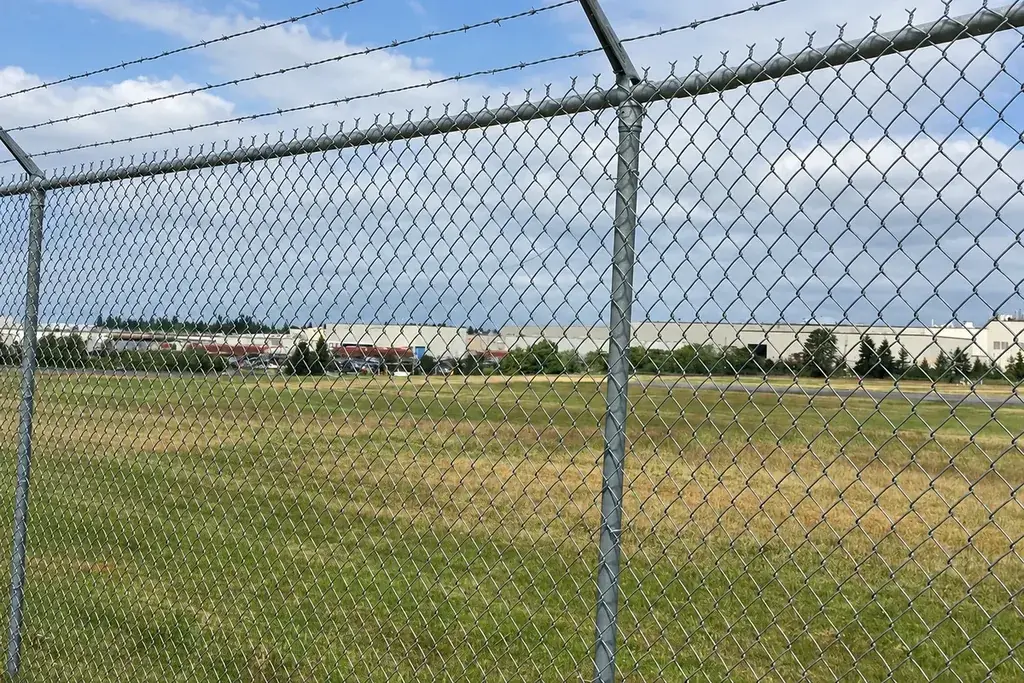
This list identifies functions, not a universal design. A top-rail system and a rail-less tension-wire system use different components. The CLFMI technical information library provides industry drawings and guidance for defined chain link configurations; the order should name the configuration actually being supplied.
Worked example: one 40 m straight run
Assume a fictional straight, level boundary between two end-post centres, with no gates or corners. For counting only, suppose an approved design has already set the bay spacing at 2.5 m.
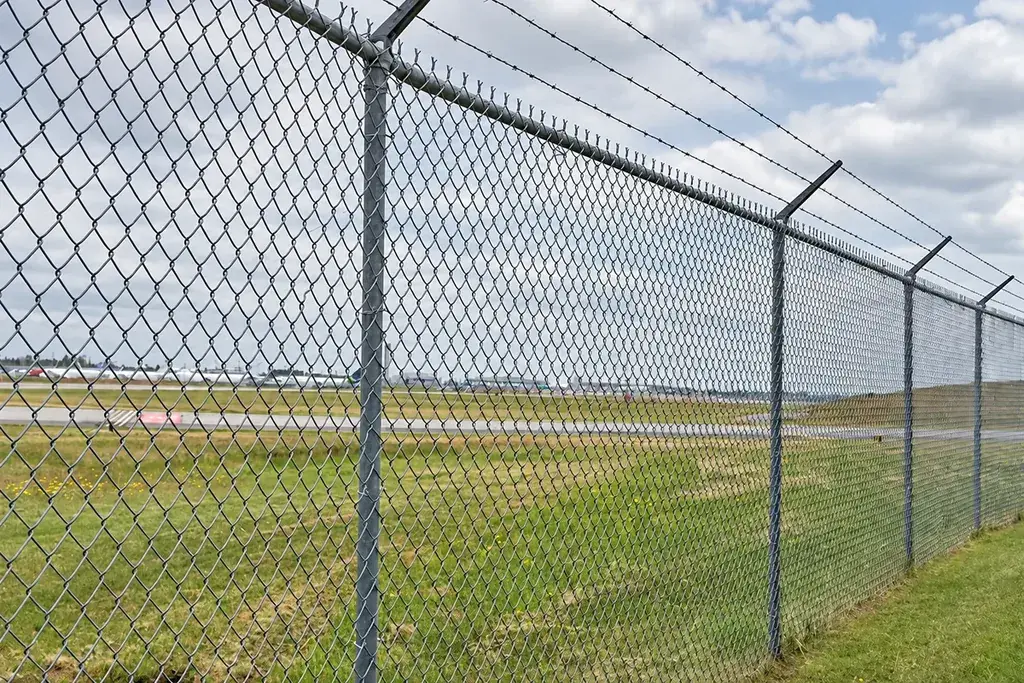
The support calculation is:
- Number of bays: 40 ÷ 2.5 = 16.
- Total posts in this open run: 16 + 1 = 17.
- End posts: 2.
- Intermediate line posts: 17 − 2 = 15.
The assumed 2.5 m spacing is not a universal recommendation. Actual spacing and post sections depend on the specified system and site design.
Now suppose the agreed fabric schedule calls for 40 m and the supplier offers usable 25 m rolls. The preliminary roll count is ceiling(40 ÷ 25) = 2 rolls, or 50 m purchased. The nominal balance is 10 m.
Before ordering, confirm that the joining method and end details allow that usable-length assumption. Roll labels alone do not approve a splice position or the allowance at the terminals.
Count connection parts from the approved detail
Continue the same example with an explicitly hypothetical fitting detail: one tension bar at each fabric end and five complete attaching sets per bar.
That produces 2 tension bars and 2 × 5 = 10 attaching sets. The number five is only an arithmetic assumption, not a recommended connection spacing.
Other attachments need their own quantities. Do not multiply 17 posts by five and assume the result also counts fabric ties: terminal connections and line-post attachments perform different jobs. If the rail is supplied in lengths, its joints and end receivers must also be counted from the proposed arrangement.
An enquiry should therefore contain a calculated quantity where a detail is fixed, and a clearly identified unresolved line where it is not. A supplier should not fill the latter by silently choosing another fence system.
Show what a corner changes
Suppose the same 40 m boundary consists of two 20 m legs meeting at a corner, with the same illustrative bay spacing. Each leg has eight bays.
Counting the support nodes gives 16 bays and 17 posts, provided the design uses one shared corner post. The positions now comprise 2 ends, 1 corner and 14 line posts.
If the fabric terminates separately on both faces of that corner, the number of fabric ends becomes 4, rather than two. Under the earlier hypothetical five-set detail, the termination count becomes 4 tension bars and 20 attaching sets.
The total boundary length and total post count have stayed the same, but the post types and connection quantities have changed. This is why a “price per metre including posts” can still conceal an incomplete package.
Compare the returned offers line by line
Place the roll offer and system offer against the same schedule. Mark fabric, supports, termination parts, rails or wires, attachments, gates, finish and packing as included, excluded or unresolved.
Ask for the contents of any item called a kit. Ten kits might mean ten complete connections or ten bags containing several connections. The unit and quantity inside the pack must be clear before totals are compared.
Keep spares separate from installation quantities. A planned allowance for lost ties does not replace a missing corner fitting. For a broader example of assembly counting, use the accessories BOM guide.
Issue one package definition
The final order should link the fabric specification, layout, post schedule and connection drawings through consistent references. Package labels should preserve those references so the receiving team can distinguish line materials from terminal and gate parts.
FencingWise's chain link collection is the starting point for a supply enquiry. Send the counted layout with it. A defined package allows the supplier to identify a genuine alternative or omission before it becomes a missing component on site.