
1. Establish what the document certifies
Read the scheme, standard, subject and named holder before reading the logo. A product certificate, management-system certificate and test report answer different questions. If the document certifies a company’s management system, it cannot establish a fence system’s security performance.
Use the document-type comparison when the evidence pack mixes these categories. Keep the issuer’s original title in the register instead of renaming every document “compliance certificate”.
2. Verify the issuer and current record
Find the certification body through its official website, then search its register using the certificate number and holder. Record the date checked, status shown and any linked schedule. Where a public register does not provide enough detail, obtain confirmation directly from the issuing body through independently located contact details.
Do not rely only on a QR code printed on the supplied PDF. It may lead to a supplier-hosted copy rather than an issuer-controlled record. Equally, a missing search result is a reason to investigate, not automatic proof of fraud.

3. Read the schedule as carefully as the cover
The cover may describe a product family while an annex defines the actual covered configurations. Preserve every referenced schedule and revision. Look for limitations on dimensions, construction, supporting members, installation and allowed variants.
For example, assume a fictional certificate schedule covers a 2.4 m high configuration while the order specifies 3.0 m. The ordered height is 600 mm greater. The correct finding is coverage for the 3.0 m configuration has not been demonstrated, not “the taller fence must be stronger” and not “the certificate is false”.
4. Build a configuration comparison
| Feature | Evidence entry | Order entry | Decision |
|---|---|---|---|
| Panel model and dimensions | Exact schedule reference | Approved drawing | Match or resolve difference |
| Posts and connections | Listed arrangement | BOM and detail drawing | Include substitutions explicitly |
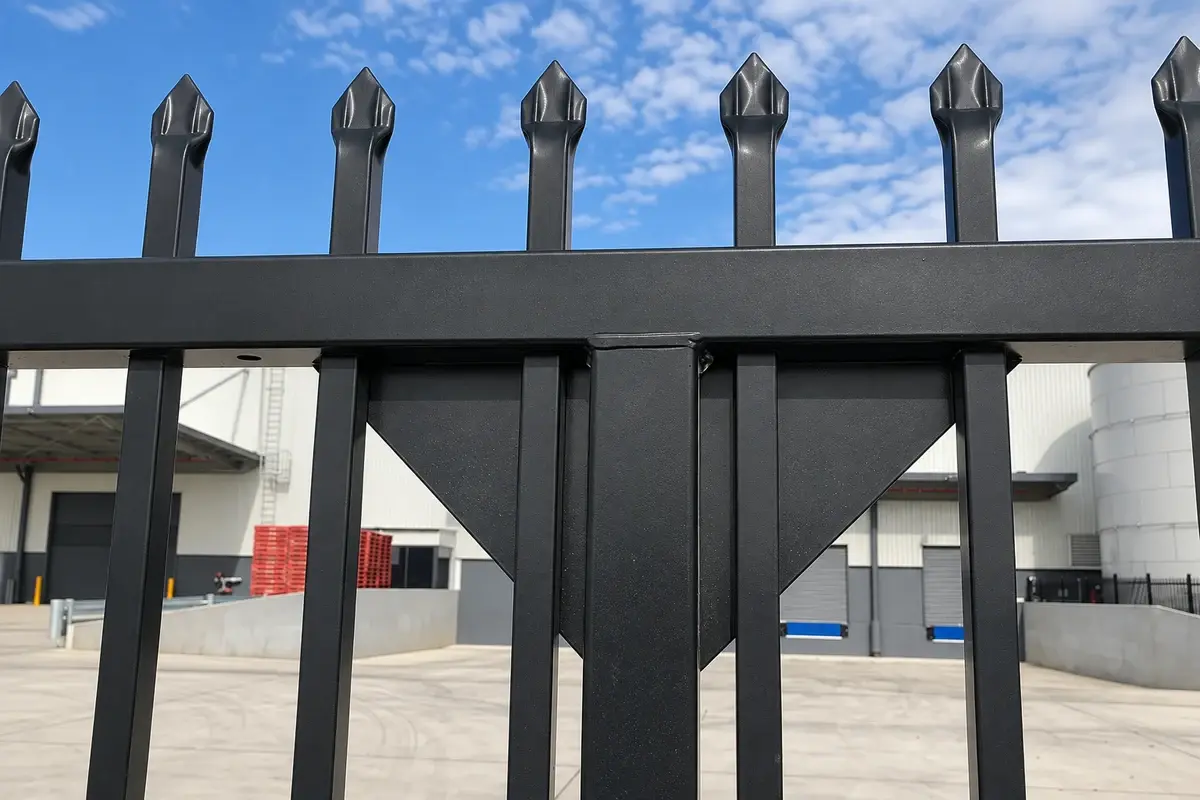
| Gate | Covered gate model, if any | Gate schedule | Do not inherit panel coverage |
| Ground fixing | Tested or certified arrangement | Site foundation design | Refer departures for approval |
| Finish or optional components | Permitted variants | Purchase specification | Verify any relevant restriction |
Copy reference numbers into the table so another reviewer can repeat the check. Avoid a single tick against the whole product where only the mesh description has been matched.
5. Check the competence scope behind the evidence
Accreditation relates to specified activities. UKAS explains this distinction in its accreditation and certification guidance. Where accredited evidence is required, identify the relevant activity and scope; the existence of an accreditation mark alone does not settle it.
6. Resolve differences before release
Send each unresolved difference to the party authorised to interpret or accept it. Possible outcomes include supplying the covered configuration, obtaining applicable additional evidence or formally revising the project requirement. A distributor’s assurance should not be presented as an extension of the certification body’s scope.
7. Preserve the link through delivery
Retain the approved comparison, issuer record, certificate schedule and order revision together. At receipt, compare product labels and component identification with the approved package. If a post section or fixing changes during manufacture, reopen the affected scope check before treating the delivery as equivalent.
A completed review therefore records both authenticity and applicability. Keep “genuine document” separate from “accepted evidence for this installed configuration”; the second conclusion needs the complete chain.