
Separate the three procurement layers
The external perimeter defines the site boundary. Service compounds control access to equipment outside the building. The building envelope protects the occupied and technical spaces. These layers can share materials without sharing one performance specification.
| Boundary | Decision that changes the fence package | Evidence to collect |
|---|---|---|
| Site perimeter | Required resistance, visibility and gate use | Approved security brief and system evidence |
| Plant compound | Equipment access and replacement route | Plant layout and removal envelope |
| Delivery enclosure | Vehicle queue and pedestrian separation | Traffic plan and gate operating sequence |
Keep a separate line item for removable plant-access sections. A permanently welded closure across the only equipment removal route may create substantial later work.
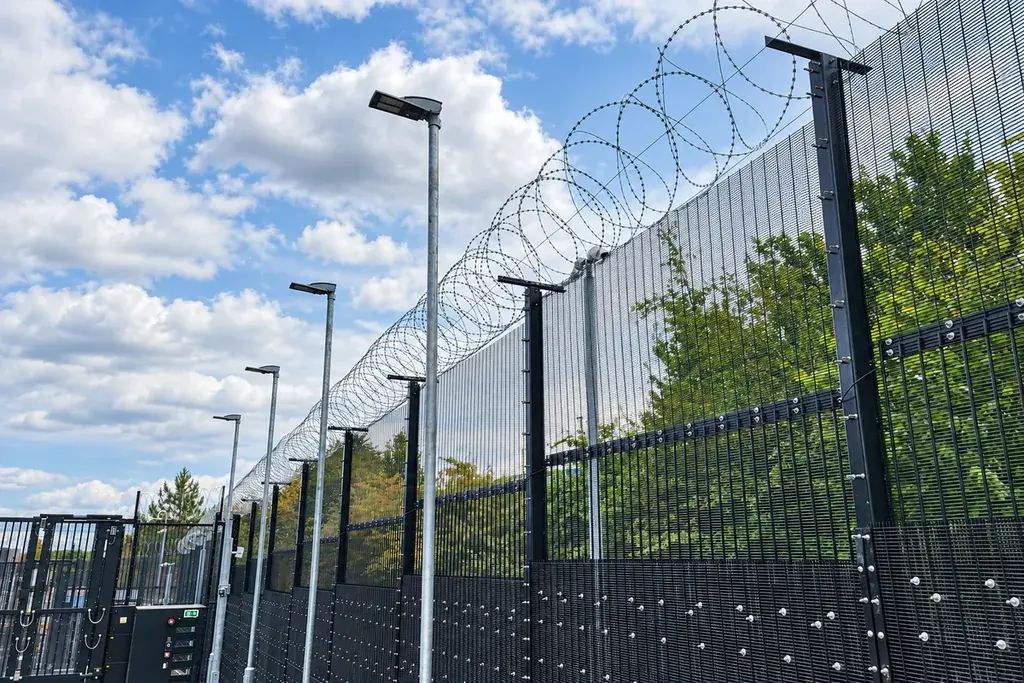
Measure the line without counting gates twice
Consider an illustrative rectangular perimeter measuring 120 m by 80 m, with gate openings totalling 10 m. The gross boundary is 2 × (120 + 80) = 400 m; the net fence length is 390 m. If the approved setting-out uses exactly 2.5 m modules and every straight run divides into that module, 390 ÷ 2.5 = 156 bays.
That is a quantity example, not a recommended bay spacing. Corners, individual gate positions and short closing bays must be checked run by run. A gate post can also terminate a fence run, so adding two ordinary posts per gate can double-count supports. Annotate each support once on the plan, then total the post types from those marks.
Give detection a defined mounting arrangement
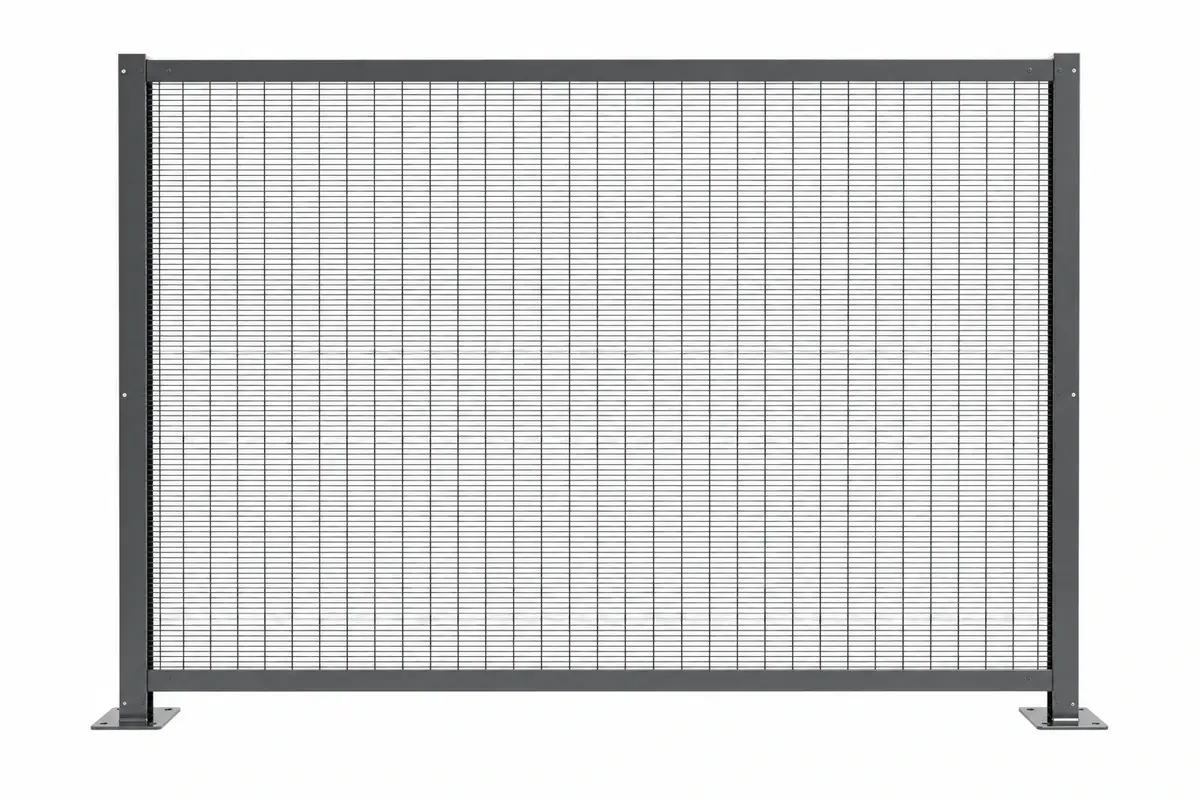
NPSA's PIDS guidance treats perimeter detection as a distinct technical subject. A mesh purchase does not establish detection performance.
Ask the detection designer to specify attachment methods, cable routes and any restrictions on panel movement. Ask the fence designer to assess the added equipment and its connections. If either package changes, review the other: replacing a panel type after the detection design is agreed can change the installation assumptions.
Compare offers by complete package
Use four commercial columns: supplied material, installation, specialist integration and commissioning. Put gates, locks, support steel, earthing interfaces and spare parts in the appropriate column. State who closes each interface before issuing the purchase order.
A low panel-only figure can exclude the components responsible for much of the final cost. Conversely, demanding a specialist rating on every internal service enclosure may add cost without meeting a defined need. The project security adviser should assign requirements to each boundary before the products are selected.
Handover should allow a panel to be replaced
Give the maintenance team a panel reference, post and fixing references, coating repair instructions and the approved arrangement for removing detection equipment. Keep sensitive site drawings in the operator's controlled system. Public supplier enquiries can identify the product and quantity without exposing operational layouts.
Use the security fencing collection to compare constructions, and the certificate scope guide when a tender calls for a rated system.