
By FencingWise Editorial Team · Updated 17 September 2026.
Colour is the last visible result. It is not evidence that the hidden zinc layer meets the order.
Write the treatment sequence for each component
Distinguish galvanized wire fabricated into mesh from a panel galvanized after fabrication. Posts, gate frames and fasteners may follow different routes even when the installed fence has one colour.
Use a component schedule rather than one finish note for the whole shipment:
| Component | Information to record |
|---|---|
| Mesh panel | Wire treatment, fabrication sequence and final powder system |
| Post | Substrate, fabrication and zinc route, internal/external scope where specified |
| Gate frame | Treatment of fabrication, cavities, fittings and later work |
| Bars and brackets | Individual finish and mating-surface requirements |
| Fasteners | Material and finish specified for the connection |
The pre-galvanized and after-welding comparison explains why the sequence matters at welds and cuts. This article develops the combined coating specification.
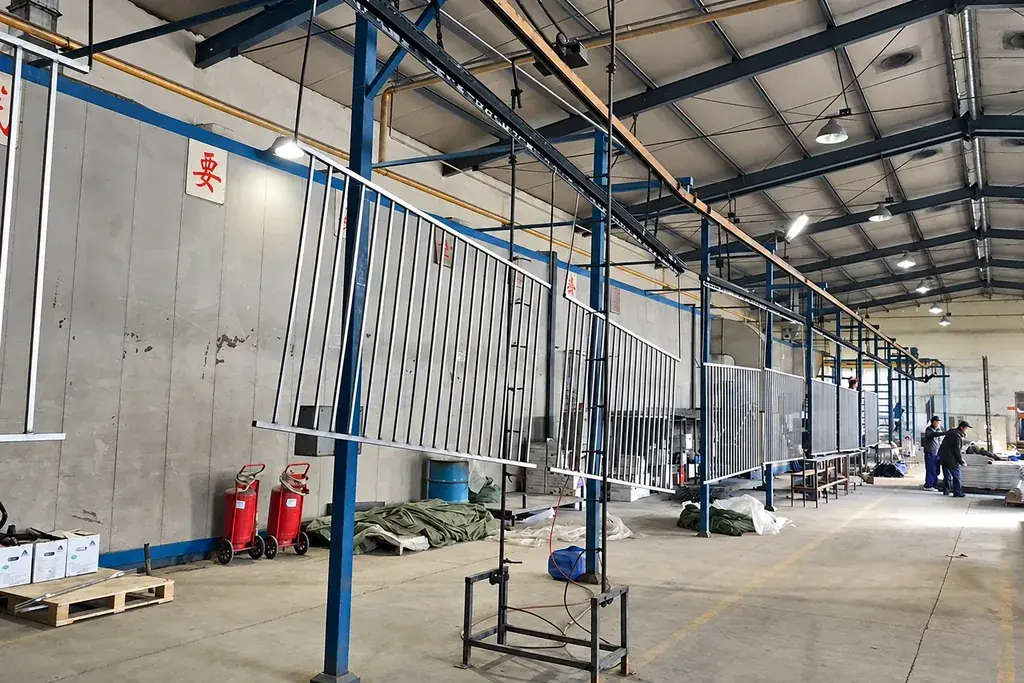
Surface preparation joins the two coating stages
Powder needs a suitable surface beneath it. Contamination, surface condition and an unsuitable preparation process can affect adhesion even when the finished colour initially looks correct.
The American Galvanizers Association's duplex-system specification guidance distinguishes preparation for painting from preparation for powder coating over hot-dip galvanized steel. It identifies a powder-specific preparation route that addresses the heating involved in powder application.
For an order, identify the proposed preparation and powder system with its applicator instructions. Do not copy a chemical concentration, blasting setting or curing schedule from another product. Those are process-control choices that depend on the materials and equipment actually used.
The purchasing outcome should be a traceable process description and an agreed inspection basis, not a vague promise of “double protection”.
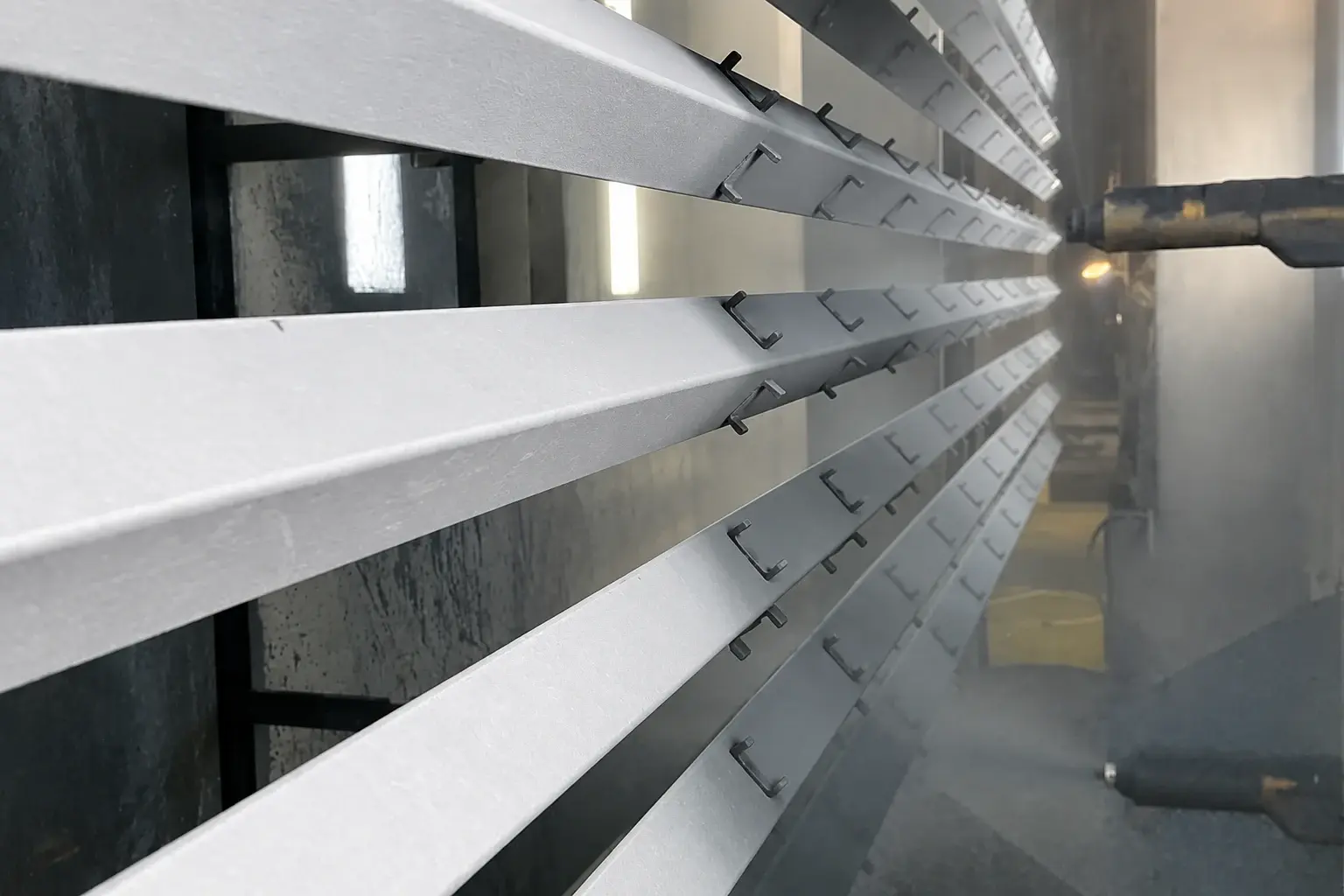
Do not turn a combined reading into a zinc reading
Imagine a fictional coating record with 70 μm of zinc measured at a defined location before powder coating. After powder application, an appropriate measurement method gives 170 μm combined thickness at the corresponding location.
The simple difference is:
170 − 70 = 100 μm.
That arithmetic can illustrate an added layer, but it does not establish a valid measurement method by itself. Instruments, substrate geometry, repeatability, calibration and how the two layers are distinguished must be suitable for the actual coating system.
Most importantly, a single combined reading of 170 μm cannot be reported as 170 μm of zinc. If zinc thickness is an acceptance requirement, obtain evidence that measures or otherwise establishes that layer separately using the agreed method.
The 70, 100 and 170 μm values are invented for explanation. They are not FencingWise coating requirements or a universal minimum.
Keep colour, film thickness and adhesion as separate checks
A powder finish can match the approved colour while failing another requirement. Conversely, a small appearance difference needs an assessment against the agreed appearance criteria; it does not automatically establish poor corrosion protection.
Create separate inspection rows for:
- Coating identity and process records.
- Specified thickness measurements.
- Appearance and coverage at defined locations.
- Colour and texture against the approved reference.
- Adhesion or other tests where required by the order.
- Treatment of observed damage and any approved repairs.
Some tests affect the tested surface. Agree their sample locations and subsequent treatment before performing them on finished goods. A photograph of a smooth panel cannot replace a required adhesion test, and an adhesion result is not a complete service-life prediction.
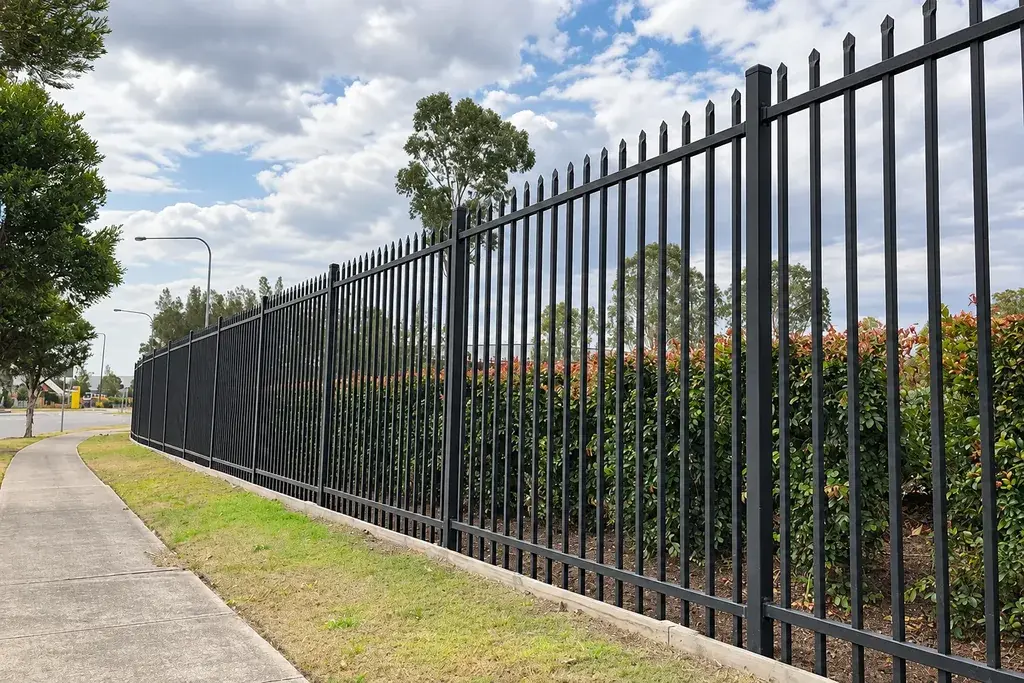
Check the difficult locations deliberately
On fence products, review wire intersections, cut ends, weld areas, edges, holes and contact points. Their geometry can make inspection different from a large flat sample.
The proposed instrument and method should suit the location. A measurement on a broad post face should not be presented as a measurement on a small wire intersection. Record the component and point, not only a list of numbers.
An illustrative record could identify “Post PS-02, face A, point 3, zinc-stage reading before powder” and a separate final-finish record. The location reference allows later results to be interpreted without implying every surface received an identical measured thickness.
Agree what happens after fabrication or transport damage
Site drilling, trimming, welding or handling can interrupt the delivered finish. Identify expected later work in the specification and agree the repair system before the goods are dispatched.
A matching aerosol colour does not necessarily restore the original zinc-plus-powder system. The repair needs to address the exposed substrate and remaining coating, using a compatible method with defined preparation and inspection.
Keep a repair record with location, extent, method, product and date. Where a deviation needs purchaser approval, close that decision explicitly rather than hiding it under a fresh topcoat.
Turn the requirement into an order paragraph
A useful finish paragraph names the component schedule, zinc route, powder product or defined performance specification, colour/texture reference, applicable inspection methods and repair requirements. It should also identify the intended exposure and maintenance information needed by the coating supplier.
For example, the order may require separate zinc-stage and final-finish records rather than one combined thickness certificate. That is a concrete document deliverable which can be priced and scheduled.
FencingWise's quality-control process follows the defined order. The buyer's task is to make each required check identifiable before production starts. A two-layer description then becomes an inspectable finish, rather than two marketing words beside a colour code.