
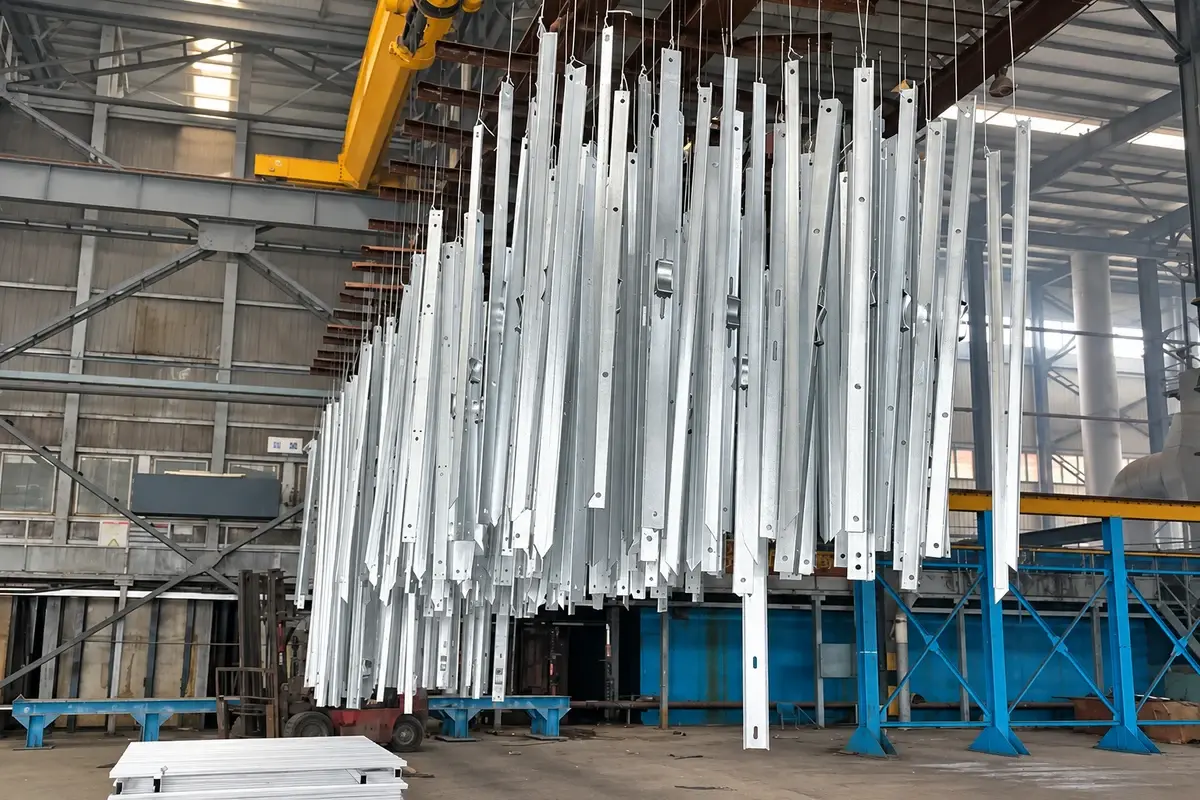
Establish the galvanizing process first
ISO 1461:2022 covers hot-dip galvanized coatings on fabricated iron and steel articles. Its stated exclusions include continuously galvanized wire and mesh, certain tube or pipe processes, and products covered by specific standards. Additional protective coatings are outside this standard's scope.
Ask whether an item is galvanized after fabrication or made from pre-coated material. That distinction determines which document belongs in the order and what evidence is needed for welds, cut edges and finished assemblies.
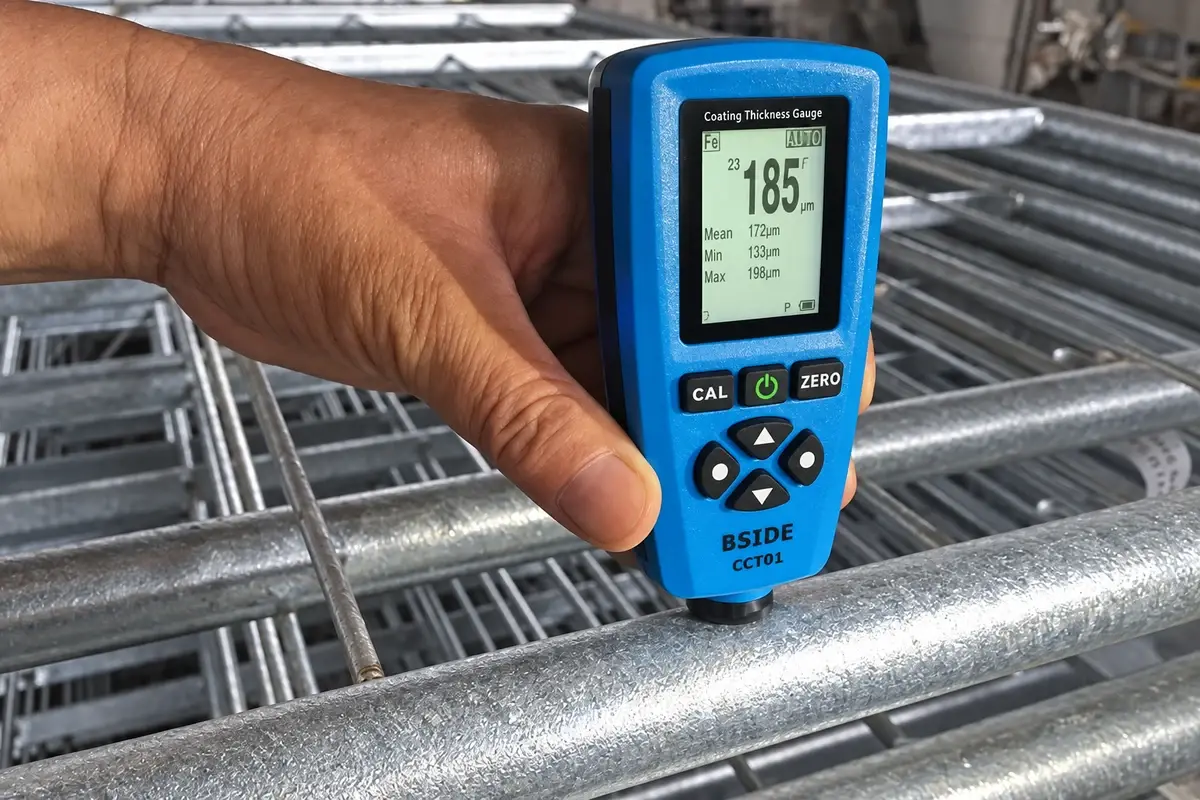
Distinguish local and mean results
The Galvanizers Association summary gives, for non-centrifuged steel articles over 3 mm and up to 6 mm thick, minimum local and mean coating thicknesses of 55 µm and 70 µm respectively. Use the full standard to verify the applicable article category, exceptions, reference areas and measurement procedure.
“Local” is not simply any isolated gauge reading. A valid inspection record should make clear how readings were taken and combined under the applicable method. An overall average alone can conceal a deficient reference area.
Work through a simplified result
For illustration, suppose three properly established local values for an applicable article are 54, 78 and 81 µm. Their arithmetic mean is (54 + 78 + 81) ÷ 3 = 71 µm. The mean exceeds 70 µm, but one local value is below 55 µm.
That simplified example demonstrates why both criteria matter. It does not specify the number of reference areas or a complete acceptance test. The inspector must apply the actual standard and agreed plan before determining disposition.
Ask for a traceable record
| Record field | Useful content |
|---|---|
| Article identity | Product, lot and drawing reference |
| Substrate | Relevant steel thickness and article category |
| Method | Instrument, calibration check and reference-area identification |
| Results | Recorded readings and calculated local/mean values as required |
| Disposition | Accepted, repaired or referred, with responsible sign-off |
An unexplained statement saying “galvanized to ISO 1461” does not give the receiving inspector enough information to reconcile the batch with the order.
Include repairs and any second coating separately
Record damage, uncoated areas and the agreed treatment under the applicable requirements. Where powder coating is added, identify that coating system and its own preparation and inspection records. Do not describe the combined system using zinc thickness alone.
Coating thickness is not a fixed service-life promise. Exposure, detailing and maintenance affect performance. Use EN 10244 wire coating documents for coated wire and EN 13438 documentation where that powder-coating standard applies.