
Give each function a clear owner
A material enquiry becomes more reliable when it describes the fence's task within the wider system. The NPSA operational-requirements guidance promotes a risk-based approach to defining security needs. Use the resulting project requirements to specify materials and interfaces, rather than assuming a taller or denser panel is always the correct improvement.
| Function | Typical question for the project team | Fence interface |
|---|---|---|
| Boundary definition | Which areas are controlled? | Alignment, signs, gateways and transitions |
| Physical resistance | What performance is required and evidenced? | Complete fence and gate configuration |
| Detection | What event should produce an alarm? | Approved sensor attachment and cable route |
| Verification | How will staff assess the event? | Sightlines, lighting and vegetation management |
| Access | Who may pass and under what procedure? | Opening dimensions, gate hardware and controls |
| Response | Who acts after an assessed event? | Safe routes and agreed operational arrangements |
These functions overlap in use but should not disappear into a single supplier's undefined “complete security” description.
Use a timing exercise without inventing resistance
For an internal planning example, assume detection takes 8 seconds, assessment takes a further 20 seconds and the planned response takes another 90 seconds. If those activities occur sequentially, the total is 118 seconds from the starting event.
If the project uses an independently justified available delay of 150 seconds from the same starting point, the nominal margin is 150 − 118 = 32 seconds. If assessment instead takes 50 seconds, the margin falls to 2 seconds. This arithmetic illustrates sensitivity; it does not establish actual security performance.
The designer must define when each clock starts, whether activities overlap and what evidence supports the inputs. A resistance rating cannot simply be converted into a guaranteed real-world delay. Nor should the example be used as an acceptable response target. Keep operational timing and sensitive site details within the authorised security team.
Check the physical interfaces before ordering
A detector may need a particular fence movement response, attachment arrangement or cable separation. An equipment bracket adds loads and can change maintenance access. Obtain the specialist's approved requirements and carry them into the fence drawing.
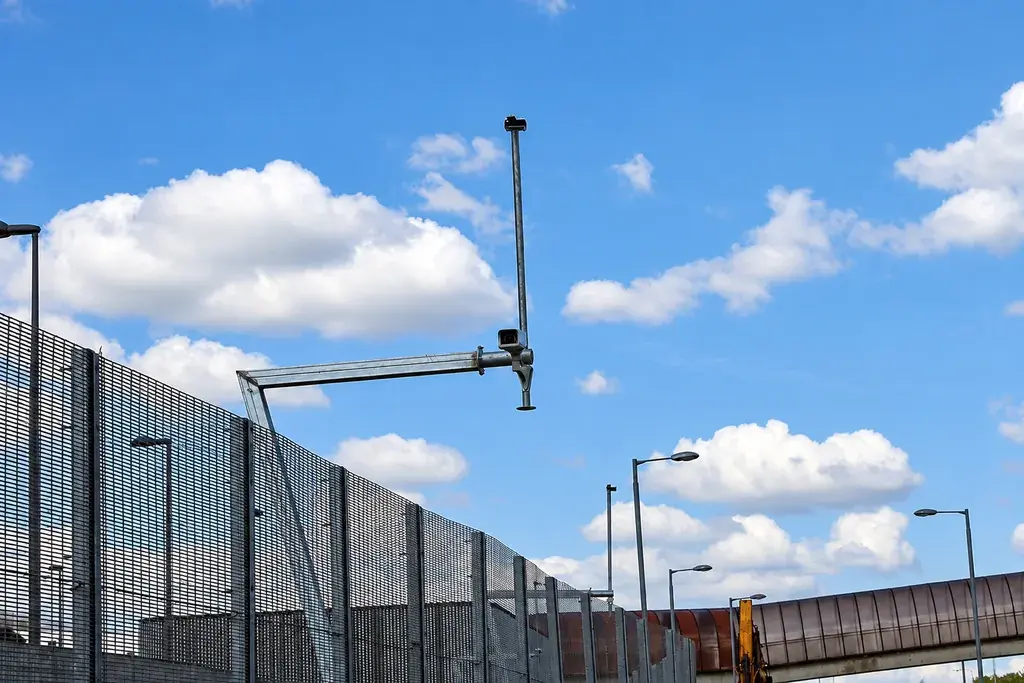
For surveillance, inspect the view through and along the proposed mesh at relevant camera positions. Colour, wire alignment and viewing angle can affect the image. The security mesh and CCTV guide explains how to evaluate the actual view rather than relying on a catalogue photograph.
Lighting needs its own support and electrical design. Do not assume a panel or standard post can carry a luminaire simply because a clamp fits. Any new mounting should be considered in the structural, electrical and maintenance interfaces.
Treat gates as operating points
The boundary changes state whenever a gate opens. Define the access process, movement direction, usable width and the relationship between pedestrian and vehicle routes. A rated fixed fence does not answer how an entrance will be supervised or how a powered gate will operate safely.
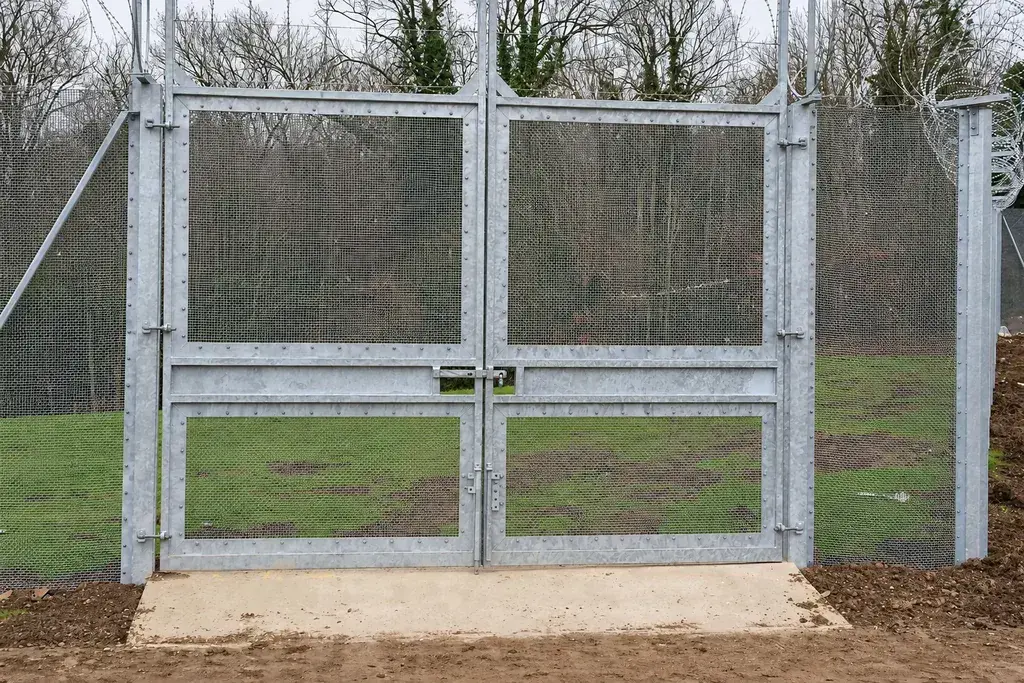
Record the supplier responsible for the mechanical gate, the controls, safety assessment, commissioning and ongoing maintenance. Where vehicle-impact protection is part of the project, preserve its separate design and evidence. Ordinary perimeter fencing should not be described as crash protection.
Handover should test the joined-up arrangement
- Verify the installed fence and gate references against the accepted drawings.
- Close dimensional, fixing and coating defects under the agreed inspection process.
- Have each specialist complete its own commissioning records.
- Exercise the agreed interfaces and confirm who receives and acts on relevant information.
- Record maintenance access, replacement references and controlled operating instructions.
- Assign responsibility for later changes, including new signs, screens or equipment.
A fence can be delivered exactly as ordered while the wider system remains incomplete. Keep material acceptance, system commissioning and operational readiness as distinct decisions.
For procurement, FencingWise's role is to identify the fence, gate and accessory materials it can supply against the project brief. Use specification support to resolve dimensional and documentary interfaces, while the appointed specialists retain responsibility for the complete security design and its operation.