
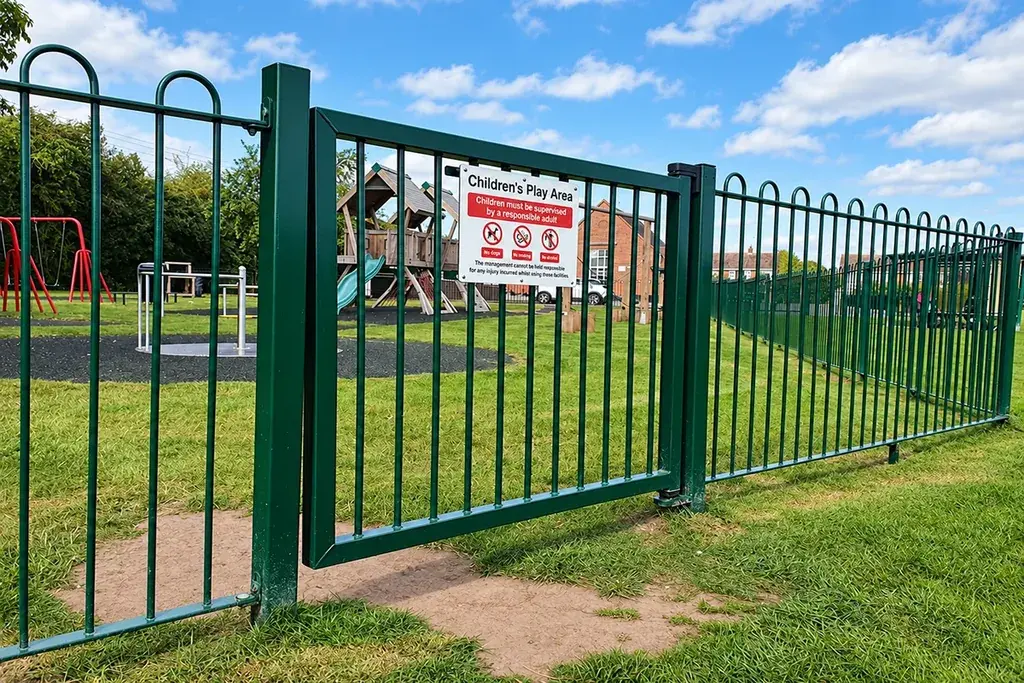
Draw the access as well as the fence
Show gate positions, opening direction, approaches, finished levels and nearby activity areas. Include the route for pushchairs, wheelchairs, maintenance equipment and emergency access as required by the project.
RoSPA Play Safety's gate guidance recommends at least 1 m open width for wheelchair passage and a closing time ideally no quicker than five seconds. It also discusses movement conflicts, entrapment and ground conditions. Apply these recommendations through the project assessment; they are not a substitute for the full applicable requirements.
Keep four records with the submission
| Record | Content to include |
|---|---|
| Layout | Approaches, gate movements and surrounding hazards |
| Product drawing | Openings, edges, hinges, latch and closer arrangement |
| Installation instructions | Supports, adjustments and relevant clearances |
| Inspection and maintenance plan | Functional checks, wear points and corrective action |
Where an approval or inspection report is claimed, identify the issuing organisation, product and scope. Do not describe a reference to RoSPA advice as proof that RoSPA has approved the product or inspected the site.
Record closing tests consistently
For a non-normative recordkeeping example, use the starting positions required by the product instructions and project inspection plan, then record the result for each test. If the agreed test position produces times of 6.2, 6.5 and 6.3 seconds on repeated checks, the average is approximately 6.33 seconds.
That average does not establish safety on its own. Check each result, complete closure, any required latching, smooth movement and the absence of conflicts through the full swing. These example times are not FencingWise test results or a universal test procedure. The competent inspector sets the actual acceptance method.
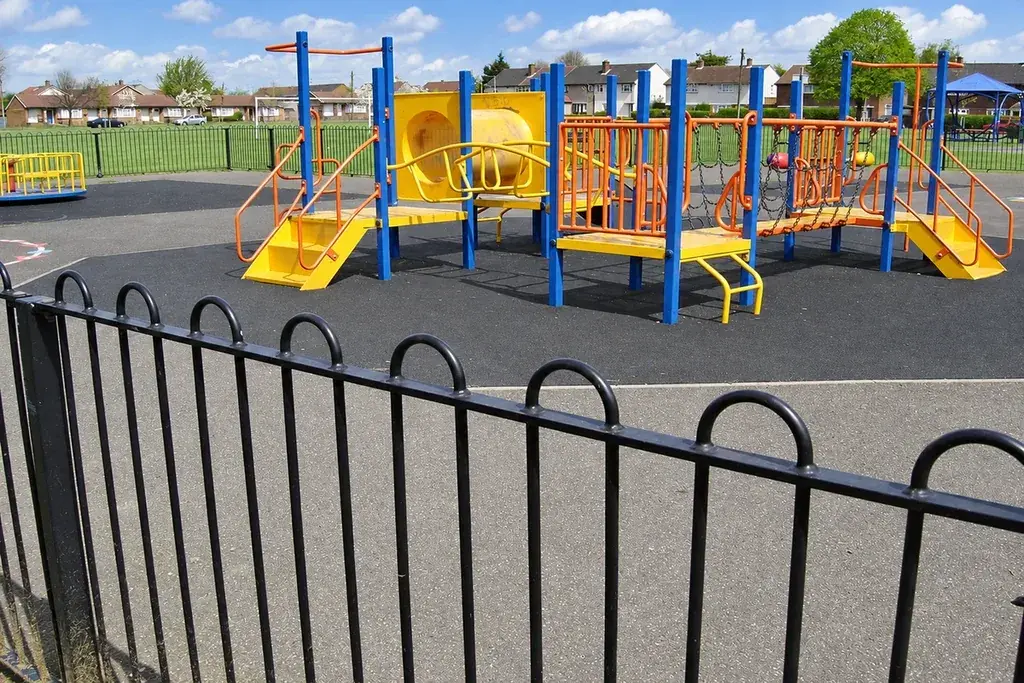
Assess the installed ground relationship
Ground that slopes through the gate's movement can change clearances as the leaf opens. Loose surfacing can migrate, and wear can change the approach. The installed inspection should consider those actual conditions rather than relying entirely on the factory drawing.
RoSPA Play Safety provides post-installation inspection guidance. Agree the inspection and close-out arrangements with the operator before the play area opens.
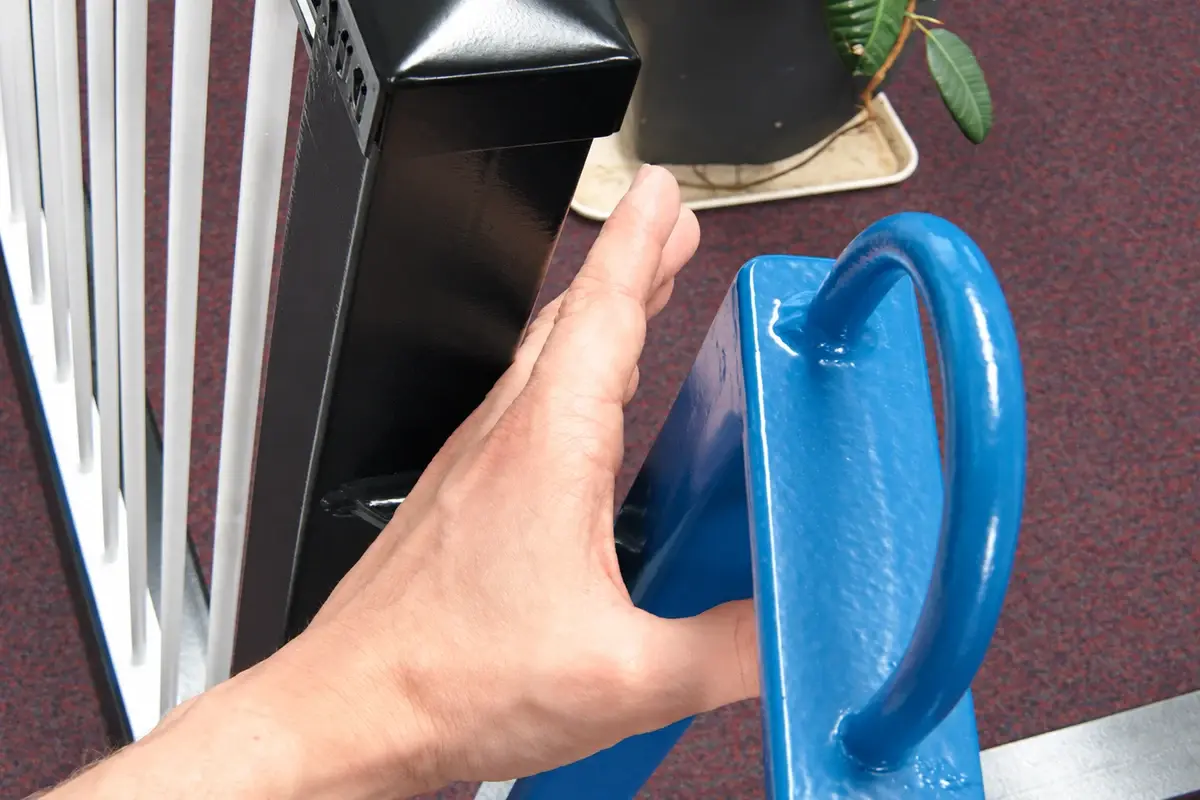
Make maintenance information usable
Identify the closer, hinge, latch and replacement part references. State the adjustments permitted by the product instructions and who should perform them. If a gate begins to slam or fails to close, investigate the cause rather than compensating with an unapproved hardware change.
Retain the accepted drawings and inspection report, including corrective work. The self-closing playground gate page explains the assembly choices; the pool fencing guide covers a separate application with its own legal requirements.