
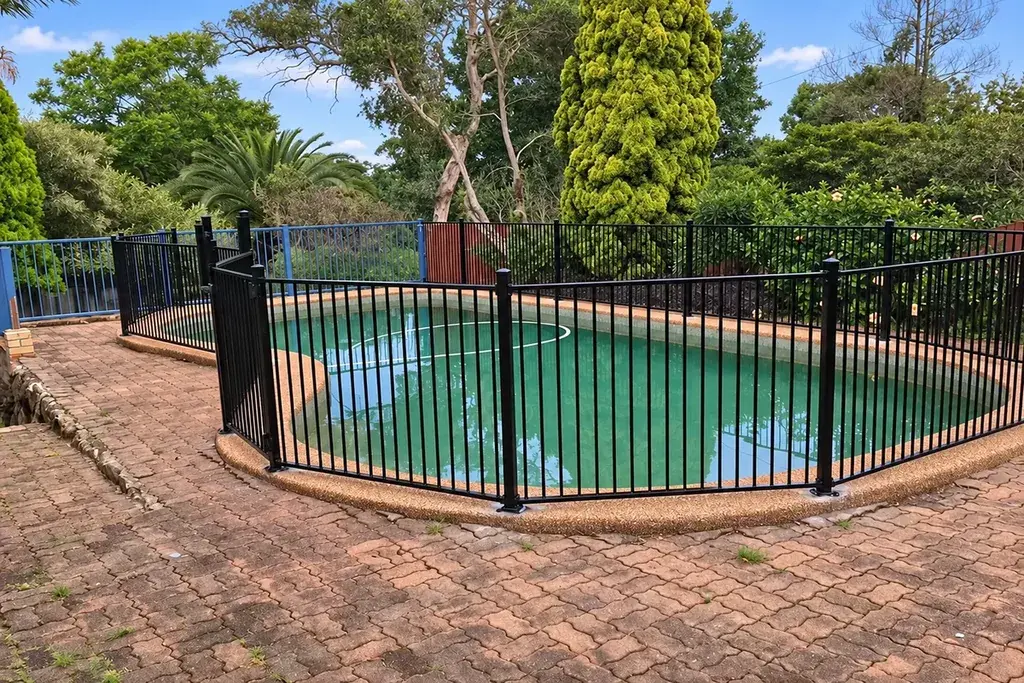
Identify the jurisdiction and project type
Record country, state or territory, local authority, pool type and whether the work is new construction, alteration or repair. Ask the responsible inspector or approval professional which legislation, adopted standard edition and local modifications apply.
Do not assume that the newest published standard is automatically the legally adopted edition. Nor should a dimensional rule from one Australian state be presented as a worldwide pool-fence requirement.
Use official dimensions in their stated context
For example, Queensland's official guidance identifies barriers below 1,200 mm and climbable objects within the relevant 900 mm zone as issues requiring attention. Its guidance also addresses gate and other barrier failures. These are Queensland examples, not a complete compliance checklist or universal rules.
Measure from the relevant finished surface. Landscaping, raised beds and stored objects can alter the effective arrangement after installation. A panel's factory height does not establish the installed barrier height.
Check the whole access route
| Element | What the project reviewer needs |
|---|---|
| Fence run | Height, openings, ground relationship and nearby climbable features |
| Gate | Opening direction, closing/latching arrangement and operating clearances |
| Building interface | Relevant doors, windows and adjoining structures |
| Changes in level | Retaining walls, steps and altered ground surfaces |
Use the applicable rules and a qualified assessment for the detailed criteria. Product drawings should show the actual proposed arrangement so that the reviewer can assess it before the order is placed.
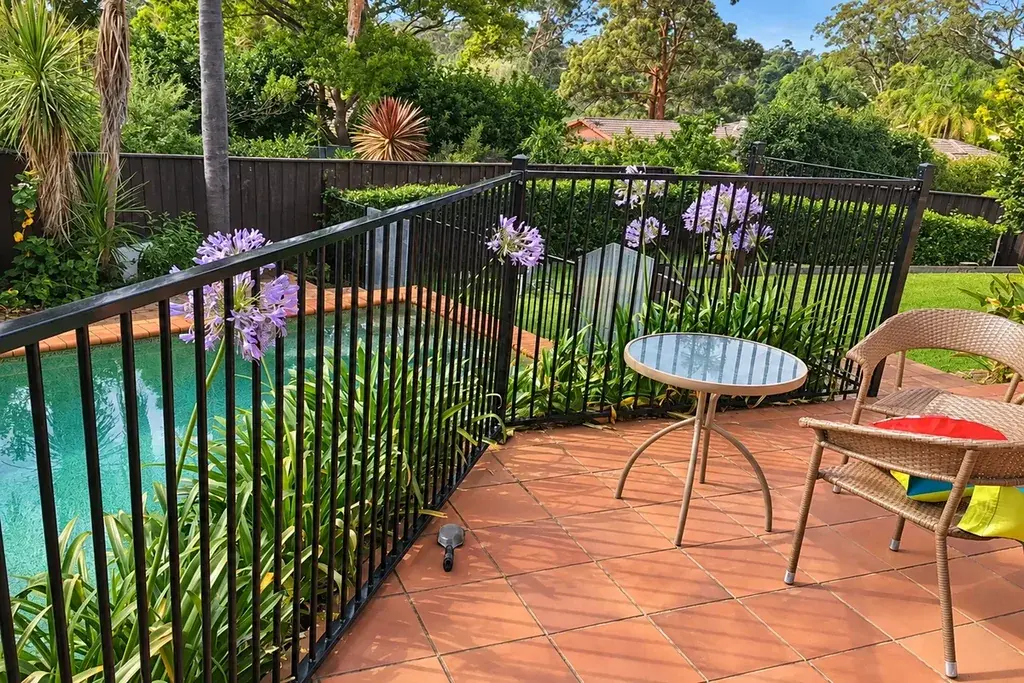
Calculate effective height correctly
Suppose a hypothetical barrier top is 1,300 mm above the original ground, and a new raised surface increases the relevant ground level by 150 mm. The remaining height is 1,150 mm. That calculation illustrates the effect of landscaping; the inspector determines the legally relevant measurement point and requirements.
It also explains why supply-only orders need the finished-site dimensions, not merely a nominal panel size. The installer must coordinate the actual levels and connections.
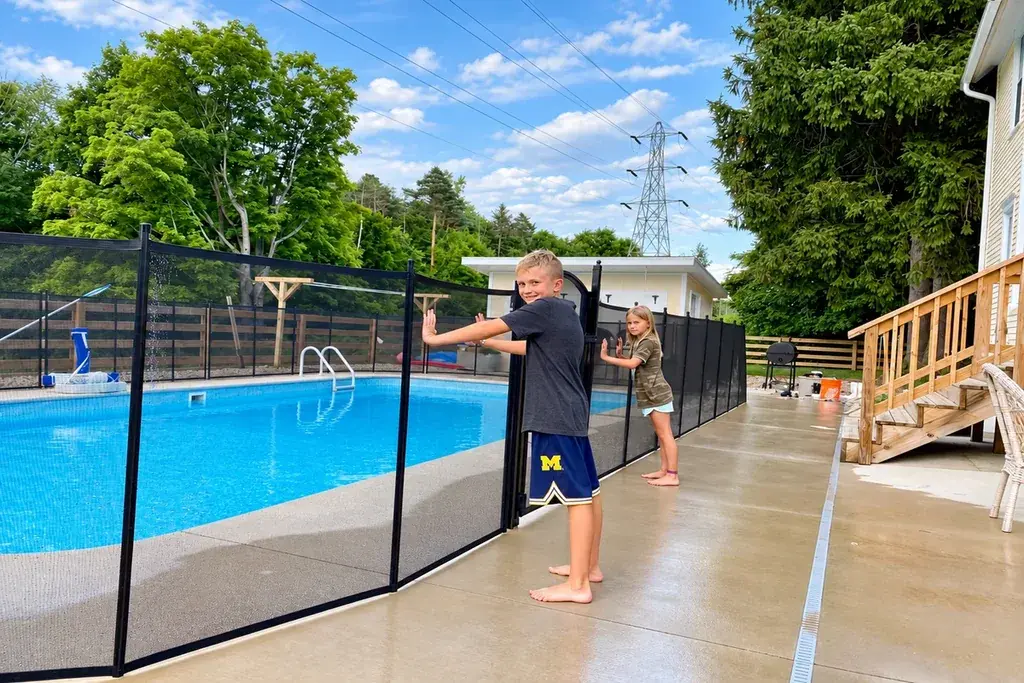
Verify operation after installation
Have the responsible inspector check the complete barrier, gate operation and surrounding conditions under the applicable rules. Record any corrective work and its acceptance. Do not treat a successful latch operation on a loose demonstration gate as acceptance of the installed pool barrier.
Give the operator the required maintenance and inspection information. Subsequent changes to paving, planting, gate hardware or nearby storage can affect compliance and should be reviewed.
FencingWise's aluminium picket fence page describes a product family; pool use requires the specific compliant design and evidence for the destination. The playground documentation guide concerns a different use and should not be substituted for pool-barrier requirements.