
By FencingWise Editorial Team · Updated 17 September 2026.
Start with package references, then count the contents and classify their condition.
Prepare the receiving references before arrival
Have the latest packing list, order schedule and any agreed inspection or split-shipment record available. Identify expected package numbers, contents and separately packed hardware.
Confirm the receiving and handling arrangements for the actual package dimensions and weights. If unloading cannot be carried out safely or the load appears unstable, use the responsible site's procedure before attempting to open or move it.
Know the notification requirements that apply to the actual order and transport arrangement. Do not assume a universal reporting deadline or that a photograph alone satisfies every requirement.

Record the packages as received
Identify the vehicle or shipment reference, delivery time and package labels. Record visible damage, missing packages, disturbed wrapping or other relevant conditions before they are changed during unpacking.
Take overview photographs and closer images with the package reference visible. A close-up of a scratched panel without any connection to a carton, pallet or item code is harder to use later.
If condition changes during unloading, keep that sequence clear. Record observations without deciding the cause before the evidence is available.
Open and count against the contents list
Match each package to its stated items. A mixed pallet needs a contents breakdown, not just an overall number of pieces.
Separate panels, posts, gates and hardware. Check whether caps are already fitted to posts and whether gate hardware is nested in another crate. Search the packing references before reporting a separately packed item as missing.
Record the counting method and any limits. Counting visible top layers does not establish the complete contents of a wrapped stack.
Work through a 120-panel example
Assume a fictional packing list states 6 pallets of 20 panels, giving 120 panels expected. All six labelled pallets arrive, but physical counting finds 118 panels. Of those, 5 have damage requiring assessment.
The reconciliation is:
| Category | Quantity |
|---|---|
| Expected | 120 |
| Physically received | 118 |
| Short delivery | 120 − 118 = 2 |
| Received but held for damage assessment | 5 |
| Received without the recorded damage issue | 118 − 5 = 113 |
The immediate shortfall against 120 readily available panels is 7, comprising two absent panels and five held panels. That does not mean seven panels were missing from the shipment.
If three of the held panels are later approved after an authorised repair, the available quantity becomes 116, leaving two missing and two still held. Keep that later disposition separate from the original delivery observation.
These are invented counts used to demonstrate the record.

Classify damage by item and location
For each affected component, record its code, package, quantity and observed condition. Distinguish coating marks from deformation, broken welds, damaged hardware or other issues requiring assessment.
A useful entry might read: “Pallet P-04, panel reference MP-02, units 7–9 in the identified stack, bent lower edge photographed.” It is more actionable than “several fences damaged”.
Do not make repairs or discard relevant packing before the responsible parties have the information needed for their assessment, except where immediate safety measures are necessary. Where goods are held, label and segregate them so they are not installed accidentally.
Reconcile small parts by complete assembly
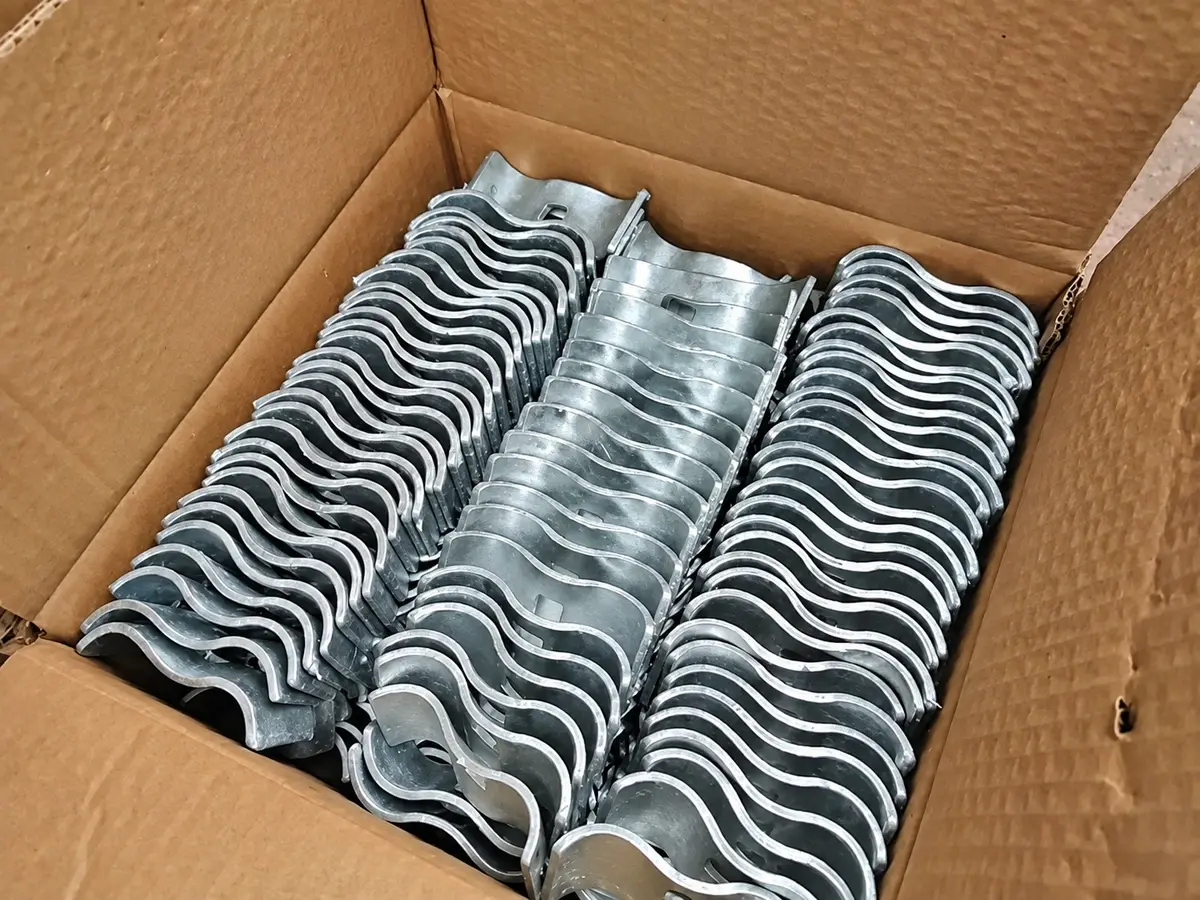
Suppose the packing list includes 80 clamp kits, each with one clamp, one bolt, one nut and two washers. Receiving 80 bags does not prove that all contents are complete.
If five bags each lack one washer, record 5 washers short within otherwise identified kits. Do not describe this as five complete kits missing unless the agreed disposition actually treats them that way.
The missing-parts prevention guide explains how set contents and area kits support this check. The same item references should appear in the notification to the supplier.
Send a concise evidence package
The initial notification should identify the order and shipment, affected packages, expected and observed quantities, condition photographs, inspection date and immediate operational effect.
Separate facts from interpretations. “Wrapping torn and three lower panels bent” describes an observation. Assigning fault to a particular loading stage without supporting evidence goes further than the record establishes.
Include the requested next action: quantity reconciliation, assessment of damaged parts, proposed replacements or an agreed repair review. Keep the commercial resolution tied to the actual order and transport terms.
Update status without rewriting the first count
Use a discrepancy register with the original observation, responsible party, agreed action, current status and closure evidence. If replacement goods arrive, link them to the original discrepancy and their new shipment reference.
For the example above, the register should still show two originally missing panels even after replacements close the issue. That history explains why the final stock includes items from a later shipment.
Likewise, a repaired panel remains a received item whose disposition changed; it should not appear as both an original panel and a new replacement in the quantity total.
Feed recurring issues back into packing
After the discrepancy is resolved, compare the pattern with the packaging and receiving method. Repeated damage at strap positions, projecting hardware or unsupported panel bends may point to a packaging detail needing review.
The pallet packing guide helps turn those observations into a specific change. Better labels and component separation may also reduce false shortage reports.
A good receiving record supports resolution of the current delivery and improves the next one. Its value comes from traceable quantities and conditions, rather than a large collection of unlabelled photographs.