
Begin with the route through the gate
Mark the pedestrian approach, adjacent play space and any road, cycle path or other hazard outside. The opening direction should follow that layout and the responsible designer's assessment. A general preference for inward or outward opening cannot resolve every site.
Record the clear passage required for the users, including pushchairs, mobility aids and maintenance access where relevant. Distinguish the normal pedestrian opening from a second leaf used only for equipment. If the second leaf is normally secured, assess everyday access with that leaf in its normal position.
Use the gate dimension schedule to separate clear passage, leaf width and post spacing. These dimensions are particularly important when a closer or hinge occupies space within the opening.
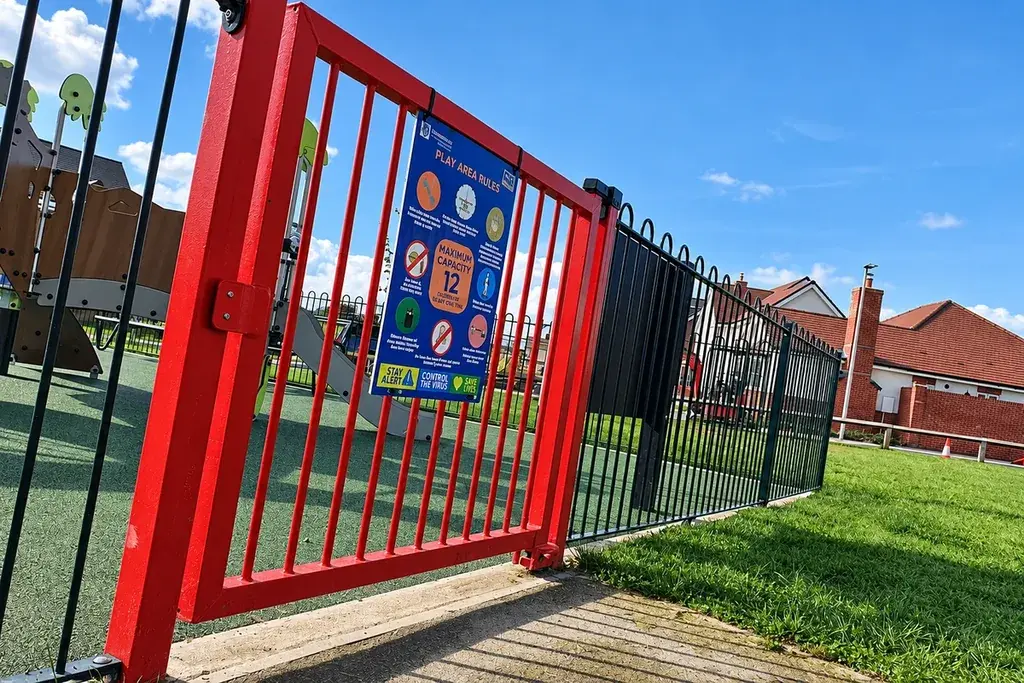
Match the closer to the actual leaf
A closer selection depends on more than leaf weight. Width, hinge geometry, mounting position, opening angle and environmental conditions affect its use. Obtain the current manufacturer's instructions for the exact model and compare them with the proposed drawing.
Check gate dimensions, mass, mounting geometry and adjustable closing behaviour against the selected closer's documented limits. A closer's individual rating does not by itself establish the safety of the assembled gate.
If the hinge and closer functions are separate, establish their compatibility. Adding a stronger spring to overcome binding can mask a mechanical fault and change the closing behaviour. Resolve alignment, ground interference and damaged hardware first.
Inspect the whole movement path
The assessor should consider changing gaps at the hinge and closing edge, projections, access to moving mechanisms and the final stop. Gaps can change throughout the swing, so an acceptable-looking closed position does not establish the condition at every angle.
Check the relationship to the surrounding fence, including reachable edges and the lower gap over uneven ground. Entrapment assessment requires the relevant method and competent judgement; do not use fingers, a child's hand or improvised body-part tests as gauges.
Also consider latch operation and rescue or emergency access under the site's approved arrangements. A gate that returns to the closed position but fails to engage its intended latch has not completed the same function as one that closes and secures correctly.
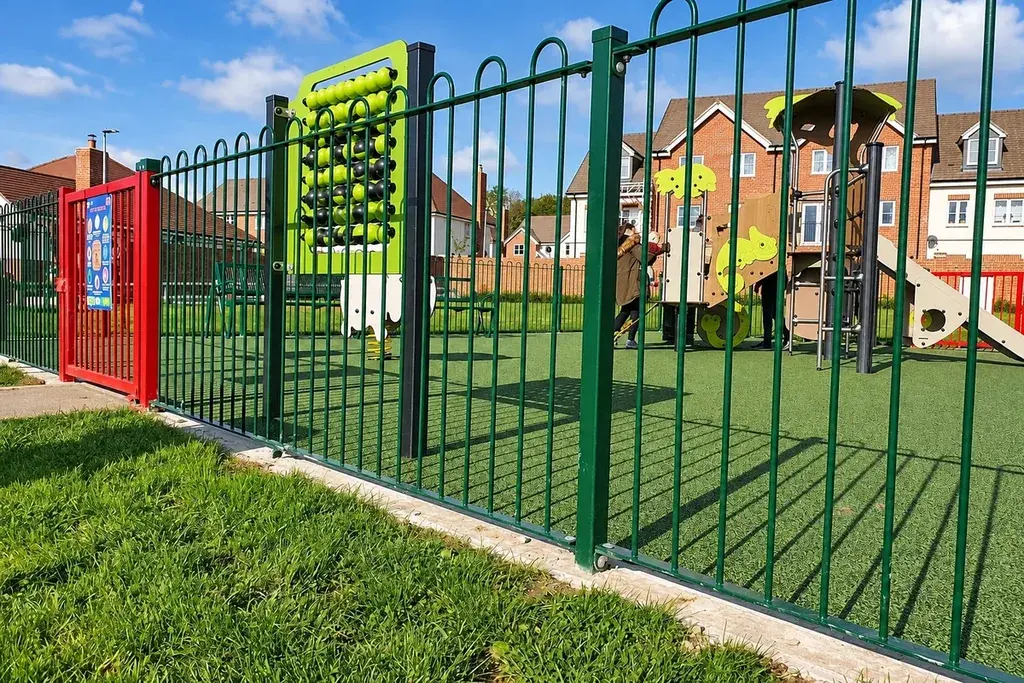
Record closing behaviour consistently
Once the competent installer has set the assembly according to the approved requirements, an observation record can make later changes visible. The following is an illustrative recording method, not a safety test standard or an acceptance threshold:
- Identify the gate, closer model, settings and environmental conditions.
- Define the starting angle and the event used to stop the timer.
- Keep the movement area clear and use the approved observation procedure.
- Record repeated closures without pushing the leaf to alter its speed.
- Note latch engagement, rebound, interference and unusual noise separately from time.
- Compare the results with the actual project and manufacturer's acceptance requirements.
Suppose three observations from the same starting position are 6.2, 6.5 and 6.3 seconds. The mean is 6.33 seconds and the range is 0.3 seconds. These numbers describe consistency only. They do not prove compliance, acceptable force or freedom from trapping hazards.
A different starting angle, wind condition or latch adjustment can change the result. Preserve those conditions in the record so a future comparison has meaning.
Plan the maintenance handover
The operator needs the approved settings, inspection instructions, component references and a route for reporting faults. Closing behaviour should be reviewed when the leaf binds, the latch fails, the closer leaks or the surroundings change. The appropriate response to a dangerous defect is to control access and obtain competent repair, not to keep increasing closing force.
Do not carry an old inspection result across a substantial change to the leaf or hardware. Replacing a component can change geometry and operation even when it uses the same mounting holes.
For a B2B enquiry, provide the site layout, passage requirement, leaf dimensions, intended closer and the required assessment evidence. Treat any claimed approval as product-specific and verify its scope before ordering. Playground boundary planning connects the gate decision to the surrounding fence and public route.