
Start with an equal-volume comparison
Aluminium has a density of approximately 2.7 g/cm³, around one-third that of steel. This is a material property, not a guarantee that an aluminium fence weighs one-third as much as a steel fence.
For an illustrative calculation, use 2,700 kg/m³ for aluminium and an assumed 7,850 kg/m³ for carbon steel. A component containing 0.003 m³ of metal would have a theoretical mass of 8.10 kg in aluminium or 23.55 kg in steel. The difference is 15.45 kg. Fasteners, welds, coatings, caps and packing are excluded.
If the aluminium design uses 0.005 m³ instead to achieve its required geometry, its theoretical metal mass becomes 13.50 kg. The finished design still needs assessment; the calculation only explains why equal-volume comparisons can overstate the saving available in an actual order.
Ask for the section rather than only its outside size
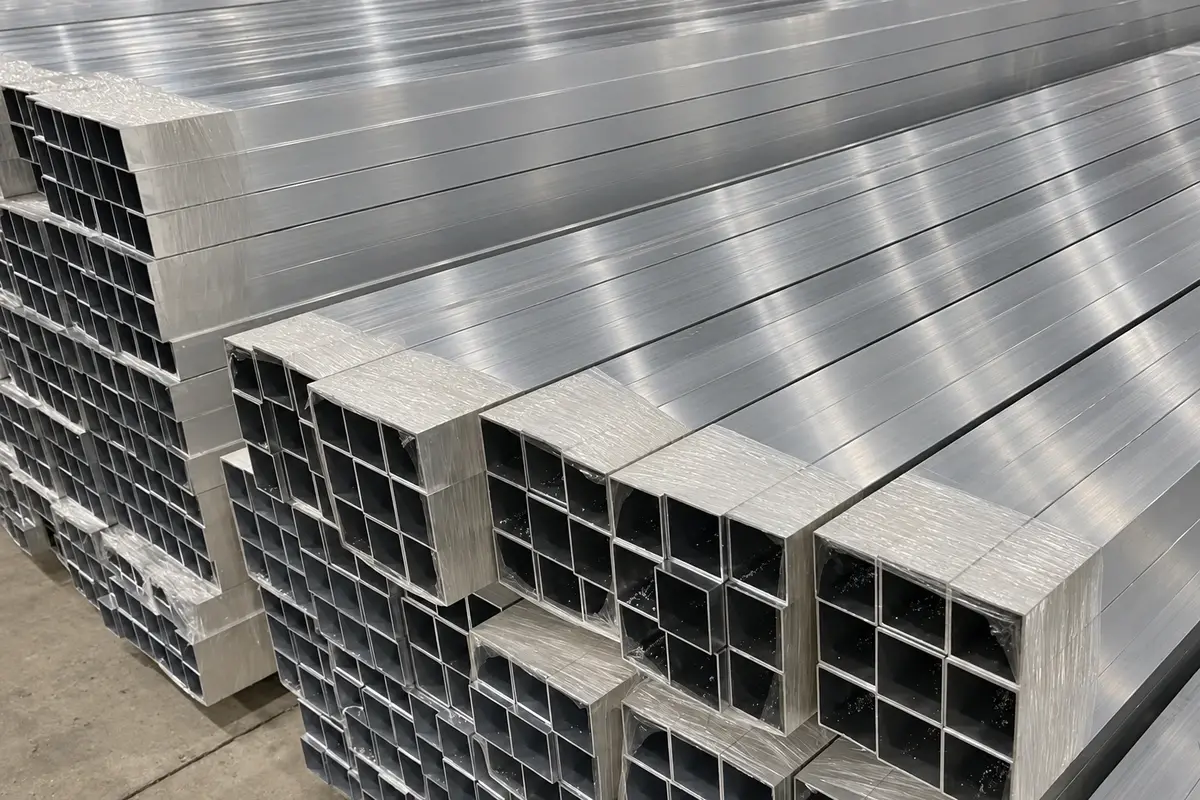
Two hollow uprights can both be described as 25 mm square while having different wall thicknesses, corner shapes and internal features. An extrusion may include channels for concealed fixings that a steel tube does not have. Ask for the cross-section drawing and the material designation for each significant component.
| Decision | Information that changes the answer |
|---|---|
| Manual handling | Finished panel mass, size, grip and access |
| Gate operation | Leaf mass, hinge geometry and approved support design |
| Impact or security duty | Evidence for the actual assembly |
| Coastal appearance | Exposure, material and finish system, cleaning access |
| Replacement supply | Profile ownership, tooling and compatible fixing details |
The lighter option may simplify a handling operation, but size and wind exposure can still make a large panel difficult to move. A low weight is not a safe-lifting instruction.
Separate corrosion behaviour from finish appearance
Carbon steel generally needs a suitable corrosion-protection system for outdoor service. Aluminium behaves differently but is not immune to corrosion, staining or coating failure. Contact with other metals, trapped moisture and the local environment require attention in either design.
A powder-coated colour match does not establish an equivalent substrate or pretreatment. Specify the finish process with the material and identify what happens at drilled holes, site cuts and assembly interfaces. For exposed connections between different metals, use the detail approved for that material combination rather than assuming a washer solves every contact problem.
Compare delivered packages, not bare panels
Suppose two illustrative offers contain 80 panels. One finished panel weighs 24 kg and the other 14 kg. Their panel-only masses are 1,920 kg and 1,120 kg, a difference of 800 kg. Posts, gates and packing remain additional. Container payload might benefit, but cargo volume or package geometry could still control the shipment.
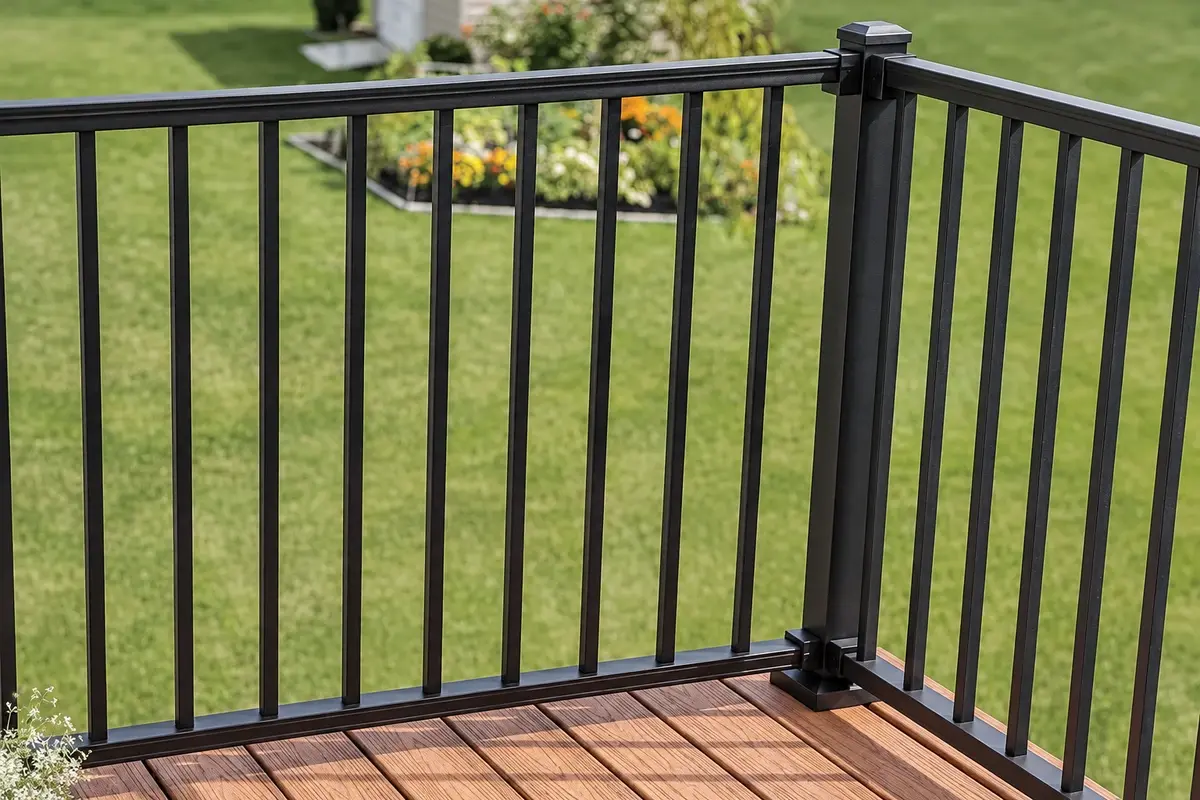
Obtain a finished packing list before making freight savings part of the purchasing decision. The same applies to installation: compare the activities actually affected by weight instead of reducing the entire installation budget by the percentage mass saving.
Compare a proposed section substitution
When an aluminium alternative uses a larger outside section, place both proposals on the same elevation and connection drawing. Check whether the change reduces clear openings, alters the visual rhythm or requires a different bracket. A technically acceptable material substitution can still conflict with an approved architectural detail.
Ask the designer to compare the actual section and joints against the same duty. If the review changes support spacing, update panel quantities, foundations and packing as well. It is easy to preserve an attractive panel price while overlooking the extra supporting work created by the revised design.
Keep the comparison at assembly level throughout the decision. The order should identify the selected material, section and connection together. A later instruction to use aluminium instead of steel should return through that same review, rather than authorising the factory to substitute material within an otherwise unchanged drawing.
Make the material decision traceable
Use steel where the proposed steel system best meets the project duty and evidence requirements. Use aluminium where its complete design, handling characteristics and finish suit the boundary. If both are acceptable, compare maintenance access, replacement availability and the total installed package.
Record why the selected design wins and what would require reassessment, such as a taller panel, wider gate or added privacy infill. For the environmental comparison, continue with outdoor corrosion of steel and aluminium fences. Keep that decision separate from a claim that either material is always stronger or maintenance-free.