Aluminium & privacy fencing
Custom Aluminium Picket Fencing
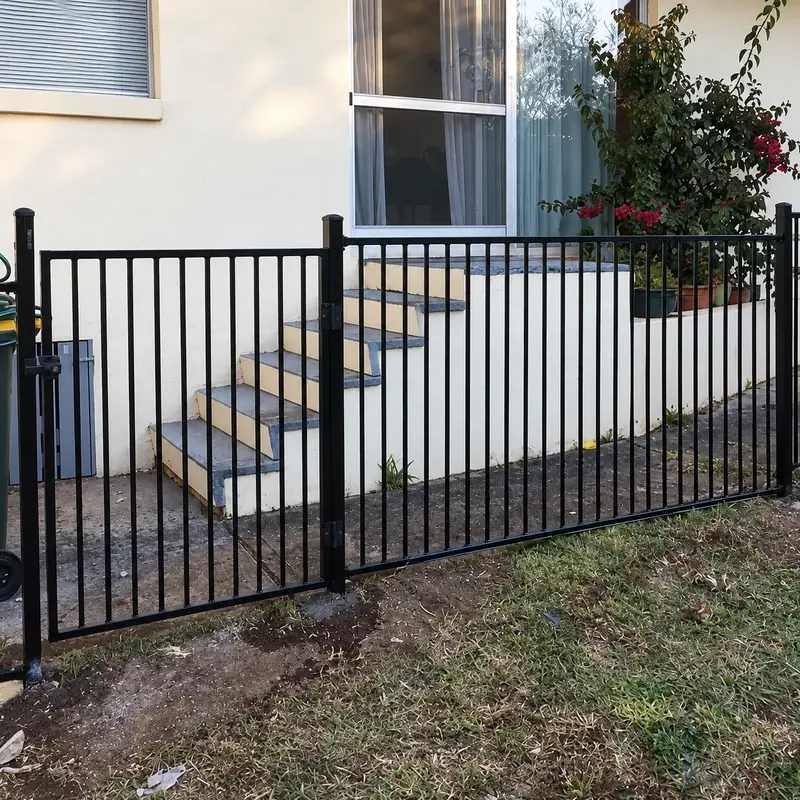
Vertical aluminium members carried by horizontal rails.
View productCompare custom aluminium fencing and privacy screens by the view, material and assembly your project needs. We coordinate aluminium pickets, slats, laser-cut metal screens and vinyl profile fencing through production partners. Use the comparison, quote references and specification fields below to build a defined project or distributor package, with the actual product and supply scope recorded in our offer.
THE FENCINGWISE RANGE
4 products
Aluminium & privacy fencing
Vertical aluminium members carried by horizontal rails.
View productAluminium & privacy fencing
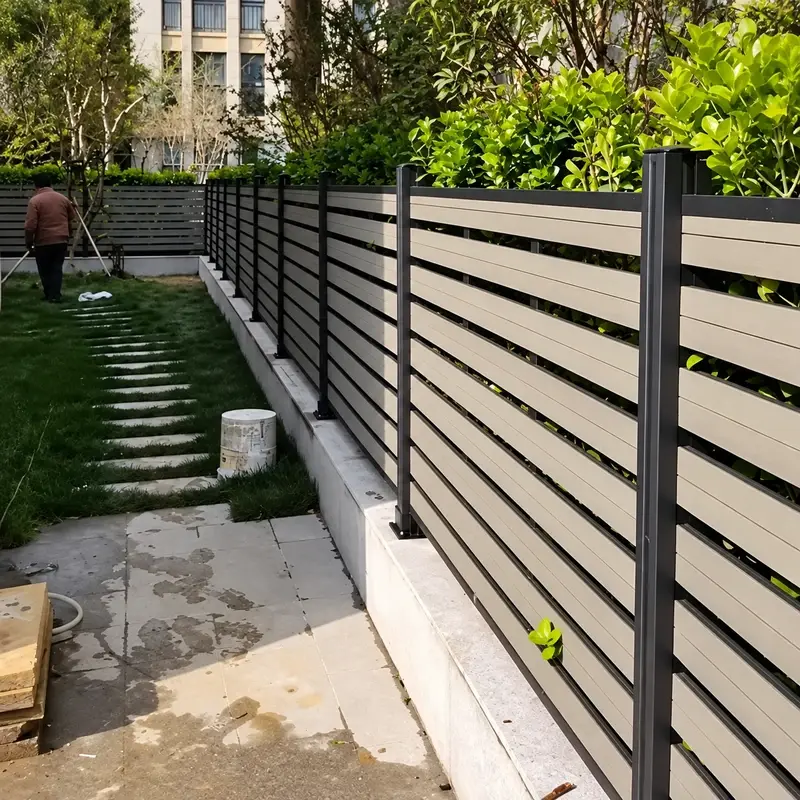
Repeated aluminium slats with a specified gap arrangement.
View productAluminium & privacy fencing
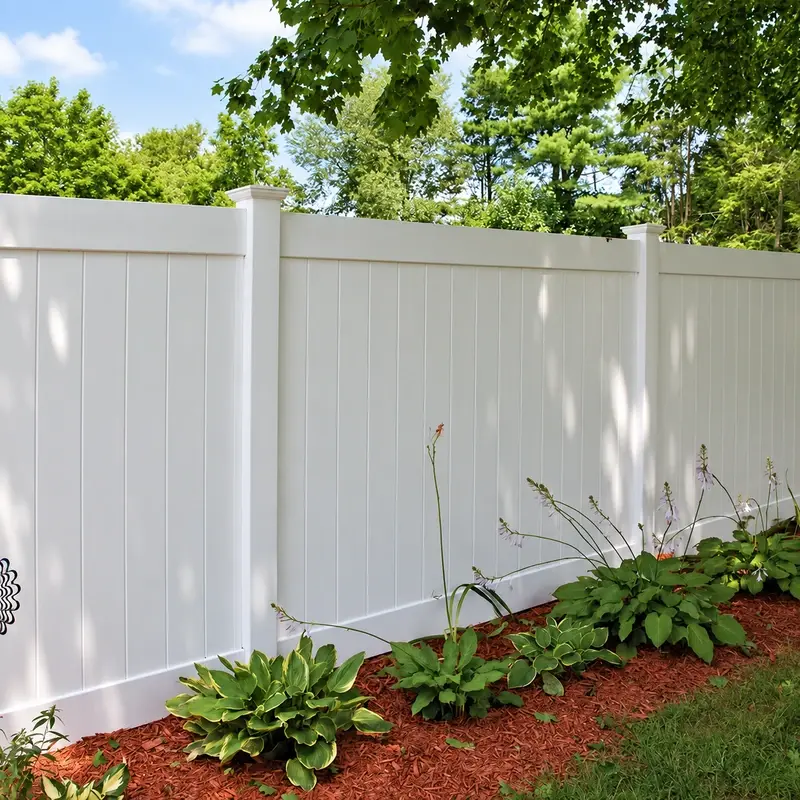
PVC profiles, rails and posts for a screened boundary.
View productAluminium & privacy fencing
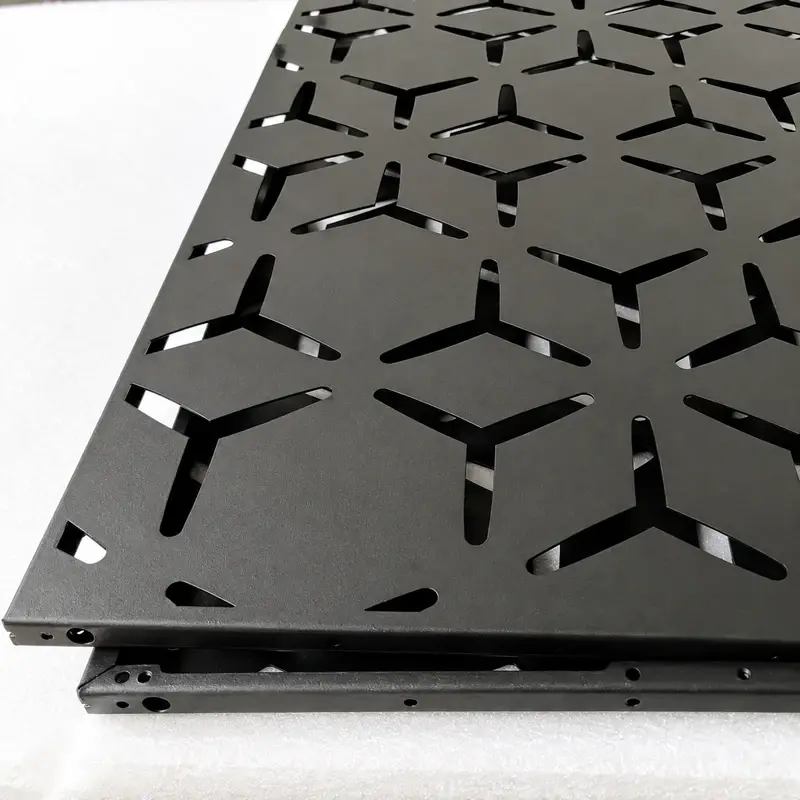
Cut metal panels with a designed pattern and fixing border.
View productTry a broader term or clear the filters to see the full range.
The useful first choice is the type of boundary: an open elevation, a controlled view through repeated slats, a decorative sheet pattern or a continuous profile screen. These constructions have different parts, replacement methods and fabrication inputs. We coordinate them through production partners for trade and project orders, keeping each offered system identifiable within a mixed shipment.
| Construction | Where it belongs on the shortlist | What drives the specification |
|---|---|---|
| Aluminium pickets | Open frontages where the vertical rhythm and views beyond the boundary matter. | Picket section, clear openings, rail positions and the top line. |
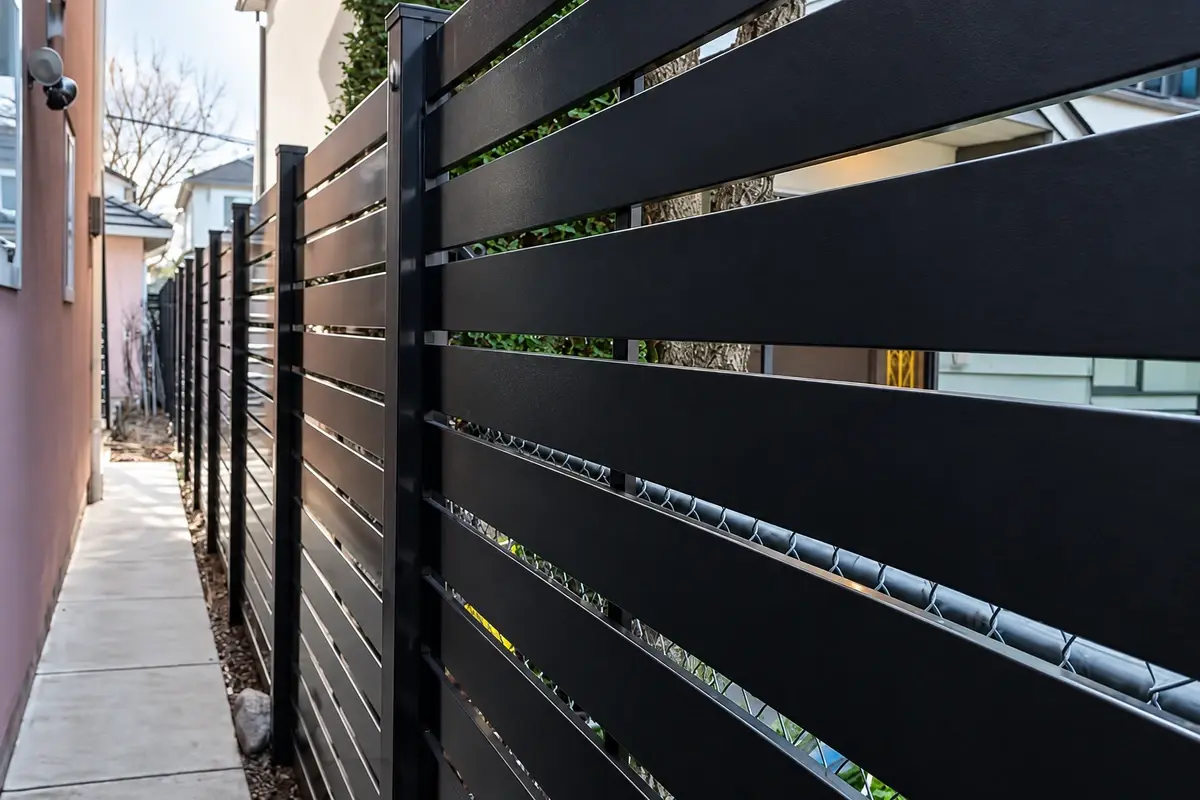
| Aluminium slats | Repeated horizontal or vertical screening with a deliberately selected gap. | Profile face and depth, orientation, end gaps and retaining channels. |
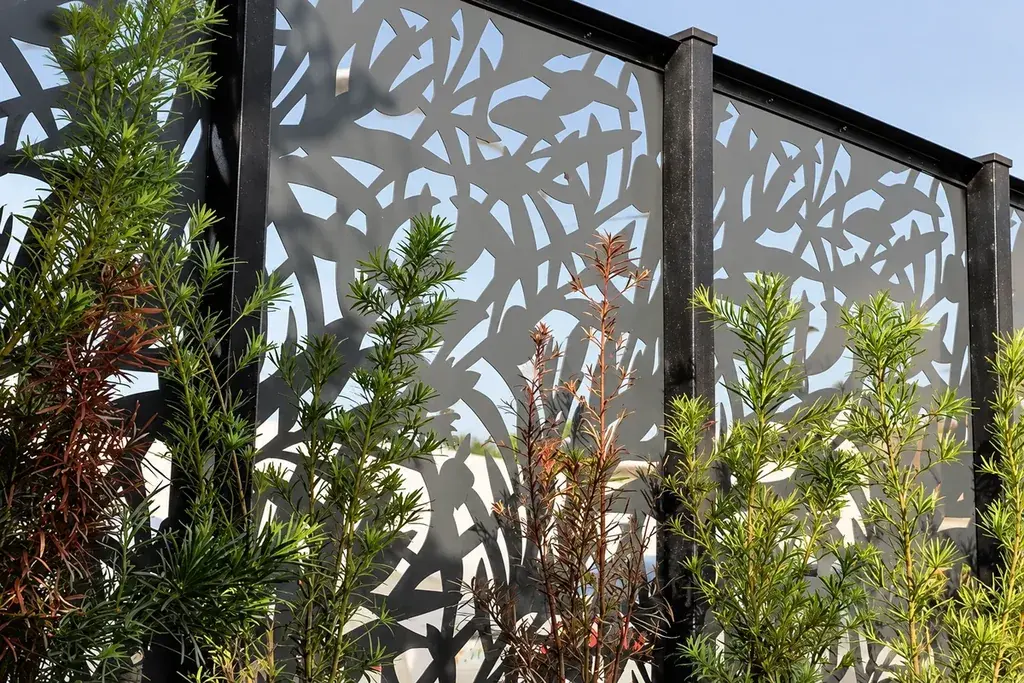
| Laser-cut metal screens | Feature elevations, repeating artwork or a pattern continuing across several bays. | Substrate, sheet thickness, remaining webs, fixing border and panel sequence. |
| Vinyl privacy panels | A screened boundary assembled from coordinated PVC profiles. | Board, rail and post engagement, reinforcement and movement provisions. |
A project can combine these families: an open frontage, screened service area and coordinated gate need not share one infill. Use a common appearance brief while retaining a separate component schedule for each construction. Steel palisade, garrison and traditional steel railings belong in our steel fencing collection.
A privacy brief should name the objects to conceal and the positions from which people look. Slat direction, depth, gaps and the angle of observation work together. A patterned screen can appear open from one direction and more closed from another; a front elevation alone cannot resolve that choice.
Show the gate, bottom edge, stepped bays and nearby level changes in the same visual review. For a feature frontage, compare a representative pattern or profile sample at its intended scale. For screening around equipment, separate the appearance decision from ventilation and service access. The privacy-versus-open-fencing guide explains how to map those different viewing duties.
Customisation starts with the drawing, then the partner's proposed profiles or sheet construction. The following fields make an enquiry specific without assuming that every extrusion, pattern or colour is an available combination.
| Order choice | Information to define | Why it changes the product |
|---|---|---|
| Bay dimensions | Finished width and height, post positions, steps and special end bays. | Controls cutting, frame size and the connection to adjacent supports. |
| Pickets or slats | Profile section, wall detail, direction, clear gap and edge treatment. | Changes the visible pattern, part count, fit and retaining arrangement. |
| Patterned sheets | Dimensioned artwork, viewing face, border, returns and fixing holes. | Controls cutting complexity, remaining material and installation sequence. |
| PVC construction | Profile references, inserts, engagement and system movement details. | Determines compatibility between boards, rails and posts. |
| Surface appearance | Colour reference, texture, gloss and approved sample. | Sets the comparison basis for components finished in different batches. |
| Supply format | Assembled panels or identified components, with fittings and spares listed. | Moves work between the supply package and site assembly, and changes packing. |
For an initial size brief, the published examples below provide recognisable dimensions. They describe other manufacturers' products, rather than a FencingWise stock list or guaranteed production range. Our offer identifies the proposed partner system and its accepted dimensions.
| Reference item | Published example | How to use it in an enquiry |
|---|---|---|
| Slat panel outline | 2400 × 1800 mm or 2400 × 1200 mm, width × height. | State whether your measurement describes the panel, clear opening or installed bay. |
| Slat face | 65 mm blades in Quickscreen; 75 mm blades in Ezi-Slat. | Add profile depth, wall detail and gap. Face width alone does not identify a compatible extrusion. |
Source: Stratco manufacturer catalogue, screening page 22. These are dimensional references only; its prices, stock statements and system performance are not part of our offer. Pickets, cut sheets and PVC panels need their own specification.
Aluminium profiles: identify alloy and temper where required, section geometry and the chosen surface process. Preparation and coating must suit aluminium. A steel hot-dip galvanizing note is not an interchangeable finishing instruction. Mechanical joints and welded joints also produce different visible details, so the joining method belongs with the appearance sample.
Cut metal screens: name the substrate before discussing finish. Aluminium, carbon steel and stainless sheet have different treatment routes. Include cut edges, borders, returns and attachment points in the finish review; approval of the broad front face alone misses these details.
PVC profiles: identify the actual profile construction, colour and any metal reinforcement. Their engagement and movement provisions come from the offered system. A matching board face does not make components from different systems interchangeable. Our vinyl and PVC terminology guide explains the distinction from PVC-coated metal wire.
For colour-sensitive orders, retain a physical reference across the selected families. RAL's digital-colour guidance explains why a screen image only approximates its physical sample. Texture and gloss remain separate appearance decisions even when the colour code matches.
The supply boundary should identify panels, posts, brackets or channels, caps, fasteners and any gate components. A wall-mounted screen and a free-standing boundary have different supporting interfaces. The completed screened surface, its exposure and the project support design determine the required arrangement.
Show changes in level and the first and last bay on the elevation. A stepped run may use repeated panels; a raking arrangement may require different fabrication. At gates, coordinate pattern alignment and the viewing face while specifying the moving frame, hinges and latch separately.
Replacement access is an order choice. A removable slat, detachable sheet and interlocking PVC board require different dismantling routes. Identify the retained part references and accessible fixing side before choosing a supply format. Equipment enclosures also need the equipment designer's ventilation and service-access brief. Pool, guarding, acoustic or rated-security duties require evidence for the particular assembly.
Compare quotations against the same elevation and component scope. Narrower slat gaps can increase profile quantity; additional special widths increase the number of cutting and assembly references. A complex cut pattern changes cutting work, border detailing and protection of the finished sheet. A requested extrusion outside the offered partner system can introduce a different tooling and development scope.
Finish changes, small colour batches, trial assemblies and mixed materials also affect the quotation. Separate these from transport and site work. An assembled panel and a component pack may use different shipping space and installation labour, so the lower supply price is not automatically the lower project cost.
A finish swatch can approve appearance; a section sample identifies local profile fit; a representative assembled bay shows the pattern and connection together. State what each sample approves so a colour decision does not silently release unfinished dimensional details.
The receiving schedule should cover finished dimensions, profile or sheet identity, orientation, edge condition, appearance and included fittings. Label special-width and continuous-pattern panels by elevation position. Packing should separate finished faces, protect exposed edges and avoid loading delicate cut features. Identify caps and small fittings by their matching assembly so the final bay can be completed from the delivered package.
Start with aluminium slats when a repeated profile and adjustable gap form the intended design; consider a cut screen when the pattern itself matters. Use the important viewing positions to compare them. Pickets preserve a more open elevation, while PVC privacy profiles provide a different, coordinated screening system.
They can be reviewed against a common appearance reference in the enquiry. List the substrate and finish for each item, and compare representative finished samples together. The same code can look different across textures, gloss levels and component shapes.
Choose around the available installation work and the need for repeatable fit. Finished assemblies carry more of the assembly work into the supply package. Component packs need a complete parts list, compatible interfaces and usable assembly information. Compare packing volume and local labour alongside the product price.
Yes, it can be submitted as a coordinated design enquiry. Number the panels and show the gate closed, its viewing face, frame border and meeting gaps. The graphic needs to work around the gate's structural frame and hardware rather than simply being divided into equal rectangles.
Retain the partner product reference, approved section or artwork, finished dimensions, colour sample identity and connection revision. A photograph records appearance but usually omits engagement and hidden fixings. Those records let us review a replacement against the original supplied system.
Include the boundary or screen layout, viewing objective, chosen family, dimensions, quantity, finish reference and required gates or fittings. Identify special bays and the delivery destination. Send your custom aluminium or privacy-fence enquiry; we will review the configuration and partner-supply scope for the order.