
Establish the handover baseline
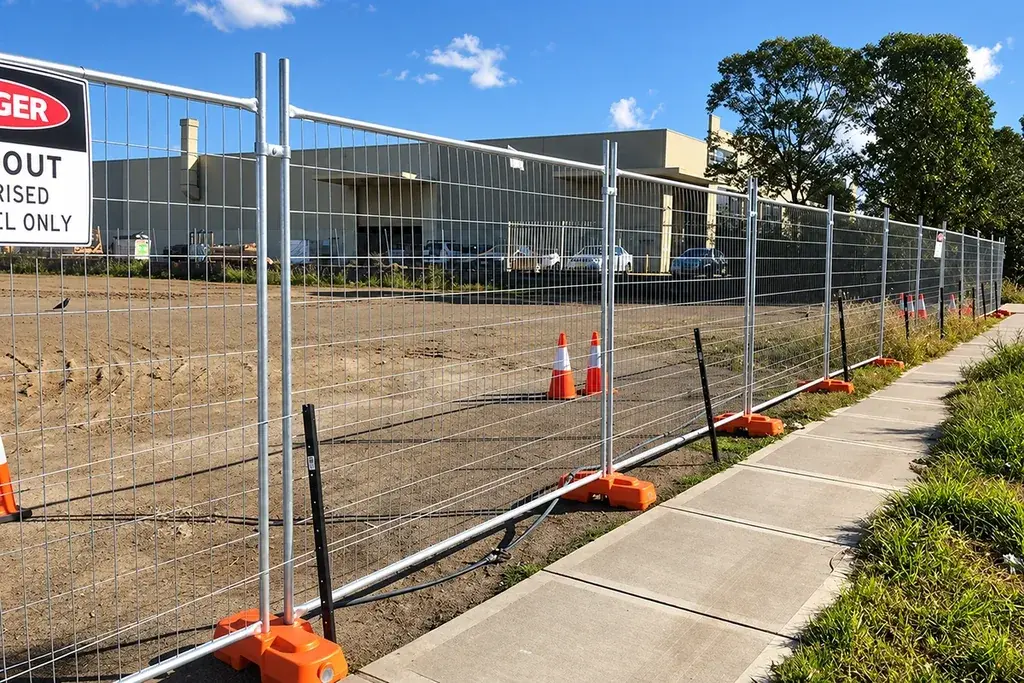
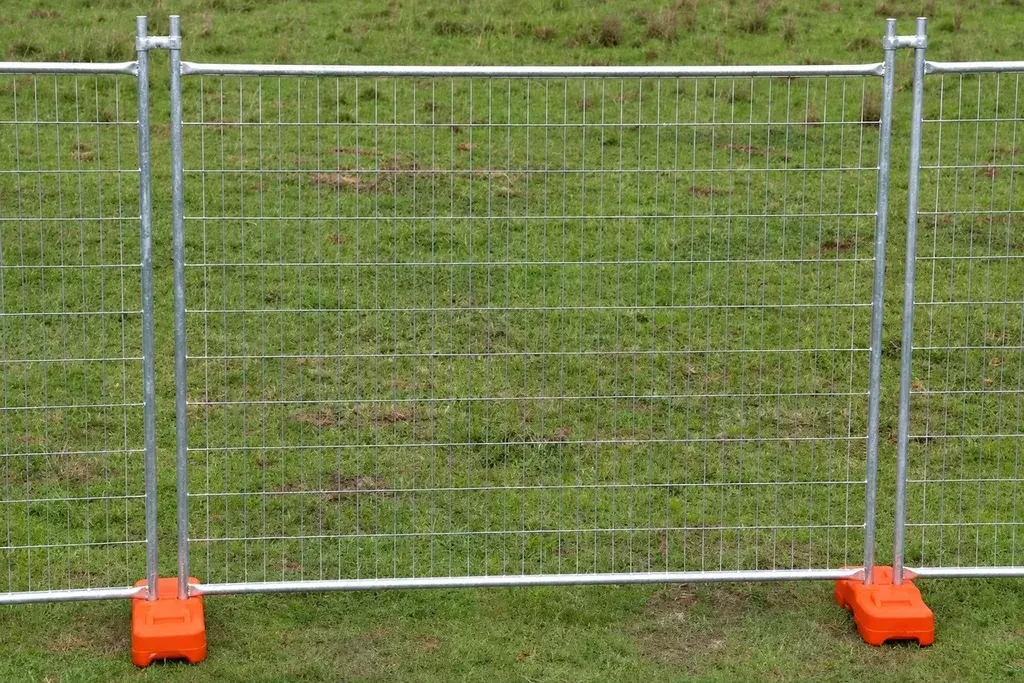
Before use, compare the installed line, components and support positions with the approved drawing. Record the layout revision, installation date and person accepting the arrangement. Photograph important junctions and special conditions so later movement can be recognised.
Handover should include the relevant instructions, inspection responsibility and response to damage or changed conditions. HSE identifies maintenance and foreseeable loads as part of temporary-works management. HSE: temporary works.
The routine frequency should follow the project assessment and instructions. A daily operational check may be useful, but it does not replace inspections required after relocation, impact, significant weather or other relevant changes.
Walk the boundary in a repeatable order
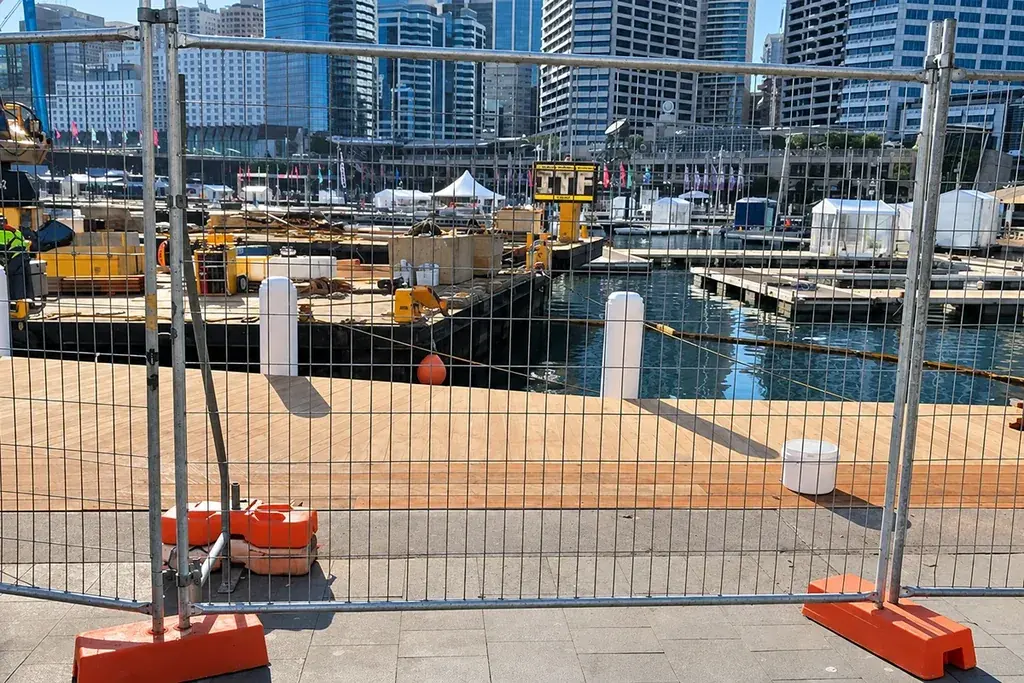
- Start at a named reference point and follow the numbered segments.
- Check whether feet, braces and ballast remain in their specified positions.
- Inspect panel condition, connections and accessible sharp damage.
- Check gates in their intended operating and secured positions.
- Look for added screens, signs, storage or ground changes.
- Record defects and confirm who will make the area safe and close them out.
Do not enter an unsafe area merely to complete a checklist. Escalate an unstable or damaged arrangement through the site's established procedure and prevent exposure while it is assessed.
Use a defect record that leads to action
| Field | Illustrative entry |
|---|---|
| Location | North run, junction N07–N08 |
| Observation | Lower coupler absent |
| Required arrangement | Two couplers shown on layout revision C |
| Immediate action | Affected area controlled under site procedure |
| Responsible person | Named site supervisor |
| Closeout evidence | Compatible replacement fitted and rechecked |
This example describes a record format, not a universal coupler arrangement. The reference detail determines what should be present.
Separate observation from diagnosis. A leaning panel may indicate a moved support, damaged connection or changed ground; do not write footing failure without an appropriate assessment. The record should preserve what was actually seen and measured.
Reconcile open defects, not only completed visits
Suppose a morning check identifies six defects. Four are corrected and verified that day, leaving two open. If one new defect appears during the afternoon, the open total is three: 6 − 4 + 1 = 3. Counting two completed inspection visits would conceal the unresolved work.
Track each defect by identity until it is closed. A second observation of the same missing component should update the existing record rather than creating an apparently separate problem with no owner.
Do not mark a defect closed merely because a replacement part has been ordered. Closeout requires the appropriate correction and verification on the actual fence.
Distinguish a repeated defect from a recurring cause
If the same junction repeatedly loses a component or moves out of position, do not treat each inspection as an isolated replacement task. Review the installation detail, operating activity and adjacent conditions to identify why the problem returns. Repeated correction without investigation can conceal a mismatch between the layout and its use.
Keep each occurrence linked to the location history while recording the current condition accurately. The responsible reviewer can then compare events such as deliveries, gate operation or altered storage with the observed damage. Avoid assigning a cause without evidence, but preserve the information needed to assess it.
When the cause requires a revised arrangement, update the drawing and inspection criteria after approval. The old checklist should not continue to describe a superseded detail. Close the original defect only when the appropriate correction and verification are complete, and retain the change record for the next team taking responsibility for the boundary.
Review changes against the original acceptance
Added advertising, moved supports and changed gate operation can create a new configuration. Record who authorised the change and which design or instruction now applies. If the change has not been assessed, routine inspection cannot turn it into an approved arrangement.
After a move, establish a new baseline for the affected area. Retain the previous record for traceability while making the current drawing obvious to the inspection team.
Use wind-assessment checks when conditions or screening change, and stacking and reuse when equipment leaves the site. The inspection record should follow the equipment's actual status, from accepted installation through repair or removal.