
Measure the packed unit
Record the full footprint and height of the pack, including separators, feet, hooks and packaging. Do not calculate transport space from the bare frame dimensions alone. The packing drawing should identify which surfaces support the load and how the pack is handled.
In an illustrative pack, 30 panels weigh 18 kg each and the rack and packing weigh 90 kg. Gross pack mass is 30 × 18 + 90 = 630 kg. If a proposed handling arrangement has an approved 600 kg limit for that configuration, the pack exceeds it by 30 kg. Reducing the number of panels may resolve mass, but stability and geometry still need checking.
This example is not a lifting recommendation. Use the actual handling equipment, rated configuration and approved method.
Do not confuse nesting pitch with panel thickness
Suppose the measured packing pitch between consecutive panels is 55 mm, and base plus top protection totals 150 mm. An illustrative 30-panel pack height is 30 × 55 + 150 = 1,800 mm under that defined packing convention.
If hooks or distorted frames increase the pitch to 65 mm, the same calculation becomes 2,100 mm. The 300 mm difference can affect access through a vehicle door or the stability of the packed unit. Verify the actual trial pack rather than relying on a theoretical drawing alone.
The permitted stack height and restraint arrangement must come from the packaging and transport assessment. Do not infer a safe height from the available warehouse roof space.
Keep loose accessories in identified containers
| Inventory | Packing control |
|---|---|
| Panels | Count, model, condition and pack identity |
| Feet | Compatible family, count and condition |
| Couplers | Complete assemblies, not mixed halves |
| Braces | Connection parts kept with the brace reference |
| Gate hardware | Identified kit for each gate assembly |
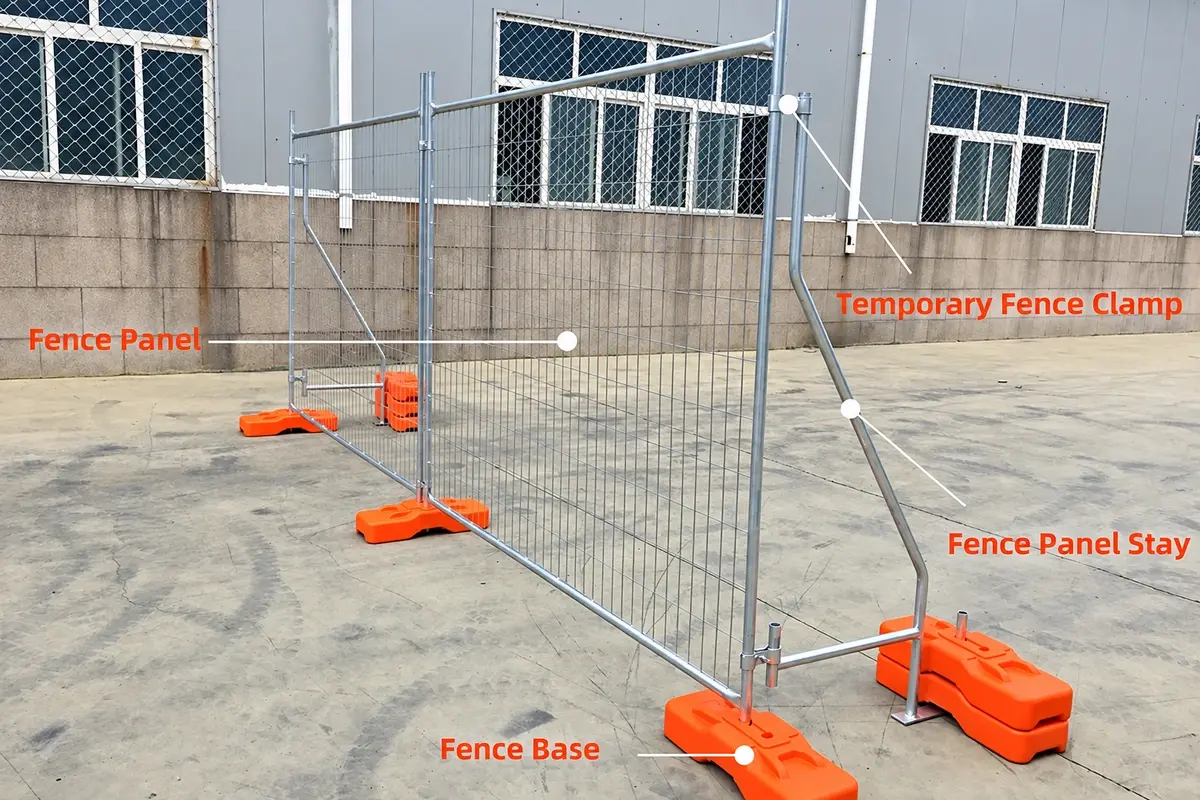
An illustrative issue of 40 panels with 78 complete junction couplers follows a two-coupler detail for one open run with 39 shared junctions. On return, count the couplers independently; 40 returned panels do not prove that the accessory set is complete.
Separate installed quantities from agreed spares so losses can be identified accurately. Keep mixed product families apart unless compatibility has been confirmed.
Inspect after unloading, before returning stock to service
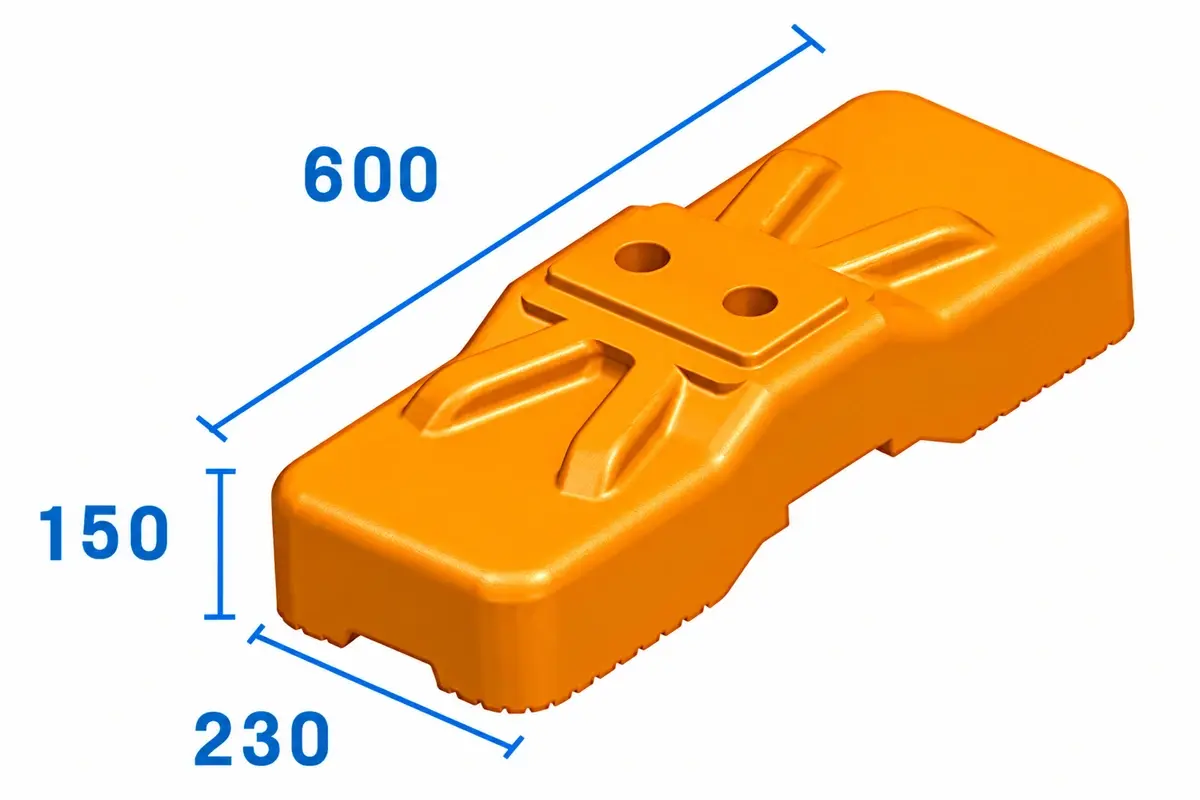
Classify returned parts as serviceable, requiring assessment or rejected. Examine frames, infill attachment, welds, feet and connection points. Record the defect and the component identity, not merely a total number of damaged panels.
Do not straighten or weld a damaged part as a routine response unless an appropriate repair method has been approved. A visually improved component may still have an unresolved structural or connection problem.
Use a controlled area for parts awaiting assessment. This prevents a busy loading crew from treating them as available stock for the next job.
Preserve package identity after a partial return
When only part of a pack returns from a site, create a new count and condition record rather than reusing the original full-pack label. Keep compatible components together, but separate items awaiting assessment. The next dispatch should use the revised serviceable quantity.
Inspect protective separators and racks as well as the panels. Damaged packaging can expose otherwise serviceable components to distortion or abrasion on the next journey. Replace or repair the packing through the appropriate method before using it again.
If the storage arrangement changes, review support points and the retrieval method. A pack suitable for one rack may not be suitable when stacked directly on uneven ground. Record the approved arrangement so warehouse staff do not have to infer it from available space. Fleet reuse depends on the condition of both the equipment and the system used to store and transport it.
Reconcile the next dispatch against the new layout
The next site may need different gates, supports or quantities even where most panels are reused. Build the dispatch list from that site's approved arrangement, then select compatible serviceable stock. Do not send the previous site's package unchanged and leave the installer to improvise.
For container shipments, use the loading calculation guide to check geometry and mass separately. For on-site acceptance after transport, use handover and daily checks. A fleet remains reusable only when its components remain identifiable, compatible and fit for their assigned duty.