
Separate four different duties
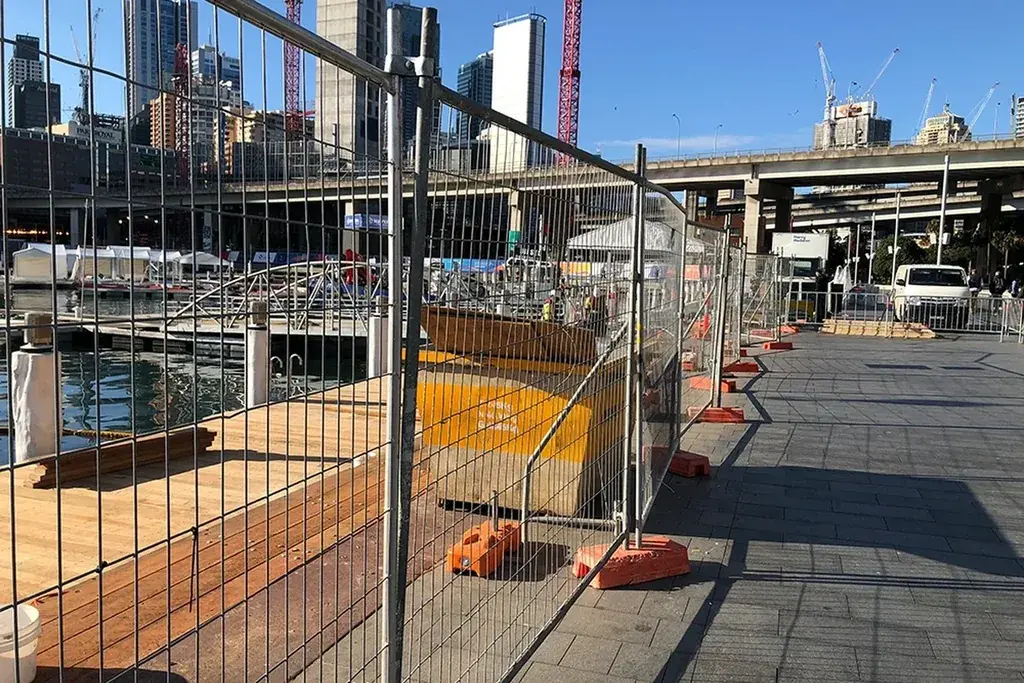
An open mesh enclosure can define a site boundary while preserving visibility. Opaque hoarding adds screening and a substantially different exposed surface. Crowd barriers organise people under a specified crowd-management plan. Vehicle mitigation requires equipment and evidence appropriate to the vehicle threat; ordinary site fencing does not become a vehicle barrier because it has heavy feet.
HSE's event guidance calls for barrier selection to consider use, ground, weather and loading. That principle supports selecting by duty rather than by appearance. HSE: using barriers at events.
| Boundary purpose | Candidate arrangement | Evidence to resolve before ordering |
|---|---|---|
| Exclude casual access to a work zone | Temporary site enclosure | Complete support and connection arrangement |
| Conceal works from public view | Assessed screened fence or hoarding | Design for the actual covered configuration |
| Guide an event queue | Suitable crowd-management barrier | Layout, users and expected loading |
| Address vehicle impact | Specialist assessed barrier | Relevant system test and deployment scope |
A site can need several of these at once. One product name should not cover all of them on the quotation.
Draw the operating states
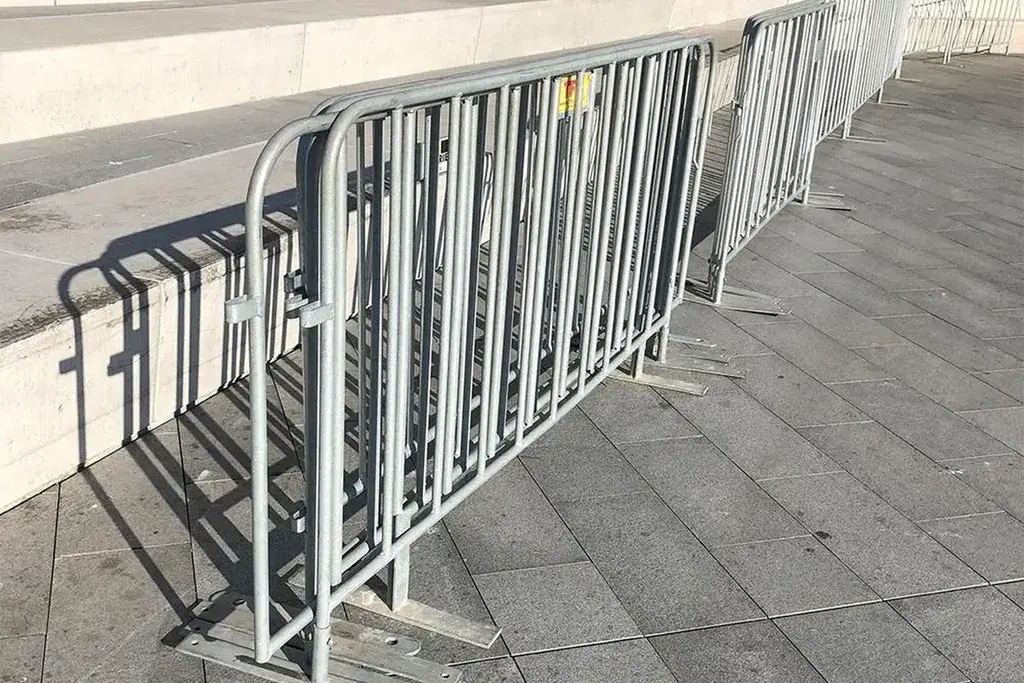
Show the boundary during work, deliveries, public opening and overnight closure. A gate that is normally open during deliveries creates a different condition from the closed perimeter shown on a tender drawing. Identify who controls it and where pedestrians pass while vehicles enter.
Record ground type and changes in level. Feet, braces or ballast can extend beyond the panel face, so the usable footprint is wider than the line drawn on a plan. Check that the complete arrangement fits inside the available space.
Turn length into a provisional panel count
For an illustrative straight 84 m run with an installed module of exactly 3.5 m, 84 / 3.5 = 24 modules. If the module were 3.4 m, 24 modules would cover 81.6 m, leaving 2.4 m to resolve with a designed end arrangement. Simply rounding up can create an overlap or protrusion the system was not designed to use.
Use installed module length rather than assuming it equals frame width. Count gates and corners separately. The provisional count is a planning result; the final order follows the approved layout and connection details.
Include the parts that make the system usable
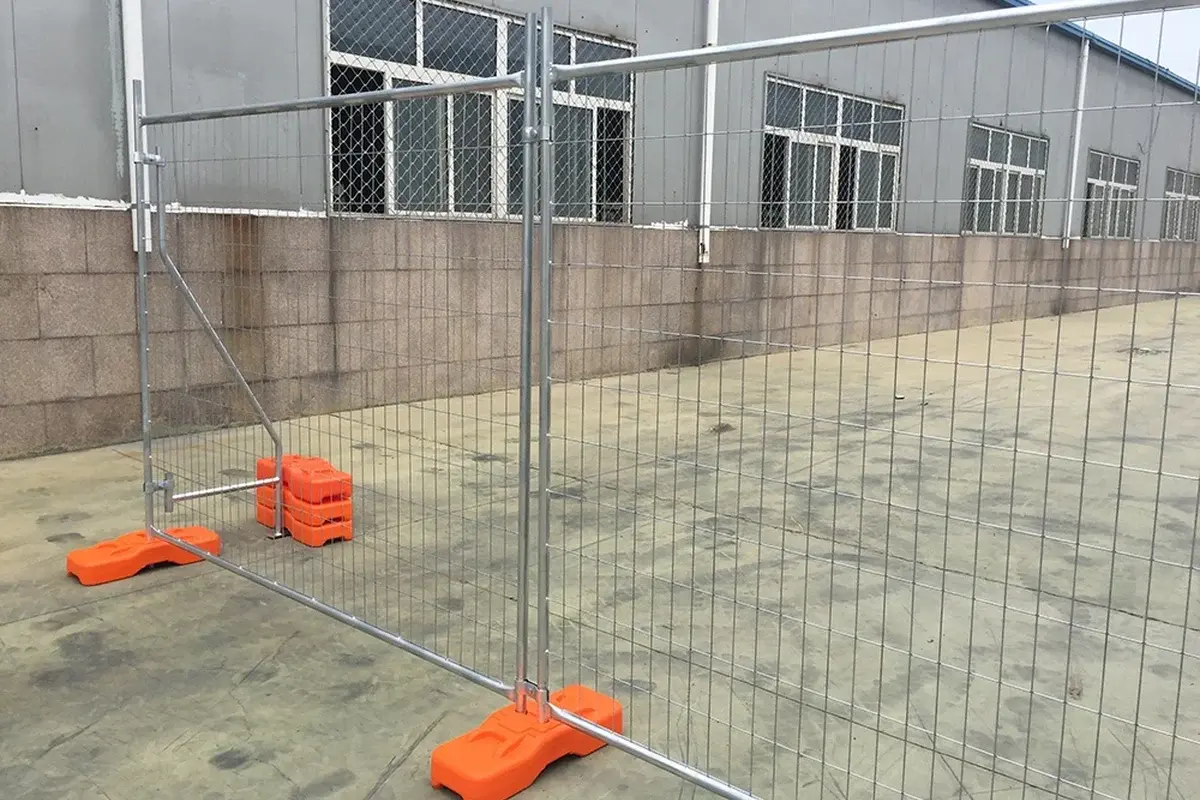
Ask the supplier to identify panel, foot, coupler, brace, ballast and gate references. Where an engineered layout specifies a particular support pattern, retain that pattern with the order. Do not reduce accessories to an unspecified percentage of panel quantity.
Prepare an inventory that distinguishes installed parts, separately agreed spares and items provided by others. A hire package may include retrieval and inspection that a purchase package does not. Compare these services explicitly rather than assuming that both offers include the same operating support.
Compare two packages against one duty schedule
If one proposal contains open mesh and another includes screening, do not compare the panel totals until the supplied functions are aligned. Mark which boundary segments need visibility, privacy or controlled access, then ask each proposal to address those same segments with its appropriate system.
List the supporting documents supplied with each package. A quotation that includes panels and feet but leaves the support assessment to others may still be usable, but that responsibility and its cost must be explicit. The project needs to know who will close the gap before installation.
Keep rejected alternatives in the comparison with a short reason, such as incompatible footprint or unresolved evidence. This prevents a later purchasing substitution from reintroducing an option that was already unsuitable. If the budget changes, reassess the complete requirement rather than stripping necessary supports or operating provisions from the accepted package.
Make reassessment triggers visible
Screening, advertising, altered gates and changes to the support layout can change the duty of the fence. Record who can authorise a modification and which documents must be updated. A site team should not need to guess whether a banner is covered by the original design.
For component selection, continue with feet, clamps and braces. For project economics, use renting versus buying. These are separate decisions: a financially attractive package still has to satisfy the boundary's actual function.