
Begin with the end condition
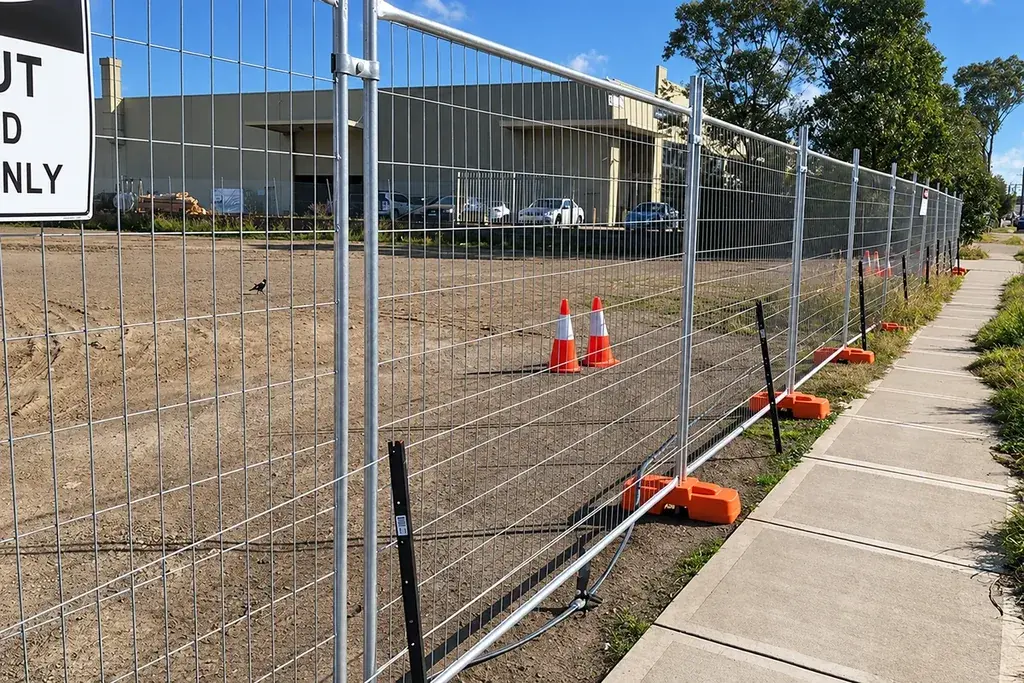
Ask whether the finished project needs a permanent boundary in the same location. If it does, an early permanent installation may avoid buying and removing a separate system, but construction activities could damage it or obstruct the work. If the boundary will move repeatedly, a relocatable arrangement may be more practical.
Record underground services, surface ownership and reinstatement requirements. Permanent foundations can affect later landscaping or utilities. Temporary feet and braces avoid some excavation but occupy surface space and still need an appropriate design.
Neither label removes the need to assess the complete installation for its loads and use. For construction projects, HSE includes site fencing and hoarding within temporary works. HSE: temporary works.
Compare costs over the same programme
Use a common scope and currency. Include delivery, installation, moves, inspections, repairs, removal and reinstatement. Include residual value only where the assumed resale or reuse route is credible. The figures below are invented to show the method, not market prices or a FencingWise quotation.
| Cost item | Temporary option | Permanent option |
|---|---|---|
| Supply or hire for the programme | 6,000 | 9,000 |
| Initial installation | 1,200 | 3,000 |
| Planned moves or changes | 1,500 | 0 |
| Inspection and repair allowance | 500 | 400 |
| Removal and reinstatement | 800 | 0 |
| Total in illustrative currency units | 10,000 | 12,400 |
The permanent option remains in service after the project in this example. If it also had to be removed, its removal and reinstatement costs would need adding. The apparent 2,400 difference does not answer the decision until the end conditions are comparable.
Test a change in duration
Suppose an extension adds three months of temporary hire at an assumed 450 units per month plus 150 for additional inspection visits. The temporary total increases by 1,500 to 11,500. If another relocation adds 1,200, the result becomes 12,700.
This sensitivity check shows which uncertain programme items matter. It does not establish a universal break-even month because hire rates, repair costs and the installed systems differ between projects.
Keep each assumption visible in the comparison so the project team can update the decision when the programme changes.
Review operational differences
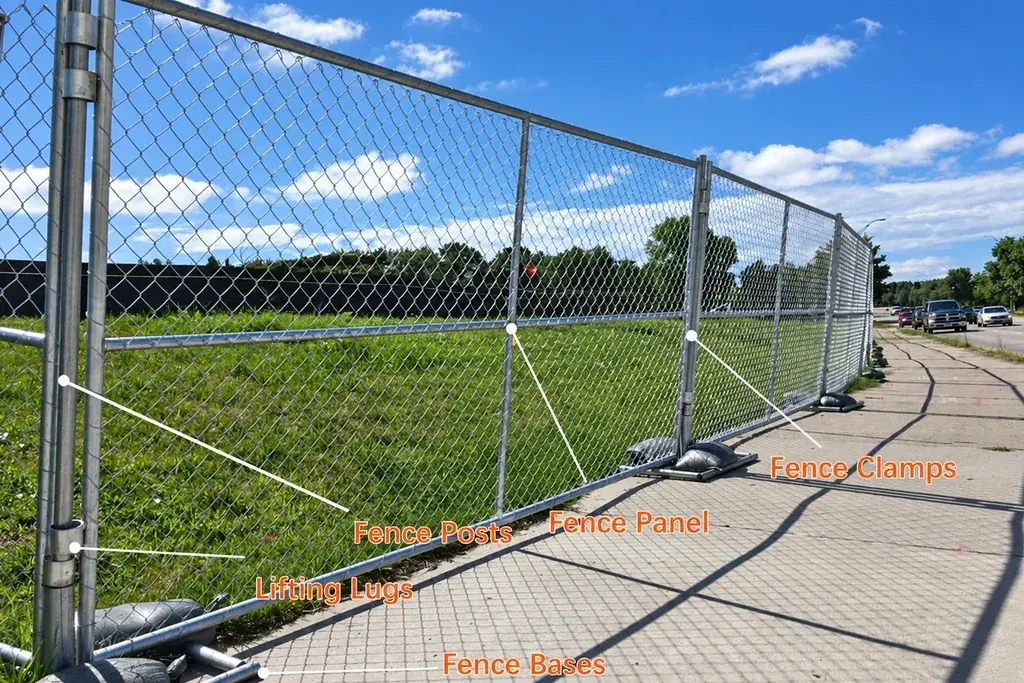
Temporary supports may conflict with narrow footpaths, storage areas or vehicle turning. Permanent posts may conflict with excavation or future works. The gate arrangement also needs to suit the real delivery route and emergency plan in each phase.
If the boundary moves, define how the revised layout is approved and inspected before use. A system that was appropriate in one position may face different exposure or ground conditions in another.
For phased development, show the interface between completed permanent fencing and the temporary extension. That transition can require a special connection rather than an improvised overlap.
Assess early installation of the final fence
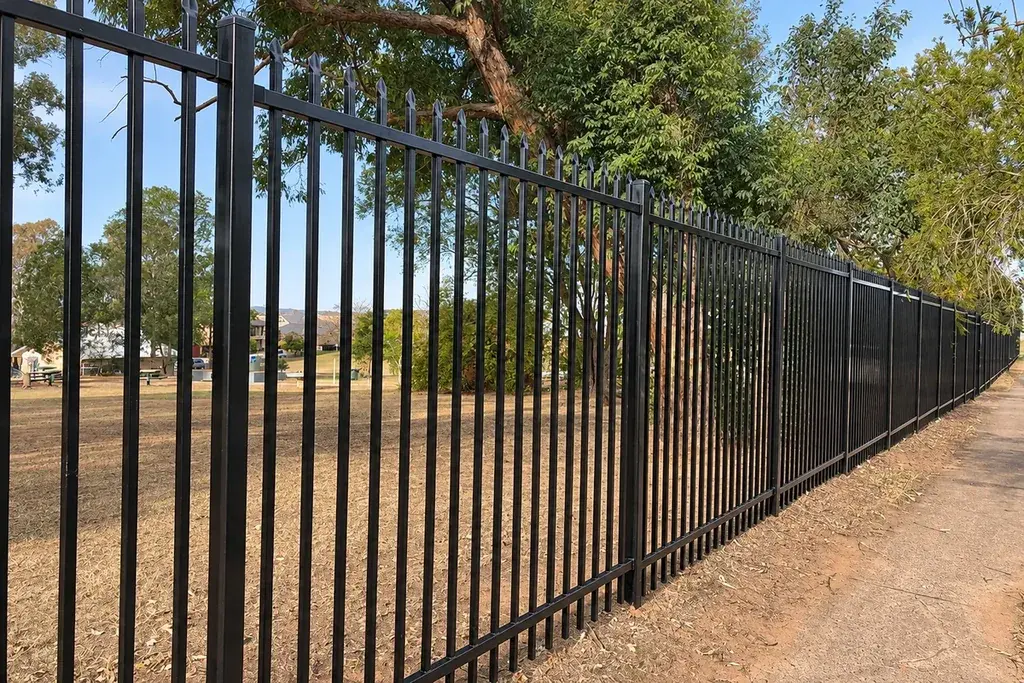
Where the permanent boundary is installed before construction finishes, identify the work that will take place beside it. Excavation, lifting, vehicle movements and material storage can damage the final assembly or require temporary openings. Put protection, inspection and any planned reinstatement into the programme and comparison.
Do not count the permanent fence as complete while temporary changes leave it outside its accepted arrangement. Record which sections are available for their final duty and which remain under construction control. The handover should follow the actual condition, not simply the date the posts were installed.
If the alignment is likely to move, assess the effect on foundations, finish repairs and replacement parts before choosing early installation. The apparent saving from avoiding a temporary system can disappear if substantial permanent work must be altered. Conversely, a stable final alignment with controlled access can make early installation a practical option when the full project assessment supports it.
Record the reason for the choice
Choose the option whose complete cost and operating arrangement meet the programme and final boundary requirement. State which assumptions could reverse the choice, such as another move, extended hire or a changed finished alignment.
Use temporary fence selection to establish the system duty before doing the cost comparison. If the choice is specifically hire versus ownership of a temporary system, the rental comparison separates fleet costs from a permanent-work decision.