

Survey what will remain
Identify retained supports, gates, walls, foundations and equipment. Measure their actual geometry and condition rather than treating an old drawing as an as-built survey. Record which items are to be reused and who accepts their continued suitability.
Where detection equipment is attached, involve its specialist before removing or altering the supporting fence. NPSA's PIDS guidance provides context for this separate technical system; a panel replacement is not simply an aesthetic change to its support.
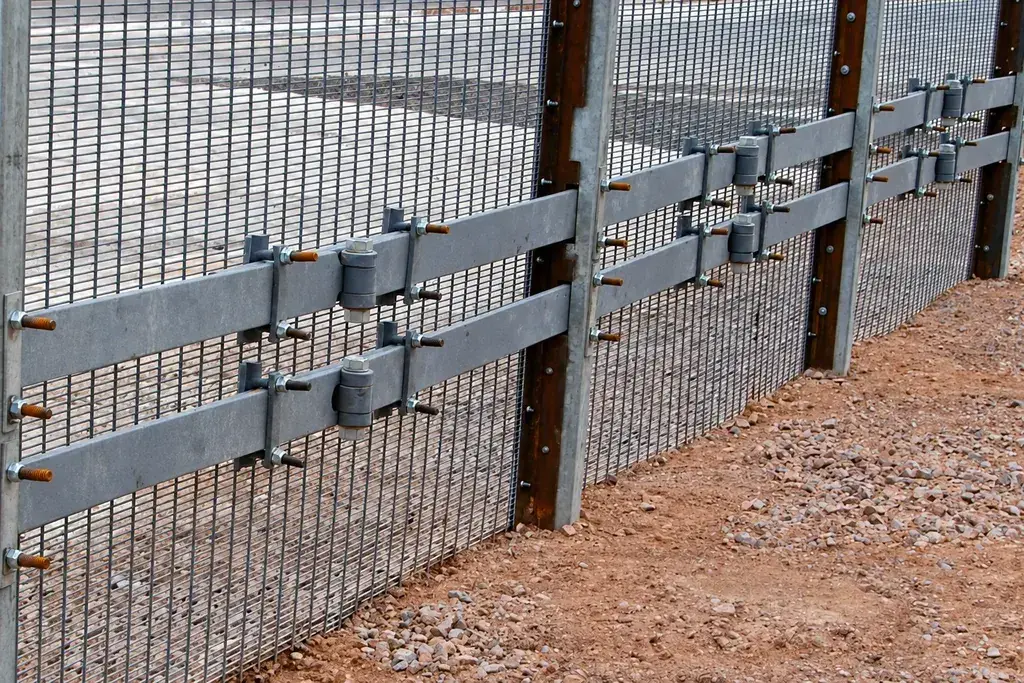
Trial the least repeatable connection first
Choose a representative transition between new and retained work. Check panel alignment, fixing access, coating repairs and the equipment interface. Resolve the drawing and parts list from that trial before releasing repeat quantities.
| Survey result | Procurement response |
|---|---|
| Repeated standard bay | Order a repeatable assembly |
| Existing post centres vary | Develop measured closing panels or approved adjustments |
| Retained gate support is unsuitable | Include the accepted replacement support scope |
| Attached equipment conflicts | Resolve the specialist mounting arrangement |
Avoid ordering standard panels with an assumption that the installer can cut everything to fit. Cutting can affect protection, geometry and the scope of any product evidence.
Separate available stock from authorised workfront
Suppose 120 replacement bays are delivered, but the approved working arrangement releases only 20 bays at a time. The project has six material lots of 20 bays. It does not have permission to remove all 120 existing bays at once.
This is a staging example, not a prescribed exposure length. The operator determines the acceptable workfront and temporary arrangements. Mark each lot to the approved section and keep the components required for immediate reinstatement together.
Define the release conditions for each stage
Before removal, confirm authorised access, temporary boundary arrangements, available replacement components and specialist attendance. Before moving on, complete the stage's physical checks and required operational acceptance. Record any open item that affects the next stage.
A useful hold point is evidence-based: “replacement section accepted against drawing D04 revision B” is clearer than “fence substantially complete”. The exact checks and sign-off parties come from the project plan.
Close the record for retained and new work
Distinguish original assets from new assemblies in the final schedule. Update component references, coating repair records and maintenance requirements. Make sure the next replacement order will not use the superseded post spacing or fixing pattern.
For a proposed change discovered on site, use the technical deviation schedule. If the new arrangement falls outside its certificate or report, follow the evidence gap process before treating it as an accepted substitute.