
Identify what the material does and does not replace
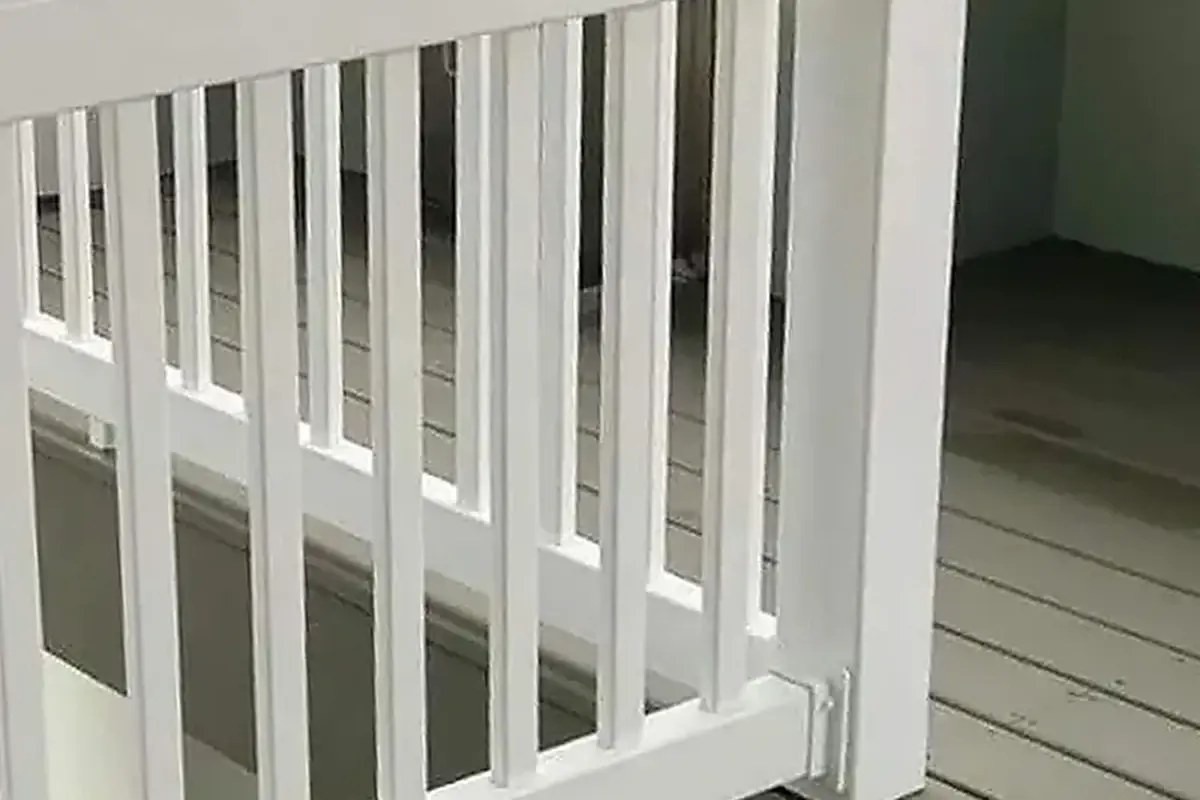
A PVC system may use metal inserts, hinges and fasteners. Record these separately rather than assigning the outer profile's material properties to the entire assembly. Gates especially need the actual frame and hardware arrangement identified.
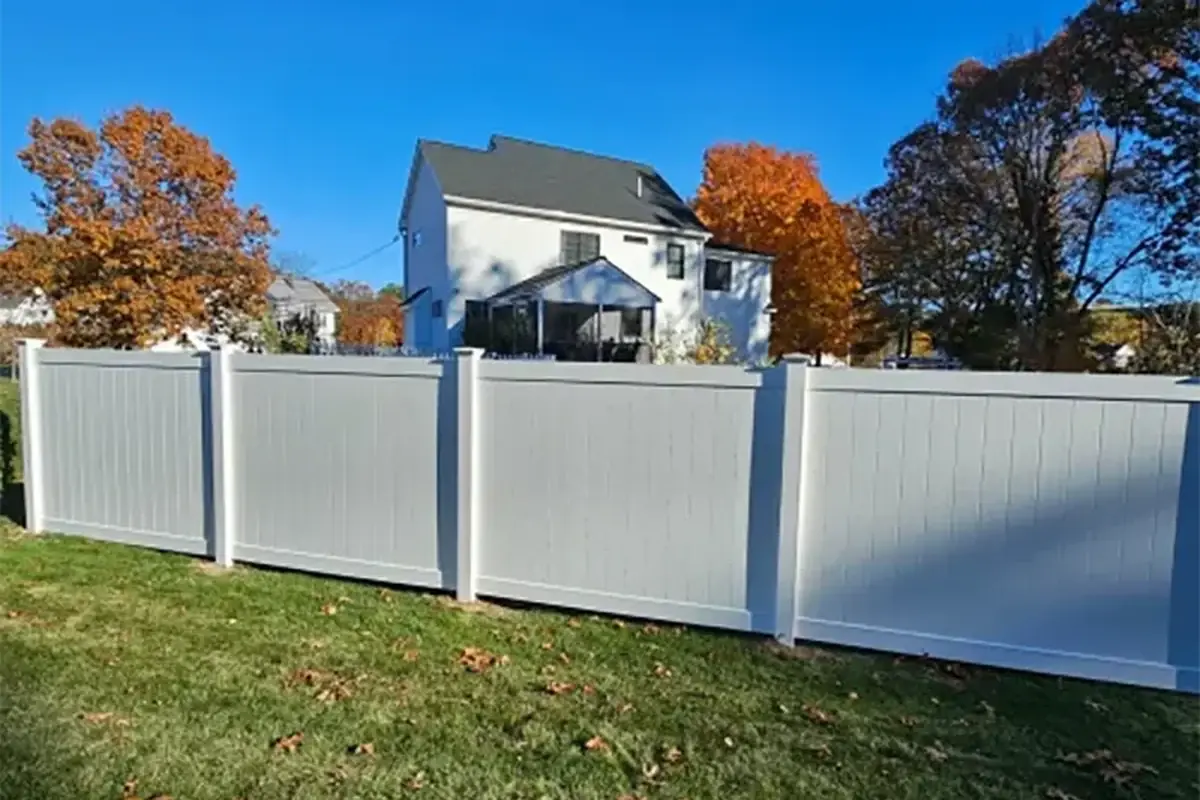
The BPF overview of PVC explains that formulation affects material properties. For procurement, this means two profiles sharing the same colour and outside shape are not necessarily equivalent. Ask for the product-specific evidence behind impact and weathering claims.
Calculate movement from declared inputs
Linear thermal movement can be estimated as ΔL = α × L × ΔT, where α is the coefficient supplied for the relevant material, L is length and ΔT is the temperature change. The installation detail must then accommodate the system's actual behaviour.
For an illustrative calculation only, assume α = 0.000070 per °C, a 2,000 mm length and a 40°C temperature change. Movement is 0.000070 × 2,000 × 40 = 5.6 mm. The assumed coefficient is not a FencingWise product value and the result is not an instruction to leave a 5.6 mm gap at every joint.
The location of restraint, engagement length and temperature at assembly affect the joint detail. A rail restrained at one end behaves differently from a component centred between two supports. Use the manufacturer's approved clearances rather than dividing the calculated movement arbitrarily.
Compare benefits with the condition they depend on
| Potential benefit | Condition to examine |
|---|---|
| No red rust on the PVC profile | Metal inserts and hardware assessed separately |
| Consistent coloured surface | Weathering evidence and permitted cleaning method |
| Replaceable individual components | Continued availability of matching profiles |
| Relatively light hollow members | Complete panel support and handling requirements |
These are reasons to investigate a system, not promises that every PVC fence provides the same result. Dense screening also needs an appropriate wind design; an infill material name cannot establish post or foundation capacity.
Inspect a sample as an assembly
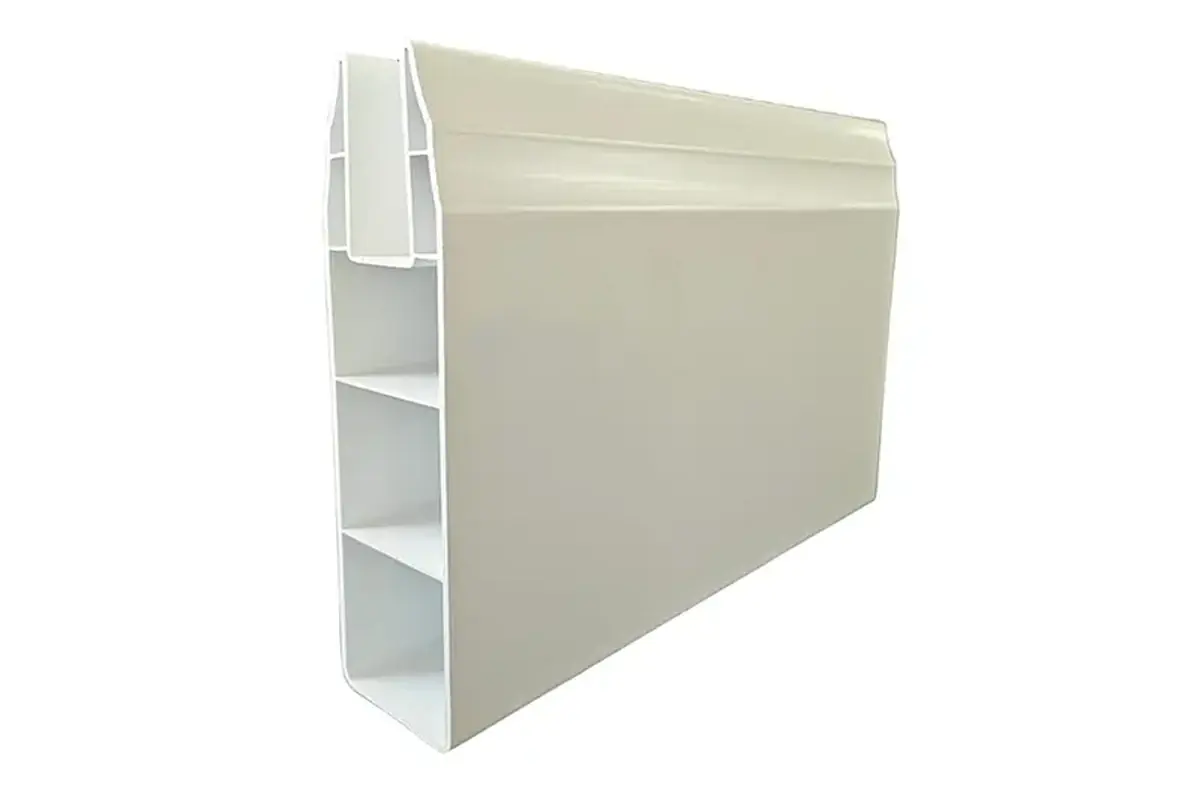
- Check the profile drawing against the sample, including internal ribs and reinforcement.
- Assemble the rail-to-post and infill connections using the specified parts.
- Record engagement, movement provisions and the retention of caps or trims.
- Examine corners, gates and short panels, where the standard detail often changes.
- Confirm how a damaged member is removed without damaging adjacent components.
A hand squeeze or an improvised impact demonstration is not a substitute for a defined test. If impact resistance is important, agree the relevant test method and the configuration to which the result applies.
Investigate a rail that no longer sits correctly
If an installed rail bows or moves out of its intended position, first record temperature conditions, connection position, visible restraint and any impact history. Do not immediately attribute the problem to thermal expansion or poor material. Several causes can produce a similar appearance, and the applicable installation detail provides the reference for investigation.
Check whether the specified engagement and movement provisions were maintained and whether landscaping or another component now restrains the assembly. Compare the observed condition with the approved drawing and the manufacturer's assessment. Avoid cutting or tightening components before the cause and repair method are established.
Keep photographs and component identities with the defect record. If a replacement is required, confirm that it matches the retained profile and reinforcement arrangement. Replacing only the visible outer part without checking its internal or adjoining components can leave the original cause unresolved and make a later recurrence harder to diagnose.
Plan for local damage and appearance changes
Obtain the permitted cleaning agents and process. Aggressive solvents, abrasive treatment or unapproved painting can create new problems. A maintenance instruction should explain what to inspect and how to replace parts, not merely advise occasional cleaning.
Keep the colour reference and production identification for later orders, while recognising that an aged panel and a new replacement may not appear identical. If matching is critical, ask how colour variation will be assessed under agreed lighting and viewing conditions.
PVC is a candidate where its finished assembly meets the boundary purpose and the owner accepts its maintenance and replacement arrangements. It is a poor choice to approve solely on a broad claim of no maintenance. Start with PVC and vinyl terminology if the quotations do not clearly describe the same construction.