
Map exposure by location
Ordinary atmospheric exposure, repeated splash and contact with process chemicals are different conditions. Record the likely substance, contact pattern and cleaning method for each affected fence section. The coating adviser needs that description; the word “waterproof” provides no useful purchasing criterion.
ISO 12944-2 distinguishes atmospheric, immersion and buried environments and recognises special corrosion stresses. It provides an environmental classification framework for protective paint systems, not a blanket suitability certificate for any fence near water.
Keep four boundaries distinct
| Area | Fence selection issue | Operational consequence |
|---|---|---|
| Public-facing perimeter | Access control and visibility | Inspection from a maintained route |
| Wet process area | Splash and cleanability | Coating and repair method need exposure data |
| Chemical delivery area | Vehicle movement and substance exposure | Gate operation must fit the delivery procedure |
| Equipment enclosure | Authorised maintenance and lifting access | Openings must fit the planned removal route |
A mesh perimeter does not replace a guardrail around a fall hazard. Nor does a locked fence establish safe chemical handling. Keep those functions in the relevant specialist design so that a fence supplier is not asked to certify an unrelated safety system.
Choose access that staff can maintain
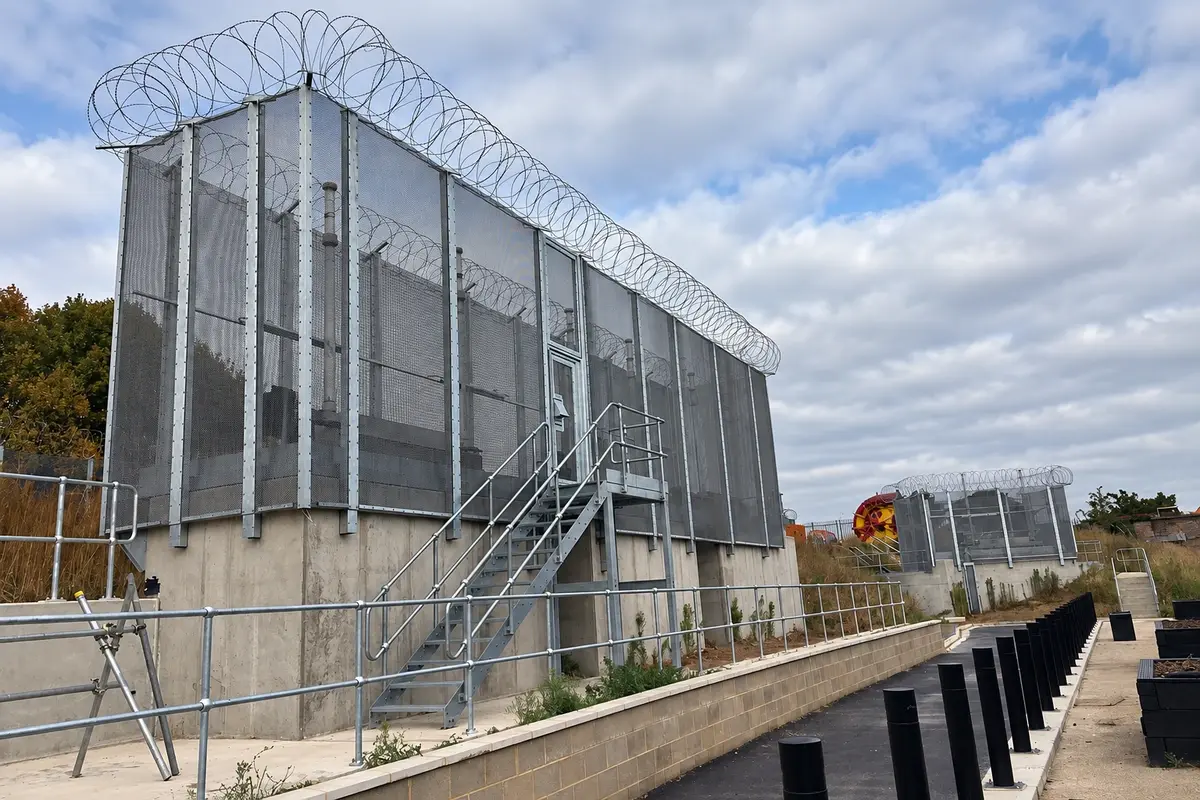
Locate inspection routes where vegetation, sludge handling or parked equipment will not routinely obstruct them. Check that a gate can open without sweeping across a required walkway. If hoses or temporary cables cross an entrance, deal with that crossing in the operational plan rather than propping the gate open.
For submerged or buried portions, specify the actual exposure separately from the above-ground finish. Include cut edges, fasteners and attachment points in the coating review; a good panel finish cannot protect an unaddressed connection.
Estimate the maintenance workload
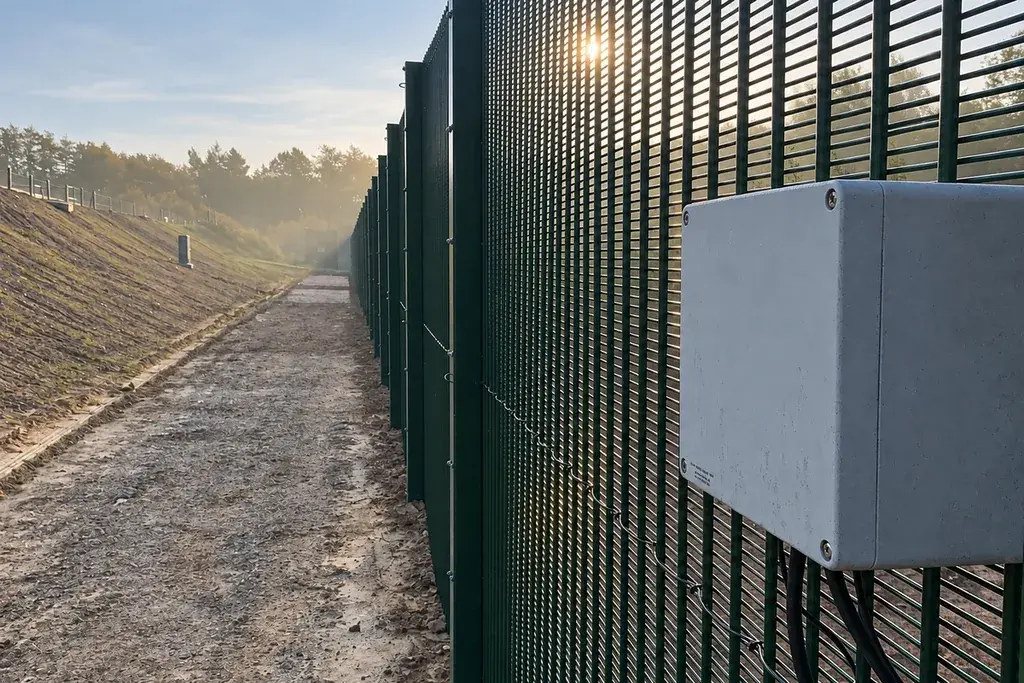
For budgeting only, suppose a site has 600 m of accessible fence and a walking inspection rate of 1.5 km/h. The uninterrupted walk takes 600 ÷ 1,500 × 60 = 24 minutes. If 12 gates each need four minutes of functional checks, gate checks add 48 minutes, giving 72 minutes before travel, defect investigation or reporting.
These are illustrative planning assumptions, not an inspection frequency or a required test duration. They show why counting only fence metres understates the maintenance effort. Set the actual inspection interval from the operator's risk assessment and equipment instructions.
Specify acceptance evidence for the exposure
Require coating identification, substrate preparation, relevant inspection records and a repair procedure appropriate to the selected system. Where a product test is requested, match the tested construction and exposure to the offered product. Do not convert a salt-spray test duration into a promised service life.
The coastal facility guide considers salt exposure, while ISO 12944 in procurement explains how to record the environmental basis of the coating choice.